
HISTORY This Week: The Sky Is Falling
History Channel podcast features Institute’s oral history interview with Nobel laureate and ozone savior Mario Molina.
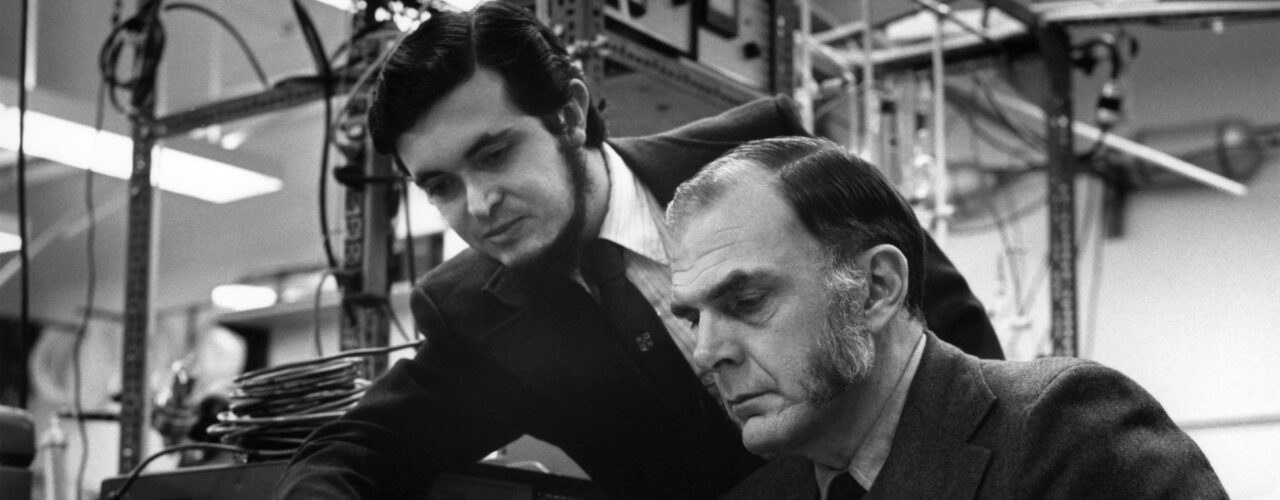
The Science History Institute’s oral history interview with Nobel Prize-winning scientist Mario Molina (pictured left) was featured in HISTORY This Week, a podcast series produced by HISTORY (formerly the History Channel). The episode features excerpts from his 2013 interview and reveals how the Mexican chemist “contributed to our salvation from a global environmental problem that could have catastrophic consequences.”
Molina was the first to notice that chlorofluorocarbons—better known as CFCs—had the potential of destroying the Earth’s protective ozone layer. He shared the 1995 Nobel Prize in Chemistry with his mentor, Frank Sherwood Rowland, and Dutch scientist Paul Crutzen.
Listen to the oral history interview >>
Above: Mario Molina (left) and Frank Sherwood Rowland at UC Irvine, January 1975. University of California, Irvine
More News
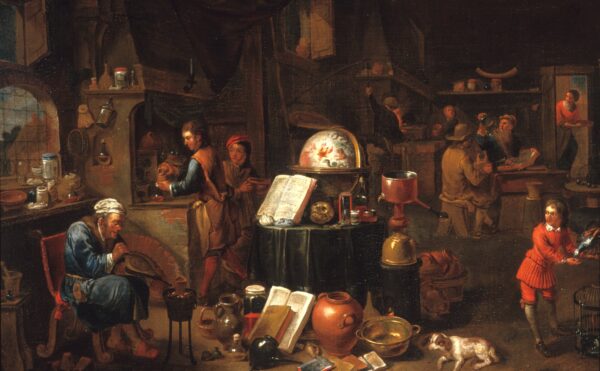
Explore the Alchemist’s Laboratory with Institute’s New ‘Fire and Gold’ Exhibition Opening October 7
Paintings and rare books from the 15th to the 19th centuries highlight the art, science, and history of alchemy.
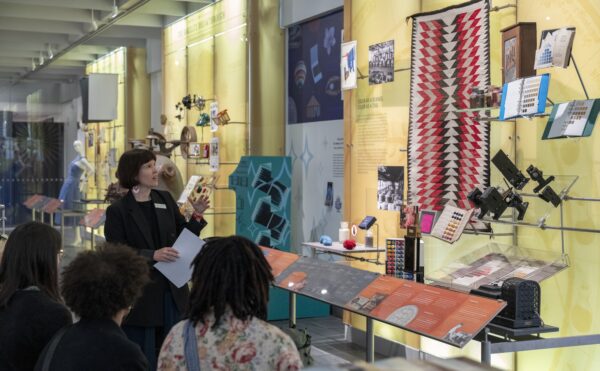
Group Tours Are Now Free at the Science History Institute
Kick off the new school year with a guided museum tour, self-guided field trip, or virtual program for middle school, high school, and college students.
Science History Institute Welcomes 2026–2027 Beckman Center Fellows
Scholars from around the world will study a wide range of topics in the history and social studies of chemistry, chemical engineering, and the life sciences.