
WHYY: Exhibition Traces a 200-Year History of Water Pollution in Philadelphia
Local public media outlet features Institute’s new ‘Downstream’ exhibition.
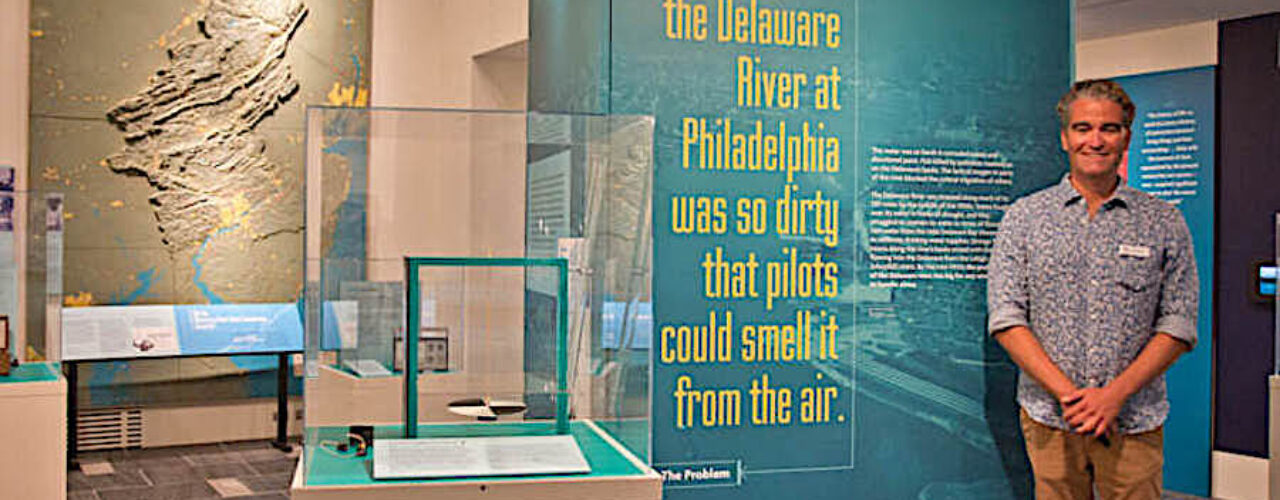
Downstream, the Science History Institute’s new exhibition that explores 200 years of water analysis and protection, is featured on WHYY as part of its Watershed series. The public media outlet spoke to research curator Jesse Smith, who explains how people could see, smell, and taste contaminants in the waterways throughout Philadelphia in the late 1700s.
“It was biological,” said Smith. “Waste from industries like tanning, like brewing, animals that were left to rot in waterways, and also vast amounts of human waste.”
Above: Research curator Jesse Smith stands in front of a Downstream display in the Institute’s museum. Kimberly Paynter/WHYY
More News
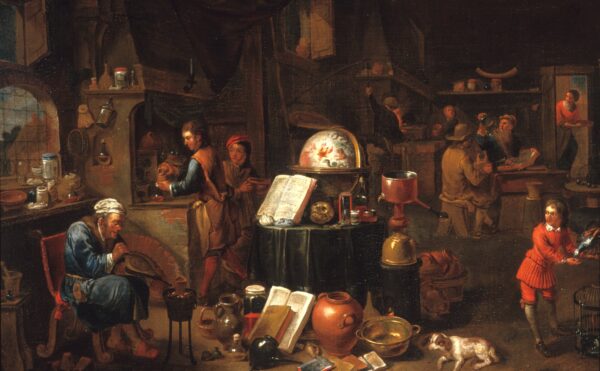
Explore the Alchemist’s Laboratory with Institute’s New ‘Fire and Gold’ Exhibition Opening October 7
Paintings and rare books from the 15th to the 19th centuries highlight the art, science, and history of alchemy.
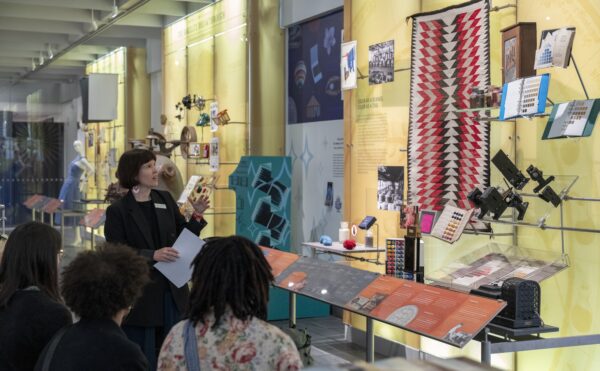
Group Tours Are Now Free at the Science History Institute
Kick off the new school year with a guided museum tour, self-guided field trip, or virtual program for middle school, high school, and college students.

Science History Institute Welcomes 2026–2027 Beckman Center Fellows
Scholars from around the world will study a wide range of topics in the history and social studies of chemistry, chemical engineering, and the life sciences.