
WHYY: Exhibition Traces a 200-Year History of Water Pollution in Philadelphia
Local public media outlet features Institute’s new ‘Downstream’ exhibition.
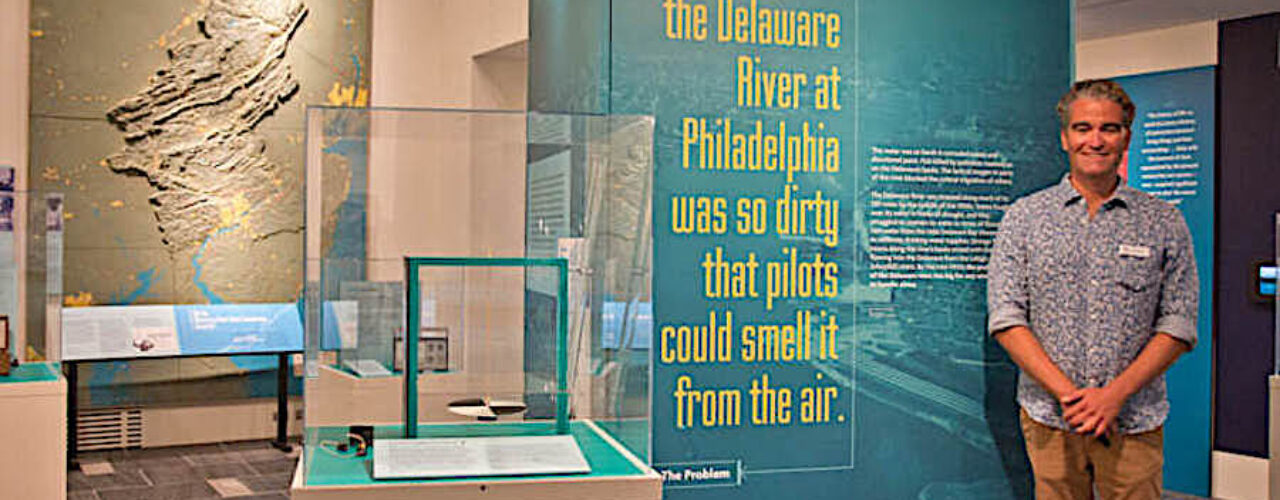
Downstream, the Science History Institute’s new exhibition that explores 200 years of water analysis and protection, is featured on WHYY as part of its Watershed series. The public media outlet spoke to research curator Jesse Smith, who explains how people could see, smell, and taste contaminants in the waterways throughout Philadelphia in the late 1700s.
“It was biological,” said Smith. “Waste from industries like tanning, like brewing, animals that were left to rot in waterways, and also vast amounts of human waste.”
Above: Research curator Jesse Smith stands in front of a Downstream display in the Institute’s museum. Kimberly Paynter/WHYY
More News
Applications for 2027–2028 Beckman Center Fellowships Now Open
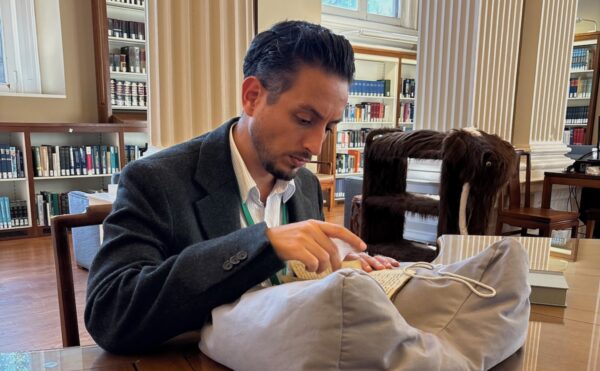
Researchers can apply by January 15 for various long- and short-term programs, including two-year curatorial fellowships.
New Alchemy Exhibition Draws Sold-Out Crowd to Opening Celebration
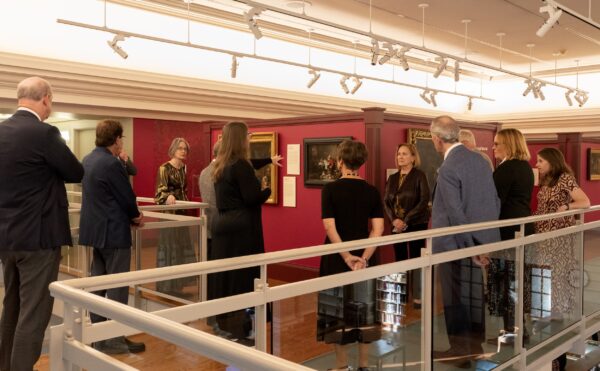
Attendees take an up-close look at paintings and rare books from the Institute’s Fire and Gold exhibit while enjoying a curator’s talk, activities, and light bites.
New Research Challenges Misconceptions about Rosalind Franklin’s Famed ‘Photo 51’ and the Discovery of DNA’s Double Helix
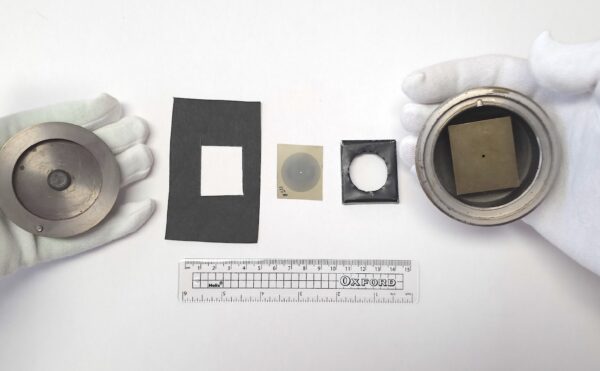
Paper by the Science History Institute’s Alistair Sponsel and King’s College London’s Brian Sutton uncovers the significance of her previously captured Photo 49.