Natural Blues
In a world dominated by synthetic textile dyes, natural alternatives persist.
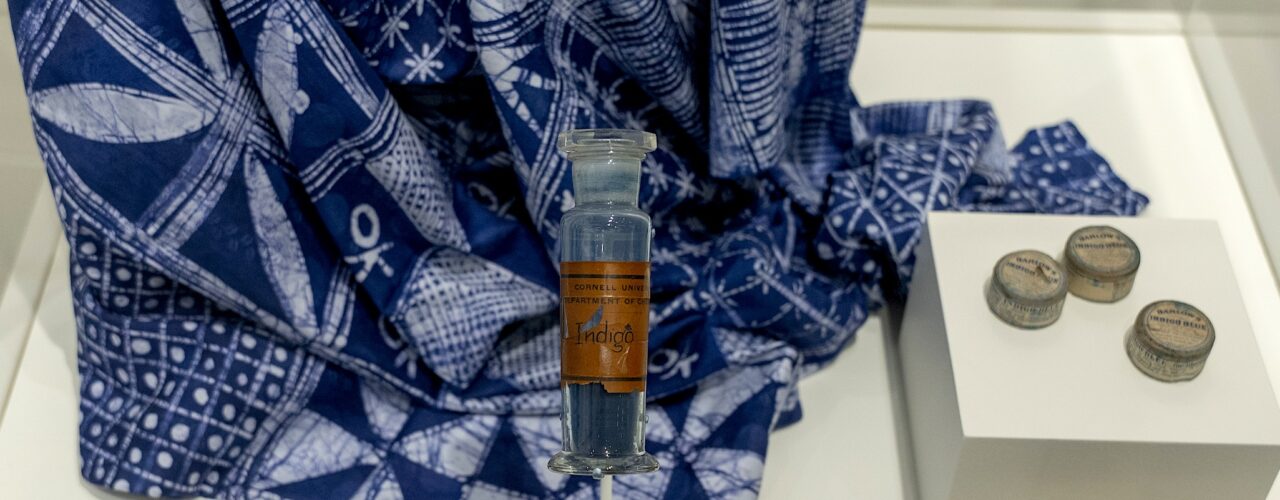
In a world dominated by synthetic textile dyes, natural alternatives persist.
As the curator of our recent exhibition, BOLD: Color from Test Tube to Textile, Elisabeth Berry Drago drew on the Science History Institute’s extensive collections in textile dyeing to explore the histories of the ways we’ve colored our world. These included objects such as advertisements for a weatherometer and fadeometer that calculated how long a dye would last, dyers’ account books that tracked their recipes, and a Metrohm E 1009 Spectrocolorimeter used to measure color values.
As part of her research into the business of textile dyes—a world largely dominated by laboratory- and factory-made synthetic dyes—Dr. Berry Drago visited a site in Japan that uses much older natural dyeing techniques (which evoke the techniques captured in a series of 19th-century watercolors also in our collections that depict the process of making and dyeing ramie cloth in China).
The Wanariya Workshop in Tokyo, Japan, uses natural, plant-based indigo to color textiles in a variety of patterns and a range of color intensities. Such blue work suggests sustainable “green” ways to dye textiles.
Curating an exhibit on student notebooks.

Bringing the past to life with an obsolete video format.

Highlighting the research projects of our current resident scholars.
Copy the above HTML to republish this content. We have formatted the material to follow our guidelines, which include our credit requirements. Please review our full list of guidelines for more information. By republishing this content, you agree to our republication requirements.