Friedrich Miescher
In a pile of old bandages, this Swiss scientist found a mysterious chemical substance that he called “nuclein.” Today we call it DNA.
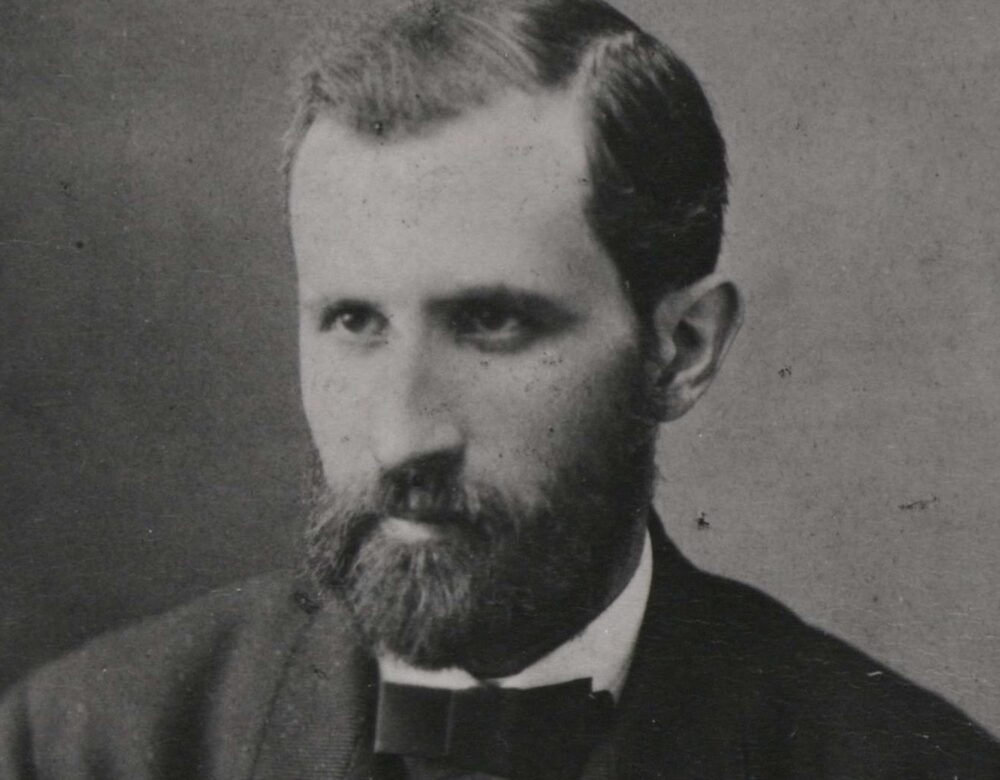
February 26, 1869. On this day, young Swiss scientist Friedrich Miescher (1844–1895) wrote to his uncle, Wilhelm His, with news of a discovery: he had found a previously unknown chemical substance in a pile of discarded surgical rags. Because Miescher had isolated this substance from the nuclei of white blood cells, he gave it the name “nuclein.” Had it not been for the encouragement of His, a distinguished scientist at the University of Basel in Switzerland, Miescher might never have discovered the substance we now call deoxyribonucleic acid (DNA).
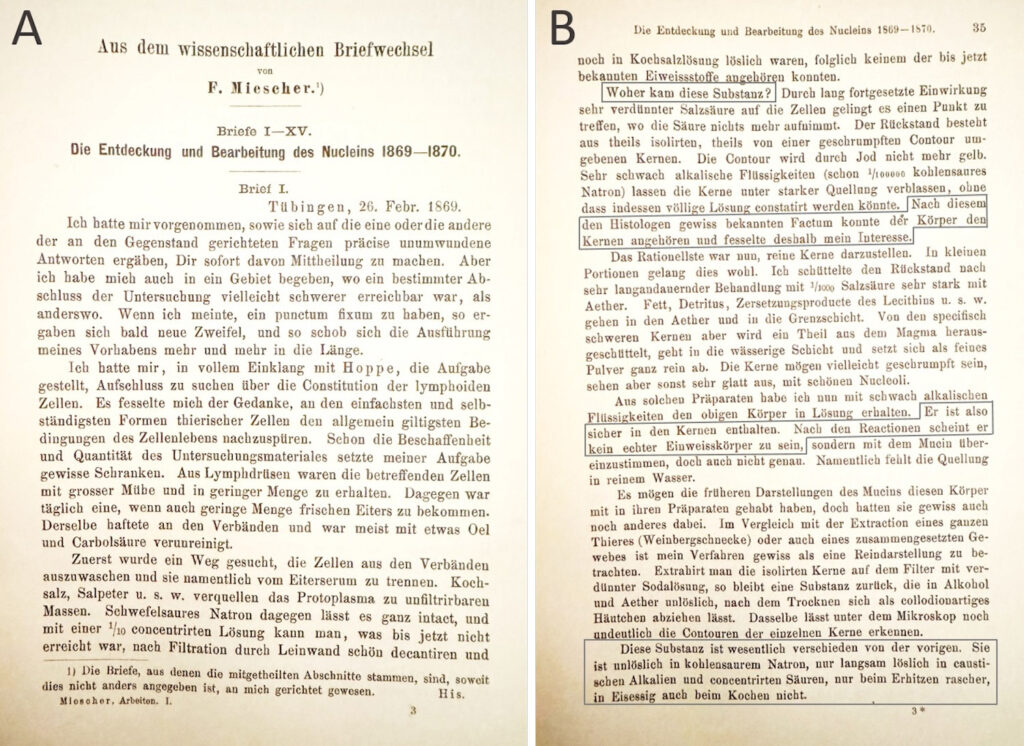
Breaking New Ground
As a young man in Basel, Friedrich Miescher had initially hoped to follow in the footsteps of his father, Johann Friedrich Miescher (1811–1887), who was a prominent physician. Though he completed a medical degree, he ultimately decided against becoming a doctor. Fritz, as he was known, had lost most of his hearing as a child, and he worried that this would make it too difficult for him to examine his patients with a stethoscope.
As Miescher looked around for other career options, his uncle offered some important advice. His had made several significant scientific contributions himself: he was the first person to describe the structures in the human fetus that go on to form the ear, and he invented the microtome, a tool used to slice tissues thinly so that they can be viewed through a microscope. At that time, microscopes offered the most direct evidence of tissues and their component cells. But because microscopy involved staining tissues with chemical dyes, scientists worried that the so-called appearance of a new feature might be nothing more than a mirage arising from the chemical treatment used to prepare the sample.
Because of this, some scientists, including His, felt that a new approach to studying cells was needed. Moving beyond microscopy, they wanted to understand the cell in terms of its chemical components. His believed that this new field, which was known at the time as “physiological chemistry” (we would call it “biochemistry” today), offered Miescher an ideal opportunity to make his mark as a research scientist. In the 1860s, there was no better place to do this than at the University of Tübingen in Germany. Miescher moved to Tübingen in 1868 to work with one of the trailblazers of physiological chemistry, Professor Felix Hoppe-Seyler.
Discovery Delayed
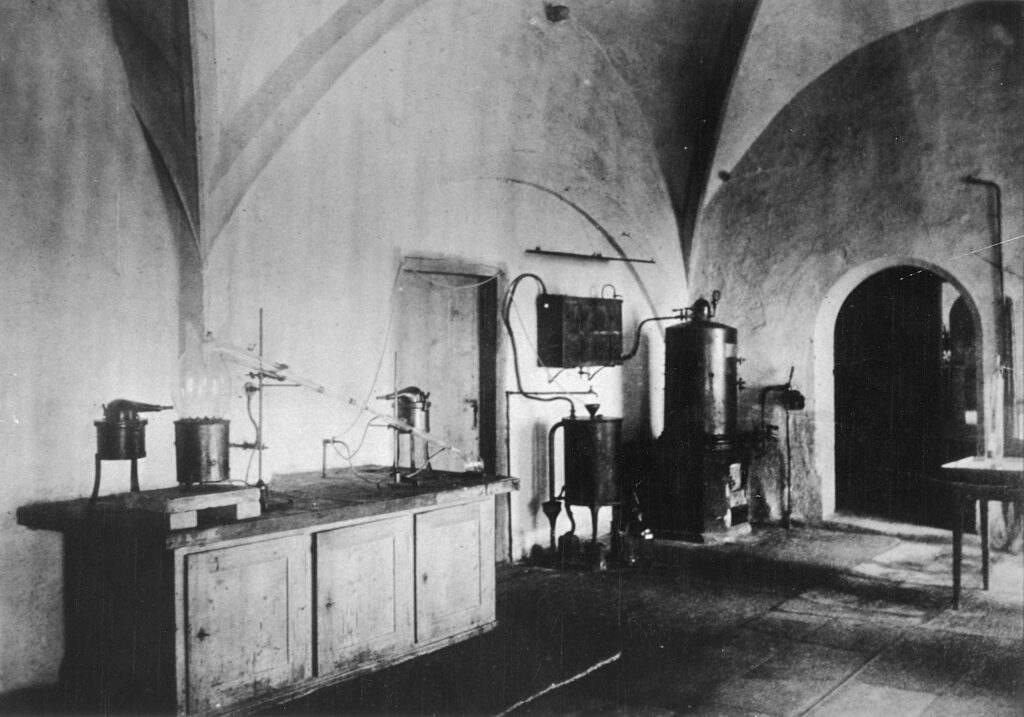
Although Miescher found himself at the cutting edge of a new field, his working conditions were hardly state-of-the-art. Hoppe-Seyler’s department of physiological chemistry was housed in Tübingen’s medieval castle. Here, working in a laboratory that had been converted from a former kitchen, Miescher began analyzing the chemical composition of leukocytes, a type of white blood cell. These were easily, albeit unpleasantly, obtained by washing pus from surgical bandages, which Miescher obtained from a local hospital.
When Miescher isolated the chemical components of these cells, he found that they contained some new substance in addition to the proteins he had expected to find. Not only did this substance behave chemically in a way that was very different from proteins, it also contained high levels of the element phosphorus, which is not found in the amino acids from which proteins are made. Miescher was convinced that this “nuclein” was of some great importance in biology, and he was eager to share the news of its discovery with the scientific world. But to his frustration, he would have to wait another two years—until 1871—before his discovery was published in a scientific journal.
LEARN MORE
How did Miescher actually extract nuclein from rags? He first removed white blood cells from the bandages with dilute solutions of sodium sulfate, filtered them to remove contaminants, and gathered them up from the bottom of a glass. After checking the cells under a microscope, he burst open their membranes and removed fats by washing them with warm alcohol several times. Once the contents of the cells were released, he removed the proteins involved with the protein-digesting enzyme pepsin, sourced from pigs. Treatment of the cell extracts with pepsin allowed the cell nuclei to be isolated as a fine, grey sediment. Miescher ultimately found that the addition of dilute acid yielded nuclein, a white, flaky substance.
The principles behind Miescher’s method of bursting cells, removing fats and proteins, and then isolating the DNA are essentially the same ones used in modern laboratories. Try it yourself at home. You will just need a few strawberries, some liquid soap, and some table salt to separate the proteins.
The reason for this delay was that a cloud of suspicion hung over Hoppe-Seyler’s lab. Only a few years earlier, another one of his students, Oskar Liebreich had claimed to have discovered a new cellular substance that was rich in phosphorus. Liebreich called this substance “protagon,” but other researchers soon showed that it was actually lecithin, a fat compound that was already known. Embarrassed by this incident and realizing it could damage his scientific credibility, Hoppe-Seyler insisted that he repeat all Miescher’s work before it could be published.
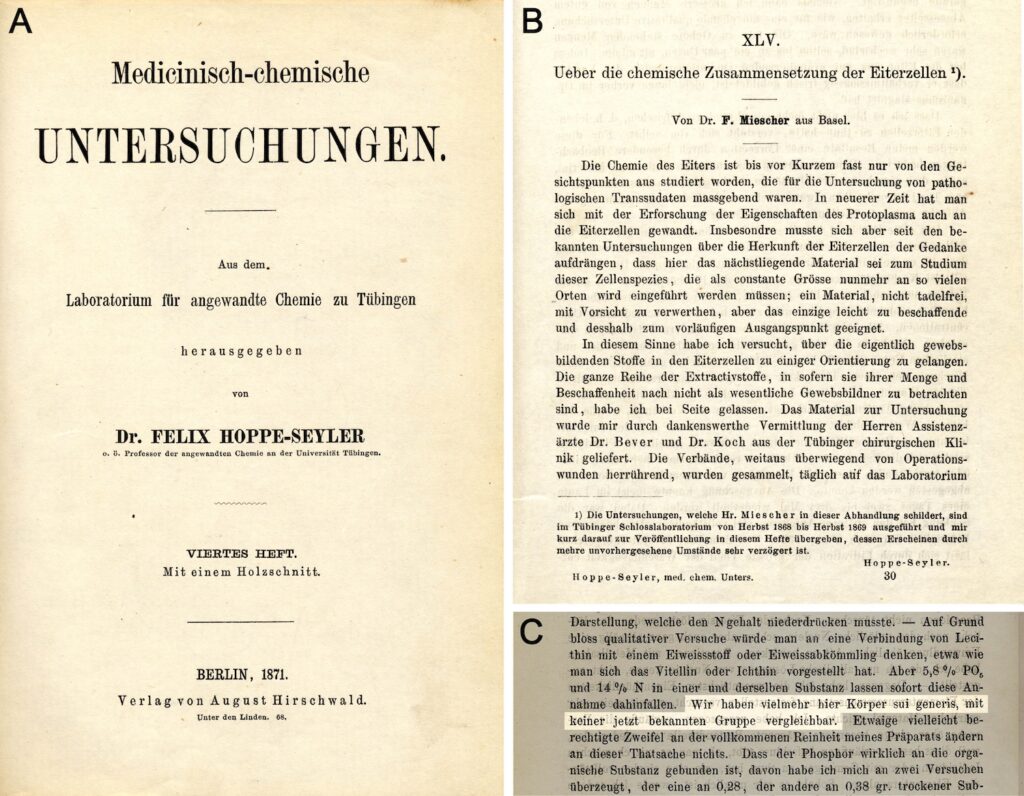
Miescher’s paper finally appeared with the title “On the Chemical Composition of Pus Cells” and it did not mention nuclein by name until halfway through. Needless to say, it did not make headline news. But with the publication of a second paper on nuclein three years later, Miescher’s discovery began to attract attention—as well as criticism.
“The Great Unwashed”
Miescher returned to his native Basel in 1870, where he soon succeeded his uncle as the professor of physiology at the university that had trained him. He found the salmon that swam in the Rhine River nearby provided ideal research material for his experiments. This was because, having swum 500 miles from the North Sea to their breeding grounds in the upper Rhine, the sperm cells of the male fish were packed with nuclein.
After analyzing the chemical composition of nuclein from the salmon sperm now at his disposal, Miescher concluded that it was essential to carrying biological traits from one generation to the next. He wrote:
But his work drew heavy criticism from some colleagues. Two British physicians suggested, for instance, that the high levels of phosphorus Miescher had found were due to contamination. In an indirect attack on Miescher’s former mentor, Hoppe-Seyler, they dismissed nuclein as “The Great Unwashed.”
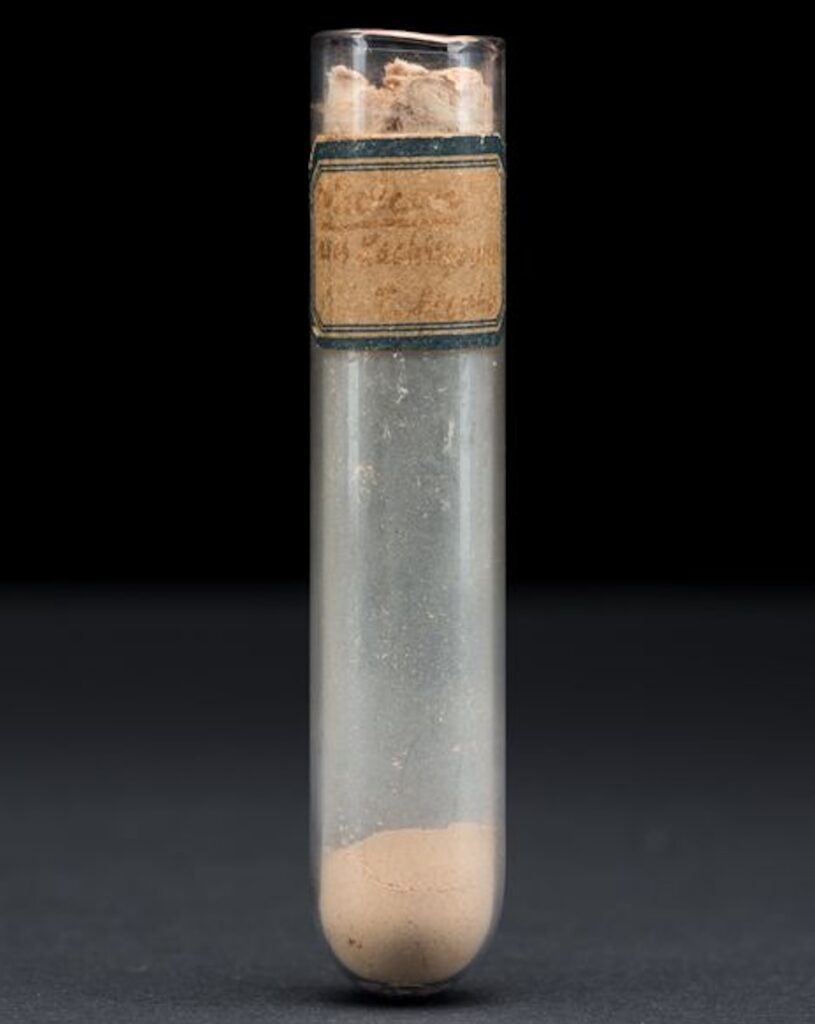
While several trailblazers of physiological chemistry disputed the existence of nuclein, Miescher found support from specialists in cell biology—those microscope users who Wilhelm His had originally dismissed. Though His and Miescher had staked their careers on the idea that the staining techniques of cell biology were too prone to misinterpretation, it was through this very approach that cell biologists had already identified chromosomes, the threadlike structures that form during cell division. Not only had they shown that chromosomes were the most likely carriers of hereditary traits, but they also identified nuclein as their main component.
Rhine Salmon
Just as the cell biologists were offering support for Miescher’s claim that nuclein was essential to heredity, he started drifting away from research in this area. Salmon, which had offered him a rich source of nuclein for his laboratory studies, were starting to take over. Curious to know more about how salmon were able to go for months on end without feeding during their breeding season, Miescher became ever more interested in their diet, ecology, and migratory habits. With his time and attention now shifting to these questions, he found himself preoccupied with making exhaustive studies of salmon themselves for the local fishing industry.
This work, in turn, brought Miescher to the attention of Swiss government officials, who gave him the job of studying the diet of inmates in the Swiss prison system. Increasingly, Miescher’s administrative duties kept him from the lab: not only was he a young university chair, but in 1885 he also founded a new institute for the study of physiology and anatomy in Basel. His attention had gradually shifted from rags to paperwork.
All this took a heavy toll on Miescher. On one occasion, he compared the burden of his work to that of Sisyphus. Exhausted, Miescher developed tuberculosis in 1895 and died in a sanatorium in the Swiss mountain resort of Davos.
Ship’s Treasure
By the time of Miescher’s death, nuclein had a new name: one of his former students, Richard Altmann, had renamed it “nucleic acid.” Another one of Hoppe-Seyler’s students, Albrecht Kossel, then showed that it contained four chemicals—adenine, guanine, cytosine, and thymine—work that led to a Nobel Prize in 1910. Around this time, chemist Phoebus Aaron Levene showed that the bases are attached to the sugar deoxyribose and a phosphate group to form a long chain molecule. What remained unproven in the early 1900s, however, was whether nucleic acid was in fact the genetic material as Miescher had claimed.
LEARN MORE
DNA was not Miescher’s only important discovery. In an 1892 letter written shortly before his death, he proposed that a chain molecule, if large enough, might be able to represent different biological traits through a variation in the three-dimensional arrangement of its atoms. This is known as “stereoisomerism.” A very similar idea was later suggested by the quantum physicist Erwin Schrödinger in his 1944 “What Is Life?” lectures, often hailed as the inspiration that prompted many physicists to turn their attention to the life sciences after World War II.
Despite many important accomplishments, Miescher did not die a happy man. He grew frustrated with the fact he had never nailed down the function of nuclein. He once complained that he went to bed each night feeling like a schoolboy who has not done his homework. One of the few students who studied with him later compared him to a ship laden with treasure that sinks to the seabed just as it is returning to harbor.
As Miescher lay sick in Davos, one of his former teachers, the physiologist Carl Ludwig, wrote him a letter offering some words of consolation:
We’ll never know whether Miescher found any consolation in Ludwig’s words, but today we remember Miescher’s work on nuclein for breaking important new ground in the study of life.
Glossary of Terms
Physiology
The experimental study of how the parts of living organisms function.
Back to top
Sisyphus
The figure in Greek mythology who was doomed by the gods to spend eternity rolling a boulder up a mountain slope, only for it to slip from his grip and roll back down again.
Back to top
Further Reading
Dahm, R. “Discovering DNA: Friedrich Miescher and the Early Years of Nucleic Acid Reseach.” Human Genetics, 122 (2008): 656-581.
Hall, K. and R. Dahm. The Dawn Fisherman: Friedrich Miescher and the Discovery of DNA. Springer Nature, 2026.
Wolf, G. “Friedrich Miescher: The Man Who Discovered DNA.” Chemical Heritage, Volume 21 Number 2, 2003.
Support
Support for this biography was made possible by the Wyncote Foundation.
You might also like
COLLECTIONS
History of Molecular Biology Collection
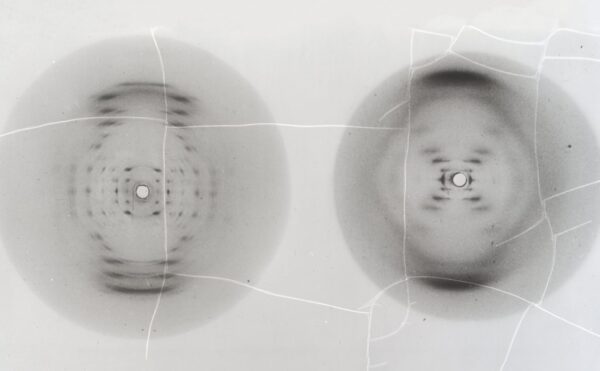
This unparalleled collection documents the race to identify DNA’s double-helix structure and other significant developments that formed the foundation of molecular biology.
DIGITAL COLLECTIONS
Life: The Cosmic Imperative
This video features Nobel laureates Christian de Duve and Max Perutz talking about the origins of life and DNA as part of the John C. Polanyi Chair Inaugural Lectures held at the University of Toronto in 1994.
SCIENTIFIC BIOGRAPHIES
Francis Crick, Rosalind Franklin, James Watson, and Maurice Wilkins
These four scientists codiscovered the double-helix structure of DNA, which formed the basis for modern biotechnology.