Maria Sibylla Merian
How do you capture transformation in a still life? Merian, a German-Dutch entomologist and illustrator, developed a new artistic style for the scientific study of insects.
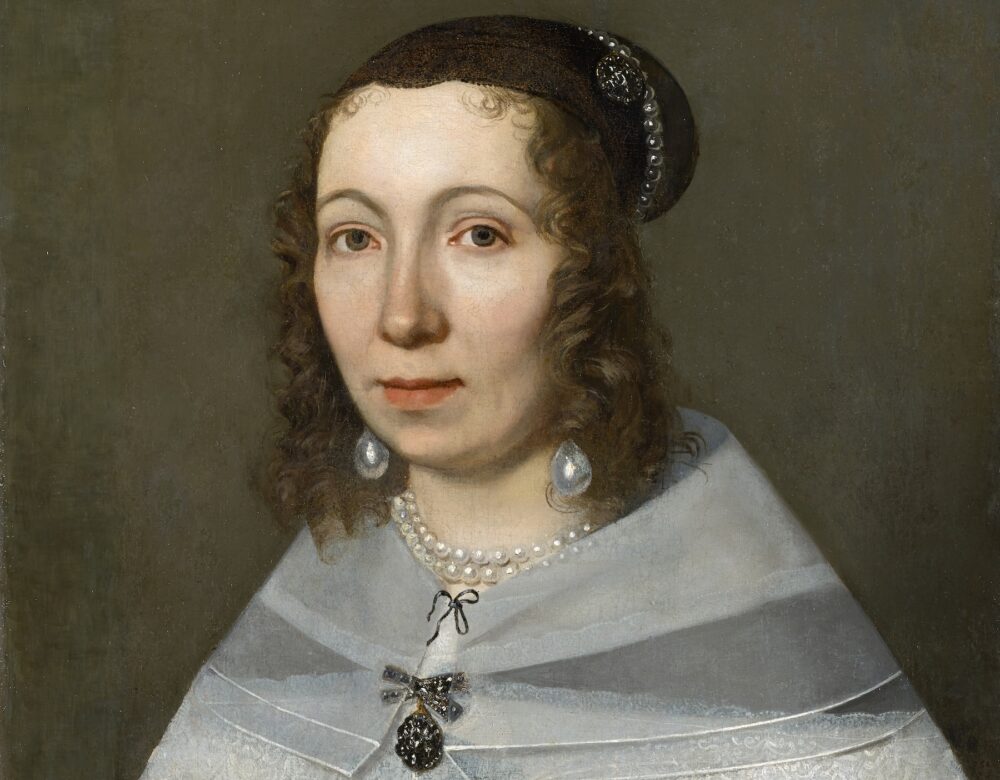
Formal education and scientific research were generally reserved for men from privileged social classes in Europe during the 1600s. Nevertheless, Maria Sibylla Merian (1647–1717) established herself as an independent collector, researcher, and author in this context. A keen observer of butterfly metamorphosis, she even undertook a self-financed expedition to the Dutch colony of Suriname in South America, resulting in her most famous work, Metamorphosis Insectorum Surianmensium (1705). Merian’s work, as unique as the creatures she depicted, reveals the complexity of nature and early modern European society.
Artistic Roots
Merian was born into a middle-class family of artists, copper engravers, and publishers in the southern German city of Frankfurt, a center of the Holy Roman Empire in the mid-1600s. Her father, Matthäus Merian the Elder , was a famous engraver who ran one of the largest publishing houses in Europe. He died when Merian was just 3 years old. Her mother, Johanna Catharina Sibylla (Heim), remarried the painter and art dealer Jacob Marrel, and Merian trained in his workshop as a painter.
In 1665, Merian married the painter Johann Andreas Graff, who she met in her stepfather’s workshop. Together with their first daughter, Johanna Helena, they moved to Nuremberg, a center for the arts, in 1670. Merian and Graff both worked to secure the family’s household income through various activities: they traded art supplies, sold paintings, offered copperplate engravings, and taught art classes—Graff to men and Merian to unmarried women from wealthy patrician families. Merian also taught and produced embroidery.
Despite this collaborative approach to household income, women’s lives in the 1600s were regulated by a patriarchal social order and they faced significant restrictions in their work. The nature of these restrictions, however, differed from place to place and with the local context. In Nuremberg, the city council decreed in 1596 that only men could use oil paints on canvas and in large formats, ensuring that the larger and more prestigious contracts would go to them. Nevertheless, Merian’s work stood out against this backdrop and she was able to make a name for herself. By 1675, the prominent art historian Joachim von Sandrart recognized and praised her paintings, highlighting her depiction of insects and their transformations.
Nature in Images Around 1700
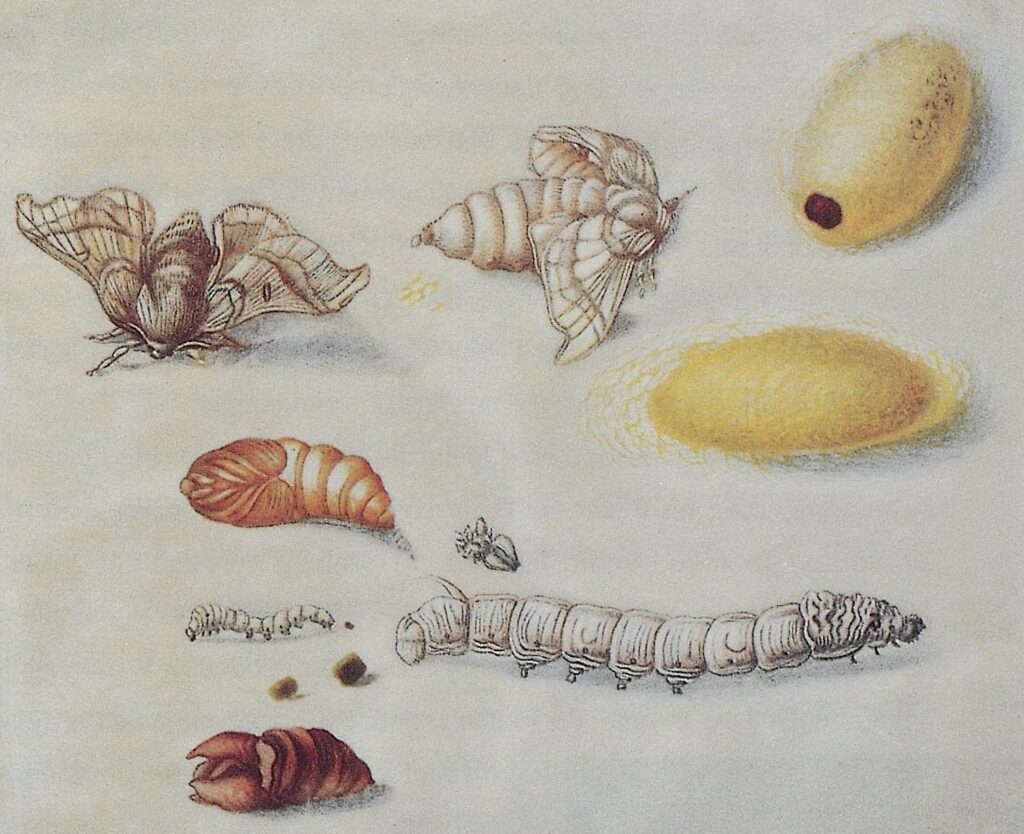
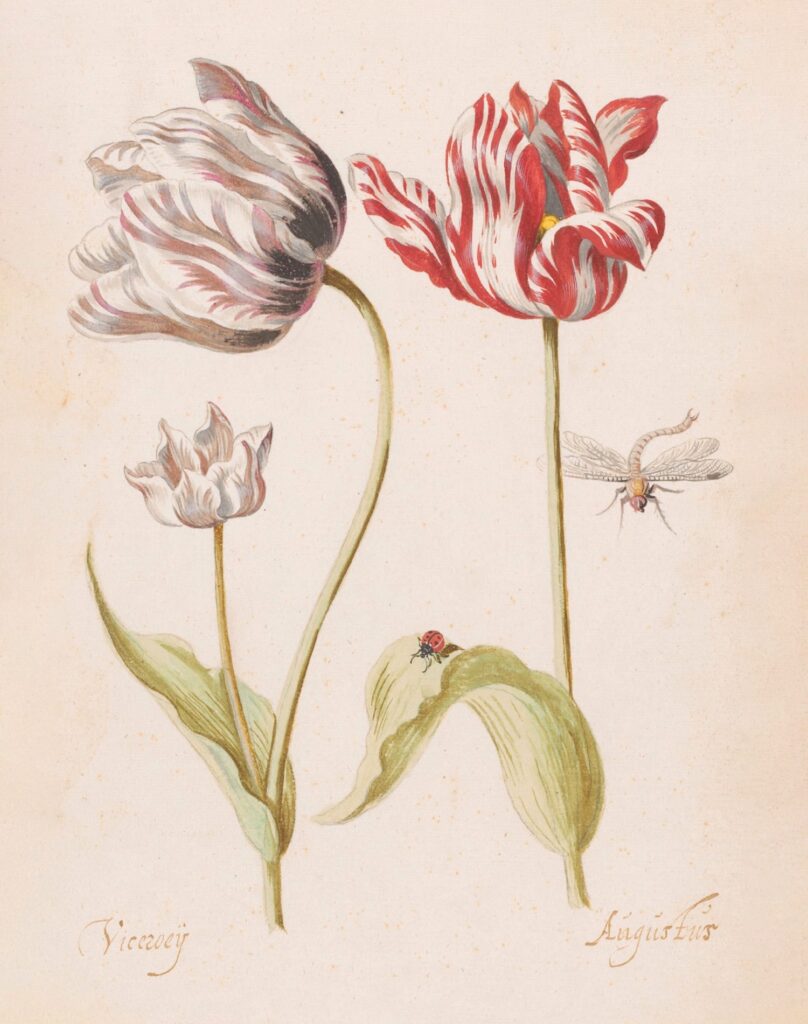
Artists often included insects in still life paintings because viewers of the day perceived them as lively. Merian participated in this tradition, but she also pursued a distinctly scientific approach: she investigated firsthand the life cycles of winged insects, pinpointing which caterpillar transformed into which moth or butterfly, documenting what they ate. Through careful observation, she was able to establish insect identities through different stages of metamorphosis, identifying hundreds of species.
In 1679, she published her first Raupenbuch (Caterpillar-Book; a second volume followed in 1683) chronicling the transformations of European caterpillars. In it, she described her meticulous research practice. Undertaking collecting expeditions to gardens, fields, meadows, and hedges, Merian reported that she had spent “a great deal of effort and time” looking for caterpillars. Her students assisted her, bringing specimens to her, and giving her privileged access to gardens where she could collect her own. In order to observe transformations over the life cycle, Merian kept her specimens in boxes, giving them “food for many days, even months” to keep them alive and active. Such care required her to create the proper conditions for the metamorphosis to take place, including tracking down the right food. In the first entry in her Studienbuch (Study-book) from around 1660 she wrote:
In addition to her notes, Merian documented the different stages of the insects’ life cycles in her drawings. These provided the source material for her larger works.
Merian studied her “little animals” with no formal scientific training. But it is important to note that natural historical work like hers was not necessarily, or primarily, occurring at universities in the 1600s. Rather, it was driven by practitioners who were either wealthy enough to finance their own studies or working in positions that allowed them to make firsthand observations. Sometimes they were professors, but just as often they were employees of trading companies or civil servants in overseas territories.
We primarily think of these practitioners as men, because it was overwhelmingly men whose names were written down. However, women participated too—often as illustrators, having gained artistic training, like Merian, in their families and through their participation in family businesses. Merian’s family relationships, her training as an artist, her contributions to the household economy, and her employment networks provided her with opportunities to pursue her scientific interests in Lepidopteran metamorphosis.
Voyage to Suriname
After she divorced her husband, Merian eventually settled with her daughters in Amsterdam in 1691. They established a workshop there that continued the family art business, and they also traded insect specimens.
Through their family reputation for art and science, Merian and her daughters had the opportunity to see many exotic specimens brought to Europe from Dutch colonies overseas. While she admired these “beautiful animals,” Merian worried that it was hard to understand “how they change from caterpillars into pupae and so on” when looking at them outside of their natural habitat. Craving more of this knowledge, she decided to undertake a trip to the Dutch colony of Suriname on the northeast coast of South America so that she could study the lives of these insects firsthand.
To help pay for the trip, Merian sold her paintings and large parts of her zoological and botanical collection. But the voyage was also partially supported by the city of Amsterdam, reflecting the high social standing and recognition she must have enjoyed.
In Suriname, Merian and her younger daughter, Dorothea Maria (1678–1743), collected and raised insects, identifying and documenting their changes over time. They also painted birds and studied amphibians. Just as Merian had done before, they compiled the results of these investigations in a book, Metamorphosis Insectorum Surinamensium, which was published in 1705 in Latin and Dutch. Considerably larger than other books about insects that were available at the time, Merian’s Metamorphosis provided much broader information, including notes on usage and taste of the plants and fruits. The work was also designed to be much more luxurious than her European books about caterpillars. By including specific and colorful details, Metamorphosis appealed to European audiences who were curious about faraway places, but who didn’t have the opportunity to travel.
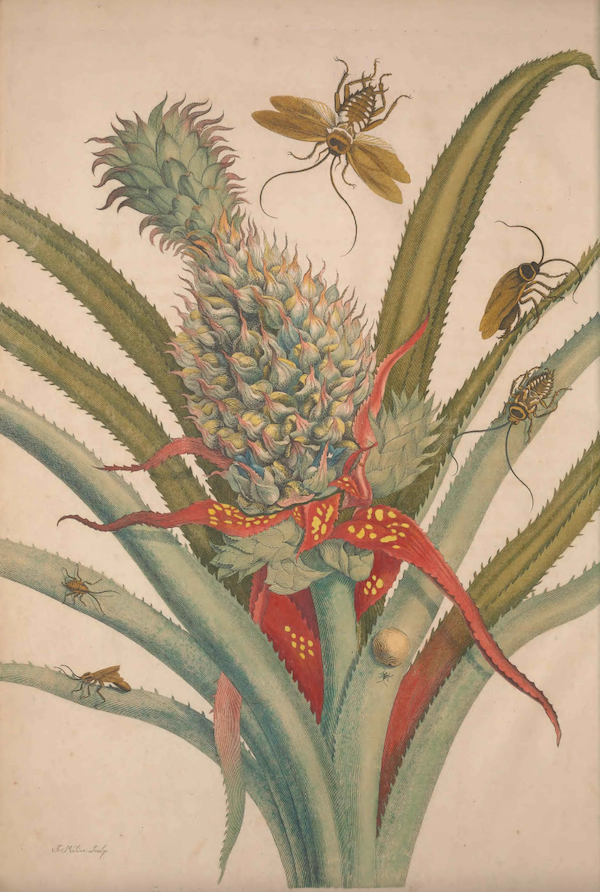
Merian’s time in Suriname not only highlights her independence, scientific curiosity, and entrepreneurialism, but it also points to a more complicated legacy. She notes in several places in Metamorphosis that she was supported by Indigenous people from the area. On Plate 45, for instance, she writes that “natives” had brought her the lantern beetles depicted in the image. Some historians argue that these references are evidence that Merian respected her Indigenous collaborators. Others point to her language use and the fact that she brought one Native person back to Amsterdam as evidence that she participated in the exploitation of Surinamese people. Like male researchers of her day, it is clear that she was able to produce Metamorphosis in part by relying on Indigenous knowledge and labor.
How to Capture Change in a Still Image
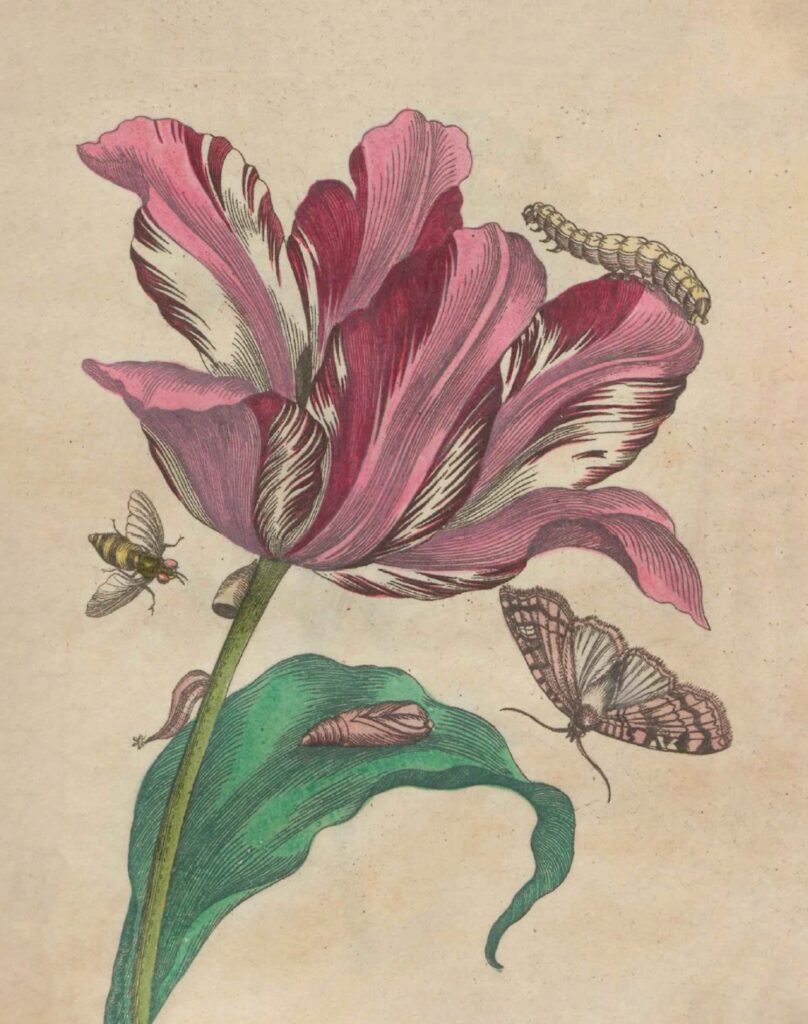
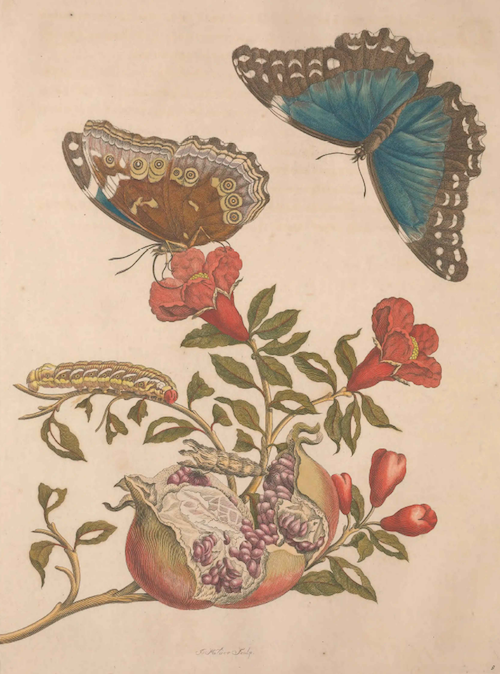
The most striking aspect of Merian’s life and work are her images, which are a unique contribution to the history of science. Rather than randomly mixing unrelated insects and plants, she depicted the different developmental stages of individual insects in conjunction with relevant sources of food. Whereas the emphasis in most still life paintings was on flowers rather than insects, Merian reversed the prominence of these elements, drawing attention to the insects and their transformations.
LEARN MORE
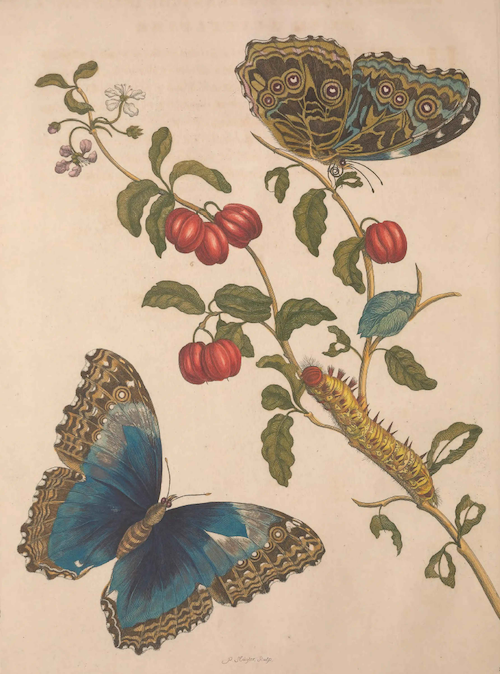
Look at Plate 7 (above left) from Merian’s Metamorphosis: the Deidamia morpho butterflies in the bottom and top corners draw attention and lend emphasis to the insect bodies. She depicts the animals in their actual size, while at times adjusting the size of their food source—the plant—to balance the composition. She does something similar with the pomegranate in Plate 9 (above right): the bite marks on some of the leaves represent the relationship between insects and plants.
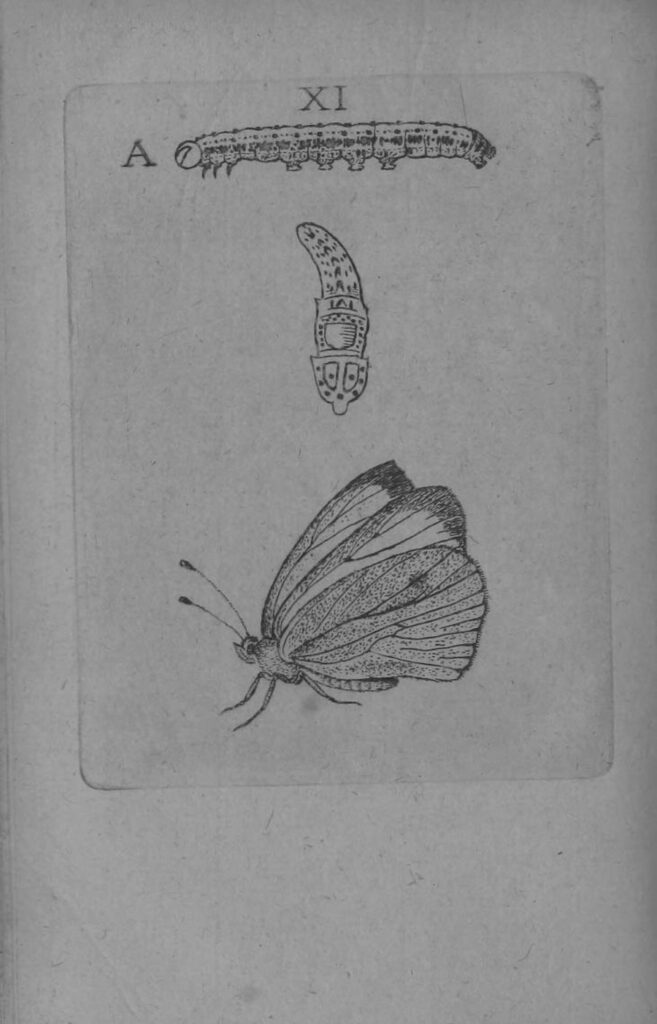
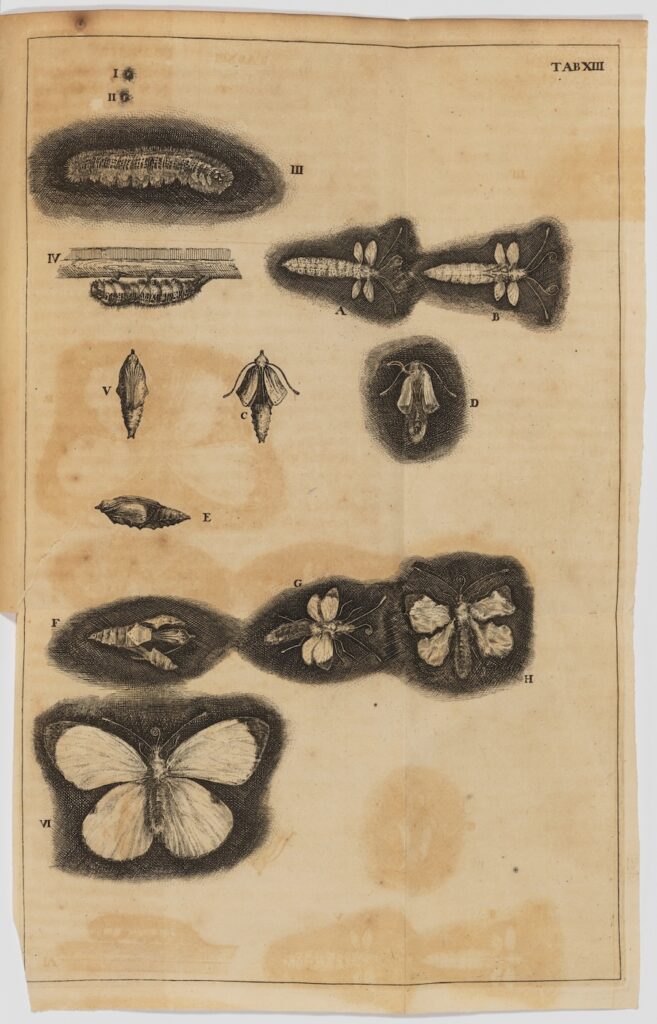
Likewise, Merian’s images differed from the visual language used by other natural scientists of her time, who favored clearly separated pictures of individual life stages, arranged in rows and taken out of the flow of life. Merian kept her animals intact and showed their activities. Although she did not engage in formal insect classification herself, her works facilitated the practice. Beyond this, Merian’s artistry is significant because it reminds the viewer of the individuality of each specimen. By capturing change in still images that were both accurate and beautiful, she suggested that there are limits to our ability to completely know the natural world through scientific means.
Legacy
Merian made the most of the opportunities that were available to her as a middle-class woman with limited access to formal education. Not only did she overcome barriers to gain respect as an accomplished artist and naturalist, but her story also opens up new horizons for understanding the history of women in science during the early modern period.
Not only does Merian show us that women participated in science, but her images push viewers to ask what “science” really is more broadly. They reflect an understanding of nature that is hard to pin down, they emphasize the temporary and ever-changing character of animals and plants, and they insist upon the uniqueness of each creature. In these ways, Merian’s contributions can help us recognize the active role of nature in our own times.
Glossary of Terms
Metamorphosis
The biological process of an animal undergoing sudden changes in body structure, often also significantly affecting their behavior, as part of their biological development.
Back to top
Early modern period
The period roughly from 1450–1500 to 1800–1850.
Back to top
Patrician
Patricians in this context were those merchant families who were entitled to sit on the inner council of the city, running its affairs, and thus a privileged and influential class.
Back to top
Lepidoptera
The scientific order of winged insects comprising moths and butterflies.
Back to top
Further Reading
Natalie Zemon Davis (1995): Women on the Margins: Three Seventeenth-century Lives. Cambridge, MA: Harvard University Press.
Kurt Wettengl (ed.) (1998): Maria Sibylla Merian, 1647–1717: Artist and Naturalist. Ostfildern: Verlag Gerd Hatje.
Bert van der Roemer, Florence Pieters, Hans Mulder, Kay Etheridge & Marieke van delft (eds.) (2022): Maria Sibylla Merian: Changing the Nature of Art and Science. Tielt: Lannoo.
Tomomi Kinukawa (2012): “Science and Whiteness as Property in the Dutch Atlantic World: Maria Sibylla Merian’s ‘Metamorphosis Insectorum Surinamensium’ (1705).” Journal of Women’s History Vol. 24, Issue 3: Pages 91–116.
Catherine Powell-Warren (2025): Maria Sibylla Merian. London: Lund Humphriess.
Support
Support for this biography was made possible by the Wyncote Foundation.
You might also like
THE DISAPPEARING SPOON PODCAST
Claude Monet and Bee Purple
How cataracts nearly ruined the impressionist painter’s career—and then revived it by giving him an insect-like superpower.
SCIENTIFIC BIOGRAPHIES
Edith Coleman
The Australian nature writer solved the orchid pollination mystery that puzzled Darwin.
DIGITAL COLLECTIONS
History of Molecular Biology Collection
Materials related to British chemist Rosalind Franklin, whose famous X-ray diffraction image revealed the double-helix structure of DNA.