
New York Times: Is It Time to Upend the Periodic Table?
The Institute’s Brigitte Van Tiggelen is quoted in this article on Mendeleev’s chart and the variations proposed in the 150 years since.
Brigitte Van Tiggelen, a chemistry historian at the Science History Institute in Philadelphia, discussed the work of Ida Noddack, a German chemist who discovered rhenium, and Lise Meitner, an Austrian-Swedish physicist who, with Otto Hahn, discovered protactinium. Dr. Van Tiggelen is an editor of a new book, Women in Their Element, that explores more than 30 similar stories, including, of course, that of Marie Curie, who discovered two elements, radium and polonium, and twice won the Nobel Prize.
“We present the story as a communal enterprise,” Dr. Van Tiggelen said.
Read more in the New York Times >>
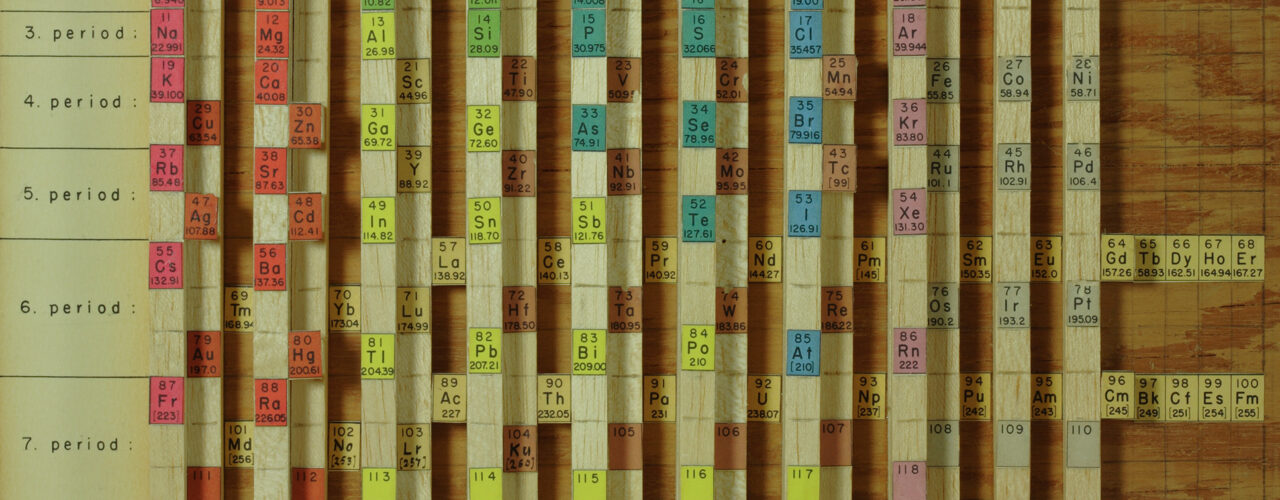
Above: 3-D wooden periodic table model designed by Edward G. Mazurs, ca. 1974. Science History Institute.
More News
Applications for 2027–2028 Beckman Center Fellowships Now Open
Researchers can apply by January 15 for various long- and short-term programs, including two-year curatorial fellowships.
New Alchemy Exhibition Draws Sold-Out Crowd to Opening Celebration
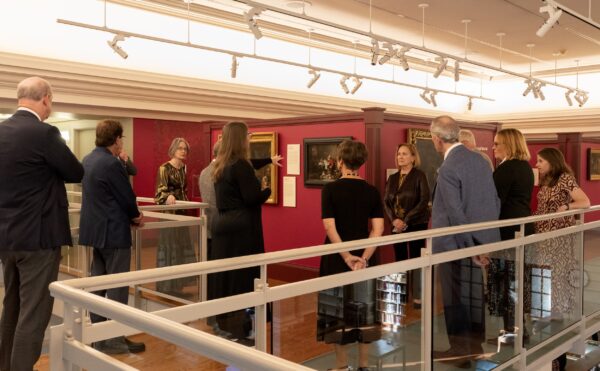
Attendees take an up-close look at paintings and rare books from the Institute’s Fire and Gold exhibit while enjoying a curator’s talk, activities, and light bites.
New Research Challenges Misconceptions about Rosalind Franklin’s Famed ‘Photo 51’ and the Discovery of DNA’s Double Helix
Paper by the Science History Institute’s Alistair Sponsel and King’s College London’s Brian Sutton uncovers the significance of her previously captured Photo 49.