
Artefacts XXXI:
Trust and Objects
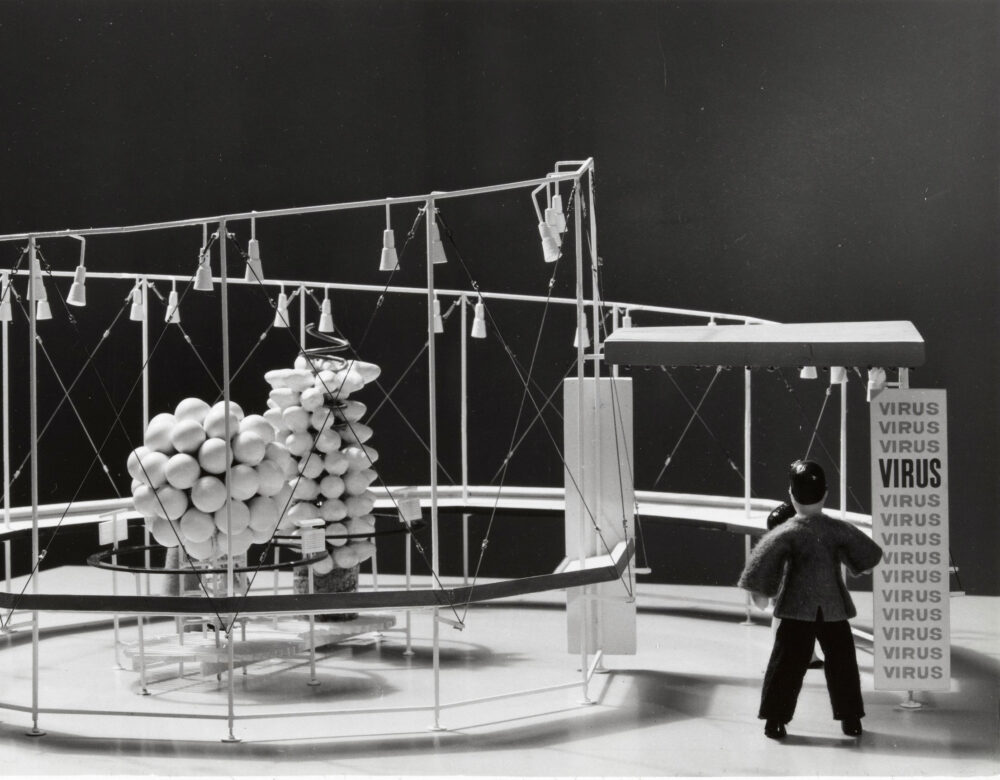
The 31st annual Artefacts conference will be hosted by the Science History Institute, along with the American Philosophical Society (APS) and the Mütter Museum at The College of Physicians of Philadelphia.
Papers will be presented on October 19 and 20, followed by optional tours of the APS and the Mütter Museum on October 21.
Artefacts Theme
The theme of the 2026 meeting is “Trust and Objects.” Today, many museums aligned with the history of science (very broadly defined) are being called upon to help build, restore, or grow “trust in science” among their audiences. As historians of science and museum professionals, the organizers share the concerns motivating such calls, yet also recognize that “trust in science” is itself an object of historical inquiry.
The conference will explore how scientific objects can be mobilized to bring audiences into a more critical history of science, while recognizing that museums serve many different “publics,” across and within institutions. On one hand, objects are flexible; their meanings and identities come from those who study and interpret them. At the same time, for the public, objects are material, “real,” and carry an aura of authority. In the American Alliance of Museums’ Spring 2021 report, Museums and Trust, respondents identified the fact that “museums present real/original/authentic objects” as the second-most cited measure of museums’ trustworthiness.
Papers will explore how museums and academic institutions use material culture to build “trust in the history of science” in multiple ways:
- How do we use objects to negotiate the different meanings of “science” for audiences?
- In what ways can objects be deployed programmatically and interpretively to raise critical and generative questions about science, and its relationships to politics, culture, and economy?
- How can the seemingly inert nature of material culture be used to cultivate values of care, empathy, and understanding?
Attendance and Registration
This conference is aimed at people working on or with public-facing projects using material culture. This could include museum professionals, as well as historians who study museums, public displays, or interpretation within the history of science.
For inquiries about registration, please email artefacts@sciencehistory.org.
About Artefacts
Artefacts is an association of historians of science, technology, engineering, and medicine working in museums and academic institutions who use material culture in historical study and public displays. Artefacts encourages new research and collaboration through annual meetings and publications.
Conference Program
Monday, October 19
| 9am–9:15am | Welcome and Introduction |
| 9:15am–10:45am | In Objects We Trust? Case Studies from the Smithsonian’s National Museum of American History • Punch Cards as Proof: On Trusting the Four Color Theorem (David Dunning) • DNA Autoradiographs (Kristen Frederick-Frost) • Pink Triangle (Katherine Ott) • Is Cold Fusion Real? Cells, Sells, and What They Tell (Roger Sherman) • Short-Circuits (Hal Wallace) |
| 10:45am–11am | Break |
| 11am–12:10pm | Interpreting Knowledge-Making Systems • University Collections Navigating STEM’s Past, Present, and Future (Alexi Baker, Peabody Museum, Yale University) • Cold Fusion Cells, 1989 (Judy Kaplan, Science History Institute) • Trust in Objects: Bacteriology, Art, Museums and the Dysmorphism Debate, 1875–1925 (Karin Tybjerg, Medical Museion, University of Copenhagen) |
| 12:10pm–1pm | Lunch |
| 1pm–2:30pm | Technical Expertise, Scientific Authority, and Public Expectations and Understandings • ‘The Government’s Maid-of-All-Work’: Trust, Machines, and the Post Office, 1950s” (Rachel Boon, Science Museum) • Elmer Merrill, Scientific Authority, and Public Trust: Uncovering an Early 20th-century Botanical Exhibit (Marianne Jennifer Datiles, University College London School of Pharmacy) • Building Trust in Microchips that Shook the World (Daniel Mitchell, IEEE History Center) • Trusting the Bomb in the Museum (Aimee Slaughter, Independent Scholar) |
| 2:30pm–2:45pm | Break |
| 2:45pm–3:50pm | Disrupting Categories, Boundaries, and Disciplines • ‘It’s Complex, Trust Me’: Objects as Conduits for Open-Ended Encounters with Health Complexity (Adam Bencard, Medical Museion, University of Copenhagen) • Stars Aligned: Telling the History of Science Through Pseudoscience (Katie Boyce-Jacino, Adler Planetarium) • Putting the ‘Art’ in Artefacts: Displaying Art Works as/and Material Cultures of Biomedicine (Allison Morehead, Queen’s University Canada) |
| 3:50pm–5:30pm | Artefacts Volume and Member Institution Reports |
| 5:30pm–6:30pm | Reception |
Tuesday, October 20
| 9–10am | Collecting, Displaying, and Instilling Trust in Spaceflight Artifacts: A Panel Discussion • Changing Exhibitions (Michael Neufeld, Smithsonian’s National Museum Air and Space Museum) • Digital Opportunities (Emily Margolis, Smithsonian’s National Museum Air and Space Museum) • The Particular Challenges of Spacecraft (Samantha Thompson, Smithsonian’s National Museum Air and Space Museum) |
| 10am–11:25am | Care, Empathy, and Ethics • The Legacies of HBCU Hospitals: Artifacts, Consequential Care, and Restoring Public Medical Trust (Jeanelle K. Hope, Smithsonian National Museum of African American History and Culture) • Your Beginning: The Universal and the Exceptional in the Chicago Museum of Science and Industry’s Prenatal Development Exhibit (Sara Hollar, Yale University) • Exposing the Visceral: Stigma, Shock, and Trust in Dermatological Moulages (Catarina Janeiro, University of Porto) • Endangered Specimens, Unaccountable Objects: Medico-Historical Collections and Human Biomaterial: Competing Ethical Claims, Phenomenological Effects, and the Historical Commons (Michael Sappol, Uppsala University) |
| 11:25am–11:40am | Break |
| 11:40am–1:10pm | Myths, Simulacra, and Scientific Imaginations • Trust and the Formation of Historical Myths (Carola Dahlke, Deutsches Museum) • Giovanni Stradano’s Americae Retectio Series: Extinct Birds, the Roc, and the Creation of Knowledge (Jessica Hogbin, Syracuse University) • Performing Care and Garnering Trust in Museum Practice (Jessica Walthew, University of Glasgow) • Heinrich Goebel — or Poetry and Truth of a German Invention Myth (Frank Dittmann, Deutsches Museum) |
| 1:10pm–2pm | Lunch |
| 2pm–3:10pm | The Ontology of Objects, or How Objects Come to Be: Session I • Containing Cholera: Diseased Matter in a Bottle (Eva Åhrén, Karolinska Institute) • Reaching for the Stars: When Glass Is Less Fragile than Data (Thom Burns, Lisa Hees, and Jennifer Bartlett, Harvard/Smithsonian Center for Astrophysicis) • Objects Entrusted to Museums (Peggy Kidwell, Smithsonian’s National Museum of American History) |
| 3:10pm–3:30pm | Break |
| 3:30pm–4:30pm | The Ontology of Objects, or How Objects Come to Be: Session II • The Orchard for the Trees: Contested Objects and Community Trust in Los Altos, California (Anna Toledano, Los Altos History Museum) • The Life of the Subharchord: On the Different Meanings and Identities of a Museum Object (Frode Weium, Norsk Teknisk Museum) |
| 4:30pm–4:45pm | Conclusion |
Wednesday, October 21
| 9am–10:30am | Tour of the American Philosophical Society |
| 11am–12:30pm | Tour of the Mütter Museum |
| 1:30pm | Tour of the Franklin Institute |
Featured Image: Model of Virus Structure Exhibit for the Brussels World’s Fair, 1958.
More events
Othmer Library Tour
Curious about the other half of the Science History Institute? Step into the Othmer Library of Chemical History!
Art of Alchemy Self-Guided Visit
Step into the age of alchemy and explore works in our new permanent exhibition, Fire and Gold: The Art of Alchemy (1450–1850).
Unwell Waters Highlights Tour
Join our museum educators as we visit the history of medicine exhibit to learn about waterborne epidemics from Pennsylvania’s past.