
Sweet Revenge on Cancer
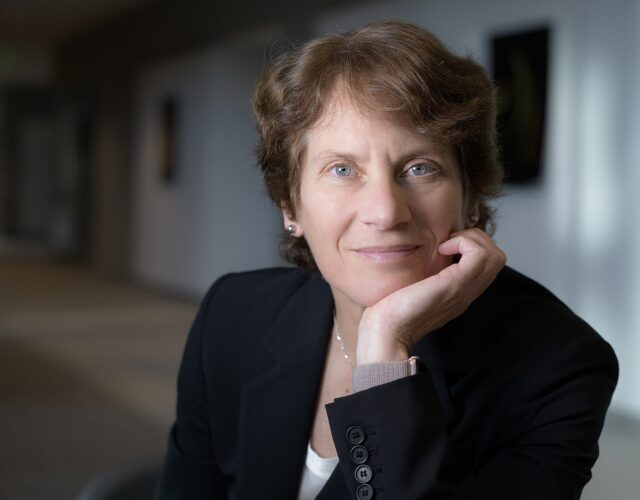
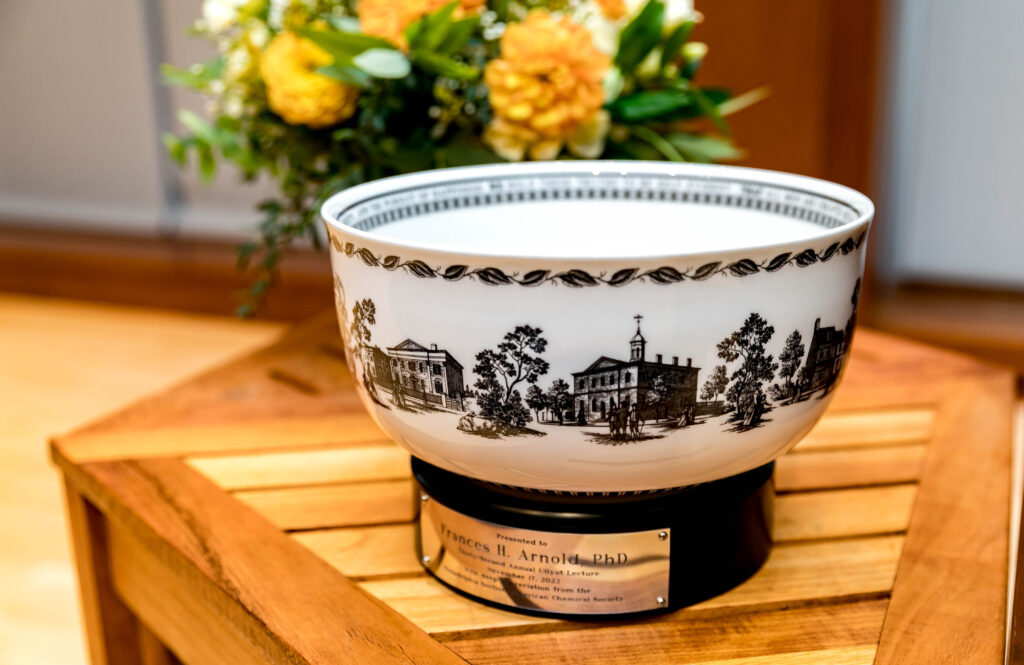
The 2023 Ullyot Public Affairs Lecture features Nobel laureate and Stanford professor Carolyn R. Bertozzi. A Q&A session and the presentation of the Liberty Bowl will follow Bertozzi’s lecture.
Complex sugars known as glycans cover the surfaces of all living cells where they serve as a molecular “barcode” that reports on the health status of the cell. Cancer cells are known to undergo changes in the structures and abundances of certain glycans, most prominently those that include a sugar building block called sialic acid. Consequently, cancer cells have more sialic acids on their surface than healthy, normal cells. Carolyn Bertozzi and her team discovered that this thicket of sialic acids allows cancer cells to escape recognition by our immune system, which allows the cancer to grow and spread. This finding motivated them to develop a new kind of cancer immunotherapy that functions as a “lawnmower,” cutting the disease sugars off cancer cells so that the immune system can recognize and kill them.
About Carolyn Bertozzi
Carolyn Bertozzi is the Anne T. and Robert M. Bass Professor of Chemistry and Professor of Chemical & Systems Biology and Radiology (by courtesy) at Stanford University, the Baker Family Director at Sarafan ChEM-H, and an Investigator of the Howard Hughes Medical Institute.
She was awarded the 2022 Nobel Prize in Chemistry for her role in founding the field of bioorthogonal chemistry, a term she coined, and for “taking click chemistry to a new level” with a set of chemical reactions that allow scientists to explore cells and track biological processes without disrupting the normal chemistry of the cell.
Listen to an oral history interview with Carolyn Bertozzi >>
About the Ullyot Public Affairs Lecture
The Ullyot Public Affairs Lecture emphasizes the positive role that the chemical and molecular sciences play in our lives. It’s presented in partnership with the Philadelphia and Delaware Sections of the American Chemical Society, the Department of Chemistry at the University of Pennsylvania, the Department of History and Sociology of Science at the University of Pennsylvania, and the Department of Chemistry and Biochemistry at the University of the Sciences.
More events
Educator Night: Back to School
Discover new ways to bring the history of science into your classroom at this special evening dedicated to educators.
First Friday: Take Note
School is back in session, so make the Science History Institute your first field trip!
Othmer Library Tour
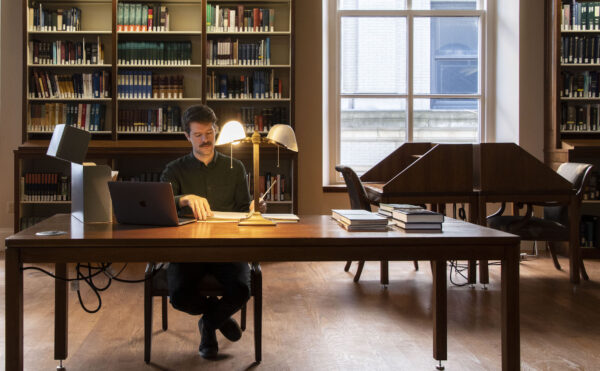
Curious about the other half of the Science History Institute? Step into the Othmer Library of Chemical History!