
Stories of Science: Revolutionary Science
Join us in our museum EVERY SATURDAY for a family-friendly program that highlights the many surprising and spellbinding stories from the history of science.
The 250th anniversary of America’s independence has finally arrived, and we are celebrating here in the museum by honoring chemistry that is truly “revolutionary!”
Stories of Science’s fun, interactive activities are designed for science lovers of all ages. Take a look at interesting items that you can touch and examine up close. The Boston Tea Party is embedded in U.S. Revolutionary history, but have you ever heard of the Philadelphia Tea Party? Visit our handling table this week to learn about the chemistry and history of the world’s most popular beverage: Tea!
Stop by our Object Explorer touch table to learn about the science behind everyday items like refrigerators and LED light bulbs. Explore our collection with one of our many fun scavenger hunts, including “Science and the Revolution.” And chat with our experienced Gallery Guides to find out more about the people responsible for the science embedded in our daily lives.
During your visit, you can also check out our themed “drop-in” tours at 11:30am and 2pm. Drop-in tours are recommended for visitors aged 13 years old and up.
Know Before You Go:
- Stories of Science takes place weekly on Saturdays
- Admission is free and reservations are not required
The scavenger hunts we provide have various challenge levels. Our museum guides can recommend which will offer the most fun for your family.
While museum artifacts within the exhibits are not to be touched, younger visitors are encouraged to visit our Kid’s Corner to enjoy a variety of puzzles, building toys, and science themed children’s books.
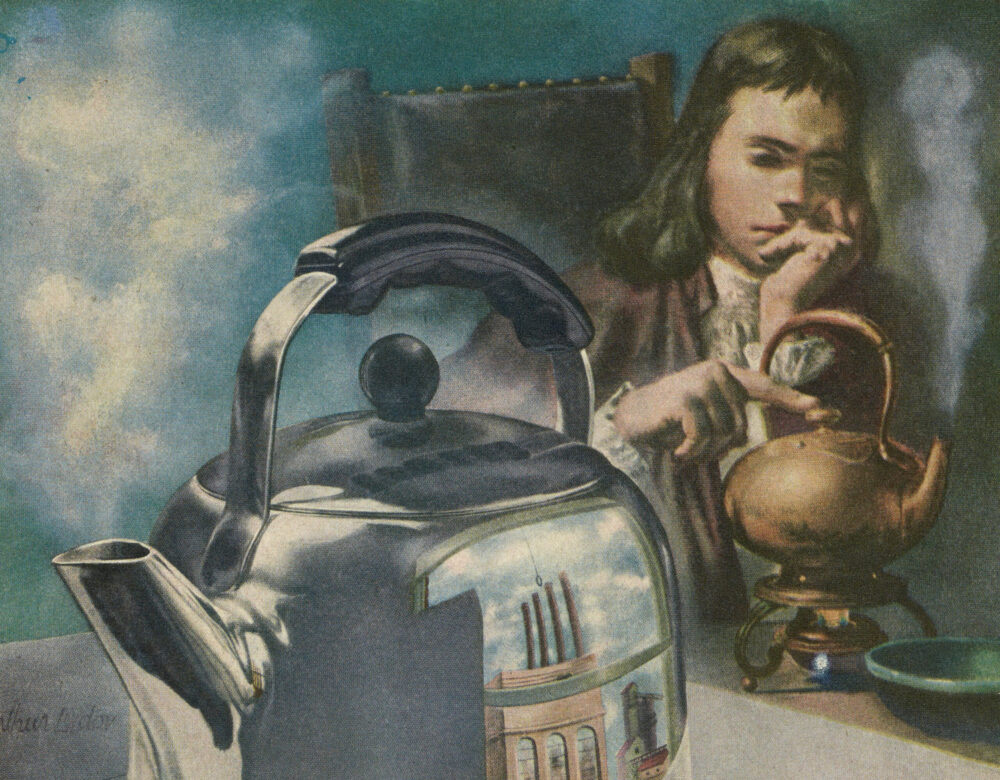
Featured image: Detail of “The Second Lesson the Teakettle Taught Us,” 1946 Advertisement for Dow Chemical Company.
More events
Othmer Library Tour
Curious about the other half of the Science History Institute? Step into the Othmer Library of Chemical History!
Stories of Science: Back to School
Join us in our museum EVERY SATURDAY for a family-friendly program that highlights strange and surprising stories from the history of science!
Delaware River Festival 2026
Institute staff will be on hand at the 8th annual celebration of the mighty Delaware with fun, water-themed activities and giveaways.