
What Frogs and Octopuses Know (That ChatGPT Doesn't)
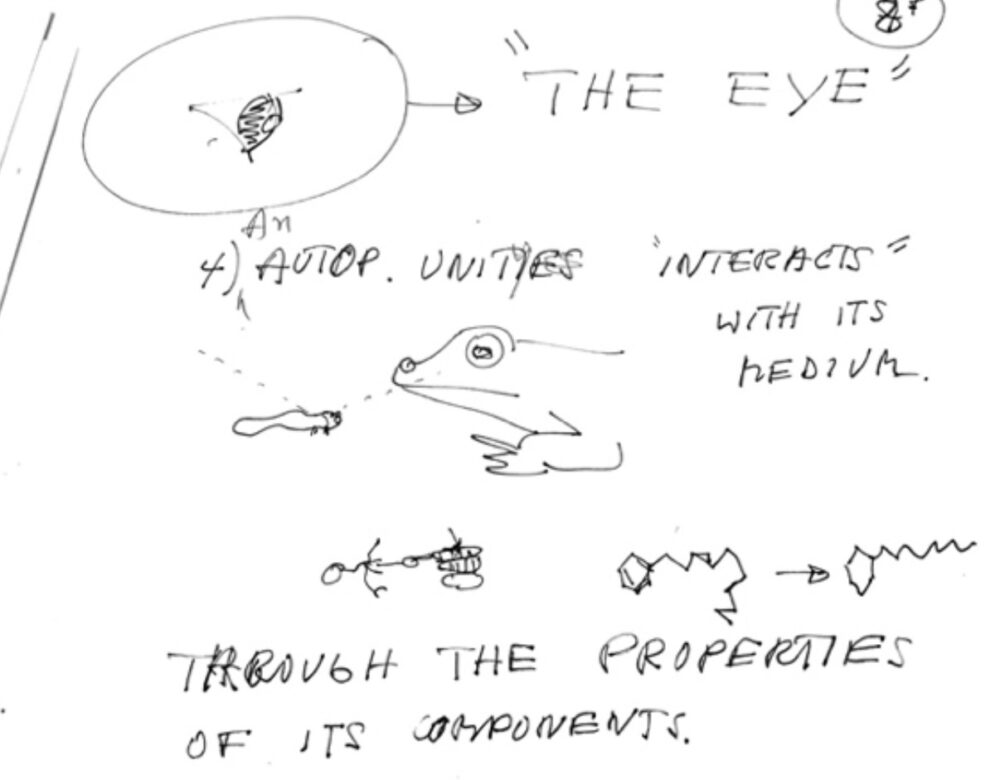
What can a frog’s eye and an octopus’s color-changing skin reveal about the limits of artificial intelligence? In the early days of computing, scientists believed that the brain can be modeled as a logical machine. But experiments with animals complicated that vision. Studies of frog vision and octopus behavior showed that biological perception is not passive signal processing, but a selective and situational filtering process shaped by an organism’s needs, environment, and patterns of interaction.
Rather than abandoning formal models, researchers doubled down on them—treating neurons as simple on/off units whose connections could be mathematically specified. This approach became the basis for artificial neural networks. Today’s large-scale language models are far more complex and trained on massive amounts of data, but they operate on this core principle: learning means iteratively adjusting internal parameters to minimize prediction error on text. Returning to these animal experiments, Won Jeon will show why systems like ChatGPT can produce convincing language without access to the perceptual, social, or practical contexts that give words their meaning—and why this structural limitation matters as AI becomes more embedded in education, work, and everyday life.
Seating is available on a first-come, first-served basis. Tickets are not required for this event.

About the Speaker
Won Jeon is a PhD Candidate in the History of Consciousness Department at the University of California, Santa Cruz, where she researches the intertwined histories of cybernetics, psychology, and artificial intelligence. She is currently the John C. Slater Predoctoral Fellow in the History of Science, Technology, and Medicine at the American Philosophical Society.
About the Series
Science on Tap is a monthly speaker series that features brief, informal presentations by Philadelphia-based scientists and other experts followed by lively conversation and a Q&A. The goal is to promote enthusiasm for science in a fun, spirited, and accessible way, while also meeting new people. Come join the conversation!
Featured image: Letter from Humberto Maturana to Heinz von Foerster, undated. Heinz von Foerster Papers, 1921–2005, 2015, 2018. 11/6/26, Box 22. University of Illinois Archives, University of Illinois, Urbana-Champaign
More events

Othmer Library Tour
Curious about the other half of the Science History Institute? Step into the Othmer Library of Chemical History!
History on the Street: Back to School Edition
Kick off your school year with museums, cultural organizations, and community partners sharing their resources through a day of fun and discovery.
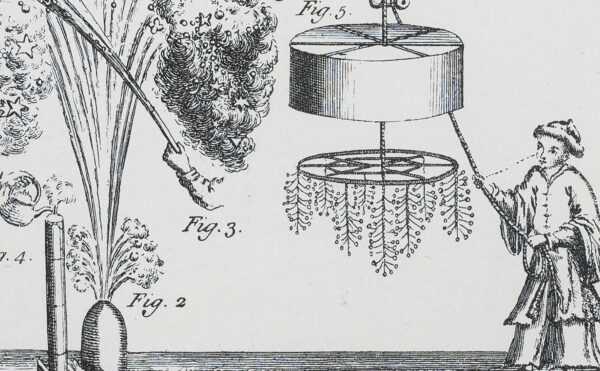
Fireworks Tour
Join our museum educators for a drop-in tour of our special exhibition on the fascinating history and science of pyrotechnics.