
Science History Institute, Pittsburgh Conference to Present Pittcon Heritage Award to Alexandra Knauer
The CEO and owner of lab instrument manufacturer KNAUER will be honored at the 2026 conference in San Antonio on March 8.
The Science History Institute is pleased to announce that Alexandra Knauer, CEO and owner of the Berlin-based scientific instruments manufacturer KNAUER Wissenschaftliche Geräte GmbH, will receive the 24th annual Pittcon Heritage Award. Presented jointly with the Pittsburgh Conference on Analytical Chemistry and Applied Spectroscopy (Pittcon) since 2002, this prestigious award recognizes individuals in the instrumentation and laboratory supply industries who, through their entrepreneurship and innovations, have provided scientists and technologists with the tools needed for discovery. The award will be presented at the Pittcon Conference & Expo being held in San Antonio March 7–11, 2026.
“We are thrilled to honor Alexandra Knauer,” said Institute president and CEO David Cole. “Her exceptional leadership, which allowed her company to develop the vital tools needed to quickly produce mRNA vaccines during the pandemic—coupled with her commitment to supporting women in STEM—makes her the ideal recipient of this premier award.”
In addition to receiving the Pittcon Heritage Award, Knauer will also be added to the Pittcon Hall of Fame, joining other pioneers such as Bill Hewlett, David Packard, Arnold Beckman, Richard Perkin, Charles Elmer, James Waters, and Sigurd and Russell Varian.
Pittcon is the largest and most inclusive conference and exposition on laboratory science and instrumentation in the world. Pittcon 2026 will include an exposition, technical program, online short courses, and learning labs, all featuring instrument manufacturers from the life sciences, analytical chemistry, and other scientific fields. More information is available at pittcon.org.
About Alexandra Knauer
Alexandra Knauer is the CEO and owner of the Berlin-based scientific instruments manufacturer KNAUER Wissenschaftliche Geräte GmbH. She led the transformation of a venerable instrument company into new markets and has recently overseen the development of novel instruments vital for producing mRNA vaccines. Knauer has been committed to supporting women’s success in typically male professions, eliminating the gender pay gap at her own company while mentoring future leaders.
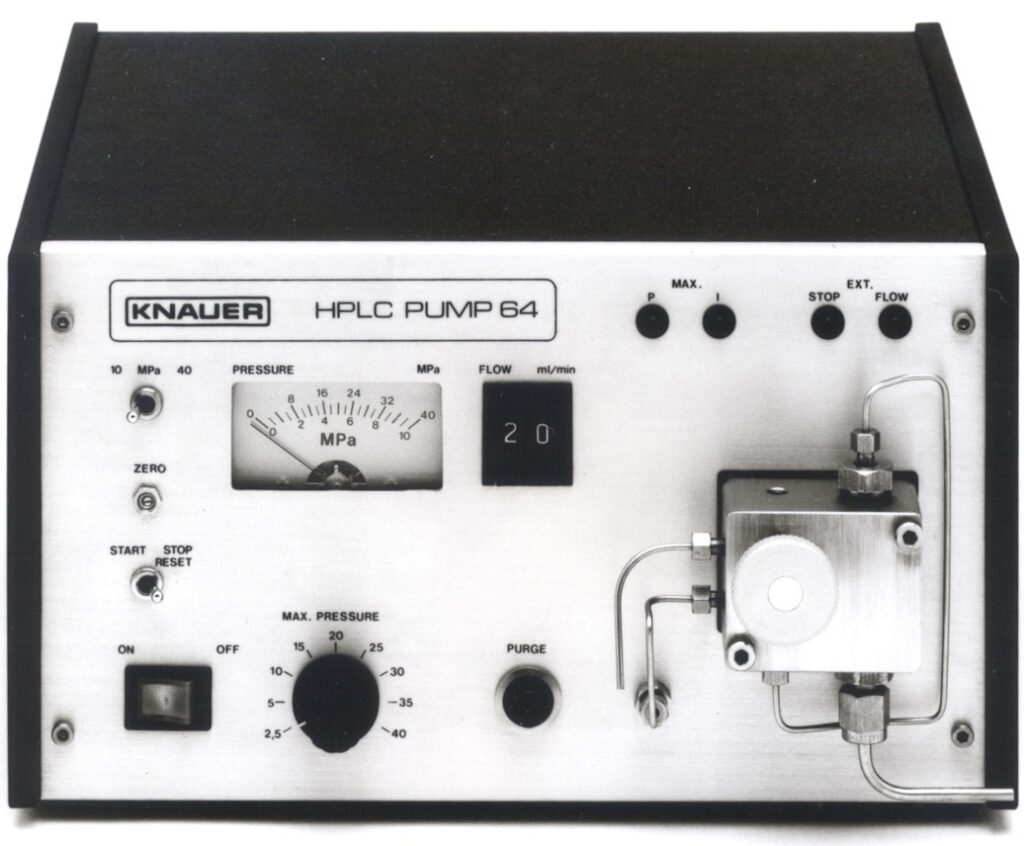
Her parents, Herbert and Roswitha Knauer, founded the KNAUER scientific instrument company in West Berlin in 1962. The company initially specialized in selling osmometers to customers in the Federal Republic of Germany and to western original equipment manufacturers. Diligent sales activities also helped the company build a market for its instruments behind the Iron Curtain, an unusual market for western instrument makers. The company expanded into building modular high performance liquid chromatography (HPLC) systems in the 1970s after Herbert Knauer noticed how many people visited the Waters Company booth at Pittcon. By the 1980s, the company’s HPLC business outperformed the osmometers.
In 1989, Germany was happily reunited, but this era also meant the reorganization of the East European economies. Many companies, labs, and institutes closed, leading to big losses for KNAUER. The newly graduated business economist entered the company to help her parents save their life’s work.

Knauer made a series of hard choices, including closing a new venture in HPLC columns and outsourcing some departments in order to focus on R&D, sales, and service. By 1996, these choices had showed success. HPLC sales increased with the development of the PC-controllable and extremely compact WellChrom line of HPLC instruments together with the EuroChrom control software. She became managing director and owner of the company in 2000. During the 2000s, UHPLC systems and simulated moving bed chromatography broadened the portfolio, enabling KNAUER to sell more devices to OEM customers. By 2020, the company had almost doubled in size.
One of KNAUER’s key recent innovations is lipid nanoparticle encapsulation equipment, which enabled mass production of the mRNA vaccine for COVID-19. As the pandemic developed, Knauer and her team threw themselves into the challenge of developing custom solutions that enabled pharma companies like BioNTech and Pfizer to scale up vaccine production. Today KNAUER’s impingement jets mixing technology means that if a process works on a small research scale in the laboratory, it is highly likely that it can also be implemented on a large production scale.
Knauer has been recognized as a role model female entrepreneur by the German Federal Ministry of Economics and Energy. She participates in the Berlin entrepreneurship network “Connecting Women” and organizes her company’s annual “Girls Day” to help girls see themselves working in technology companies. Sustainability as defined in the UN global compact is a matter close to her heart and to the hearts of her company’s management team. In October 2023, Knauer was awarded the Order of Merit by the State of Berlin for her exceptional contributions to the city, recognizing both the success of her company and her work as a socially conscious entrepreneur.
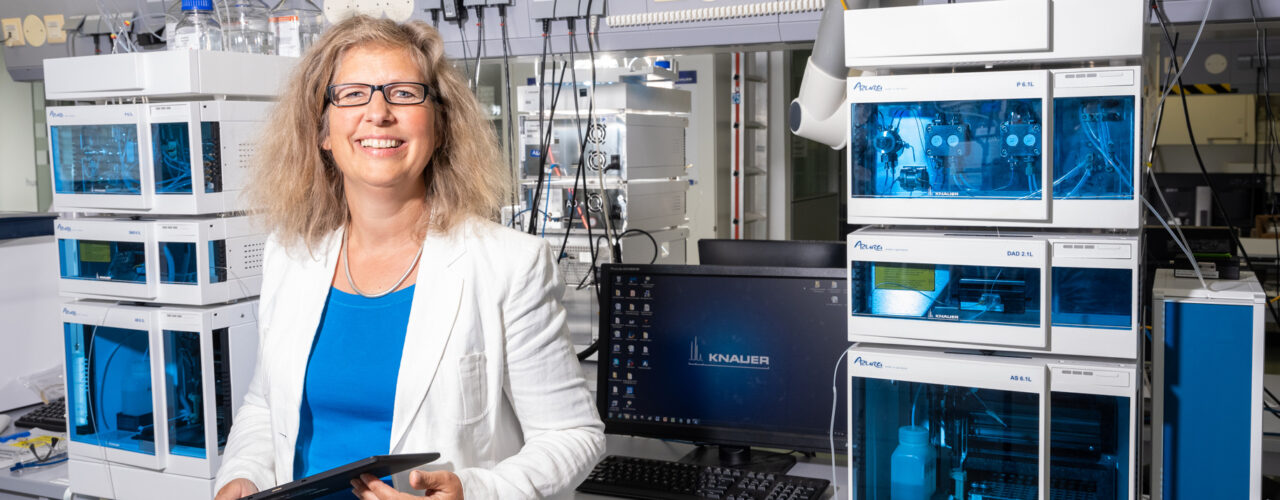
Featured image: KNAUER CEO Alexandra Knauer in the company’s analytical lab, 2019. © KNAUER
More News
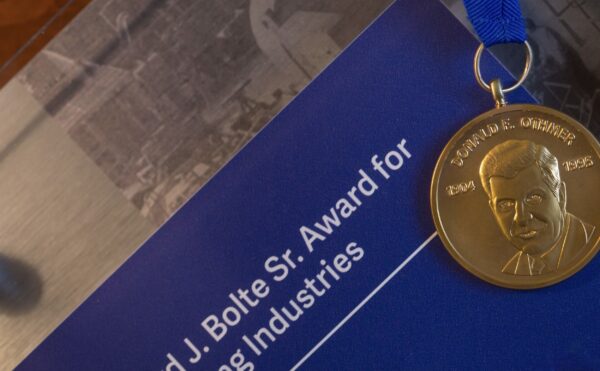
Science History Institute Announces 2026 Othmer Gold Medal, Bolte Award Winners
UConn professor Sir Cato Laurencin and Alexandria Real Estate founder Joel Marcus will be honored this May in Old City Philadelphia.

Explore the Explosive History of Fireworks with Institute’s New ‘Flash! Bang! Boom!’ Exhibition Opening April 10
Part of America’s 250th celebrations, visitors will discover the origins of and science behind these universally loved pyrotechnics.
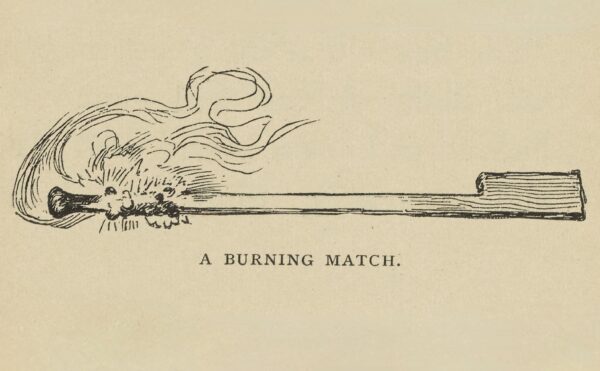
Science History Institute Joins Philadelphia’s 52 Weeks of Firsts Celebration Honoring America’s 250th Birthday
The March 21 event features the Philly-born invention of the first paper match folder.