
New Research Challenges Misconceptions about Rosalind Franklin’s Famed ‘Photo 51’ and the Discovery of DNA’s Double Helix
Paper by the Science History Institute’s Alistair Sponsel and King’s College London’s Brian Sutton uncovers the significance of her previously captured Photo 49.
Alistair Sponsel, oral historian and curator of life sciences at the Science History Institute in Philadelphia, and Brian Sutton, an X-ray crystallographer and emeritus professor of biophysics at King’s College London, have jointly published the paper “Photograph 49 Is the Key to Understanding the History of Rosalind Franklin’s DNA Photograph 51” in the Journal of the History of Biology. They reveal for the first time why British chemist and crystallographer Rosalind Franklin and her graduate student Raymond Gosling took the X-ray image known as Photo 51.
Widely described as one of the most consequential photographs ever taken, Photo 51 was first published by Franklin and Gosling in the April 25, 1953, issue of Nature, alongside James Watson and Francis Crick’s announcement that DNA was a double helix. At the time, it seemed to offer independent corroboration of the helical structure. But then in 1968, ten years after Franklin’s untimely death, Watson wrote that he had actually seen the image months before publication and that it had spurred him and Crick to begin building the molecular models that revealed the double helix. Despite the significance Watson attributed to Photo 51, however, he and many other commentators have suggested that Franklin herself found it unremarkable at the time it was taken.
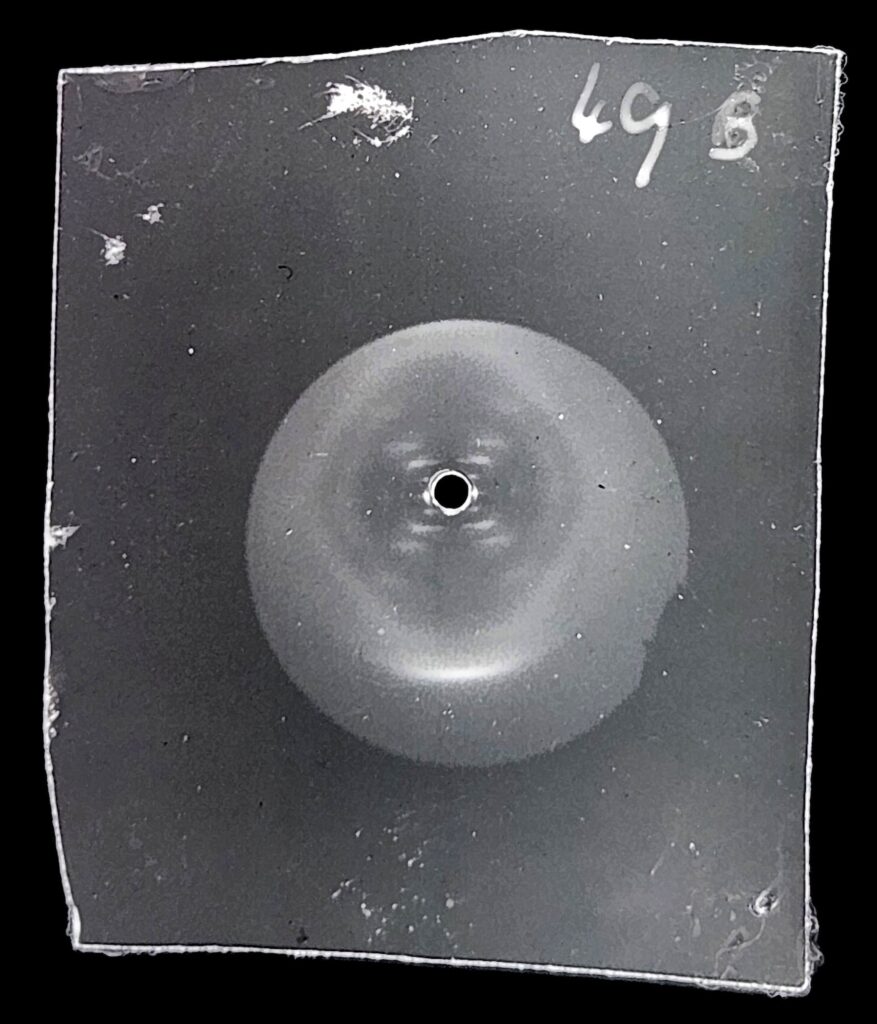
Sponsel and Sutton’s paper shows that Franklin did not overlook Photo 51. In fact, they argue that “Franklin decided to take ‘Photo 51’ precisely because she knew that key parameters of DNA’s…helix could be calculated from the resulting image.” They show that Photo 51 was not an experiment with an uncertain outcome, as Franklin’s earlier X-ray images of DNA had been; it was a publication-quality retake of her largely forgotten Photo 49, which she had already used to make the helical calculations. Although Franklin had not yet determined how many chains were entwined in the DNA molecule—whether it was a single, double, or triple helix—the striking image we know today as Photo 51 was intended all along to serve as clear evidence for DNA’s helical structure.
Sponsel began reexamining Franklin’s DNA research in 2025, after the Science History Institute acquired the History of Molecular Biology Collection from the J. Craig Venter Institute. Considered one of the most significant scientific archives ever compiled, the famed collection includes Franklin’s own personal copy of Photo 51, among other important artifacts, notebooks, images, and correspondence. Sponsel’s research led him to other collections in the U.K., including the archives of King’s College London, where Franklin and Gosling were working when they took Photo 51. The archivists encouraged him to contact Sutton, who had long been interested in the DNA crystallography work done by his biophysics predecessors at King’s.
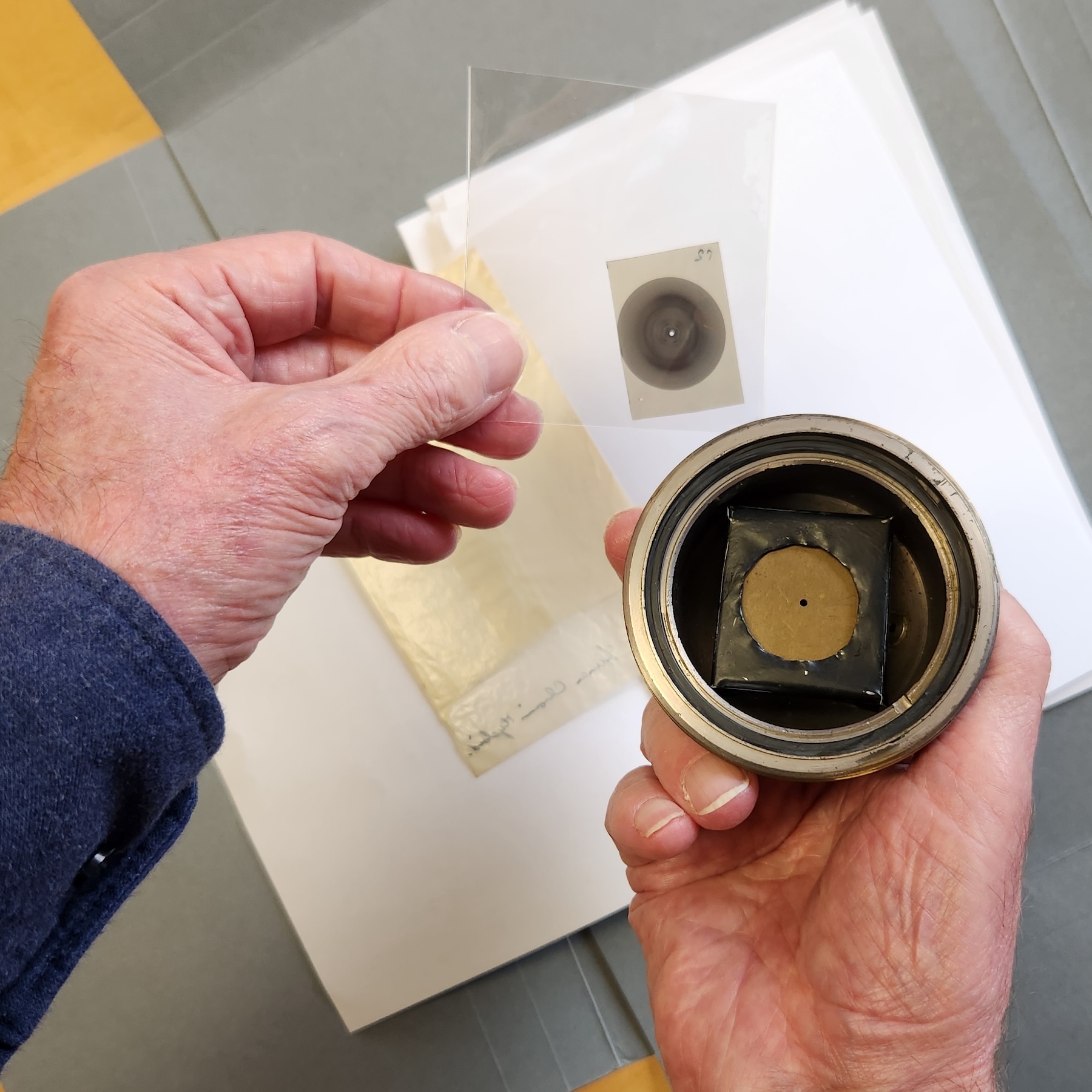
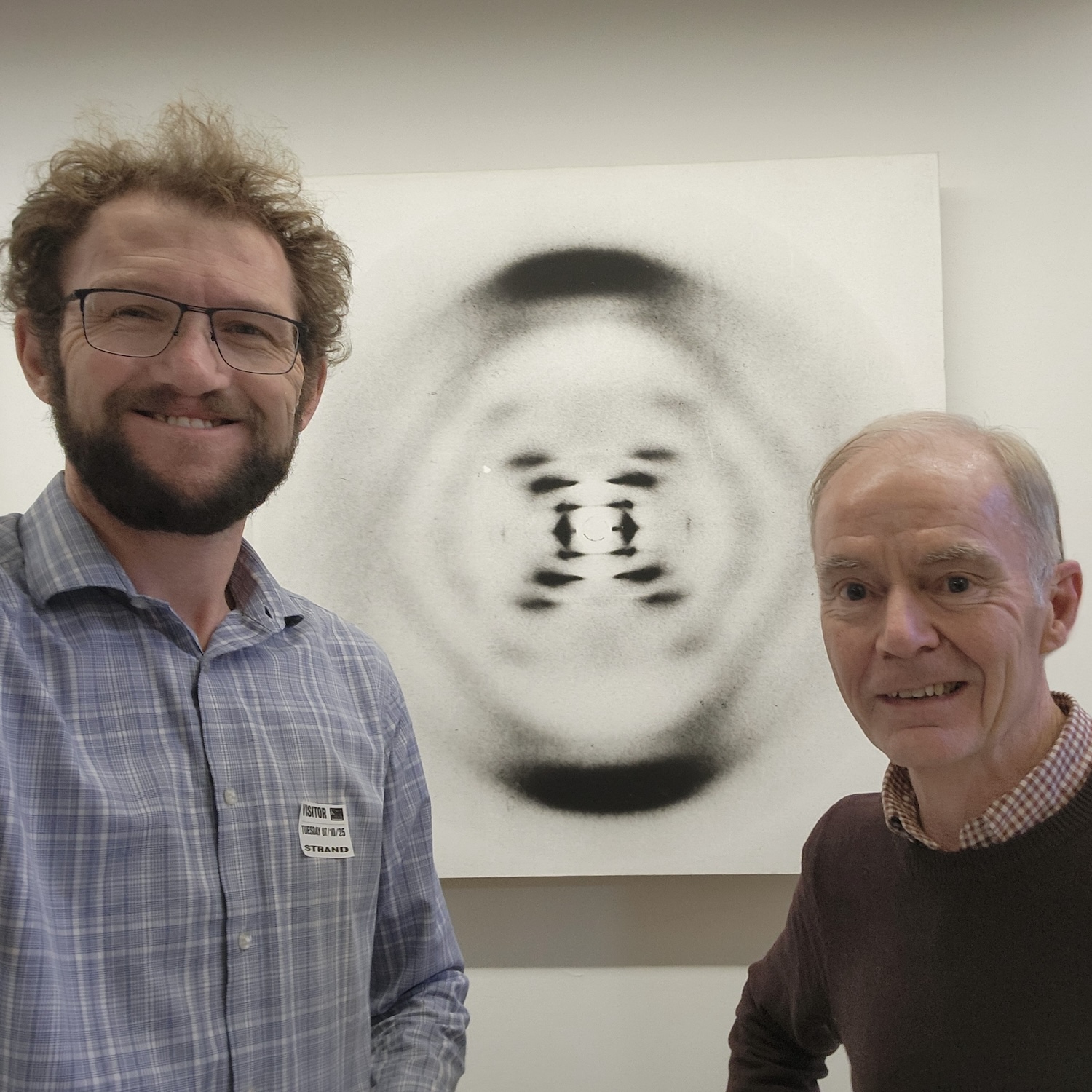
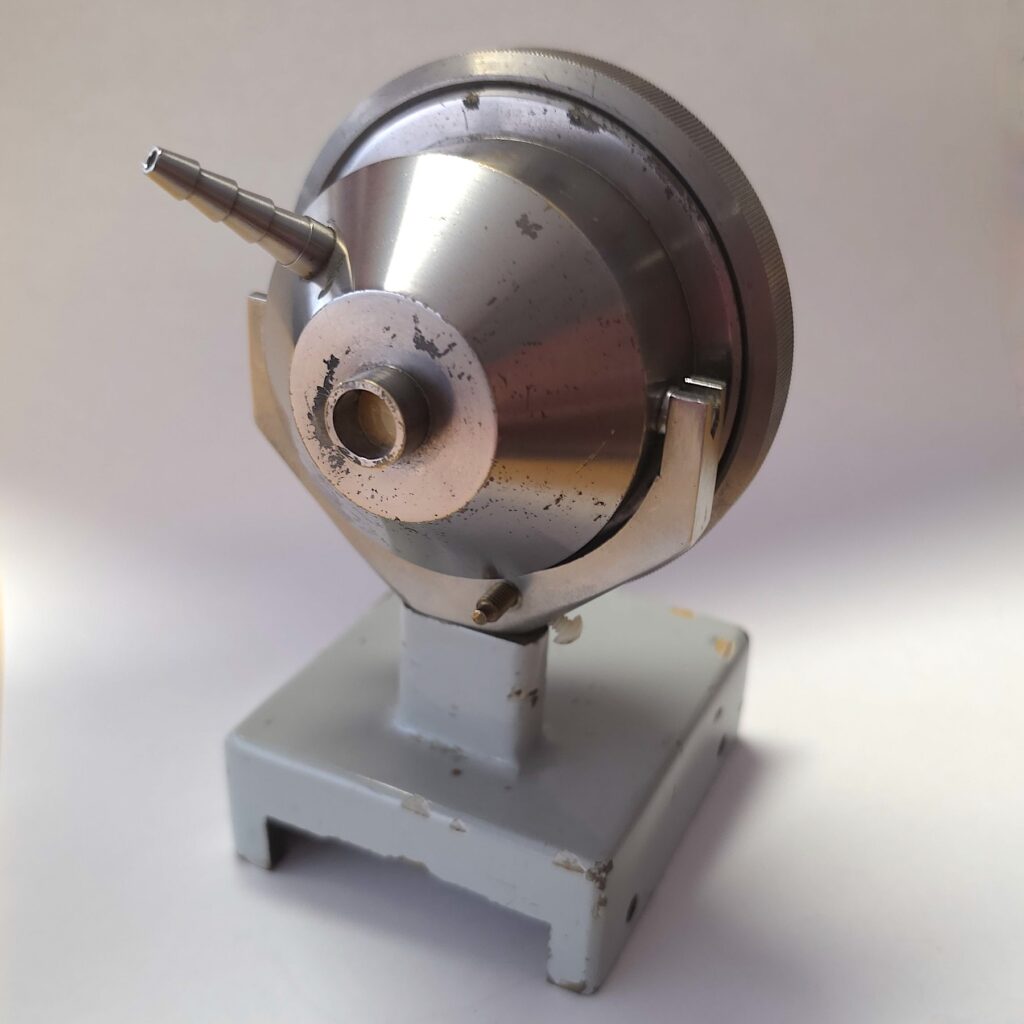
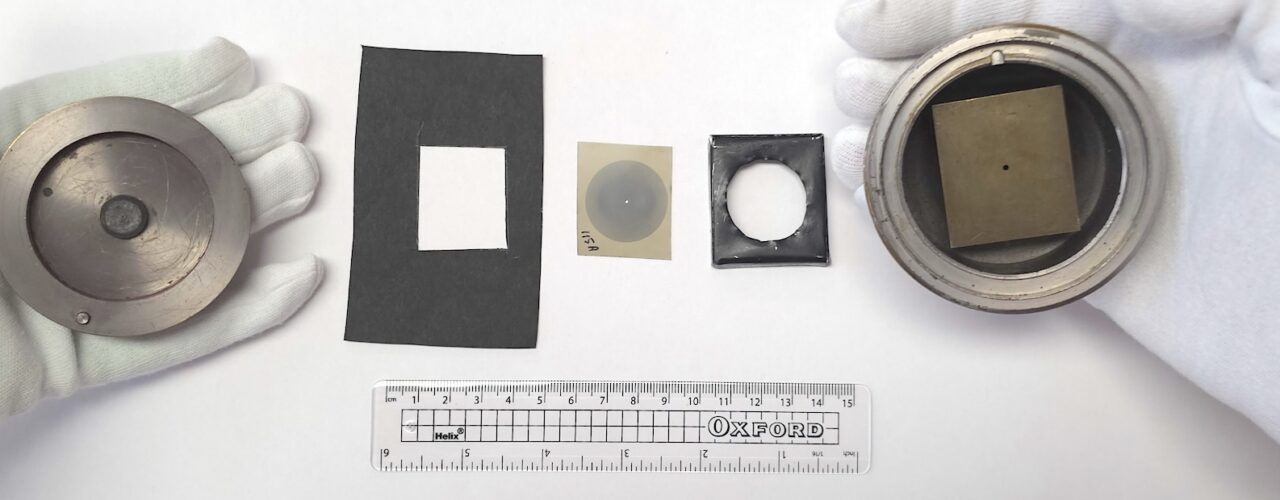
Left: Internal view of the camera used by Rosalind Franklin and Raymond Gosling to take Photo 49 and Photo 51, and a piece of X-ray film showing how the exposure was cropped by the black film-holder bracket shown inside the camera. King’s College London Archives, KDBP 6/4/7 (camera) and K/PP178/2/8 (film). Center: Alistair Sponsel (left) and Brian Sutton (right) at King’s College London. Right: The camera used by Franklin and Gosling, fully assembled and viewed from the back. King’s College London Archives, KDBP 6/4/7.
“Brian and I were each intrigued by the same features of ‘Photo 51,’ and we wanted to gain a deeper understanding of why the image looked the way it did,” said Sponsel. “After studying so many incredible documents and artifacts together, we were excited to realize that we shared a new understanding, not just of how the photograph was made, but of why Franklin had been motivated to take ‘Photo 51’ in the first place. We’ve had such fun working together and learning to see these incredible original sources through each other’s eyes.”
In addition to studying laboratory notebooks and other manuscripts in collections in Philadelphia, Cambridge, and London, Sponsel and Sutton also analyzed Franklin’s X-ray camera and photographic slides at King’s. Their research showed that Photo 49 had a blemish caused by an internal camera component slipping across the X-ray film and concealing part of the resulting X-ray diffraction pattern. This did not lessen the picture’s value for research, and Franklin immediately used it to make calculations that would contribute to the discovery of the double helix. Afterward, however, Franklin decided to use the same sample of DNA to produce a fresh, unblemished version of the image that had allowed her to achieve such a significant breakthrough. The result was Photo 51.
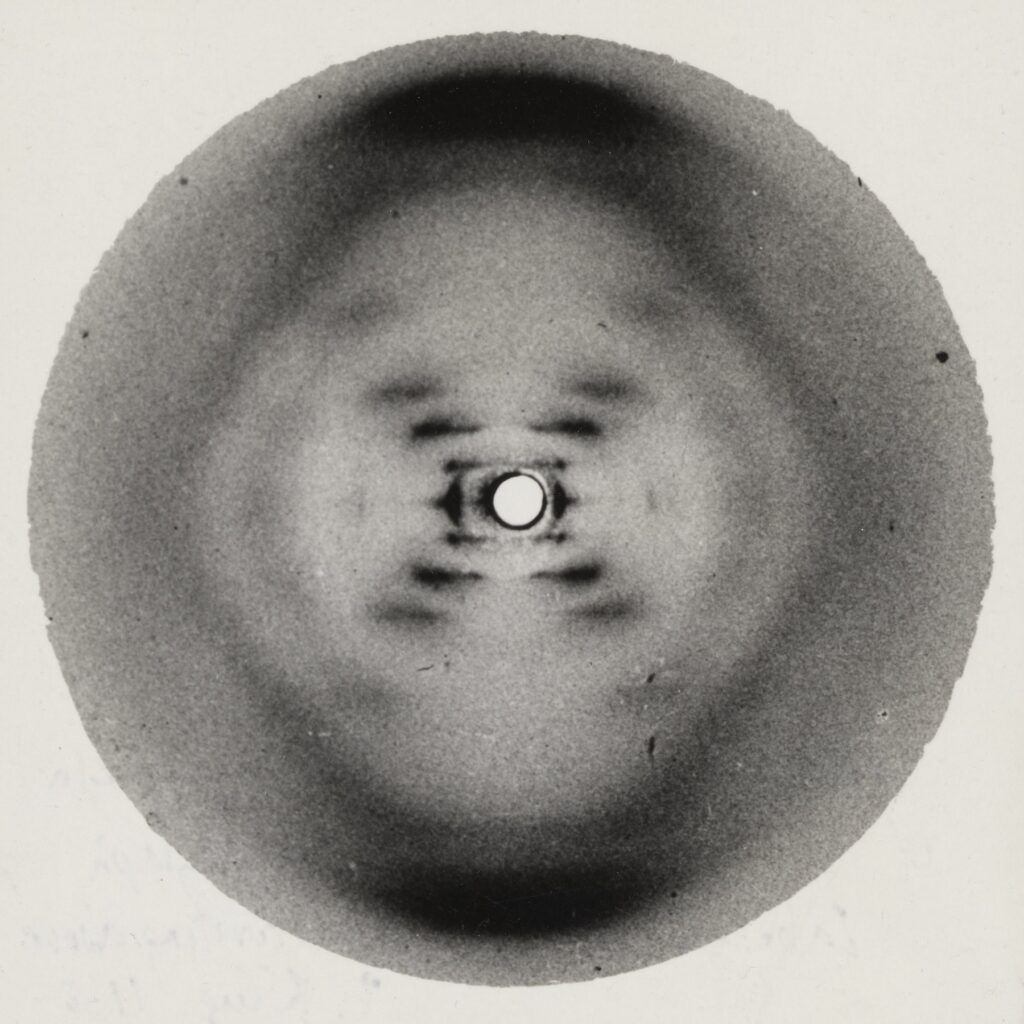
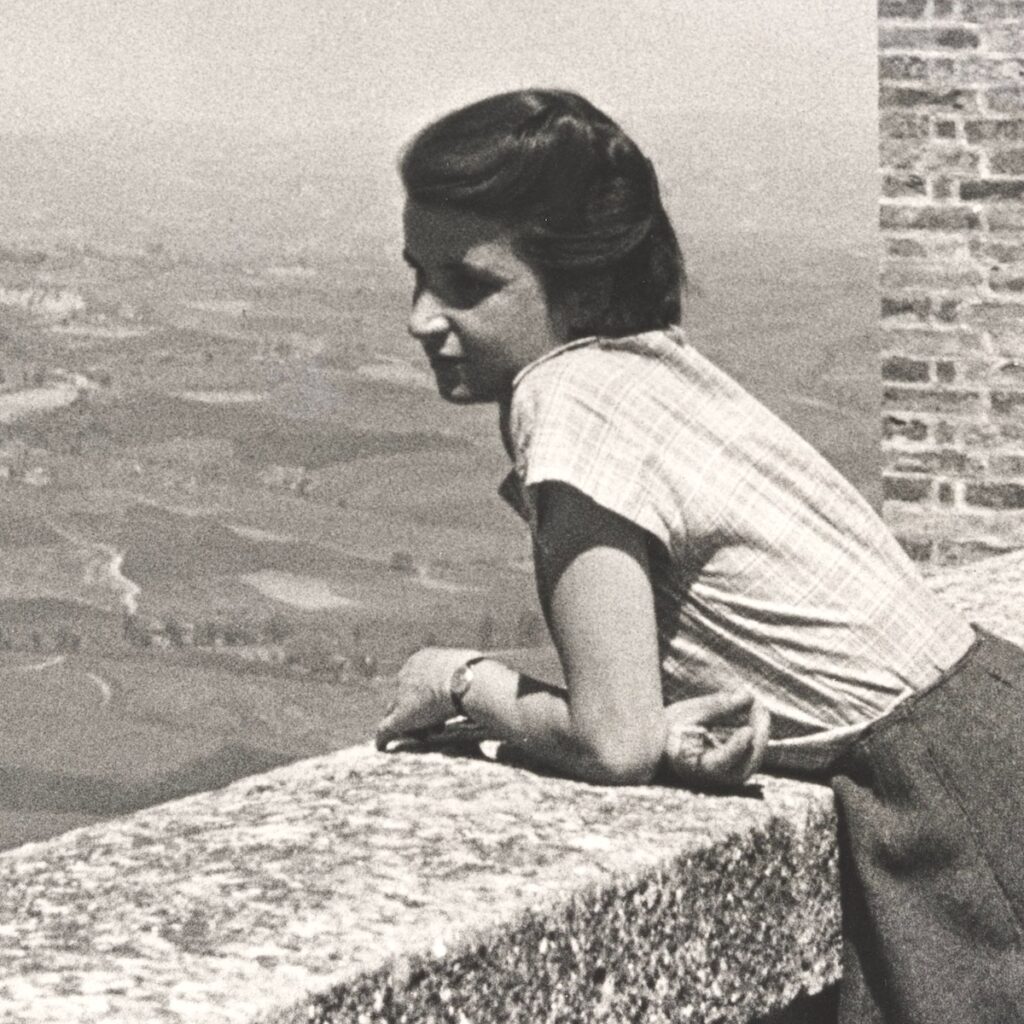
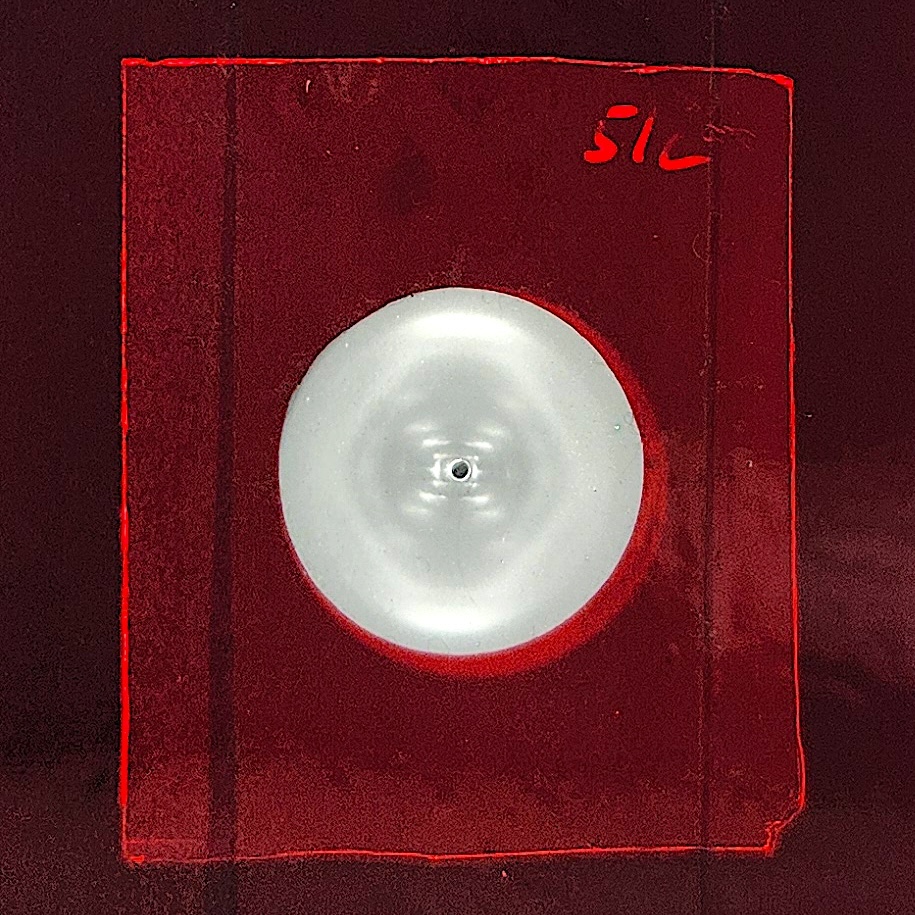
Left: Print of Photo 51 owned and annotated by Rosalind Franklin, from the Science History Institute’s History of Molecular Biology Collection, Box 10, Folder 15. Center: Photograph of Rosalind Franklin taken by Vittorio Luzzati while on vacation in Tuscany, Italy (1950), from the Science History Institute’s History of Molecular Biology Collection, Box 10, Folder 14. Right: Close-up of the glass-plate negative of Photo 51 from which prints were made for publication. The red material is masking tape used to refine the border around the X-ray diffraction pattern. King’s College London Archives, KDBP 1/1/0868.
“I have been accompanying visitors to the King’s College Archives over many years, but the highlight and focus of attention is always the original glass negative of ‘Photograph 51′,” added Sutton. “Just over a year ago, I was introduced to Alistair and we very quickly realized that we looked at ‘Photograph 51’ in different ways, and that together we might better understand exactly why Franklin and Gosling took ‘Photograph 51,’ and in particular the importance of ‘Photograph 49.’ It has been exciting for me to see ‘Photograph 51’ in a different light.”
According to historians Vassiliki Betty Smocovitis and Nicolas Rasmussen, the coeditors-in-chief of the Journal of the History of Biology, “It is an important paper not just because it alters our historical understanding of Franklin’s work…but also because it demonstrates how an emphasis on [technical practices] can be crucial in understanding laboratory-oriented sciences such as molecular biology. It also has the added bonus of showing how productive the collaboration between historians and scientists can be.”
“Dr. Sponsel’s and Professor Sutton’s groundbreaking research is precisely the type of work we wanted to make possible with our acquisition of the History of Molecular Biology Collection,” noted Science History Institute president and CEO David Cole. “By preserving such important archives and making them widely accessible through the Institute’s research fellowships and digital collections, we aim to foster understanding of the history of science by scholars, practitioners, and the public around the world.”
Media Coverage
Justice at Last for Rosalind Franklin Over Role in DNA Discovery
The Times | October 8, 2026
James Watson Suggested Rosalind Franklin Missed the DNA Double Helix. Her Notes Say Otherwise
Gizmodo | October 7, 2026
Rosalind Franklin Figured Out DNA’s Helical Structure Before Watson and Crick, Study Suggests
Live Science | October 6, 2026
How Did Rosalind Franklin Miss the Helix in Her Iconic DNA Image? She Didn’t
Science | October 5, 2026
Featured image: The camera used by Rosalind Franklin and Raymond Gosling to take Photo 49 and Photo 51, disassembled and shown along with a piece of X-ray film. King’s College London Archives, KDBP 6/4/7 (camera) and K/PP178/2/8 (film and backing paper). Photograph by Alistair Sponsel, July 2026.
More News
Applications for 2027–2028 Beckman Center Fellowships Now Open
Researchers can apply by January 15 for various long- and short-term programs, including two-year curatorial fellowships.
New Alchemy Exhibition Draws Sold-Out Crowd to Opening Celebration
Attendees take an up-close look at paintings and rare books from the Institute’s Fire and Gold exhibit while enjoying a curator’s talk, activities, and light bites.
Science History Institute Launches New Season of ‘Distillations’ Podcast
American Vice takes listeners from cigarettes and alcohol, to fireworks and LSD with weekly episodes starting September 15.