
Science History Institute Welcomes 3 New Board Members
Research, pharmaceutical, and technology leaders Jane Frommer, Greglynn Gibbs, and Geofrey Wyatt will help support the Institute’s mission and strengthen our industry relationships.
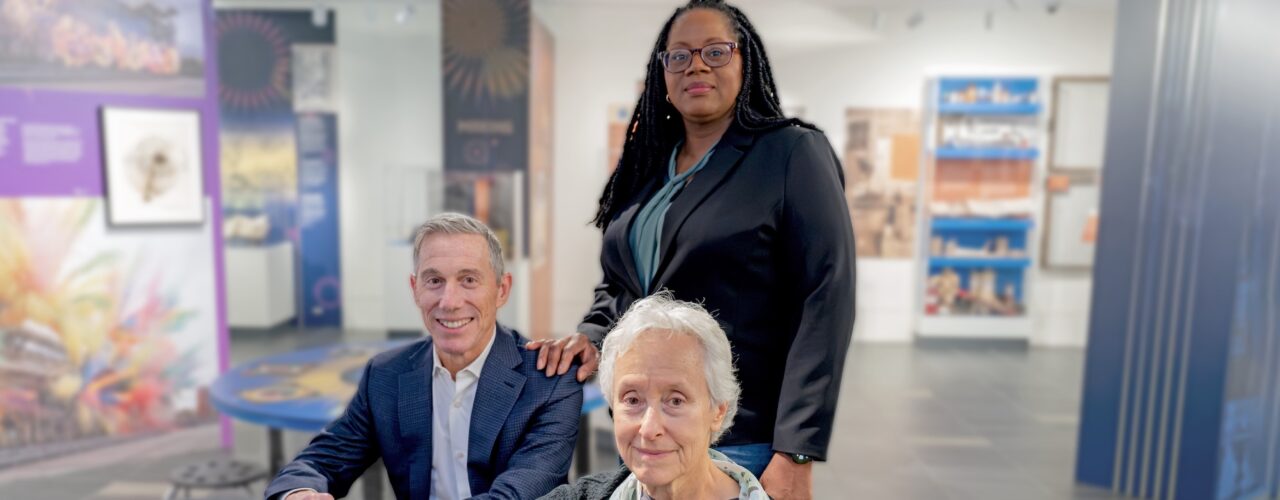
The Science History Institute is pleased to welcome three new members to our Board of Directors: Jane Frommer (above seated right), a pioneering nanoscience and nanotechnology researcher; Greglynn Gibbs (above standing), a lead research associate at Roche Innovation Center Philadelphia; and Geofrey Wyatt (above seated left), former CEO of Wyatt Technology Corporation.
Frommer, Gibbs, and Wyatt join a distinguished list of scientists, engineers, academics, entrepreneurs, and other industry professionals from a broad range of organizations that includes Institute president and CEO David Cole. Chaired by Listowel Inc. president Lewis Gasorek, the Board of Directors is charged with fiduciary and policy oversight.
About Jane Frommer
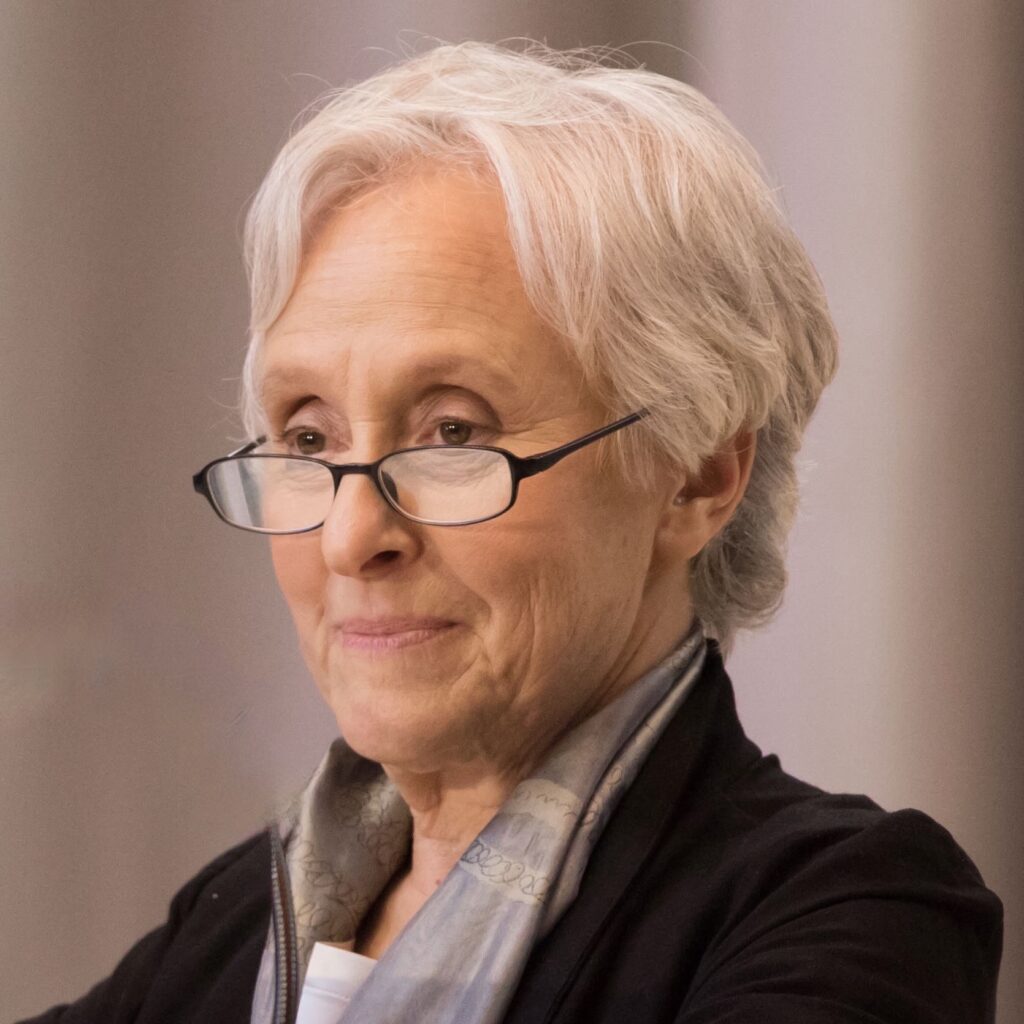
Jane Frommer is a pioneering researcher in nanoscience and nanotechnology. She earned a BS in chemistry from Tufts University in 1976 and a PhD in chemistry at the California Institute of Technology in 1980. She began her professional career at Allied Corporate Laboratories (now Honeywell International), where she served as a research scientist from 1980 to 1986.
From 1986 to 2018, Frommer served as a research scientist at IBM Research, where she was involved in a number of materials research areas, including scanning tunneling microscopy (STM), lithography, 3D nanoprinting, polymers, and biological nanostructures. Her career at IBM Research also included a four-year assignment at the University of Basel Physics Institute (1989–1993), where she and her team expanded the capability of scanning probes into measuring the functional properties of organic thin films with atomic force microscopy (AFM).
After departing IBM Research in 2018, Frommer consulted for several Silicon Valley start-ups and served for five years as a science advisor at Google, contributing knowledge of molecular behavior to large data cheminformatics. She has served on numerous editorial boards, most notably as an associate editor of the Beilstein Journal of Nanotechnology, and has mentored high school and college students.
Frommer holds more than 50 patents and is the author of more than 100 refereed science publications. As an active member of the American Chemical Society (ACS), she has served on national committees and in the Silicon Valley local ACS section as chair and councilor. Accolades include the ACS Award in Industrial Chemistry (2017), the Perkin Medal from the Science History Institute and SCI America (2020), an honorary doctorate of science from Tufts University (2022), the ACS Western Region’s Partner for Progress Award (2025), and a Presidential Community Hero Award from Santa Clara County, California (2026).
About Greglynn Gibbs

Greglynn Gibbs is a graduate of Penn State Berks and is currently a lead research associate on the Neuroscience Platform Team at Roche Innovation Center Philadelphia, where she supports neuroscience gene therapy research. She previously worked for four years as lab manager for the Central Nervous System (CNS) Platform Technologies Team in R&D at Spark Therapeutics, as well as the chemistry laboratories manager at Penn State Berks for approximately 13 years.
While currently serving as chair-elect and upcoming chair of the Philadelphia Section of the American Chemical Society, her commitment to service and science education also includes her role as chair of the Philadelphia ACS Minority Affairs Committee, as well as a national ACS career consultant.
Prior service includes student chapter advisor of the Penn State Berks Chemical Society, where she organized and performed award-winning outreach with her group, both on and off campus for students and families in grades pre-K through 12 and beyond. Gibbs has also served as chair, public relations chair, and membership chair of the Lehigh Valley Section of the ACS; an associate member of the Committee on Community Activities; a member of the Committee on Technician Affairs; a member of the Undergraduate Programs Advisory Board; and as an ACS science coach.
About Geofrey Wyatt
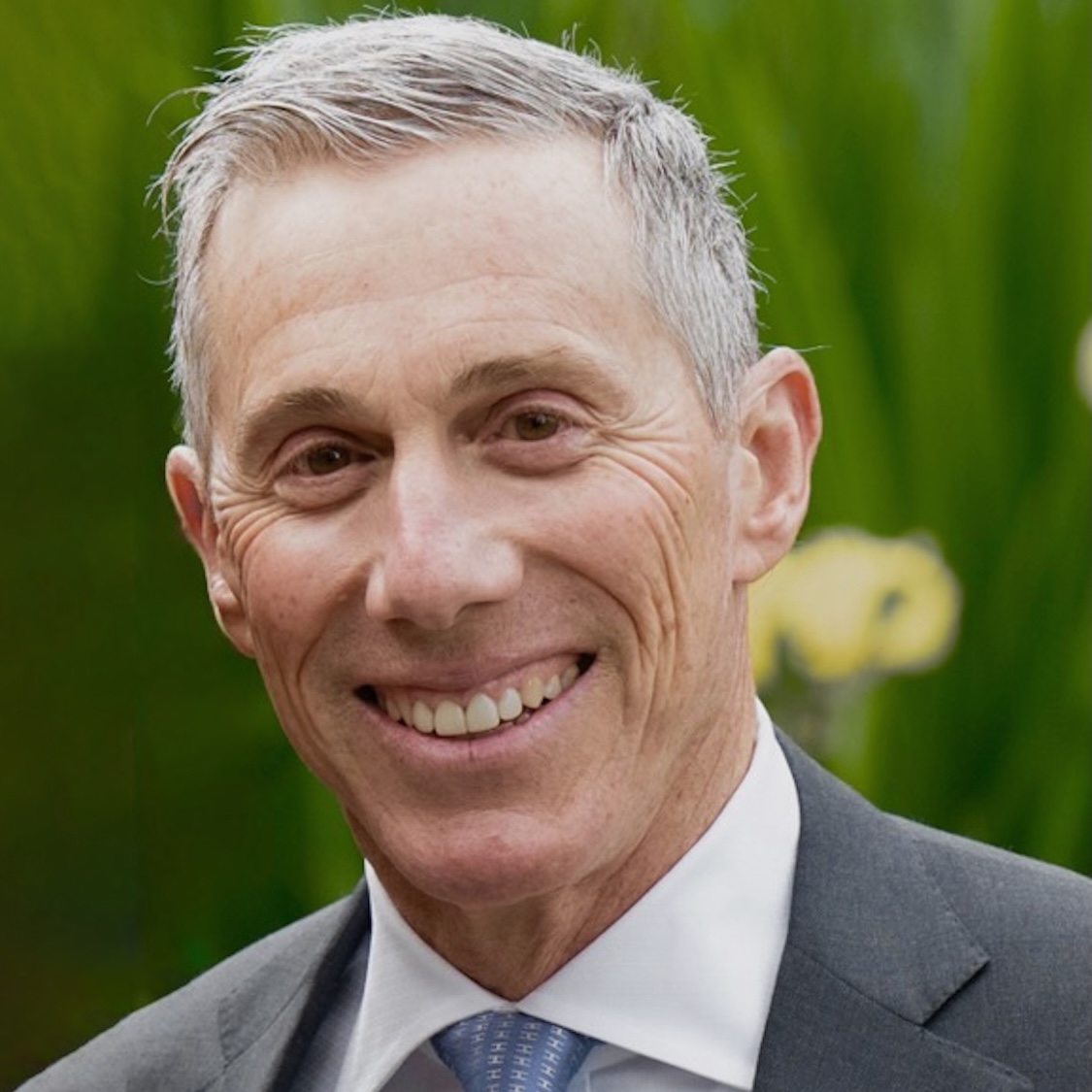
Geofrey Wyatt, an almost lifelong resident of Santa Barbara, California, received his BA in English from Yale University. When he returned to Santa Barbara in 1983, his father, Wyatt Technology Corporation founder Philip Wyatt, hired him to become the company’s first employee. Geof ran experiments on Wyatt Technology’s light-scattering instruments and began some rudimentary sales and marketing activities. As the company grew organically from government contracts to commercial instrument sales, Geof left Southern California to attend Harvard Business School, where he received his MBA in 1989.
From 1989 to 2023, Geof, his father, and later his brother, Cliff, guided Wyatt Technology through recessions, pandemics, and financial crises to a process that culminated in the sale of the company to Waters Corporation. In 2024, the Science History Institute and the Pittsburgh Conference on Analytical Chemistry and Applied Spectroscopy awarded Philip Wyatt the Pittcon Heritage Award, which recognizes individuals in the instrumentation and laboratory supply industries who have provided scientists and technologists with the tools needed for discovery.
Geof and his wife, Laura, are actively involved in local and national philanthropic activities ranging from the performing and visual arts, to healthcare, food insecurity, environmental protections, and educational opportunities for underserved communities. In his spare time, Geof is an avid reader of fiction, a sourdough bread baker, a world traveler, and a fly fisherman.
Geof and Laura have a son, Spenser, who has begun his master’s degree at New York University’s Wagner School of Public Administration.
Featured image: Science History Institute/Meredith Edlow.
More News
Applications for 2027–2028 Beckman Center Fellowships Now Open
Researchers can apply by January 15 for various long- and short-term programs, including two-year curatorial fellowships.
New Alchemy Exhibition Draws Sold-Out Crowd to Opening Celebration
Attendees take an up-close look at paintings and rare books from the Institute’s Fire and Gold exhibit while enjoying a curator’s talk, activities, and light bites.
New Research Challenges Misconceptions about Rosalind Franklin’s Famed ‘Photo 51’ and the Discovery of DNA’s Double Helix
Paper by the Science History Institute’s Alistair Sponsel and King’s College London’s Brian Sutton uncovers the significance of her previously captured Photo 49.