Rachel Carson
From government biologist to celebrity author, Carson captivated audiences. She promoted an appreciation for nature and an awareness of harm to the environment.

The American marine biologist, government scientist, and nature writer Rachel Carson (1907–1964) played a pivotal role in launching the environmental movement during the 1960s. Her 1962 book Silent Spring raised awareness of the potential damage caused by widespread use of chemical insecticides on humans and the environment.
Early Life and Education
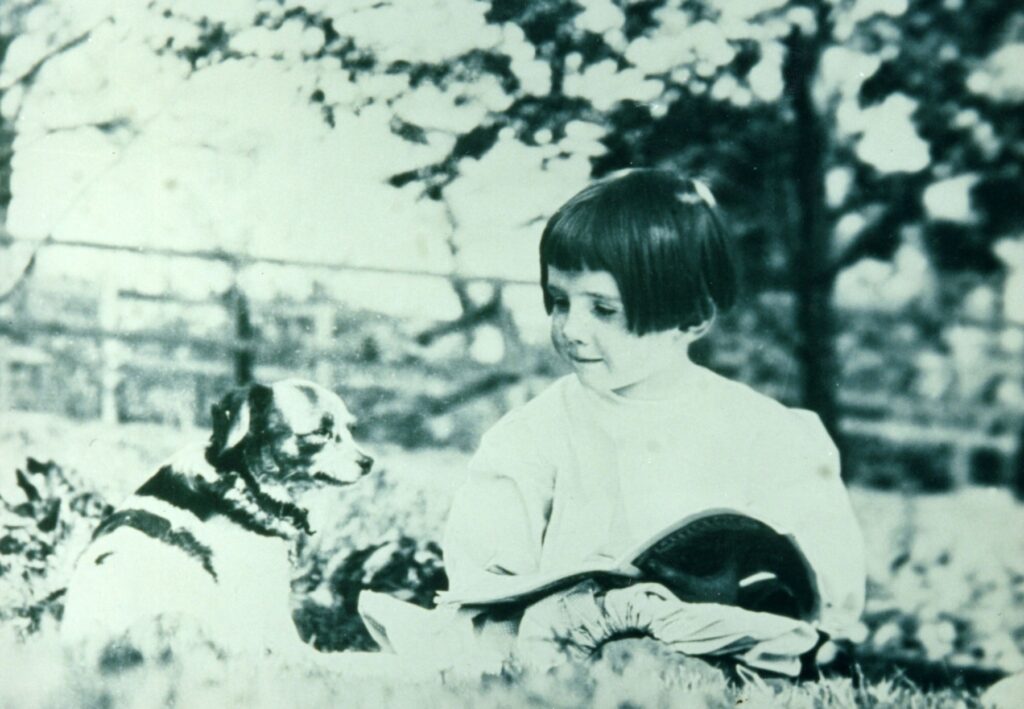
Rachel Louise Carson was born in 1907 on a farm that lacked central heating and running water. The Carson family homestead was in Springdale, Pennsylvania, a town near Pittsburgh on the Allegheny River. Her father, Robert Carson, was an insurance salesman, and her mother, Maria, had been a schoolteacher. The youngest of three children, Rachel was deeply interested in the natural world from an early age. Maria Carson, a follower of the nature study movement, frequently took Rachel on outings to identify plants and wildlife in the fields, orchards, and woods on their property. Rachel also developed a love for books and writing. At age 11, she began publishing her stories in St. Nicholas, a popular children’s magazine.
After finishing high school in the spring of 1925, Carson received a scholarship to study at the Pennsylvania College for Women (PCW, later Chatham University) in Pittsburgh. She intended to major in English and become a writer. The Carsons were not well off, but Maria Carson was determined that Rachel receive a quality education, so she sold family valuables and taught piano lessons to help cover room and board.
At PCW, Carson was captivated by a required biology course. Her professor, Mary Scott Skinker—a former public schoolteacher who had just received a degree in zoology from Columbia University—became Carson’s mentor. She convinced Carson to switch her major to biology during her junior year. While Skinker left shortly thereafter to complete her doctorate, the two wrote letters and remained friends for life.
Though opportunities for women in science were few, Skinker had shown Carson that graduate school provided a path to a career in teaching. At Skinker’s suggestion, Carson began working towards her master’s degree in zoology at Johns Hopkins University in 1929. Carson spent the summer before graduate school as a “beginning investigator” at the Marine Biological Laboratory (MBL) in Woods Hole, Massachusetts, where she experienced the ocean for the first time. The MBL offered summer courses for beginning scientists, an extensive research library, and easy access to specimens for study. At MBL, Carson met the marine biologist Rheinart P. Cowles, who became her advisor at Johns Hopkins and helped refine her thesis topic on the cranial nerves of turtles.
LEARN MORE: MARY SCOTT SKINKER
After spending 12 years as a public school teacher in St. Louis, Missouri, Skinker went to college to study zoology. In 1923, Skinker joined the faculty of PCW, where she later met Rachel Carson. She left PCW to finish her PhD, which focused on the study of tapeworms. She began working as a researcher in parasitology (the study of parasites) at the U.S. Department of Agriculture, where she joined a small group of women scientists in the zoological division. Over the course of her career, she authored several technical papers. Three are available through the Biodiversity Heritage Library. Look at the introductions to these papers. What do you observe about subject matter under investigation? What do you notice about Skinker’s writing? How does it compare to the writing Rachel Carson did for the Fish and Wildlife Service Reports?
During her graduate years, Carson faced mounting financial difficulties. The stock market crash of 1929 and the Great Depression that followed threatened what little financial security her family had managed to build. Sensing that opportunities were better in Baltimore, she persuaded her family to sell the Springdale farm and relocate to Maryland so they could pool their resources. With her father in poor health and her sister Marian suffering from diabetes, Carson, now in her early twenties, took on much of the financial responsibility for the family. This forced her to balance her graduate education with part-time research and teaching positions at Hopkins and the University of Maryland.
Carson did well in her coursework but fell behind on thesis research. With time running out to finish her degree, Cowles suggested a new topic that could be completed in less time: a study of the urinary system of fish. Carson decided to study the development of the pronephros, or “head kidney,” during the larval stage. The purpose of this organ was still a mystery to marine biologists at the time. Though she initially struggled to find a hatchery that could supply her with the necessary embryos, she completed her thesis—“The Development of the Pronephros During the Embryonic and Early Larval Life of the Catfish (Ictalurus punctatus)” in 1932. Carson passed her examinations and was awarded her MS degree that June.
Carson fully intended to pursue a PhD, which was typical for students in the Hopkins zoology program. She returned to Woods Hole for research the following summer and enrolled in courses for the fall. But her family’s financial circumstances continued to decline. Faced with the need to support her family, Carson dropped out of the doctoral program and began seeking full-time employment as a biology teacher.
Federal Career and the Sea Trilogy
Carson’s career took an unusual route, reflecting both her personal commitments and her skill as a writer. When she was unable to find a teaching job, she decided to take the civil service exams in parasitology, wildlife biology, and aquatic biology. These made her eligible for positions as a government scientist. Though no permanent positions were available at the time, Carson agreed to take on a part-time assignment writing radio scripts for the weekly radio series, “Romance Under the Waters,” sponsored by the Bureau of Fisheries. In this role, Carson brought marine biology to life for the public. When there was an opening at the Bureau in 1936, Carson was hired as a “junior aquatic biologist.” At the time, she was one of only two women employed at the Bureau of Fisheries in a professional capacity.
LEARN MORE: FROM BUREAU TO SERVICE
In 1871, Congress created the U.S. Commission of Fish and Fisheries (the “Fish Commission”) to investigate declining fish populations and promote the use of artificial fish propagation (aquaculture) at federal hatcheries. In 1903, the Fish Commission became the Bureau of Fisheries in the newly created Department of Commerce and Labor. In 1939, the Bureau of Fisheries merged with the Bureau of Biological Survey (which studied and managed animals on land) to form the U.S. Fish and Wildlife Service, part of the Department of the Interior.
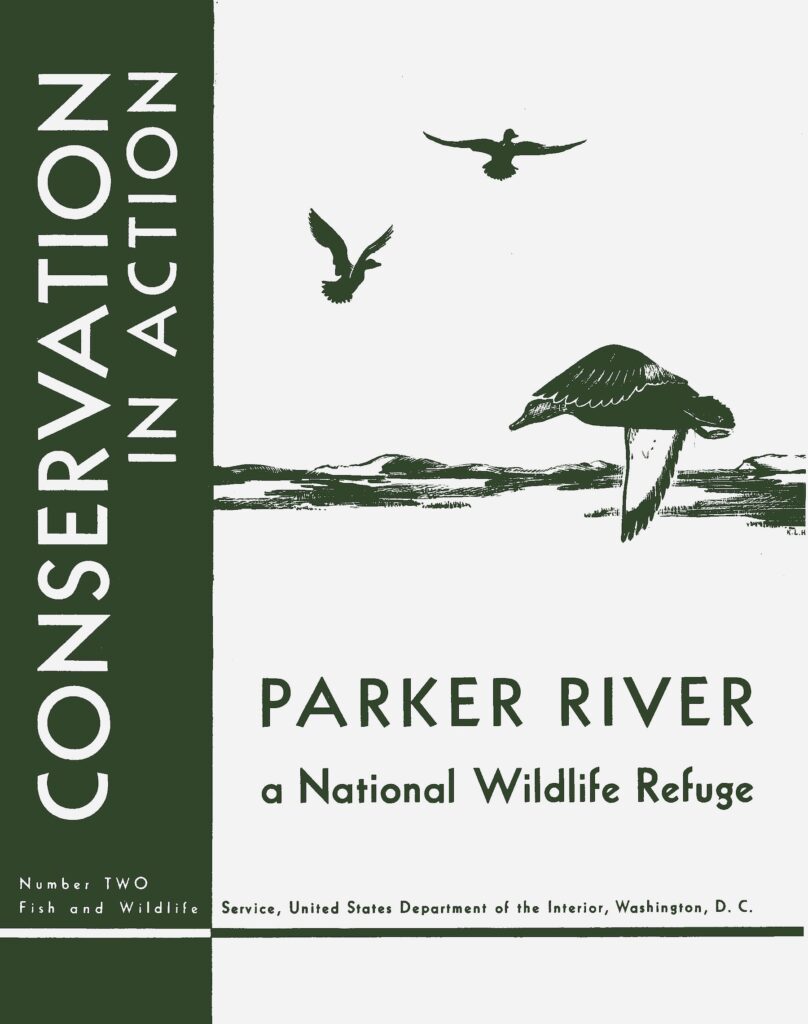
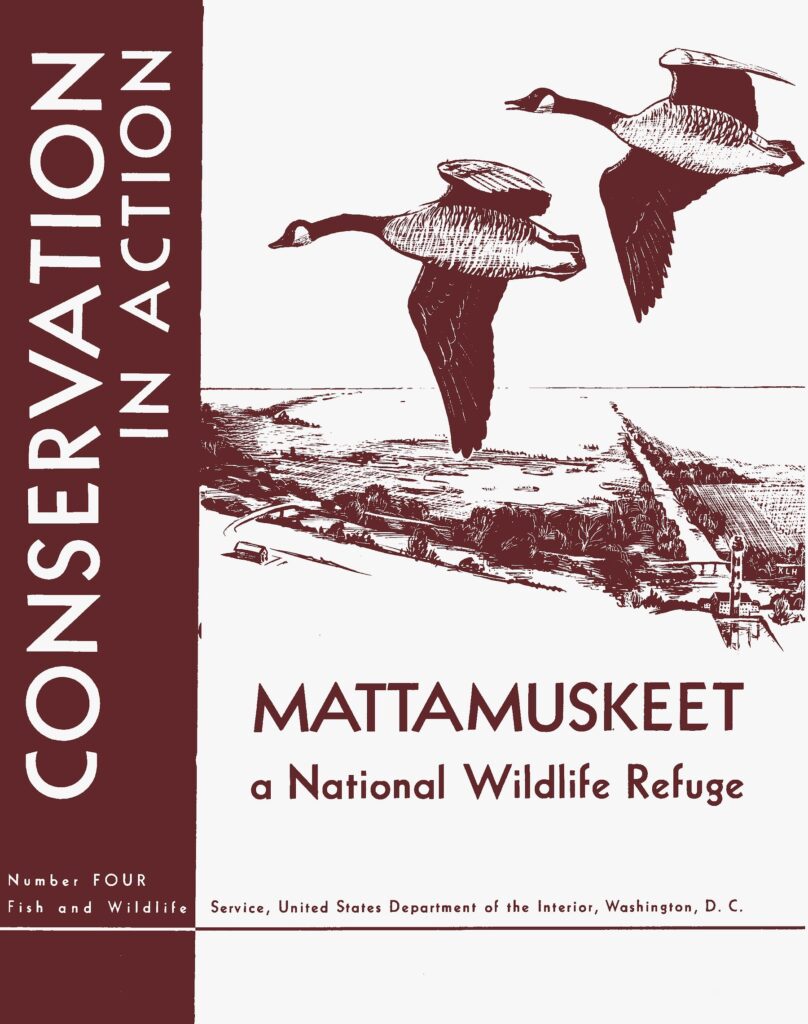
Conservation in Action bulletins authored by Rachel Carson in the late 1940s and early 1950s.
At the Bureau, Carson was assigned to work under Robert Nesbit, who was studying fish populations in the Chesapeake Bay. When data from fisheries scientists came in, Carson compiled the information into written reports, which often involved extensive analysis, library research, and correspondence with biologists. Though she was not working in the field, Carson nevertheless performed critical scientific labor, transforming research into publications.
It was also during this time that Carson began writing regular articles on Chesapeake Bay marine life for the Baltimore Sun. The extra income from these proved vital for the financial security of her family: in 1937, her sister Marian died from pneumonia, leaving Carson and her mother to care for Marian’s two daughters on their own.
In addition to writing for the Sun, Carson also published stories in national magazines. In September 1937, the Atlantic Monthly ran her essay “Undersea,” which she had initially written as a draft of a fisheries brochure. The piece introduced Carson and her poetic writing style to a national audience. The success of “Undersea” helped Carson land a book contract with Simon and Schuster for Under the Sea-Wind: A Naturalist’s Picture of Ocean Life the following year. The book, which explored the diverse ecology of the ocean from the perspectives of a sanderling (a shorebird), a mackerel (a fish), and an eel, was lauded by reviewers when it appeared in November 1941, but it failed to make money. A month later, the United States entered World War II, which limited sales.
As the federal government mobilized for war, Carson’s primary contribution to the effort was the creation of a series titled “Food from the Sea,” published by the Fish and Wildlife Service. These bulletins, each of which was centered on a specific region of the country, urged Americans to cook more seafood—especially lesser-known local species—and thus depend less on rationed beef, pork, lamb, and poultry.
After the war, Carson’s responsibilities at the Fish and Wildlife Service expanded to include more fieldwork. In 1946, she proposed a Conservation in Action bulletin series to highlight the national wildlife refuge system. Accompanied by artist and photographer Katherine Howe, Carson visited each refuge she wrote about to conduct background research and interview managers and locals. These multiday visits were mostly limited to refuges on the East Coast, but also involved trips to several western sites, such as the National Bison Range in Montana and the Bear River refuge in Utah. Partially in recognition of this work, Carson was promoted to the role of chief editor at the Service in 1949.
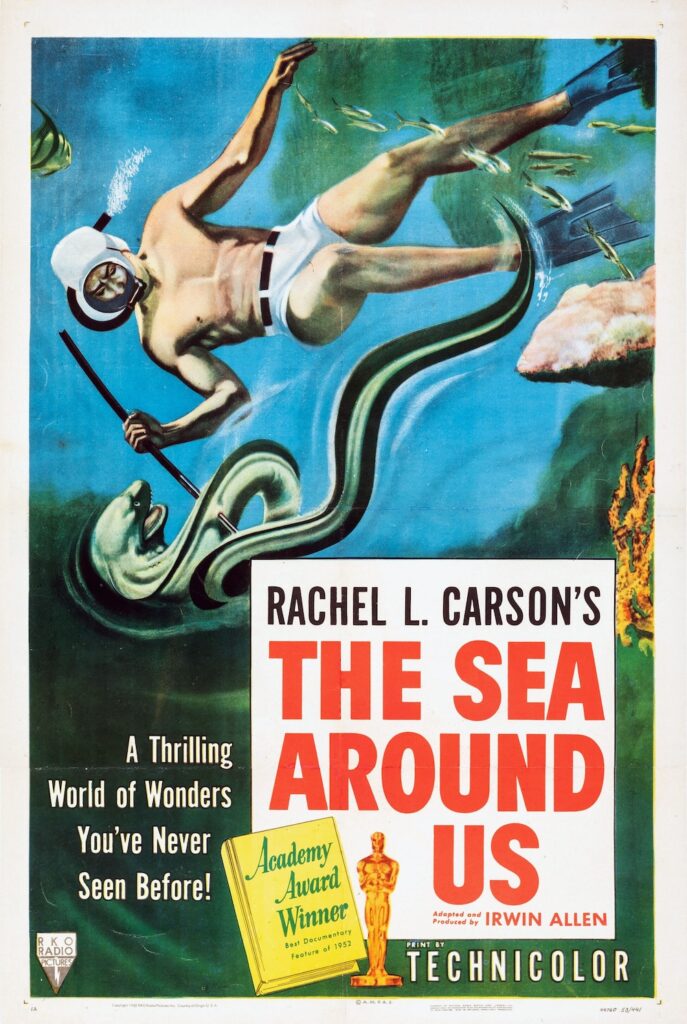
By the late 1940s, Carson had also begun work on her second book, The Sea Around Us (1951). Drawing on wartime oceanography research, the book was a sweeping natural history of the ocean—from its primordial origins to its currents, tides, depths, ecology, and natural resources. Several chapters were serialized in The New Yorker ahead of its release, helping to make The Sea Around Us a national bestseller. RKO Radio Pictures turned the book into a documentary of the same name, produced by Irwin Allen. The film won an Oscar for Best Documentary in 1953.
The success of The Sea Around Us lifted sales of Carson’s first book, providing much-needed income. In 1952, Carson formally resigned from the Fish and Wildlife Service to work full time as a writer. The third volume in what would become known as her “Sea Trilogy”—The Edge of the Sea—was published in 1955. Originally conceived as a field guide to the Atlantic seashore, the book ultimately explored the varied ecology and complex environments of the intertidal zone. “The shore has a dual nature, changing with the swing of the tides, belonging now to the land, now to the sea,” Carson wrote; it was a “marginal world,” where “only the most hardy and adaptable can survive.”
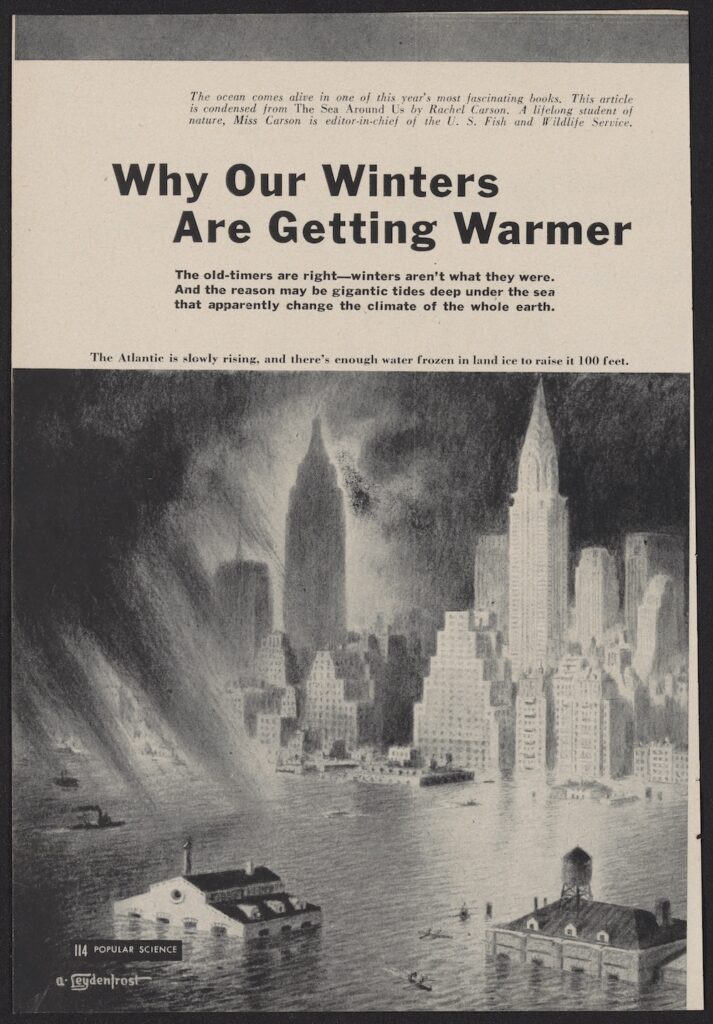
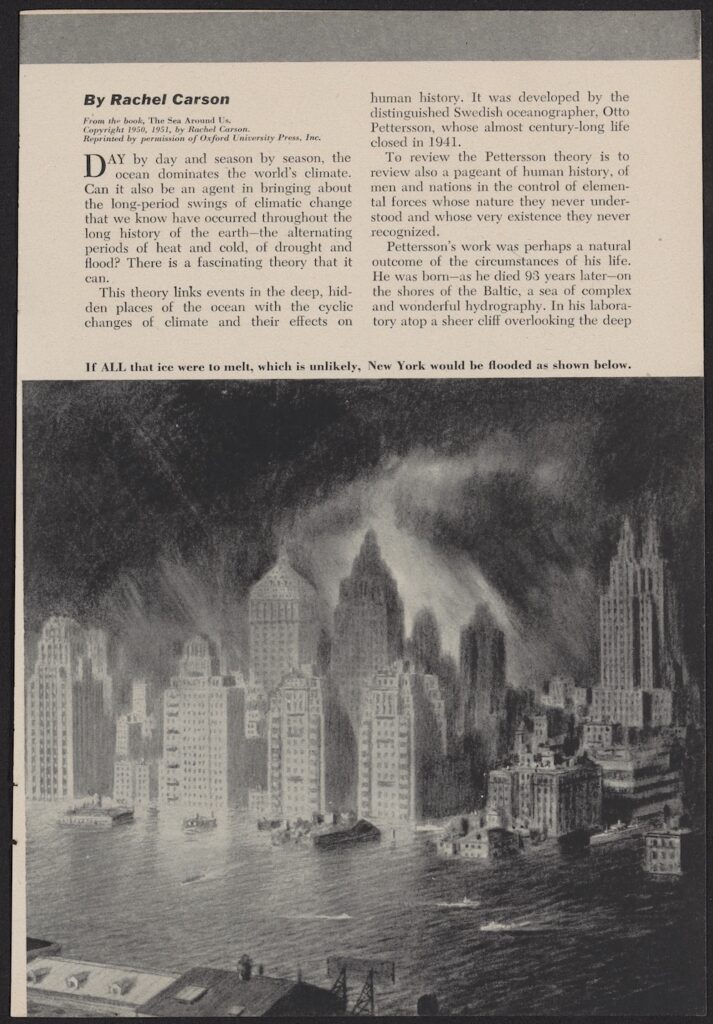
An excerpt of The Sea Around Us on warming oceans and sea level rise published in Popular Science magazine, November 1951. The illustrations depict a flooded New York City if all polar ice were to melt.
Silent Spring
Carson’s literary achievements were mixed with personal tragedy. In 1957, her niece Majorie unexpectedly died of pneumonia, leaving behind her 5-year-old son. Carson agreed to adopt the boy. The next year, her mother died too. Carson’s health was also deteriorating. In 1960, she underwent a radical mastectomy to remove tumors in her left breast. The surgeon did not inform her that these tumors were malignant. Within months of the operation, cancer had spread to her ribs and she began radiation treatment.

Despite these hardships, Carson was hard at work on her next project: a study of the dangers of chemical pesticides. She had first been alerted to this problem over a decade earlier while working at the Fish and Wildlife Service, where she wrote press releases about the first field studies on the effects of the insecticide DDT. Shortly after the U.S. Department of Agriculture made DDT available for public sale in 1945, Carson had pitched a story about the experiments to the editors of Reader’s Digest, but they declined her offer. At the time, she wondered whether the chemical might “upset the whole delicate balance of nature if unwisely used.”
By the late 1950s, scientific evidence was mounting that pesticides harmed mammals, birds, and fish. But DDT and other pesticides like it were more popular than ever. In 1957, public controversies over New York State’s efforts to eradicate the gypsy moth on Long Island and the Department of Agriculture’s plans to spray millions of acres in the South and Southwest to eliminate the fire ant convinced Carson to revisit the issue.
Carson’s skills as a researcher and a science communicator shaped the book that would become Silent Spring (1962). She consulted experts from wide range of fields and documented hundreds of accounts, building a compelling case for the threat that exposure to these new chemicals posed to both wildlife and humans. Silent Spring introduced concepts like bioaccumulation (the concentration of chemicals in tissues) and pesticide resistance (the rise of resistant populations with genetic mutations) to audiences that had been convinced that pesticides were generally safe and effective.
Though she did not call for an outright ban on their use, Carson argued that these new chemicals demanded caution and further investigation. “We have put poisonous and biologically potent chemicals indiscriminately into the hands of persons largely or wholly ignorant of their potentials for harm,” she wrote. This “subjected enormous numbers of people to contact with these poisons, without their consent and often without their knowledge.” Carson worried about the effects that continued exposure might have on future generations.
LEARN MORE: DDT
First synthesized in the late 19th century, DDT (dichloro-diphenyl-trichloroethane) was utilized on large scale during World War II to control malaria (carried by mosquitoes), typhus (body lice), and other insect-borne diseases. After the war, DDT saw widespread use in agriculture and as a household insecticide. Hear more about the persistence—and persistent controversy—of the pesticide in “DDT: The Britney Spears of Chemicals.”
The response from pesticide manufacturers to Silent Spring was swift. Labeling Carson as hysterical, emotional, and unscientific, industry representatives insisted their products were not only safe, but crucial for human survival. In the pages of its corporate magazine, for example, Monsanto published an essay titled “The Desolate Year,” parodying the opening chapter of Silent Spring. Whereas Carson’s chapter imagined a spring without birdsong, Monsanto’s version described a world overrun by insects in the absence of pesticides.
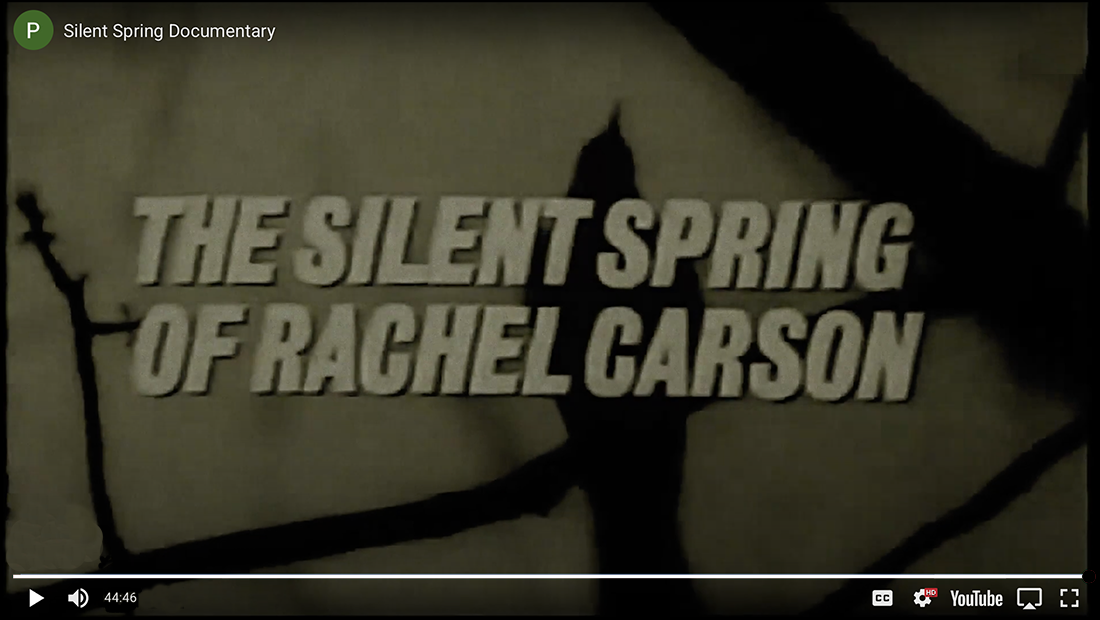
Despite these attacks, many scientists agreed with Carson, and public concern over pesticides continued to grow. CBS broadcast an hour-long special report, “The Silent Spring of Rachel Carson,” in April 1963, reaching millions of television viewers. President John F. Kennedy also tasked his Science Advisory Committee to investigate the issue. The subsequent “Use of Pesticides” report lent support to Carson’s evidence, arguing that steps needed to be taken to reduce environmental hazards. As the cancer in her body continued to spread, Carson mustered the strength to testify before two Congressional committees on pesticide use. She died in 1964.
Carson did not live long enough to see the fruits of the movement she started. Silent Spring sparked new studies on the effects of pesticides on the environment, providing further proof of their harm. In 1970, Congress created the Environmental Protection Agency (EPA) with the authority to regulate pesticide use nationwide. The EPA officially banned nearly all uses of DDT in 1972. The Fish and Wildlife Service honored Carson’s contributions to the environmental movement in 1970 by naming the Rachel Carson National Wildlife Refuge in Kennebunk, Maine, in her honor.
Glossary of Terms
Nature study
A popular education movement during the late 1800s and early 1900s that promoted hands-on engagement with natural materials rather than abstract study. It is often associated with Anna Bashford Comstock’s Handbook of Nature Study, which defined nature study in terms of “simple, truthful observations that may, like beads on a string, finally be threaded upon the understanding and then held together as a logical and harmonious whole.”
Back to top
Great Depression
A period of global economic struggle from 1929 to 1939 that was characterized by unemployment, poverty, the collapse of banking institutions, and a reduction in international trade.
Back to top
Oceanography
The interdisciplinary study of oceans including their physical properties (e.g. tides and currents), geology, chemistry, and biology. Organized as a distinct scientific field after about 1900, it grew massively in the U.S. with funding from the Navy during World War II.
Back to top
Further Reading
Carson, Rachel. “Statement before Congress, June 4, 1963.”
Lear, Linda. Rachel Carson: Witness for Nature. New York: Henry Holt and Company, 1997.
Lytle, Mark Hamilton. The Gentle Subversive: Rachel Carson, Silent Spring, and the Rise of the Environmental Movement. New York: Oxford University Press, 2007.
Stoll, Mark. “Rachel Carson’s ‘Silent Spring,’ a Book that Changed the World.” Environment & Society Portal, Rachel Carson Center for Environment and Society.
Support
Support for this biography was made possible by the Wyncote Foundation.
You might also like
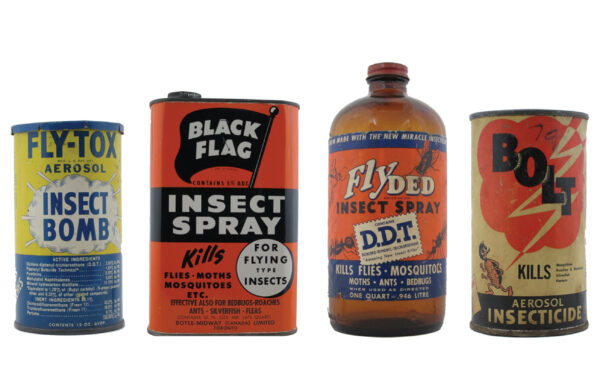
DIGITAL COLLECTIONS
Phil Allegretti Pesticide Collection
This collection features cans, sprayers, diffusers, and ephemera related to DDT.

COLLECTIONS BLOG
The Woman’s World of Pesticides
How killing bugs was gendered.
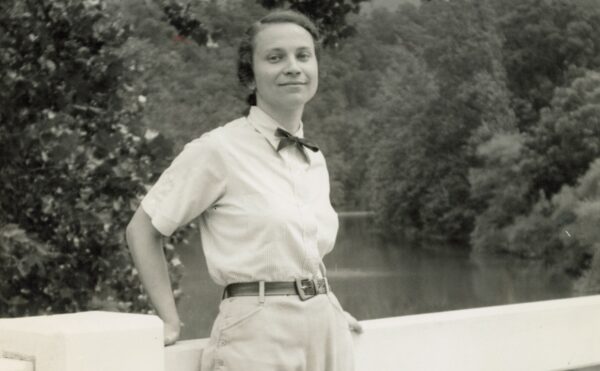
SCIENTIFIC BIOGRAPHIES
Margery Milne
A biologist and ecologist who dedicated her life to popular science writing and environmental preservation.