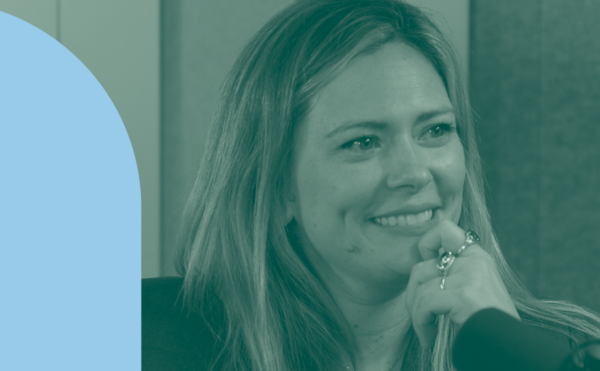
Alexis Pedrick joins Sam Jones and Deboki Chakravarti to bring you an episode from Tiny Matters, an award-winning podcast from the American Chemical Society produced by Multitude.
The episode, which originally aired in February 2026, explores the surprising origins and evolution of one of modern medicine’s most important tools: the clinical trial. Tiny Matters follows the development of experimental design across centuries to modern-day randomized control trials and the debates about their limitations, trying to answer the question, “How do we know whether a treatment truly works?”
Credits
Host: Alexis Pedrick
Executive Producer: Mariel Carr
Producer: Rigoberto Hernandez
Resource List
Placebo Controls, Exorcisms and the Devil
The Eight Wars of Religion (1562–1598)
The Emergence of the Randomized, Controlled Trial
The Emergence of the Randomized Controlled Trial: Origins to 1980
Streptomycin Treatment of Pulmonary Tuberculosis
Conservative Treatment of Acute Appendicitis: An Overview
Assessing the Gold Standard—Lessons from the History of RCTs
Transcript
Alexis Pedrick: Hi, listeners. Alexis here. So we’re big fans of Tiny Matters, an award-winning podcast from the American Chemical Society produced by Multitude. And today, not only do we have an episode from them, but we have them here on the show. So let me introduce you to their hosts, Sam Jones and Deboki Chakravarti. Hi, guys. Thanks for coming on.
Sam Jones: Hey, thank you for having us.
Alexis Pedrick: Of course. So could you tell us a little bit about your show?
Sam Jones: Absolutely. So this is Sam here. Hello. Our show is about the small science of big things. What does that mean? A lot. So we are a science podcast. We really cover, like, if you can imagine a field of science, we’ve probably covered it to some degree. Always looking for more suggestions of topics to cover, of course, but there’s really a lot of range in terms of what we talk about on the show.
So the podcast has been around not as long as Distillations, but still for quite a while. We launched in January of 2022. So we’re about four and a half years in, and yeah, it’s a blast! I mean, we cover infectious disease, we cover plants, we cover medicine, we cover physics, even though it scares us.
Deboki Chakravarti: Yeah. I think at its core, though, I think what Sam and I both love is diving into the history of all of these different science topics. Like we both are scientists by training, but I think we both have a lot of curiosity about the history and culture around these topics. So I think especially for a lot of Distillations listeners—listeners, sorry, I can’t talk. Good thing this isn’t my job or anything! But yeah, so I think for a lot of listeners today, I hope that would also be really appealing because I think that those are the most exciting things to us when we can connect. Like what’s going on in the science, what’s going on in the world with all of these other questions, and how does that shape our lives?
Sam Jones: Absolutely. I think, yeah, Deboki nailed it. This is really, you know, it’s the small science of big things in the sense that, like, yeah, big moments in science, big medical discoveries, but also things that completely shift the way humanity functions or that are sometimes kind of insidious, but play a big role. It’s like almost no topic is off limits—no science topic is really off limits. But yeah, I think like both of us as former researchers—so my PhD is in biomedical science, Deboki’s is in biomedical engineering. But I think both of us appreciate that science is one: a very important thing, but it’s just one piece of this puzzle that you kind of have to put together in terms of impact. And that has been so rewarding, I think, for us to go down those rabbit holes in these topics where we just had, at least speaking for myself, like a lot of times, I had no idea the impact beyond the stuff that’s kind of what meets the eye initially, you know?
Alexis Pedrick: Completely. I think we very much approach episodes that way too. So speaking of which, we have an episode from you guys today, and I’m really excited about it. Can you set it up for us?
Deboki Chakravarti: Yeah. So today we’re going to be listening to an episode we did recently about the history of clinical trials. And honestly, I don’t know for Sam, but how this process goes for me, a lot of my episode ideas come from being like, “So I keep hearing about this thing, but I don’t know anything about it.” Like we did one about deep-sea mining recently, that was the same thing, I was like, “I keep hearing about it in the news. I don’t know anything about it.” In clinical trials, I have a little bit more knowledge, but even then, I was still like, I actually don’t know where this started, like how clinical trials are such a big infrastructure in medicine today, and I just take it for granted that this informs all of the medicines that I take.
Sam Jones: Right? It’s so common that we just, like, don’t even, don’t even bother to think about how we got here and like what we’re actually learning from clinical trials, you know?
Deboki Chakravarti: Yeah. And for me—so I took on writing and reporting out this episode—and so for me, I knew going into it who I really wanted to talk to was a historian. Like, I really wanted to talk to someone who could help me go back in time to all of the important steps that shaped the rise of clinical trials because I felt like that would give me the best sense of how we got to clinical trials today and the way they are. And also, like a better understanding, then, of the questions that surround clinical trials: why are they the way that they are? But also, like, how should we be implementing them? Like ethically?
And there were so many parts of this conversation—and so I talked to this historian, David Jones—and there are so many parts of this conversation and the research going into it that surprised me. And I will also say there was a moment in this interview…I think starting any writing project, you’re like, how do I start? How do I introduce this to the reader? How do I get the listener to want to engage with it? There was a moment in this episode that, as soon as it happened, I was like, oh, I know how this episode’s going to start.
Sam Jones: Yeah, we’ve got a killer hook coming. I don’t want to say anything else, but get ready.
Alexis Pedrick: I actually think that’s the perfect way to start this episode. So from our friends at Tiny Matters, “The History of Clinical Trials: From Fake Exorcisms to Testing Today.”
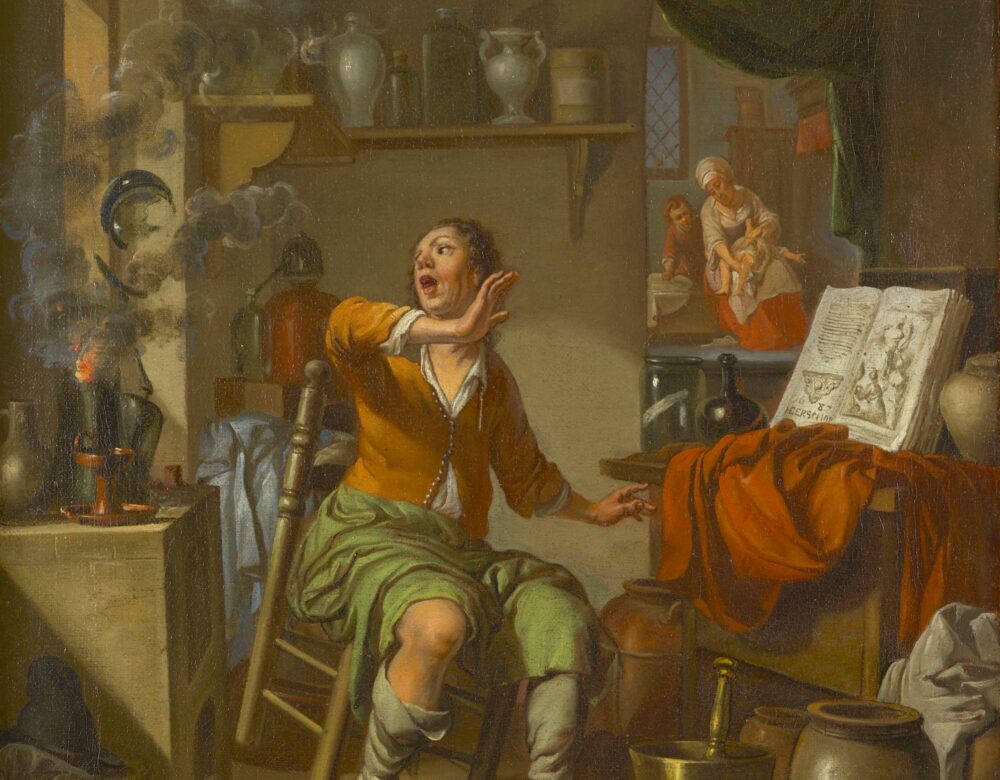
Deboki Chakravarti: In 1599, a family in a small French town had a problem. They claimed that their daughter was possessed by a demon called Beelzebub. I don’t know if there’s ever a convenient time to be possessed, but this was a particularly fraught one. Catholics had been at war with Huguenots, or French Protestants, for decades, and King Henry IV — this is France so King Henri IV — had just signed the Edict of Nantes to end the conflict. And despite daily exorcisms, the demon possessing this woman was supposedly claiming that all the Huguenots belonged to him.
So Henri IV set up a royal commission that would try something a little different. The woman would still receive exorcisms, complete with the normal exorcism accoutrements. There was a Catholic priest, a vessel to hold Holy Water, and lots of Latin…you know, like you might see in the Holy Scripture.
Except the priest wasn’t actually Catholic, the water in the vessel was just ordinary water, and the Latin wasn’t from Scripture. It was from Virgil’s famous poem Aeneid. That’s because this wasn’t actually an exorcism. It was an experiment, built on a deceptively simple tool that scientists and doctors still use today to study new medical treatments: a placebo.
Deboki Chakravarti: Welcome to Tiny Matters, a science podcast about the little things that have a big impact on our society, past and present. I’m Deboki Chakravarti, and I’m joined by my cohost Sam Jones.
Sam Jones: Henri IV’s experimental exorcism was just one of a number of, quote, “trick trials” carried out at the time to examine whether or not exorcisms worked. And they relied on the fact that the subjects of these trials — the people deemed possessed — were blinded to whether or not they were actually being given a Catholic exorcism, removing any bias they might have based on their religious beliefs.
In this case, the royal commission reported that the possessed woman still seemed to respond with agony to the fake exorcism. Other commissions, however, made up of clergy who opposed the Huguenots, reported that the woman was able to tell the difference between the real and fake materials. So there was still a bit of bias left in this experimental design. Actually, kind of a lot.
Deboki Chakravarti: And while the context is very different, at the core of these fake exorcism trials is a question that we see in medicine today: how do we figure out if a treatment works?
David Jones: And that seems like a relatively simple thing, and you’d hope doctors would have figured this out a long time ago. But it turns out that’s a really subtle question.
Sam Jones: That’s David Jones, the Ackerman Professor of the Culture of Medicine at Harvard Medicine.
David Jones: I could do an experiment on my dog. That would only be partially predictive because there are differences between humans and dogs. I could do an experiment on a family member, which would be more predictive. We’re both humans, and if you do it on a family member, you have some shared genetic similarities, but that family member is still not me. And so the only way to find out, will this thing actually work for you is for you to take the drug, but that’s not a perfect solution either.
Sam Jones: I think the answer might feel obvious to a lot of us now. You should do some kind of clinical trial where you get enough research subjects to test the drug on and see if it actually works. Clinical trials are just such a part of how we understand the medicines we use these days that it’s easy to take them for granted.
And when I think about clinical trials, my mind goes to the type you hear about most: the randomized, controlled trial, or RCT. In an RCT, you have your research subjects randomly divided into two groups. There’s the treatment group, where everyone gets the drug or procedure that’s being tested. And then there’s the control group, where people are usually given some kind of placebo that mimics the treatment but shouldn’t actually do anything. For instance, a sugar pill or a saline solution versus the real thing.
Deboki Chakravarti: It’s taken centuries for doctors and scientists to figure out the RCT as a design, and it’s become the gold standard for clinical trials. But should it be?
To answer that, let’s go back to the fake exorcisms, where the subjects weren’t aware of what treatment they were getting. That design was meant to prevent the kind of bias you might expect when carrying out an experiment loaded with religious tension. But it’s a technique that people were using a couple centuries later in a very different context.
David Jones: Mesmerism, or an early form of hypnotism, had become popular, especially in Paris in the 1760s, 1770s, and people would use mesmerism as a party trick in the same way the hypnotism is done now. But people were also curious about whether mesmerism could be used for surgical anesthesia or other therapeutic practices. And the French Academy of Science was skeptical, and so it decided to do trials of the efficacy of mesmerism. And they wanted this to be a respected trial, so they recruited famous scientists, including Benjamin Franklin, who happened to be in Paris at the time and was the most famous American in Europe.
And so Benjamin Franklin participated in this trial of mesmerism, where they had a real mesmerist, and they performed sham mesmerism. And again, the subjects were blinded, so they wouldn’t be able to see what was being done around them, whether it was real mesmerism or fake mesmerism. And again, the conclusion was the sham mesmerism was just as effective as actual mesmerism, and so neither of them was thought to be effective.
Sam: OK, my mind was just blown finding out that Ben Franklin took part in a mesmerism trial. Also by the fact that there were mesmerism trials. OK, sorry, continue.
Deboki Chakravarti: In the 19th century, doctors started doing trials of different treatments, including a type of testosterone therapy where they’d implant an animal testicle into a person.
David Jones: So they did real testes implants and then sham testes implants and then tried to figure out what was going on. Which if you ask me now as a doctor, what would happen if you injected a slice of monkey testicle into my skin? I would say you get a really bad infection and a whole lot of inflammation as your body responds to this foreign tissue. They hadn’t expected that that would be the outcome.
Sam Jones: Probably good that they did these trials then.
Deboki Chakravarti: Yes, definitely. And it’s good that the doctors used sham testes implants because it helped remove the placebo effect, the psychological effect where you feel better just because you think you’re getting some kind of special drug that will fix the problem.
Sam: This kind of trial is called a single-blind study, meaning that only the recipient doesn’t know whether they’re getting the treatment or not. But patients aren’t the only people who might want a trial to go well. The people who develop these treatments are often biased, too. Maybe they want money, fame, or just the satisfaction of knowing they’ve helped someone. To prevent that bias from creeping in, you need a double-blind trial, where neither the recipient nor evaluator know who has received what treatment.
David Jones: And that’s relatively straightforward to do in that, suppose you’re doing a trial of two different drugs. One option is to make sure that the doctors who are giving the drugs don’t know what the drug is, and then they follow the patients, and only after the fact, you undo the blind and reveal what had happened. Or sometimes what they will do is they’ll have one researcher perform the treatment, and then all the evaluations are done by a different person who doesn’t know what treatment the patient had been given.
Sam Jones: But that opens up another question: how do you actually decide who is going to get the treatment, and who is going to get the control?
David Jones: And if you say, “Well, okay, what we’re going to do is we’re going to bring 20 people into this room, and the researcher’s going to pick 10 to give the treatment to, and the other 10 don’t get the treatment.” In principle, that sounds fine, but again, if the researcher is biased, maybe they’ll cherry-pick the 10 who are going to get the treatment in some way to maximize the chance that the treated group has a better outcome than the untreated group.
And there are many accounts where that was clearly happening. Researchers would put the younger, healthier people into the experimental arm, and they’ll put the older, sicker person into the control arm, and sure enough, the younger, healthier people will have a better outcome, and they falsely conclude that the drug worked.
Sam Jones: One way around this was a technique going back to the 1800s called alternate allocation, where you’d give the treatment to every other person in the trial. So if someone comes into your trial first, they get Drug A. The next person gets Drug B, then after them is Drug A again, and so on and so forth. And the idea makes sense in theory because you should end up with two groups that are the same size, and they should be random.
David Jones: But what researchers realized, if you looked at alternate allocation trials, they often did not end up with the same number of people in both arms. And so something was going wrong that was allowing doctors to try to subconsciously or unconsciously rig the system such that people were getting funneled one way versus the other. And so by around 1900 or so or 1920, researchers had realized you couldn’t trust researchers to do alternate allocation reliably.
Sam Jones: One of these researchers was Austin Bradford Hill, a British epidemiologist and statistician. In the 1940s, Hill was working with other researchers on a trial to test the antibiotic streptomycin against pulmonary tuberculosis — a disease he’d actually survived decades before. This clinical trial was an opportunity to test out an idea Hill championed: randomization.
When patients showed up for the trial, they received an envelope that held a card that said either “S” or “C.” The S was for streptomycin, and the C was for control. The order of those envelopes had been predetermined by a series of random numbers that the investigators didn’t know, which effectively randomized the research subjects. And that was the start of what we now call randomized, controlled trials.
David Jones: It’s an incredibly elaborate process that’s really designed to overcome human foibles, like the fact that patients respond to placebo effects, that researchers have hopes and dreams for their treatments, which bias how they evaluate the results. And their biases are so profound that they can’t even be trusted to alternate back and forth, A, B, A, B, A, B.
Deboki: So, problem solved, right? We’ve found this amazing protocol that weeds out human biases, and now we’re going to just use RCTs to answer all our questions about medicine. It just makes sense, right?
Well, yes…but also no. Different elements of RCTs have been getting pushback for centuries. For example, the whole premise is based on the idea that you can look at how a drug works on a group, average out the results, and apply what you’ve learned to an individual patient. And to skeptics, that premise just didn’t hold true.
David Jones: And to make that concrete, they would say, “Well, you could do an experiment, suppose you’re a shoemaker.” You can say, “Okay, I’m going to go out and measure the feet of a thousand people, and I’m going to design the shoe that fits for the average of that group of thousand people, and then I’m going to use that average shoe for everyone.” That wouldn’t work at all for obvious reasons.
Deboki Chakravarti: In response, though, you might point out that a shoe is a little bit different from medicine. For one, it’s pretty easy to measure people’s feet. Medicine is a bit trickier, and it can make a lot of sense to rely on averages if that’s the best you have to go on.
But then there’s another concern: doing an RCT takes a lot of time and money. You have to recruit patients and arrange visits and do all the analysis — that adds up! In 2018, researchers looked at 138 clinical trials that had been carried out between 2015 to 2016. They found that the trials had a median cost of around $19 million. The most expensive one in that group was $346.8 million.
Sam Jones: And that cost can fuel an even more fundamental question. Does everything actually need a clinical trial?
David Jones: And so the classic example that comes up is people will say, “Well, for penicillin, penicillin so obviously worked that you didn’t need to do a clinical trial to know that it works.” Or appendicitis. If you have appendicitis, you need to take the appendix out. You don’t need to do a randomized controlled trial of appendectomy to show that appendicitis works.” And then people say, “Well, no one’s ever done an RCT of a parachute. We all know that if you’re falling out of an airplane, you’re better off with a parachute than without a parachute.” And those are all great rhetorical claims. But again, the question is, is the parachute analogy really fair? Are there treatments in medicine that you are so sure they’re going to work, that you’re as sure as you would be with a parachute falling from an airplane?
Sam Jones: While appendectomy has been the go-to treatment for appendicitis for more than a century, it’s not always an easily accessible surgery. For example, you know where it’s tough to do an appendectomy? In a submarine, where there’s no trained surgeon. And that became an issue for the US Navy in the 20th century. When people on board these submarines got appendicitis, the Navy decided to give them antibiotics to see if it could help. And they found that the antibiotics worked so well that not everyone ended up needing surgery.
David Jones: So appendicitis is an infection, antibiotics treat infections, and you don’t always need to take the appendix out. And so this was picked up in European healthcare systems in 1990s, early 2000s, and they started doing it.
Sam Jones: In 2021, researchers in the U.S. presented the findings of a clinical trial that compared antibiotics to appendectomy. Their results showed that for most patients with appendicitis, antibiotics are a good first-line treatment, even though some people would later need surgery I actually didn’t know about this — I was under the assumption that an immediate surgery is always necessary. Hey, that’s why you have clinical trials!
Deboki Chakravarti: The other important thing to remember about clinical trials is that they’re not just about showing that a treatment works. They can also help us identify potential side effects.
David Jones: And so if you do a trial on 100 patients and 50 of them have a terrible side effect, then you pull the plug on the drug and only 50 people have been exposed to that side effect before it goes widespread. If people had done proper trials of thalidomide in the 1950s, it’s possible that the terrible side effects would have been realized before the drug was widely used across Europe.
Sam Jones: We’ve talked about thalidomide before, but as a quick reminder: thalidomide was a drug in the 1950s and 1960s given to pregnant people to treat morning sickness, but that was later found to be linked to severe birth defects. The drug was never approved in the U.S., thanks in large part to the efforts of a woman at the Food and Drug Administration named Frances Oldham Kelsey.
The thalidomide disaster pushed the FDA to pass the Kefauver-Harris Amendment in 1962, which called for “adequate and well-controlled investigations” to prove that drugs are not only safe, but also effective. Eventually, this would be interpreted as the FDA requiring RCTs — randomized, controlled trials — to approve a new drug.
Deboki Chakravarti: However, there is a type of medicine that this policy doesn’t cover: surgery. The use of RCTs to study surgical techniques has been somewhat contentious, which surprised me because naively, I thought the same principles of studying drugs should apply here. Surgeons and patients have their own biases, and we want to make sure we remove those biases when evaluating how well a given surgery works.
But as David told us, there are actually some aspects of surgery that make it quite distinct from testing out a drug. For one, unlike handing a patient a drug, there’s a lot more variation in how surgeons apply their skill.
David Jones: A trained general surgeon presumably can do an appendectomy much more effectively than I could as a psychiatrist. And so there’s a lot of variation from one provider to another. And so suppose you do a clinical trial at hospital A of a new surgical operation, and those surgeons show that the treatment, the operation doesn’t work. Well, it’s likely going to be the case that there are other surgeons at hospital B or C who are like, “those surgeons at hospital A, they’re terrible surgeons. If I had done the operation, if I had done the trial, I would clearly have shown that the treatment works because I’m a more skilled operator than those chums who actually did the trial.”
Deboki Chakravarti: This isn’t just a hypothetical; it is actually a source of contention in the surgery world that has gone back decades. David told us that a lot of surgical research takes place in the Veterans Administration — or VA — hospital system.
David Jones: And while there are many excellent surgeons who work in the VA system, the people who see themselves as the country’s elite surgeons often end up at the big academic medical centers or the private clinics like Texas Heart Institute or Cleveland Clinic or places like that. And so whenever VA surgeons publish a trial showing that this operation doesn’t work, they’ll immediately get criticized by the people at the fancy private centers who will say those surgeons weren’t very good. And sometimes they have evidence.
Deboki Chakravarti: In the 1960s and 1970s, the VA system did a large clinical trial looking at coronary artery bypass surgery and found that it wasn’t as effective as people thought it was. But some dismissed the results as the product of less talented surgeons, particularly honing in on their operative mortality rate, which was higher at the VA system than at some other institutions.
David Jones: One response has always been to say, “Well, but the average American patient isn’t getting their bypass surgery done at Texas Heart Institute or Cleveland Clinic. They’re having it done by whatever community hospital happens to be down the street from where they live.” And so what they really want to know is what are the results of this operation in the hands of a typical surgeon, not in the elite surgeon, and so maybe RCTs actually are the right venue to do that.
Sam Jones: There are also practical issues, like time. Advances in surgery move fast, sometimes faster than clinical trials. So there might be some hot new surgical technique that gets put through an RCT, but by the time researchers have studied the result, the field may have moved on to something new.
Also, another practical issue: how exactly are you supposed to do a double-blinded clinical trial with surgery? How do you hide whether or not someone has gotten a surgery?
Deboki Chakravarti: The answer in some cases is that you can’t. Many surgical RCTs compare the surgery to a drug therapy, making it pretty clear to research subjects which treatment they’re getting. So surgeons are left to debate whether doing an RCT that’s not fully double-blinded is still worth the information.
But David told us that surgeons are figuring out ways to do sham surgeries that can make blinded experiments possible.
David Jones: And this has mostly been done by orthopedic surgeons. And it started with knee surgery and they’ve done for back surgery and a few other things. Where what they will do is they will bring a person into the OR and the people who get surgery get the real arthroscopic knee surgery. And the people who are in the control group, the surgeon will make a two, one inch incisions in the skin of their leg and they will anesthetize the leg as if they’re doing the surgery. And then often a lot of this is done with video monitors because you’re using arthroscopes and things like that. And so while everyone on the OR is looking at these screens to watch the operation, they’ll put on a video of someone else’s operation. And the doctors are looking at the screen and moving their hands as if they’re the ones manipulating the instruments. And the patient is looking at the screen and hearing noises and their body is being moved around by the surgeon. And so the patient thinks that they’re actually getting surgery.
Deboki Chakravarti: These kinds of shams work for testing out some surgeries, but there are plenty where it’s still not possible. It wouldn’t be ethical, for example, to devise a sham open heart surgery. But the fact that we’re at this point also shows how the ethics around clinical trials have evolved as surgery has advanced.
David Jones: 30 years ago, 30 years ago, 1995, a surgical sham would have been seen as a radical out there thing. Some of them had been done in the 50s, they had been done very rarely. But really starting around 2000 or so, again, with this very famous trial of arthroscopic knee surgery, surgeons have realized that there’s actually a lot of what they do can be tested with proper shams.
And so as surgery itself has changed, that has allowed the ethical conversation around surgical research to change. And so now surgeons are more and more willing to perform sham controlled surgical trials, which is interesting to see.
Sam Jones: So doing RCTs for a surgery comes with a lot of practical and ethical challenges. But that doesn’t mean using RCTs to study pharmaceuticals is straightforward either, especially ethically.
David Jones: In the 20th century, the U.S. researchers had a few favorite research populations. One was the VA system, as I mentioned earlier, another was the prison system. Vast amounts of research have been done on incarcerated people in this country. Some of it pretty grim, some of it robust research, but some of it exploitative toxic harmful stuff.
Sam: In the early 1970s, the federal government shut down these trials on incarcerated people, but the question of how to find research subjects for a clinical trial has spawned an industry of clinical research organizations, or CROs, who help researchers find people to test their treatments on.
David Jones: And they will promise to provide you a thousand research subjects over the next six months, and they have all sorts of techniques for drumming them up, often paying them, but there have always been concerns about the ethics of this.
Sam Jones: In particular, the ideal patient for a clinical trial is someone who has the disease but has never gotten any treatment for it — these people are called treatment-naive subjects. And researchers in the U.S. and Europe have found that there are actually a lot of treatment-naive subjects, if you look for them in places that don’t have access to modern healthcare. Lotta unethical red flags going up here.
David Jones: So you’ll have U.S.-based researchers going to … They used to go to Ukraine and Poland, Latin America, Southeast Asia, increasingly South Asia to do research because these countries have huge populations of people who are underserved by the healthcare system who are willing to try their luck on clinical research. And there have been huge debates about when is it appropriate to use international research subjects for U.S.-based research. For instance, suppose you’re testing an incredibly expensive treatment. Is it appropriate to go to an impoverished city in Bolivia and test that treatment there knowing full well that this treatment will never be available in that city itself?
Deboki Chakravarti: One way to address this particular question is by committing to making the drug available to that area when the trial is done. But there are so many other issues that come up, like making sure people are able to provide informed consent, so there’s still a lot of debate about how to best implement clinical trials.
Sam Jones: And just to make it even more complicated, there is still plenty to figure out in terms of the actual science of clinical trials. One of the ongoing questions that David pointed out is how to find the best endpoint for a trial. Should you be looking at how subjects are doing after a few months? Five years? Ten years? Ideally you’d be looking long enough to find compelling evidence for or against the treatment, but that also means the trial is going to be slow and expensive.
So scientists have been searching for biomarkers that can serve as a good proxy. For example, with HIV, researchers have found that looking to see if someone’s viral load has gone to zero corresponds to them not being contagious anymore. But other diseases don’t have great biomarkers, like heart disease for example.
David Jones: There have a whole series of drugs that have been shown to lower cholesterol, but not decrease your risk of a heart attack and not improve your survival. And that continues to be a puzzle. And so people in different specialties argue about the merits of biomarkers versus the gold standard of five year event free survival.
Deboki Chakravarti: The way we approach clinical trials and medical knowledge in general is going to continue to change as scientists continue to develop new research tools. But the core issue of trying to take out our own human biases, that will probably always remain.
David Jones: I think probably the thing that surprised me the most was how far back these issues go. The fact that you can trace blinding back to the 16th century studies of Catholic exorcism or to 19th century studies of testicular implants, and yet here we are in 2026 still struggling.
Deboki Chakravarti: And at the same time, while RCTs are complicated and challenging, they have been and continue to be an important tool in helping doctors remove the biases that can get in the way of good data. We rely on clinical trials to make decisions about our health — decisions that would have been so much harder to make if we also had to worry about the subjects being swayed by a placebo effect or researchers being swayed by financial interests.
David Jones: Just because the technique is fallible doesn’t mean it’s not helpful. And just as science in general is fallible, but science still works pretty well. You can get people to the moon and back. Penicillin does work really well. Turns out COVID vaccines have been life saving for billions of people. The science is uncertain or always has uncertainties built in. Scientists are argumentative and they disagree with each other. The fact that scientists disagree, I think is proof of the legitimacy of the method, not the opposite. It has mechanisms in place that should make it self-correcting science. Randomized clinical trials are a big part of that self-correcting mechanism. There is a very long list of treatments that people once swore by that were discredited by randomized clinical trials and now aren’t imposed on patients. And so that’s great.
Enormous progress has been made and it’s important for people to understand that, that you can have progress even in the absence of perfection.
Sam Jones: All right, Deboki. Tiny Show and Tell time.
Deboki Chakravarti: It sure is. Do you want to go? Do I go?
Sam Jones: I can go.
Deboki Chakravarti: Yeah, you go. You do it.
Sam Jones: Okay. All right. So this is just a fun one. All right. So at the end of last year, so December 31st, actually the press release came out December 31st, 2025. But when I saw it, I thought I have to share this. So there was an ancient snake hiding in a museum for decades and that’s misleading.
Deboki Chakravarti: The way that you say that, this is the snake.
Sam Jones: Yeah. This snake is thousands of years old. No, no, no. The snake, it’s a fossil. No, it’s part of a skeleton. Okay. So there was a snake fossil. It was found on England’s south coast and it was just in the Natural History Museum London. And so what they figured out from the skeleton was that it lived around 37 million years ago, like this type of snake lived around 37 million years ago. And it’s really interesting because it provides some clues to modern lineages of snakes. I like snakes. I think they’re really fascinating. I know we’ve talked about snakes, but the reason I’m bringing this to you is not because I’m like, oh my gosh, I love learning about snake lineages. I’m not against it. But the reason I think it’s fascinating is that the remains of this snake sat in collections for over 40 years.
Deboki Chakravarti: Oh, wow.
Sam Jones: This is not the first time we’ve talked about that on Tiny Matters, which is like, guys, how many things in museum collections that were collected in the 19 … Particularly, I think the collection that I’m talking about right now and one that I’m about to mention in a second, both were from 1980, 1981. So I wonder, was there a lot of collecting going on and a lot of just stashing it? Because now it feels like there’s all these things being unearthed in museums where people then say, “Hold on, this is telling us a lot about the evolution of a species.”
So this snake supposedly lived about 37 million years ago. And apparently in England at that time, there were a lot of different snakes that are no longer alive there today. But it’s interesting because I guess this snake is very early on in some branching, evolutionary branching event that led to most of the species that are alive today, which is really cool in itself.
Now let’s talk about March 2024, because that is when I talked about on Tiny Matters, or at least it was published, and then I think I talked about it in Tiny Matters in a Tiny Show and Tell a little bit later on, but they uncovered a fossilized skull of an ancient amphibian ancestor in the Smithsonian’s National Museum of Natural History, which is here in Washington DC where I am. And this is a 270 million year old ancient amphibian. So it feels like, I don’t know, I just thought this was so funny because I was reading it and I was like, wait, hold on. Didn’t I talk about some other creature? I understand there’s a reptile versus amphibian. These are different things. But it’s just really fascinating that people collected so much stuff. And maybe there was more funding for this kind of thing. There are booms in funding for different things at different points in time. So I wonder if this was just a really great time to be in the archeology world.
Deboki Chakravarti: Right. But also right now, are we in a time where people are like, “We got to go through the archives.” We need to go see what we’ve got, you guys.
Sam Jones: Yes. Well, it kind of feels like it, but I’m also very biased in just thinking about these two studies. But it’s interesting, one was in DC, one was in the UK, but yeah, in that case, it was, again, one of these things where all of a sudden they’re saying, “Oh, we have a new species. It’s a proto-amphibian.” And I don’t know if you remember, but they named it Kermitops gratus in honor of Kermit the Frog.
Deboki Chakravarti: Oh, nice.
Sam Jones: Yeah. So I mean, this is just kind of a silly-
Deboki Chakravarti: No, I love it. And if you’re an archivist or a librarian or whatever, let us know what the coolest thing you’ve discovered in your archives is.
Sam Jones: Yeah. Yeah. Because it’s like, yes, someone else dug this up, but you discovered that it was something unique and it actually has this wild evolutionary significance. So yeah, I loved that. And I was like, you know what? Deboki loves discovery.
Deboki Chakravarti: I don’t know if people know this. Maybe we talked about this before, but we love archives here at Tiny Matters. We’ve talked about how much we love archives. So we want to know about all the archives that are out there. If you’ve got a Tiny Show and Tell Us about archives. Please write in. We’ve asked for listeners to send us their Tiny Show and Tell Uses or ideas for episodes. We’re not putting this out there for you guys. If you have an archive that you love, tell us about it.
Sam Jones: Yeah. Yeah. Are you an archivist who’s discovered something very cool? Please, we want to know.
Deboki Chakravarti: Well, Sam, I think you and I are in a little bit of a wavelength. I don’t have the same thing as you, but I am also here to talk about ancient animals. I’m going to talk about giant kangaroos during the Pleistocene era, particularly this one group that I think are called sthenurine or sthenurine, sthenurine. That’s the pronunciation I got when I looked it up and that’s what I’m going to go with.
Sam Jones: Okay.
Deboki Chakravarti: So some details. One of my favorite is that their feet only had one toe on them and the largest species One toe. Yeah.
Sam Jones: I’m imagining this. So is their foot just a toe?
Deboki Chakravarti: It’s one big foot, I think. I think so. I think at that point-
Sam Jones: Then what’s a toe and what’s a foot?
Deboki Chakravarti: Look, that’ll be our next episode. Okay. The largest species could get to around 250 kilograms, which is 551 pounds.
Sam Jones: Whoa.
Deboki Chakravarti: For comparison, large male red kangaroos today are around 90 kilograms or 198 pounds. So that is a much, much bigger kangaroo. And so these kangaroos were so big that people have wanted to know the important thing. Could they actually jump? And so to figure this out, scientists looked at bones from species of macropods. So these include extant species like kangaroos and wallabies, but it also includes extinct giant kangaroos. So they looked at things like the femur and tibia to figure out how big the tendons attached to them would be and how much force they could deal with. And I didn’t know this, but kangaroos today, they are living on the edge. Their Achilles tendon is always close to breaking, but that’s actually an important feature because it’s like part of, I guess something about this is how it helps them store a lot of elastic energy for their hops.
Sam Jones: Whoa.
Deboki Chakravarti: Which, I don’t know, it sounds scary, but they’re hopping away. You don’t mess with a kangaroo. That’s what I’ve learned.
Sam Jones: Yeah. Kangaroos are terrifying. So I’m just imagining one that’s like three times bigger…
Deboki Chakravarti: A giant one.
Sam Jones: Oh, whoa.
Deboki Chakravarti: Yeah. And the thing with the physics of all of this, it’s not like you can just make everything twice as big and it’s going to be okay. It’s going to just work okay, especially when you’re dealing with these tendons that might be on the verge of snapping. But the scientists looked at the bones, they did some math and they found that some of the features of giant extinct kangaroos might have helped. They had shorter feet, which apparently would have helped with resisting some of the bending motion. The bone that the Achilles tendon would have gone into is also wider, which would have helped the tendons to be bigger to deal with the load of hopping. None of this means, unfortunately, that we can tell, that giant kangaroos in the past were actually hopping around, but it does mean it was an option, which it probably wasn’t like they were just hopping everywhere. It probably wasn’t their main choice, but it probably would have helped if they were doing just some quick movements. They just needed to kind of bounce a little bit.
Sam Jones: Yeah. Oh, that’s so interesting. It makes me think too about in the episode that we did on the dodo bird and dodo extinction, some of the work that people are doing to try and understand how the bird moved and it was pretty fast. And that was all probably, right? Can’t say for sure if the species does not exist anymore, but just based off of interesting modeling.
And I think same thing where it was like, okay, let’s look at femur length versus this other leg bone versus height versus … And trying to model that proposed behavior, which is just really interesting, thinking about the mechanics of movement of extinct species.
Deboki Chakravarti: Yeah. It’s crazy what you can figure out by looking at their bones.
Sam Jones: Yeah. Thanks Deboki.
Deboki Chakravarti: Thanks for tuning into this week’s episode of Tiny Matters, a podcast brought to you by the American Chemical Society and produced by Multitude. This week’s script was written by me, and edited by Michael David and Sam, who is also our executive producer. It was fact-checked by Michelle Boucher. Our audio engineer is Mischa Stanton. The Tiny Matters theme is by Michael Simonelli and the Charts & Leisure team.
Sam Jones: Thanks so much to David Jones for joining us. Go rate and review us wherever you listen, we super duper appreciate it. Also, have an episode idea? Email us at tinymatters@acs.org. We’ll see you next time.
Alexis Pedrick: So welcome back. All right. I have to say that was awesome. It was so interesting and so weird. You are absolutely right. That is a killer opener. I learned so many things that I didn’t even realize that I didn’t know, which is one of the things I love about your show.
So I know you talked a little bit about, like, how you, like, came into this idea and you were interested, but I have to know what came first, the chicken or the egg, the exorcisms or the clinical trials when you were planning this episode.
Deboki Chakravarti: It was fully the clinical trials. The exorcisms were just a complete surprise to me. I had no idea that was part of the history. Even when I had started doing the research, it didn’t come up. And so it was so great talking to David Jones, where he mentioned it, because then after that, I like dived into it and I was like, oh, this is, this is really this really happened. Like, obviously, I trusted him when he said it happened. But like you always want to make sure. And I was just like, wow
Sam Jones: Yeah, also, I feel like these are the kinds of stories that—I wish I had heard these kinds of stories when I was in school, because I feel like they are just immediately captivating because on its surface, a clinical trial, although important, essential, it’s not like flashy and exciting, right? It’s like something that needs to happen to make sure things are safe and effective. But this is just like it. It, it completely changes your understanding of how far we’ve come, but also how long ago people were thinking about the importance of really figuring out if there’s an effect or if there’s not, you know, and it’s just, it’s like that context is transformative. I think a lot of times, in terms of getting people interested in topics that they may have, you know, not even, you know, just shown no interest in otherwise.
Alexis Pedrick: Yeah, yeah, absolutely. I felt like hearing that example with the exorcism really, like, helped me understand kind of what the purpose of clinical trials, this idea of like, how do we know? And I just thought that was completely fascinating. So surgery, clinical trials, I will admit, is something I have never thought about. And it wasn’t until you started breaking it down that it occurred to me, like, oh, right, a medicine you give everyone could be the same, right? But like, you can’t give everyone the same surgeon.
Deboki Chakravarti: Yeah. It was, it was genuinely something I had never thought about. And it was just sort of in preparing for this interview with David, where I was going through his work, and he had written about, like, the history of these cardiac surgeries. And like, again, I just went in with such a set of my own assumptions of like, well, of course you’d want a clinical trial. Like, why wouldn’t you want one? And then reading through and being like, and specifically the story kind of outlines around this one particular surgery. And like some of the debate around those results, like, you know, that things are not just like immediately accepted as consensus, but sometimes hearing those conversations broken down in this way is so helpful because you’re like, oh, these are like the important questions that shape the things that are like, you know, being done to people every day.
Sam Jones: So, Deboki, what’s so interesting is although I think there’s so much overlap in the ways that we think about things and our academic training. I came into it with the opposite view. I had just assumed it was impossible almost to do clinical trials for surgery. Because a lot of times when I think of surgery, someone is, you know, ripped their ACL or did this or did that, and it’s like they have to have the surgery versus does this drug work? So in my mind, I was like, “Well, it’s completely unethical to not do a surgery, right?” But again, it’s like, how do you know if it really worked or if it would have, you know, whatever it was that was torn or damaged would have just healed on its own? Or maybe, you know, some sort of medication would have actually been enough for, I don’t know, like that was fascinating.
I also think that the appendectomy like that was—because in my mind, I was also like, how the heck would you even test that? And it’s like, all right, well, this wasn’t a planned clinical trial, but still fascinating because I always thought, yeah, if you have appendicitis, you got to get that out, or you’re going to die. And it’s like, okay, you got to do something. But apparently, for so many people, antibiotics seem to do the trick just as well.
Alexis Pedrick: But yeah, so okay, we often have more than we can fit in a single episode. I, I often feel like it’s a side effect of getting to dive into so much interesting stuff. So was there anything that you guys left on the cutting room floor in this episode that you’re still really interested in?
Deboki Chakravarti: Yeah. I think for me, one of the things that we lightly touched on, but didn’t really get to dive into really deep was placebos. Because that’s obviously a core part of, like, the clinical trial study design. And one of the things that David was telling me is just like how much work goes into the design of placebos, which I had also never appreciated, just like how much you have to make these pills really resemble the original placebo. And I was like, “Oh, that’s so interesting.”
So now I’m working on an episode about the placebo effect in general, because I was like, “Ooh, this episode is like branching off now.” There’s so many other things I want to know. So it won’t be as much about the design of placebos, but sort of understanding, like the state of what we know about the placebo effect and how that also design and how that also affects the ethics around Clinical trial design, around research, around medicine also broadly. So I’m really excited about that. It’s not out yet, but it should be out a few weeks after this episode drops.
Alexis Pedrick: Oh, I will be tuning into that episode. First of all, I’m fascinated by placebos too. I guess yeah, what else are y’all working on? What else do you have coming up?
Sam Jones: Oh yeah. So by the time this episode comes out, we will have just released two episodes that are related to safety in Space. So the first episode is about the Challenger disaster. And what went wrong on a scientific level, but also on an organizational level, right? And like this, this idea of normalization of deviance, which is a term that was coined by a sociologist following the disaster. This idea that, you know, things become normalized, like little, you know, deviations in a plan or the way that something works or doesn’t work, just become normalized, even though people know, hey, we should probably fix this.
I was actually able to talk with the safety lead at NASA, the acting chief of safety at NASA, who is also in charge of safety for the recent Artemis two mission. So that was really fascinating. And I was also able to speak with a former astronaut named Terry Hart, who flew in the Challenger less than two years before the explosion. But Deboki is reporting and writing, or has reported and written an episode on space debris: what it is, why it’s a problem, what people are trying to understand. I don’t know if there’s anything else you want to add to that.
Deboki Chakravarti: It’s definitely another one of those episodes that was really, “I keep hearing about this, but I don’t know a thing about it.” And so it’s been super fun to talk to both people who are working in this area of science that I only found out about through Tiny Matters, which is space sustainability, which makes total sense that this would exist, that we would be thinking about like, “Hey, how can we do what we’re doing in space, but in a sustainable way?”
But also talking about some of the techniques that people are exploring to deal with space debris because it really is a safety issue, both in space but also on Earth. So it’s been really, really interesting to learn about from people who are working in the field about, like, just how does this work? Like, what is space debris? How do we track it? How do we deal with it?
Alexis Pedrick: So I cannot thank you both enough for coming on the show, for chatting with me, for giving me and all our listeners sort of a behind-the-scenes look. This was such an awesome episode. Where can people listen to Tiny Matters? How can they get your show?
Sam Jones: Yeah. Well, first off, thank you so much for having us. This is always we always have fun chatting with you, Alexis. This is the best. We love Distillations. We’re psyched to be here. Yeah. So people can find tiny matters on all listening platforms. So podcast apps, you know, Apple Podcasts, Spotify, all, all the standard stuff. You can also see clips from episodes in a couple of places on YouTube at @Tiny Matters podcast, or on Instagram at @acspodcasts.
Alexis Pedrick: And I hear they can find you everywhere at @Samjscience and Deboki at @OkiDokiBoki, which I think we all agreed is the best username ever. So, all right, well, I’m going to take us out.
Distillations podcast is produced by the Science History Institute and recorded in the Laurie J. Landau Digital Production Studios. Our executive producer is Mariel Carr. Our producer is Rigoberto Hernandez. And thanks to our friends over at Tiny Matters for sharing this episode with us.
Support for Distillations has been provided by the Middleton Foundation and the Wyncote Foundation. You can find all of our podcasts, as well as our videos and articles, on our website at sciencehistory.org. And you can follow us on social media at @scihistoryorg for news about our podcast and everything else going on in our free museum and library.
For Distillations. I’m Alexis Pedrick. Thanks for listening.