Ullyot Public Affairs Lecture & Award
In 1990 chemist Glenn Edgar Ullyot endowed a public lecture with the Philadelphia Section of the American Chemical Society. The goal: that this annual lecture would inform the audience of how chemistry, biology, and the sciences in general contribute to the public welfare.
In the years since, esteemed scientists, journalists, government and business leaders, and even Nobel laureates have addressed audiences at this popular lecture. It is presented jointly by the Science History Institute (where the lecture has been held since 1997), the Department of Chemistry at the University of Pennsylvania, the Department of History and Sociology of Science at the University of Pennsylvania, the Department of Chemistry and Biochemistry at Saint Joseph’s University, and the Philadelphia Section and Delaware Section of the American Chemical Society.
The Ullyot Lecture & Award includes a Q&A session and the presentation of the Liberty Bowl. This year’s event will take place on November 13, 2026.
2026 Ullyot Public Affairs Lecturer: Ben Feringa
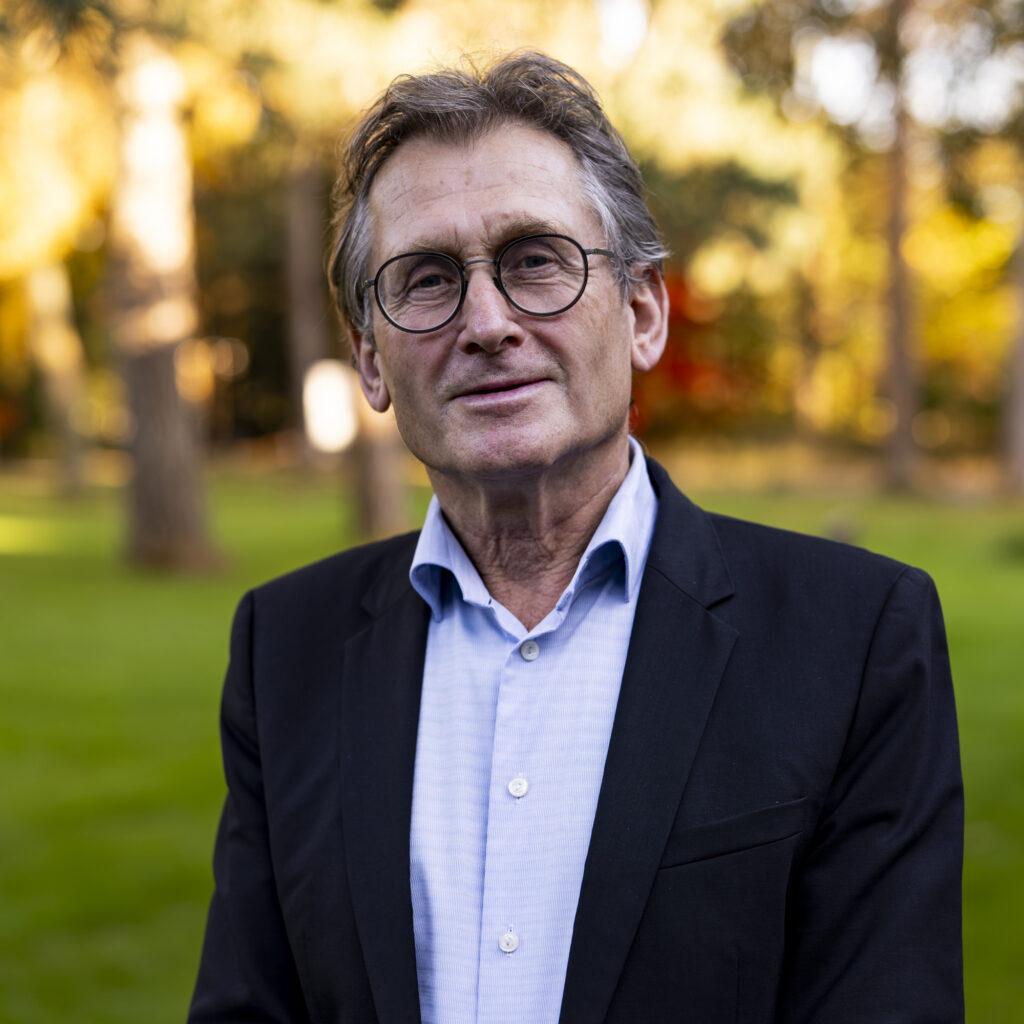
Bernard L. “Ben” Feringa is the Jacobus H. van’t Hoff Distinguished Professor of Molecular Sciences in the Stratingh Institute for Chemistry at the University of Groningen, Netherlands. His research interests include stereochemistry, organic synthesis, asymmetric catalysis, molecular switches and motors, self-assembly, molecular nanosystems, and photo pharmacology.
Feringa received the 2016 Nobel Prize in Chemistry “for the design and synthesis of molecular machines.” He shared the award with Jean-Pierre Sauvage and Sir J. Fraser Stoddart, who delivered the Institute’s 2016 Ullyot Public Affairs Lecture.
Feringa’s research has been recognized with numerous other awards, including the 2017 Tetrahedron Prize and the 2018 European Chemistry Gold Medal. He was elected as a member of the European Research Council and foreign associate of the United States National Academy of Sciences in 2019, and in 2020 as a Foreign Member of the Royal Society (United Kingdom). Feringa is an Academy Professor of the Royal Netherlands Academy of Arts and Sciences. In 2008 he was knighted by Queen Beatrix of the Netherlands.
Feringa received his PhD at the University of Groningen and worked as a research scientist at Shell in the Netherlands and U.K. before returning to Groningen as a lecturer in 1988.
Ullyot Public Affairs Lecturers
- Sir David W. C. MacMillan (2025)
- Omar Yaghi (2024)
- Carolyn Bertozzi (2023)
- Frances Arnold (2022)
- Peter Agre (2021)
- Roald Hoffmann (2019)
- Jennifer A. Doudna (2018)
- Marcia McNutt (2017)
- Sir James Fraser Stoddart (2016)
- Bruce Alberts (2015)
- George M. Whitesides (2014)
- Joe Palca (2013)
- Paul Anastas (2012)
- Michael Christman (2011)
- Susan Solomon (2010)
- Joseph M. DeSimone (2009)
- Bernard Bigot (2008)
- Shirley M. Tilghman (2007)
- Ralph J. Cicerone (2006)
- Marye Anne Fox (2005)
- Phillip A. Sharp (2004)
- Alfred Bader (2003)
- Jacqueline K. Barton (2002)
- Robert S. Langer (2001)
- Mark S. Wrighton (2000)
- George B. Rathmann (1999)
- Earnest W. Deavenport (1998)
- P. Roy Vagelos (1997)
- Harold E. Varmus (1996)
- Carl Djerassi (1995)
- Orlando A. Battista (1994)
- Bassam Z. Shakhashiri (1993)
- Maxine F. Singer (1992)
- Harry B. Gray (1991)
- Mary Lowe Good (1990)
About Our Copresenters
The Department of Chemistry at the University of Pennsylvania is composed of a dynamic community of researchers creating and disseminating new knowledge at the forefront of the chemical sciences. As an enabling science, chemistry is at the focal point of every important modern societal challenge. Our faculty and students engage these challenges daily on a local, national, and international scale.
The Department of History and Sociology of Science at the University of Pennsylvania uses the tools of the humanities and social sciences to study science, technology, medicine, and the environment. Through a broad range of scholarly projects, faculty research examines relations between the technical practice of scientists, engineers, medical researchers, and clinicians and the material, social, political, and cultural context in which those practices occur. Interdisciplinary study, faculty-student interaction, and individual mentoring characterize both the graduate and undergraduate programs.
The Department of Chemistry and Biochemistry at Saint Joseph’s University is the home of the chemistry, biochemistry, and pharmaceutical chemistry majors, and the chemistry, biochemistry, and bioinformatics minors. With expertise distributed over all five of chemistry’s primary areas, the faculty engage in diverse, award-winning teaching and research activities that prepare students for such future opportunities as employment in industry, science teaching, and postgraduate training in graduate schools, medical school, and law school.
The American Chemical Society (ACS) is a nonprofit organization chartered by the U.S. Congress. With more than 150,000 members, ACS is the world’s largest scientific society and a global leader in providing access to chemistry-related research through its multiple databases, peer-reviewed journals, and scientific conferences. Its main offices are in Washington, D.C., and Columbus, Ohio. The Philadelphia Section and Delaware Section are cosponsors of the Ullyot Public Affairs Lecture.