
Institute, Tsinghua University Partner to Present Online Exhibition
‘From Peas to the Human Genome Project’ features instruments from our collections to commemorate 200th birthday of genetics founder Gregor Mendel.
The Science History Institute has partnered with China’s Tsinghua University to present From Peas to the Human Genome Project, an online exhibition celebrating the 200th birthday of Gregor Johann Mendel, the Austrian biologist known as the “father of genetics.”
This collaboration—the first between the Institute and Tsinghua—is the result of our ever-growing international outreach and strengthens our reputation as a leading resource in the history of science throughout the world.
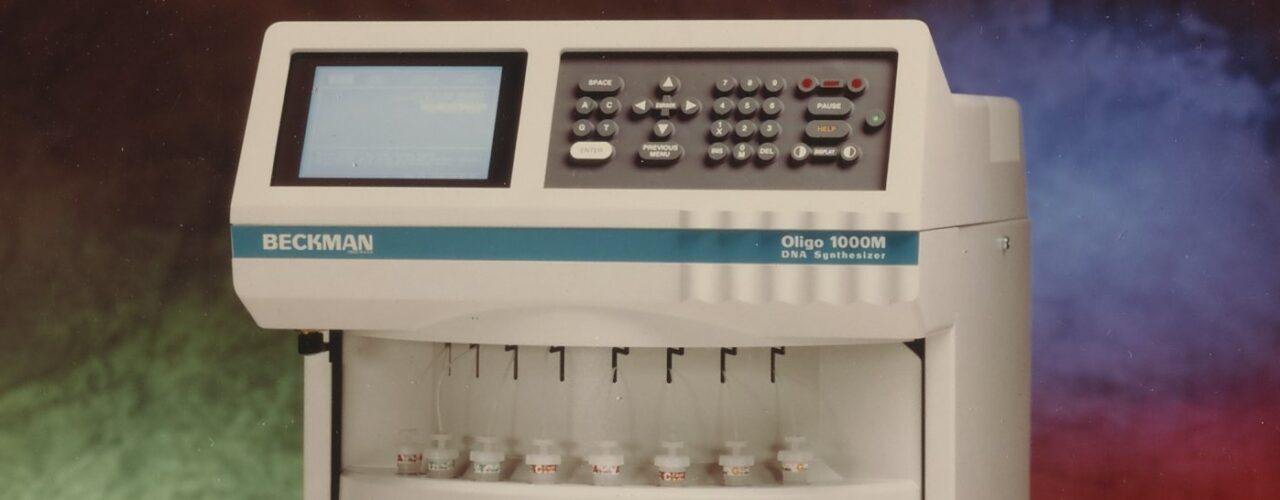
The exhibition, which traces the history of genetics research, DNA technology, and the development of analytical instrumentation, features several scientific instruments from the Institute’s digital collections, including the Coleman Model 3D pH Meter and the Beckman Oligo 1000M DNA Synthesizer (pictured above).
From Peas to the Human Genome Project was organized by Tsinghua University’s Department of the History of Science and the Tsinghua University Science Museum.
About Gregor Johann Mendel
Gregor Johann Mendel (1822–1884) was an Austrian biologist, geneticist, meteorologist, and Augustinian monk who discovered the basic laws of heredity and laid the foundation for the science of modern genetics through his pea plant hybridization experiments. The importance of Mendel’s work was not recognized until 1900, 12 years after his death and 34 years after its publication. His discoveries of how traits (such as color and shape) are passed down from one generation to the next introduced the concept of dominant and recessive modes of inheritance, now known as Mendelian inheritance.
About Tsinghua University
Tsinghua University was founded in 1911 as Tsing Hua Imperial College and earned university status in 1925. Based in Beijing, Tsinghua is one of China’s most prestigious and influential research universities, with 21 schools and 59 departments in such fields as science, engineering, humanities, law, medicine, history, philosophy, economics, management, education, and art.
More News
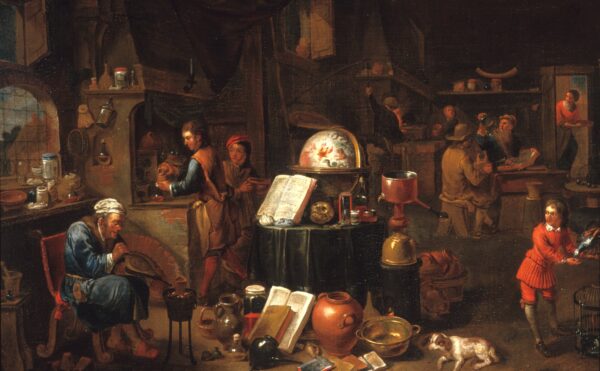
Explore the Alchemist’s Laboratory with Institute’s New ‘Fire and Gold’ Exhibition Opening October 7
Paintings and rare books from the 15th to the 19th centuries highlight the art, science, and history of alchemy.
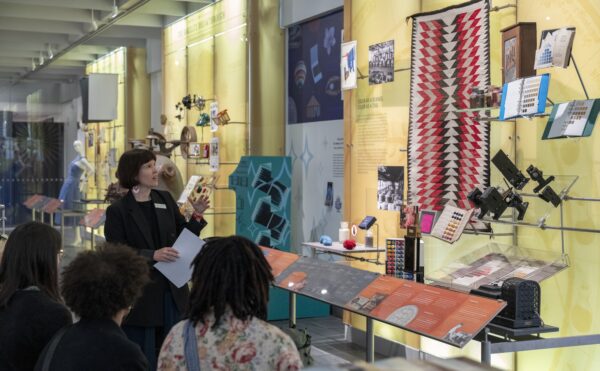
Group Tours Are Now Free at the Science History Institute
Kick off the new school year with a guided museum tour, self-guided field trip, or virtual program for middle school, high school, and college students.
Science History Institute Welcomes 2026–2027 Beckman Center Fellows
Scholars from around the world will study a wide range of topics in the history and social studies of chemistry, chemical engineering, and the life sciences.