
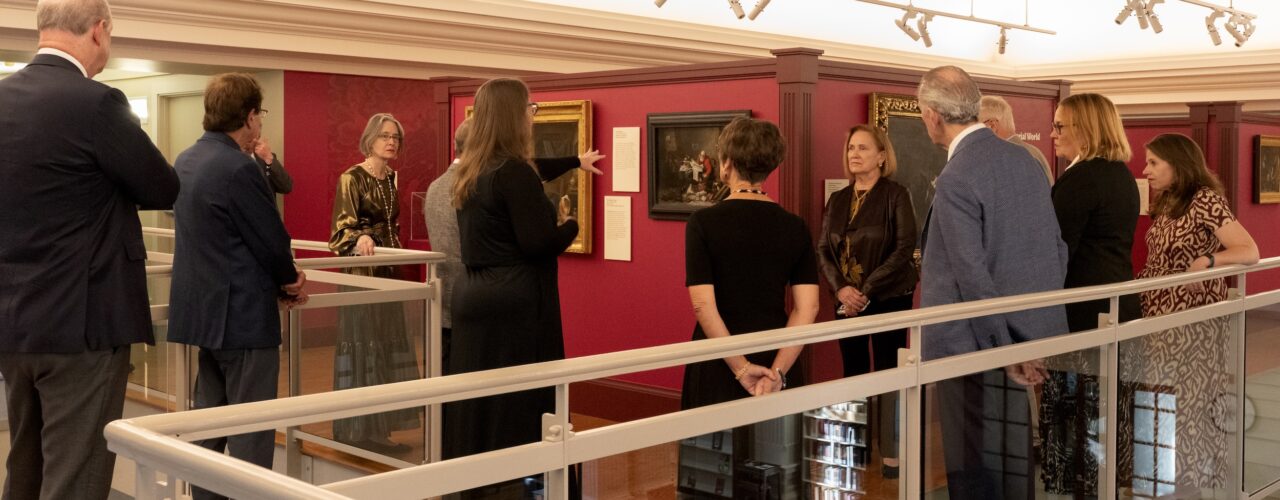
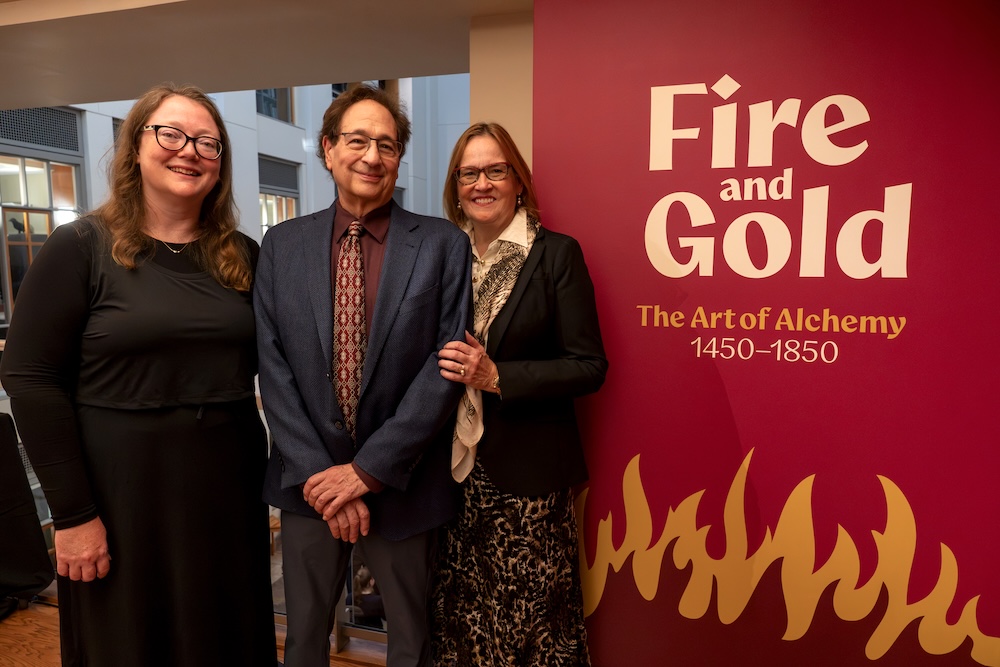
New Alchemy Exhibition Draws Sold-Out Crowd to Opening Celebration
Attendees take an up-close look at paintings and rare books from the Institute’s Fire and Gold exhibit while enjoying a curator’s talk, activities, and light bites.
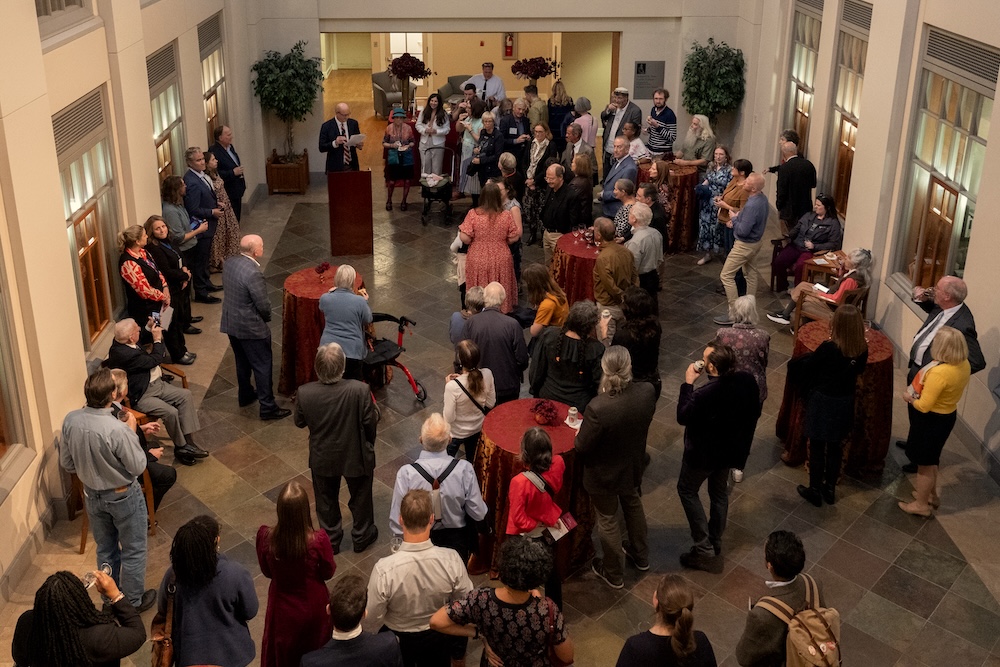
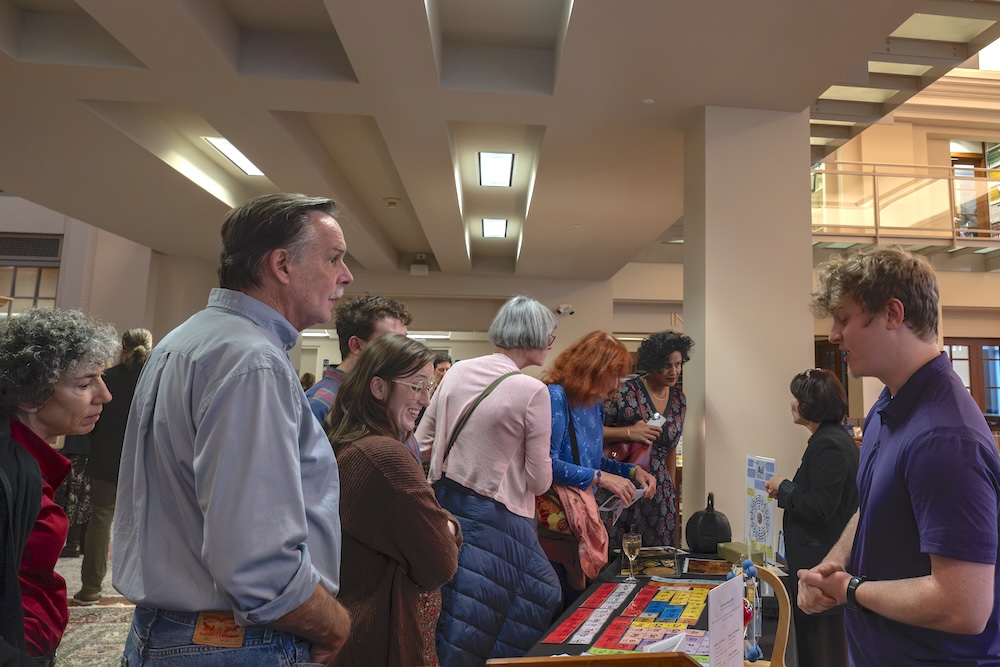
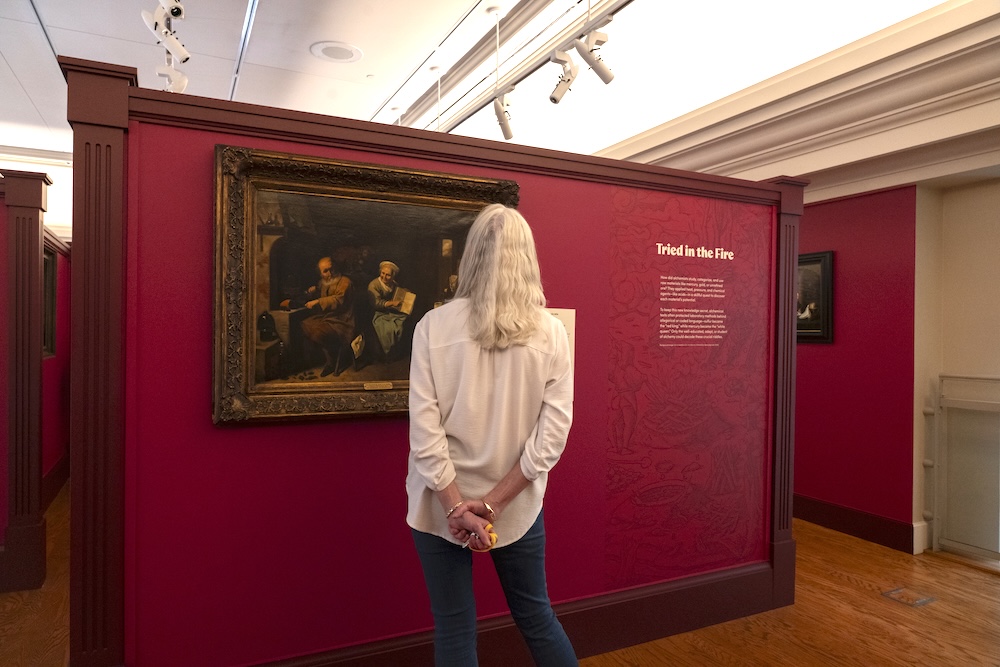
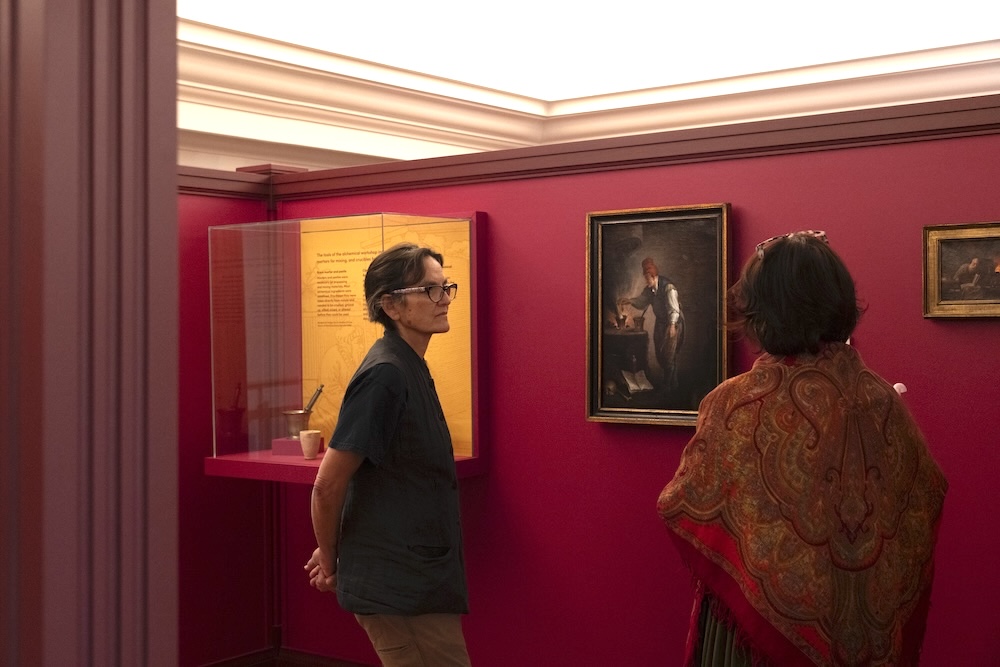
The Science History Institute welcomed a sold-out crowd to the opening of Fire and Gold: The Art of Alchemy (1450–1850), a new permanent exhibition featuring paintings and rare books that explore the alchemist’s quest to uncover nature’s secrets and unlock the potential of matter. Held on Wednesday, October 7, the lively celebration included a curator’s talk, activity tables, and light hors d’oeuvres.
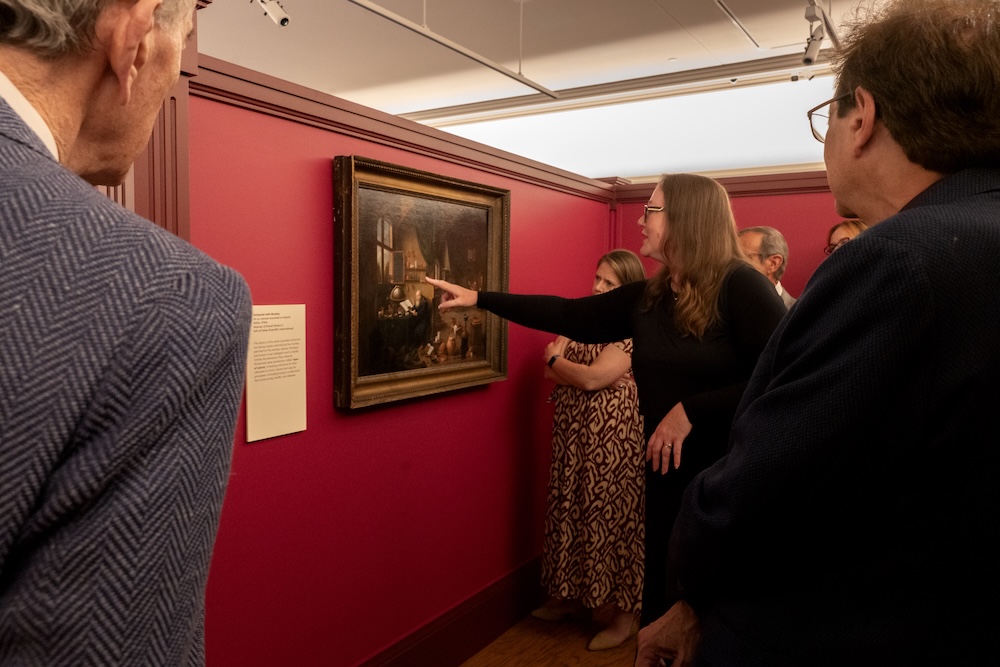
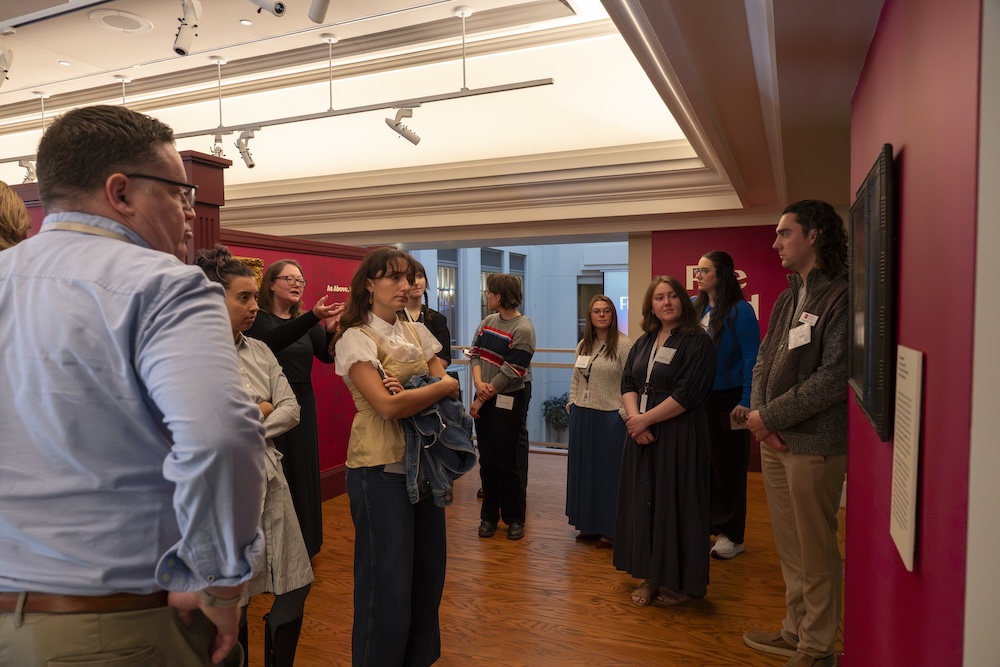
Guests took an up-close look inside the alchemist’s workshop through more than a dozen European paintings depicting fiery, mysterious scenes of experimentation with heat, metals, and medicine. They also got to view some of the rare books on display, including Georg Agricola’s De re metallica [On the Nature of Metals] (1556) and Athanasius Kircher’s Mundus subterraneus [Underground World] (1665), which show how alchemists and other early scholars, healers, and experimenters recorded and shared their ideas about the natural world.
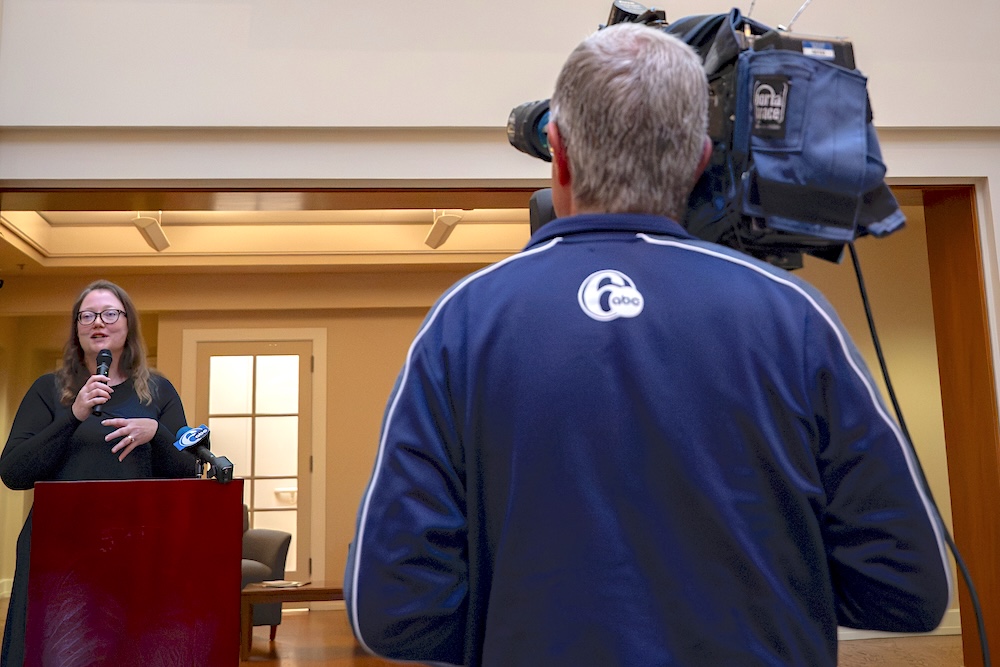
Curator Elisabeth Berry Drago and exhibition developer Jesse Smith each gave a short talk on the evolution of alchemy into modern chemistry, and how Fire and Gold tells that story through our fine art and rare book collections. The multifaceted event also featured a “Nobility of Gold” activity table, where our museum educators demonstrated how the periodic table of elements answers the question, “why has gold been valued by humans throughout history?”
Self-Guided Visits
Visitors can sign up for an Art of Alchemy Self-Guided Visit every other Saturday from 2pm to 3pm and alternately every other Thursday from 1pm to 2pm. Because of space limitations in the Fisher Gallery, which overlooks the Institute’s Othmer Library, Fire and Gold is best viewed in small groups. Registration is required; admission is free.
About Fire and Gold
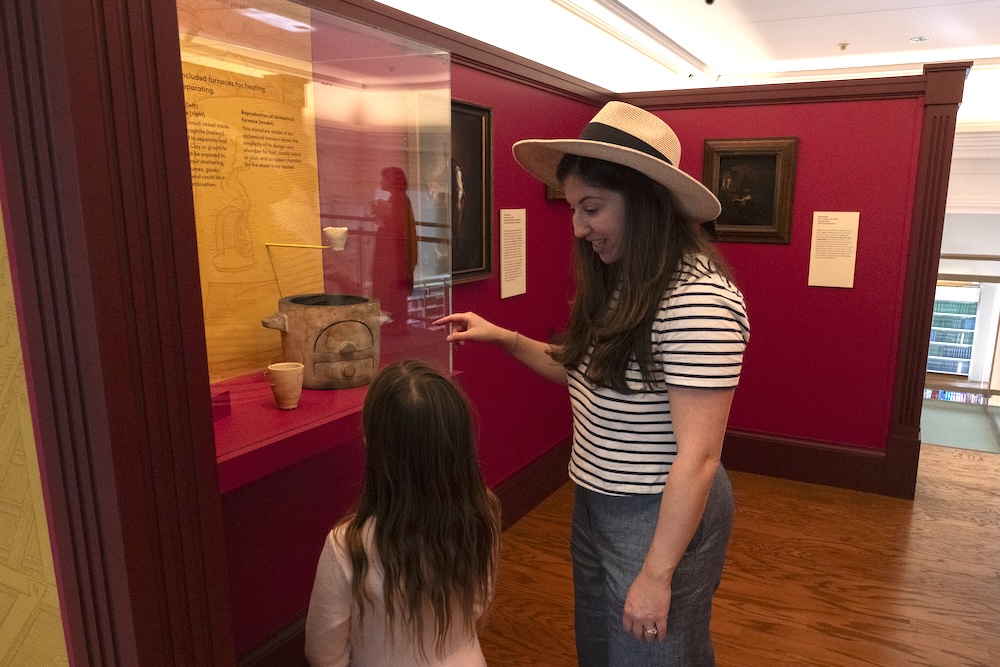
Fire and Gold: The Art of Alchemy (1450–1850) draws on the museum and library’s extensive collection of alchemical paintings and rare books to transport visitors back to a time when chemistry was chymistry, when alchemists pursued healing elixirs, searched for the legendary philosophers’ stone, and tested the possibility that one substance could be transformed into another. Take a journey from underground mines into cluttered workshops and fiery laboratories, where alchemists sought to uncover nature’s “secrets” and unlock the hidden potential of matter—and turn lead into gold.
Media Coverage
The Transformative Origins of Chemistry Are on Display in This New Art Exhibit
C&EN News | October 9, 2026
Drew Stops by the Science History Institute to See the New Fire & Gold: The Art of Alchemy Exhibit
Fox29: Good Day Uncut | October 9, 2026
An Exhibition on Alchemy
Philadelphia Inquirer’s Things To Do Newsletter: Fall Fun This Week and Beyond | October 9, 2026
New Permanent Alchemy Exhibit in Philadelphia Reveals How Art and Chemistry Intertwine
PHILADELPHIA Today | October 8, 2026
Philadelphia Museum Unveils Permanent Alchemy Gallery Linking Gold-Hunters to Modern Chemistry
Hoodline Philadelphia | October 8, 2026
From Turning Ordinary Metal to Gold to Chemistry: New Philadelphia Exhibit Explores the Fiery Origins of Science
WHYY | October 7, 2026
New Permanent Exhibition Showcasing Rare Books on Alchemy Opens Today
Fine Books & Collections | October 7, 2026
Support
Fire and Gold: The Art of Alchemy (1450–1850) has been made possible by the generous support of Barry Arkles and Janine Black.
All images: Science History Institute/Meredith Edlow
More News
Science History Institute Welcomes 3 New Board Members
Research, pharmaceutical, and technology leaders Jane Frommer, Greglynn Gibbs, and Geofrey Wyatt will help support the Institute’s mission and strengthen our industry relationships.
Applications for 2027–2028 Beckman Center Fellowships Now Open
Researchers can apply by January 15 for various long- and short-term programs, including two-year curatorial fellowships.
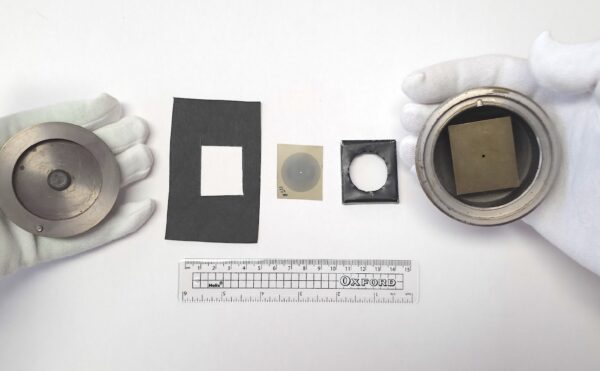
New Research Challenges Misconceptions about Rosalind Franklin’s Famed ‘Photo 51’ and the Discovery of DNA’s Double Helix
Paper by the Science History Institute’s Alistair Sponsel and King’s College London’s Brian Sutton uncovers the significance of her previously captured Photo 49.