Air Time
A visit to Knoebels Amusement Resort and chemist Joseph Priestley’s historic home in PA inspires a closer look at the Institute’s rare book collection.
A visit to Knoebels Amusement Resort and chemist Joseph Priestley’s historic home in PA inspires a closer look at the Institute’s rare book collection.
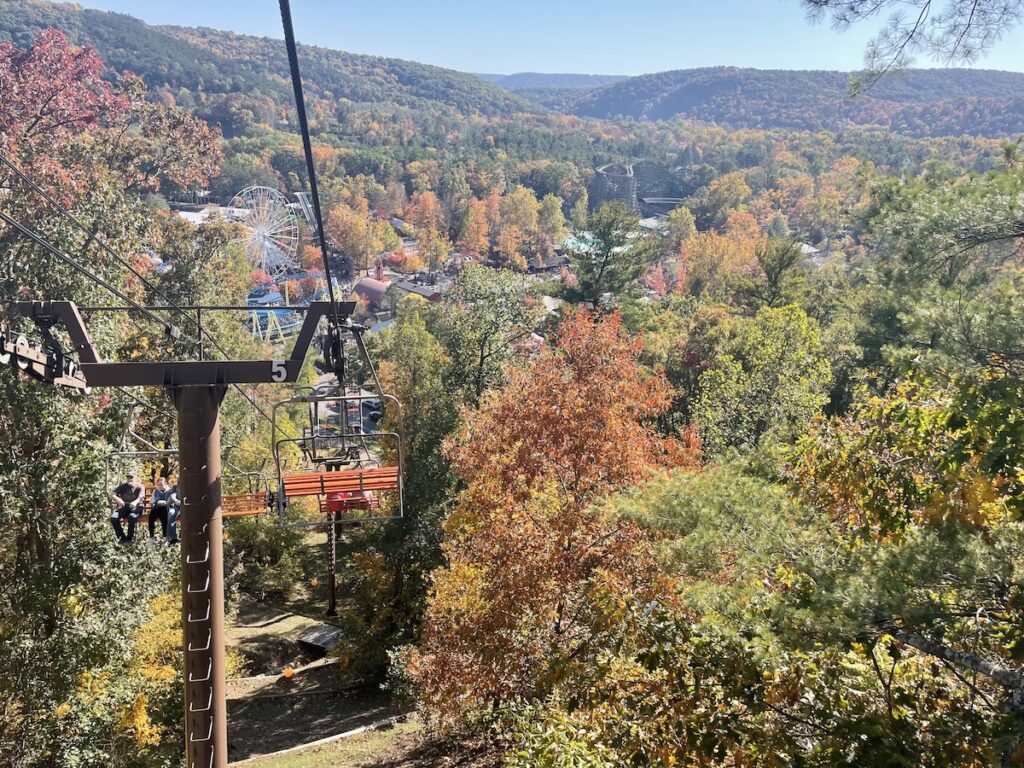
Every year, my family gathers for a trip to Knoebels Amusement Resort near Elysburg, Pennsylvania. Knoebels (pronounced kuh-NO-bulls) is the largest free-admission amusement park in the United States. It’s nestled in the valley of the flood-prone Roaring Creek, a tributary of the Susquehanna River, and started out as a lumber yard in 1926. Over the ensuing century, the owners added towering wooden rollercoasters, outdoor food stalls, vaudeville, and a narrow-gage miniature train. Knoebels is at its best in the late fall when the mountain foliage is at its peak and the vintage carousel organs play The Addams Family theme song.
As the kids have grown, our adventures in the upper Susquehanna Valley have taken us further afield. We visited the Graffiti Highway before its owners buried it; we thumbed through mysterious thrift stores in neighboring Danville and Elysburg; and we tiptoed down the doomed streets of Centralia, whose foundations are being eaten away by a mine fire.
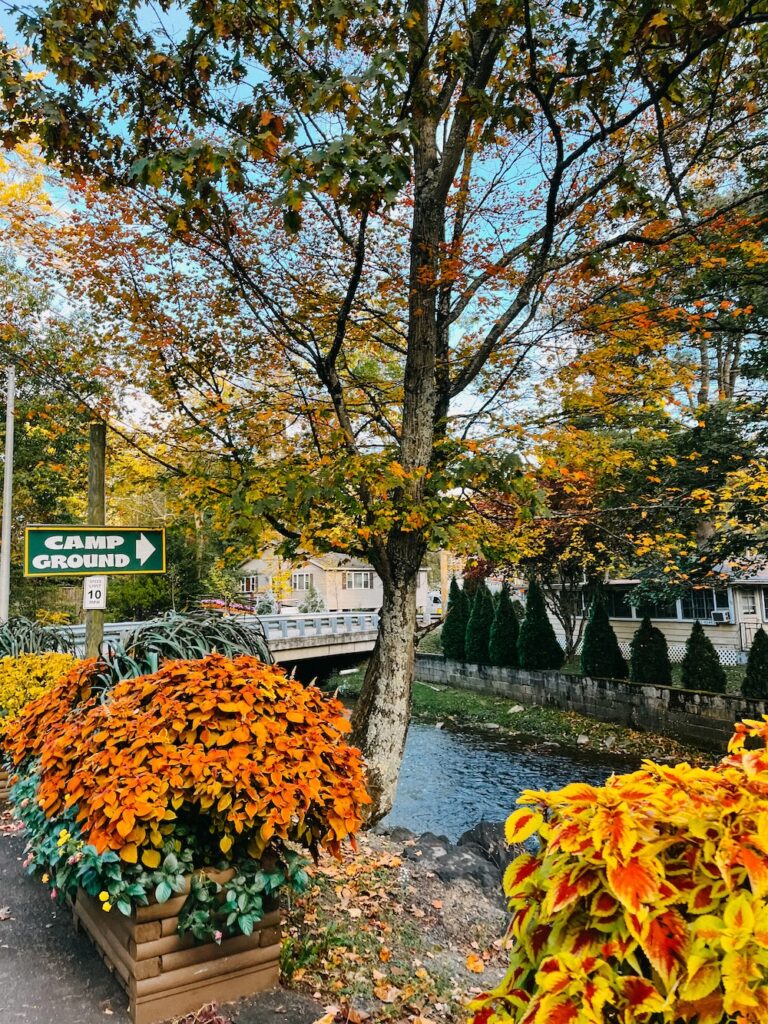

The Roaring Creek flowing through Knoebels (left) and a Beach Boys tune spray-painted on the Graffiti Highway (right).
But Knoebels, like all amusement parks, sparks curiosity in its own right. Part of it, I think, is the tremendous physical forces seen up close. I see my nieces and nephews silently wonder: “What would it really take to permanently destroy a bumper car?” “How fast does a roller coaster need to go in order to swing riders upside down without dropping them?” “What makes the thing go?” The engine behind the rides is, of course, the gas generator. Its muffled roar pervades the park beneath the whoosh of the coasters and the shrieking chorus of the riders. Inside each generator, a chemical reaction is taking place under very controlled conditions: combustion. Some of its secrets, it turns out, were worked out during the final decades of the 18th century by a scientist who lived nearby.
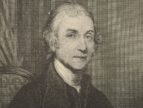
Sixteen miles down the Susquehanna River from Knoebels lies Northumberland, the last home and final resting place of famous English clergyman and polymath Joseph Priestley. Priestley was born in Yorkshire, England, in 1733, but spent the last ten years of his life in a stately Georgian house he and his wife built there. Overlooking the Susquehanna floodplain, the house has its own laboratory and the top of the roof has a terrace on it, from which I imagine Priestley observing the moon through his telescope. This past October, we decided it was time for our first visit.
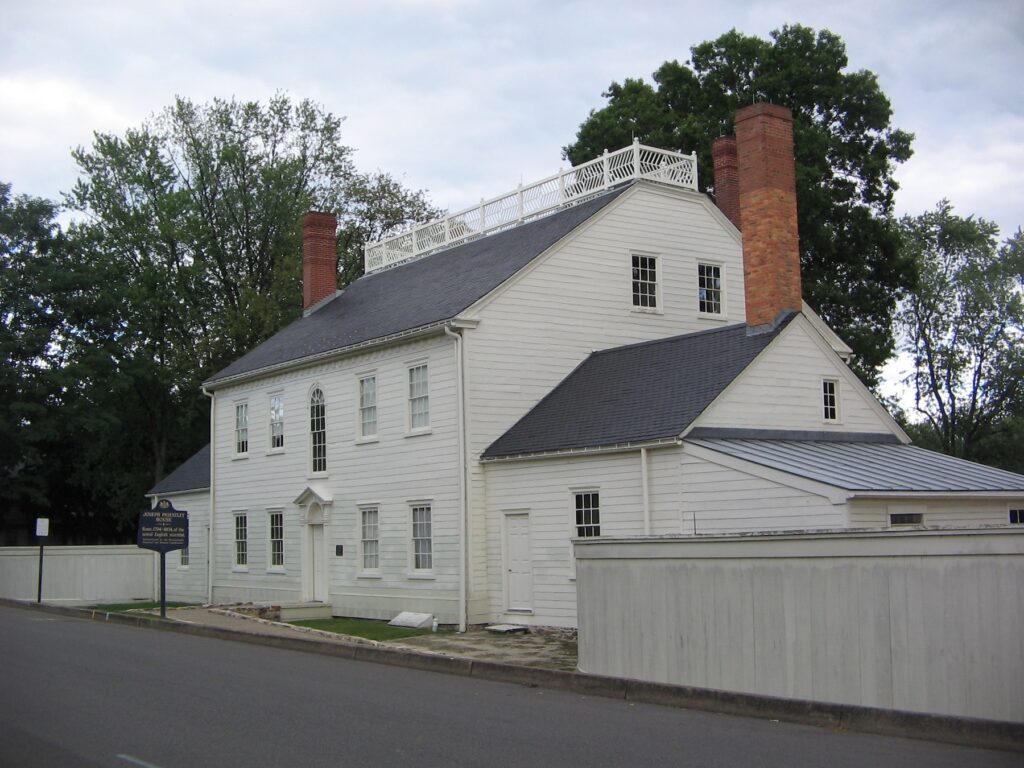
The house is now a museum, whose guides do an excellent job describing what Northumberland and neighboring Sunbury were like in the 1700s, and telling the story of Priestley and his family. They also explore the afterlife of the house in the ensuing two centuries. It turns out the origins of the museum have much to do with the story of the American chemical profession. In fact, Priestley’s house would likely have been demolished without the efforts of Edgar Fahs Smith, the cofounder of the American Chemical Society, who claimed Priestley was the “founder of American chemistry.”
While not everyone agrees with that designation, Priestley is known for numerous other achievements. He invented a method to carbonate water (the origin of all fizzy drinks) and created the first global historical timeline, A New Chart of History, published in 1769. He recorded the only surviving detailed account of Benjamin Franklin’s 1752 kite experiment, which proved that lightning is a form of electricity. Priestley also coined the word “rubber” after discovering that natural latex could rub away pencil marks and helped found the First Unitarian Church of Philadelphia in 1796.
But Priestley was also a free-thinking public intellectual. By all accounts he had a genial personality, but his uncompromising Unitarian beliefs and his pamphleteering in support of the French and American revolutions got him into a lot of trouble. In 1791 a mob burned down his laboratory in Birmingham. Three years later, the family had to leave England. They spent the winter in Philadelphia and in the summer of the next year, settled permanently in Northumberland.
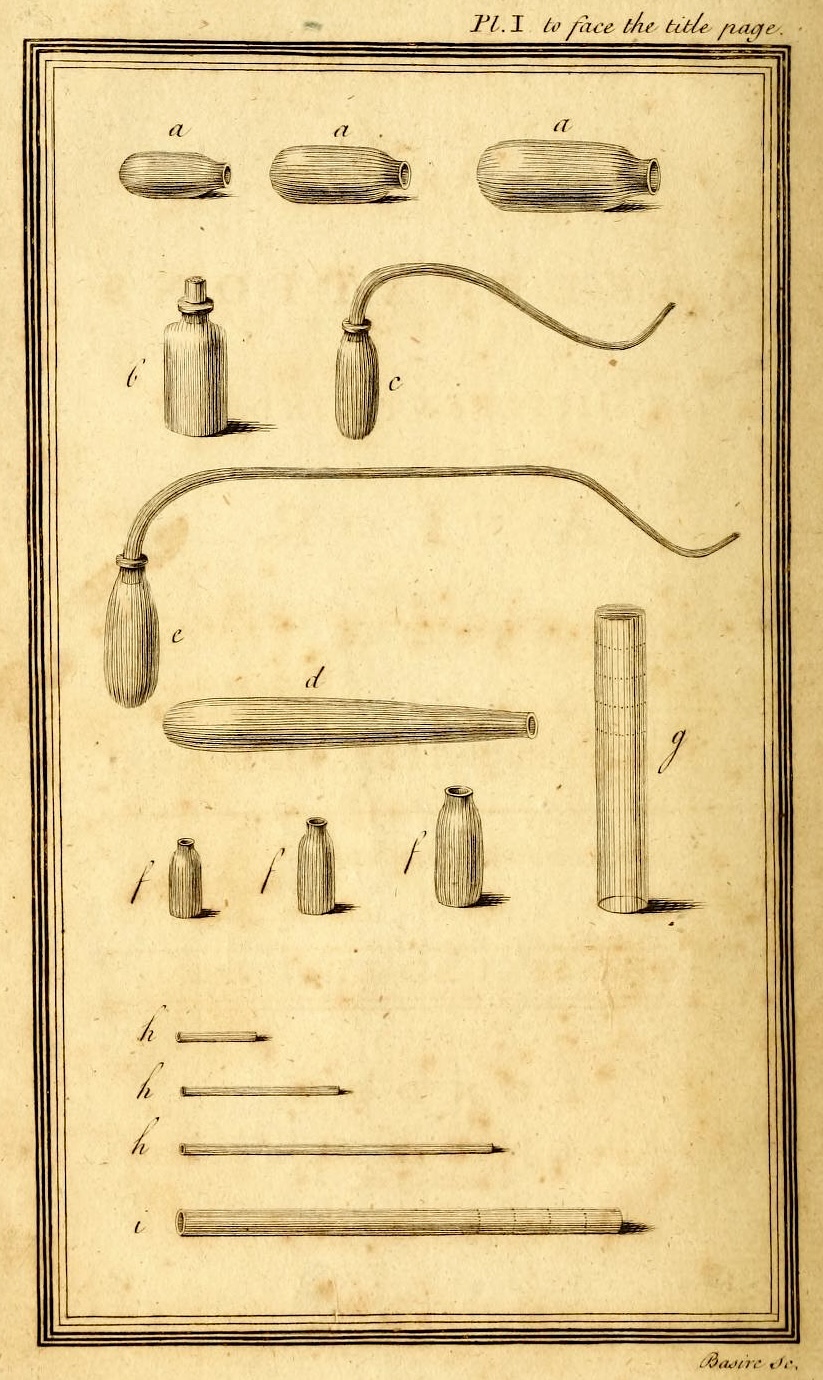
Priestley’s house had been on my radar for some time, as the Science History Institute’s Othmer Library holds a unique collection of Priestley’s scientific works, including some about his most famous discovery: oxygen. In his Birmingham lab in 1775, he focused sunlight through a large glass lens onto a chunk of mercury oxide, causing it to release what he called “dephlogisticated air” into a glass bell. In his Experiments and Observations on Different Kinds of Air, Priestley describes inhaling the new gas for the first time:
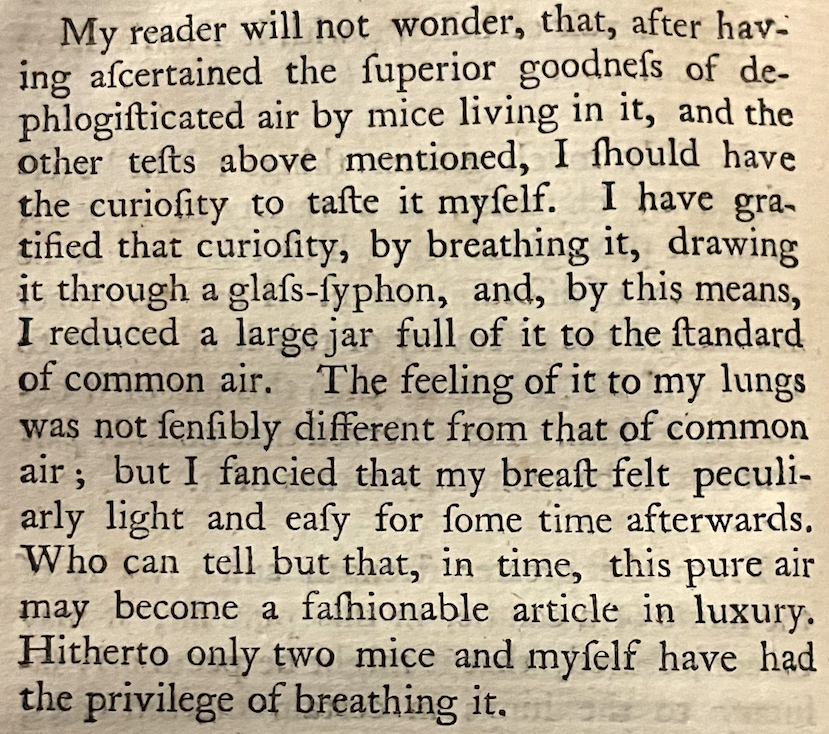
Don’t try this at home, by the way. Mercury fumes.
Priestley was not, however, the sole discoverer of oxygen. He was certainly one of the first to isolate it, but as far as I can tell, he never claimed to have discovered it. More importantly, he did not understand what it was. It was the French chemist Antoine-Laurent Lavoisier who realized a couple years after Priestley published his report that the gas was a pure substance and named it “oxygen.” Ultimately, this collective breakthrough was one of the greatest discoveries of the era. It’s impossible to imagine a gas engine, let alone a jet engine, without our modern understanding of combustion and fluid dynamics.
But whatever his shortcomings as a theorist, Priestley was unrivalled as a storyteller. The same unfeigned and contagious delight shines through in his description of Franklin’s kite experiment, which you should also not try at home:
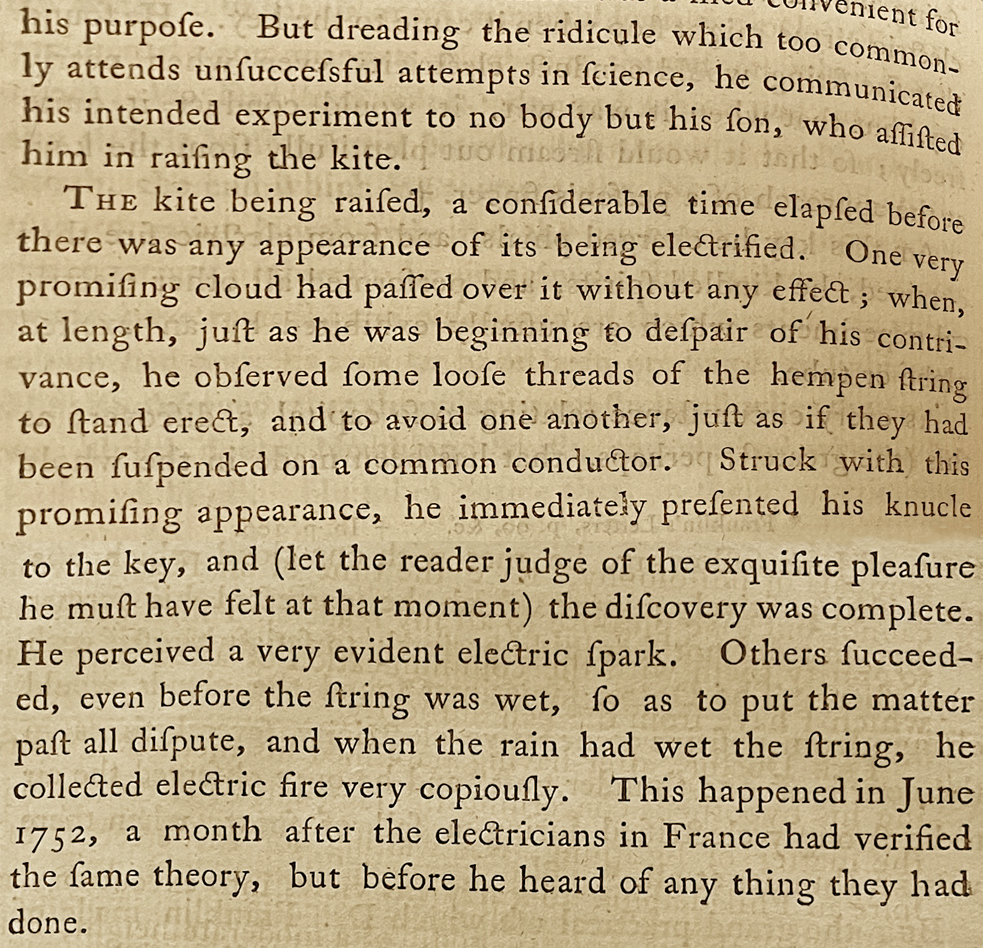
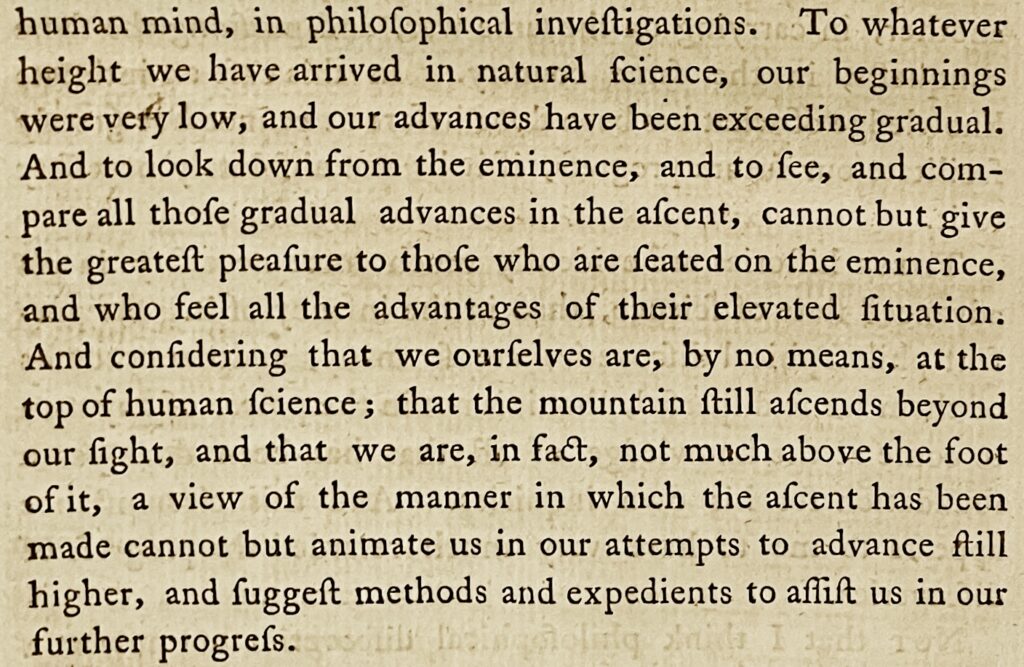
Let the reader judge, indeed. Priestley’s relish for the profound uncanniness of the experiment and his verve in retelling it are no mere byproducts of his work. Delight was central to how he saw himself as a natural philosopher and as a historian. In the preface to the same book, he puts it like this:
Why did Priestley, curious and gregarious as he was, settle in Northumberland rather than Philadelphia or Boston, where he would have had better access to the latest scientific advances? In his conclusion to the unfinished Memoirs of Dr. Joseph Priestley (1806), his son describes the decision as follows:
A couple pages later, his son does mention that Priestley felt isolated and homesick at times:
But it seems he was an optimistic soul, determined to spend his final years in peace, surrounded by his immediate family, his library, and his beloved scientific equipment.
Priestley died peacefully in his house in 1804 and was buried in Northumberland. Two hundred years later, on a quiet Friday morning before Knoebels opens, amid the silent rollercoasters, it’s easy to feel what drew him to this place. And easy to imagine his delight at science’s progress since his time, as only a rollercoaster can demonstrate it.
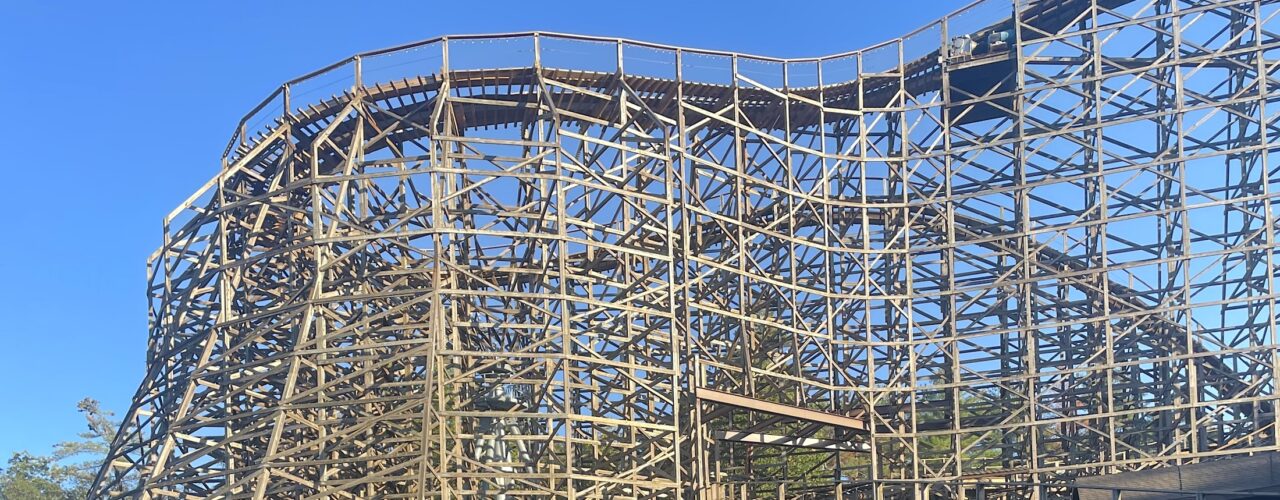
Featured image at top: The Twister, a wooden rollercoaster at Knoebels Amusement Resort. Courtesy of Eddie Rubeiz.
Public perceptions of 20th-century medical science as seen through book cover illustrations.
The Institute’s museum education team partners with Philly Touch Tours to offer a more meaningful history of science experience.
Mapping Philadelphia’s industrial past with digital tools.
Copy the above HTML to republish this content. We have formatted the material to follow our guidelines, which include our credit requirements. Please review our full list of guidelines for more information. By republishing this content, you agree to our republication requirements.