The Day the Helix Was Pronounced Dead
Rosalind Franklin announces a funeral for a hypothesis.
Rosalind Franklin announces a funeral for a hypothesis.
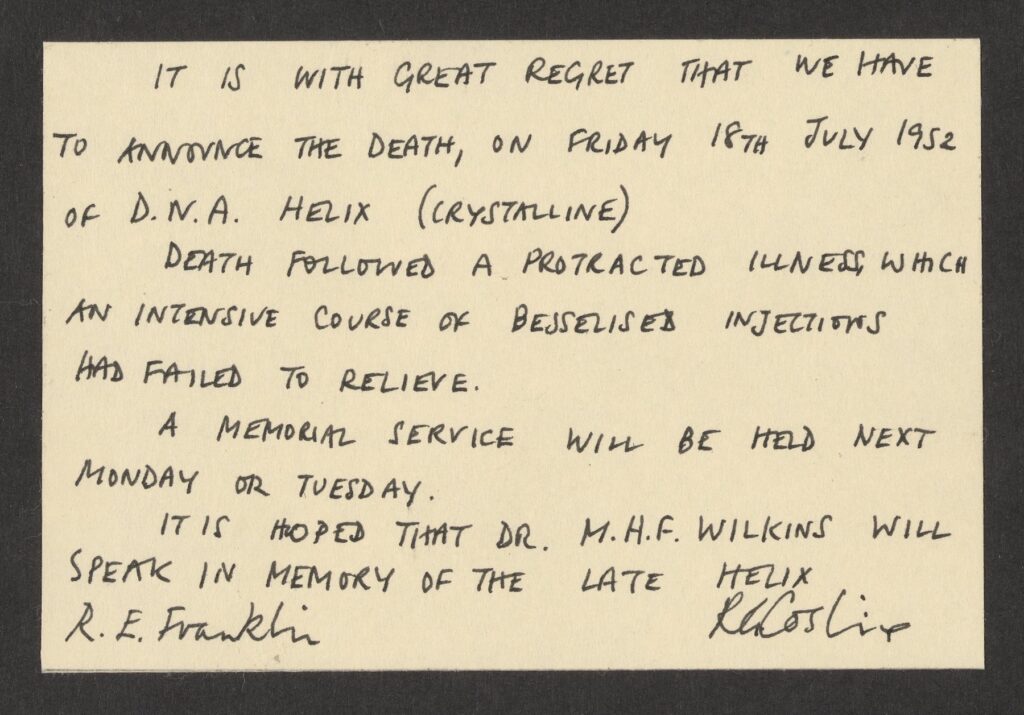
Among the more curious items in the Institute’s History of Molecular Biology Collection is a small, handwritten card dated July 18, 1952. Composed in the style of a formal obituary, it announces “the death…of D.N.A. Helix (crystalline)” after a “protracted illness” unrelieved by something called “Besselised injections.” It bears the signatures of Rosalind Franklin and her doctoral student, Raymond Gosling, and, with a touch of mischief, names their colleague Maurice Wilkins as a prospective speaker at the memorial.
At first glance, the card reads as a joke. On a second pass, it begins to look like something else: a small, pointed record of the tensions taking shape within the Biophysics Unit at King’s College London in the early 1950s. King’s was then one of the principal sites in Britain for investigating the structure of DNA, drawing together X-ray crystallographers, chemists, and physicists. Work there unfolded alongside efforts at the Cavendish Laboratory in Cambridge, where James Watson and Francis Crick pursued the same question by different means.
At King’s, the relationship between Rosalind Franklin and Maurice Wilkins was strained from the beginning. When Franklin joined the Biophysics Unit in 1951, its director John Randall placed her in charge of the DNA diffraction work and reassigned Wilkins’s graduate student, Raymond Gosling, to work under her supervision. That arrangement was not clearly communicated to Wilkins, who had already been working on DNA and assumed Franklin would be joining him in that effort. As a result, both were working on the same problem with different expectations about roles and authority. To ease tensions, Randall later redirected Franklin’s work toward the A form of DNA, while Wilkins would continue his work on the B form.
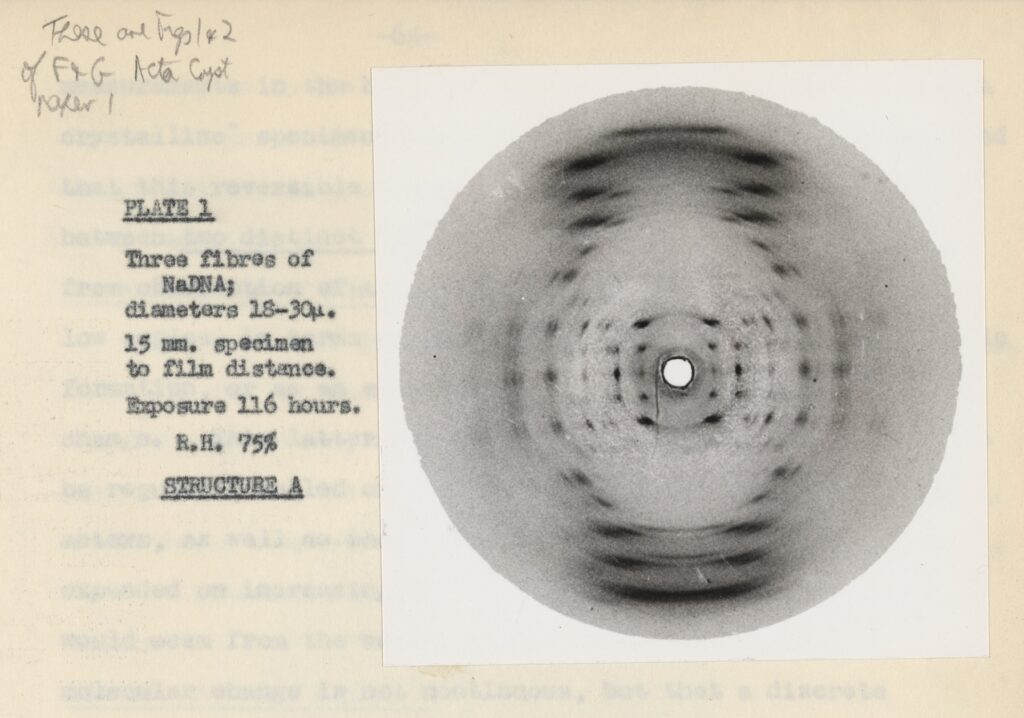
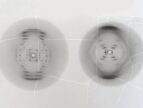
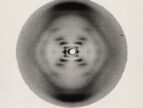
These were not simply labels, but two distinct physical states of the molecule. Under drier conditions, DNA takes the A form, which produces more complex and tightly packed diffraction patterns that are harder to interpret. Under more humid conditions, it shifts to the B form, which yields clearer, more regular patterns. But, without a clear understanding of how these forms related to one another, the results could appear inconsistent, making it more difficult to draw firm conclusions. At King’s, the division of labor reinforced that problem. Franklin’s work on the A form and Wilkins’s work on the B form proceeded along separate lines, making it harder to connect the two and see how they fit together.
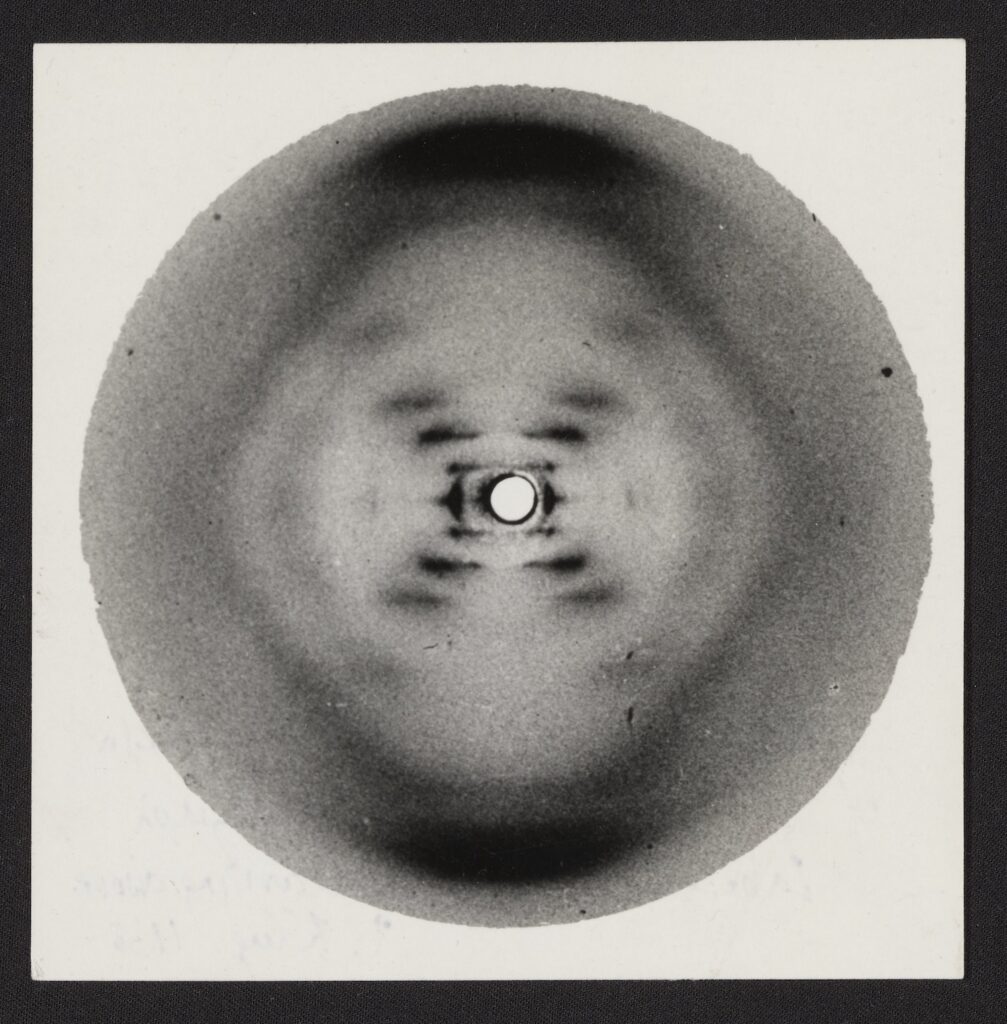
Both researchers had, at various points, entertained the possibility of a helix. In her exchanges with Wilkins, however, Franklin had begun to push back against that interpretation.
The phrasing of the card makes clear that her skepticism was not sweeping. The qualifier “crystalline” is doing real work here. Franklin was addressing the A form she knew best, where the X-ray diffraction patterns did not lend themselves easily to a helical model. The “death” of the helix, then, marks a judgment about that specific set of data, not a blanket rejection of the helical idea altogether.
That problem surfaces again in the card’s most peculiar phrase: “Besselised injections.” The joke turns on Bessel functions, the mathematical tools Franklin used to analyze diffraction patterns. What sounds like mock medical jargon is, in fact, a precise reference to the techniques she used to extract structural information from photographic data, and in this case, that data was inconclusive.
The card has sometimes been read as evidence that Franklin misunderstood the implications of her own work. Set against other sources in the archive, that interpretation becomes difficult to sustain. Wilkins later suggested that although Franklin appeared strongly anti-helical in their exchanges, this did not reflect her underlying view. Rather, he came to think that her stance was shaped by the need to preserve independence in her work. Her notes and reports, he observed, leave room for a helical interpretation.
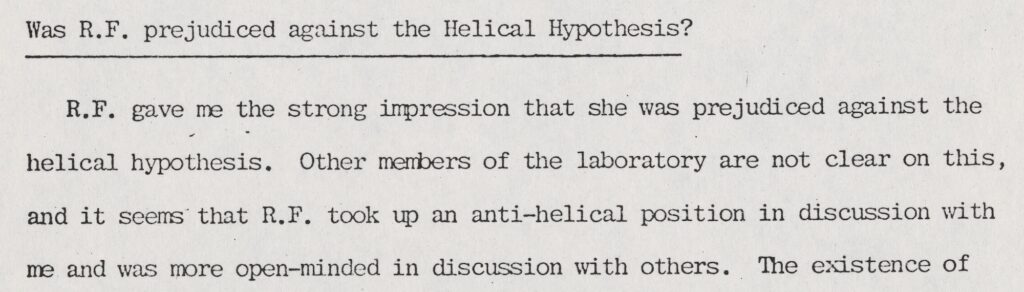

Excerpts from a 32-page draft of “X-ray Diffraction Studies of DNA in King’s College 1950 Onwards” by Maurice Wilkins, 1976.
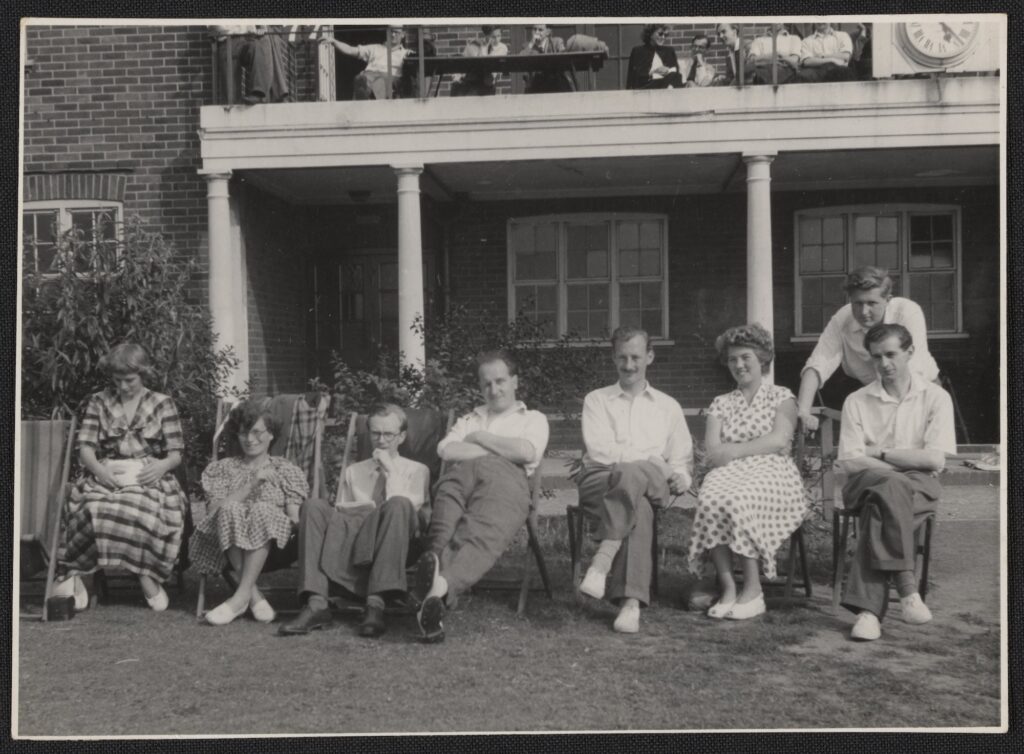
Gosling later described something similar. In the account reproduced in the photograph below, he recalled that “Rosalind did not at any time really whole-heartedly believe that the structure [of DNA] was other than helical.” In his view, Franklin accepted the helical structure even as she argued against it in discussion. Gosling understood this as a deliberate posture, one that would allow Franklin to maintain control over her line of inquiry and avoid premature conclusions.
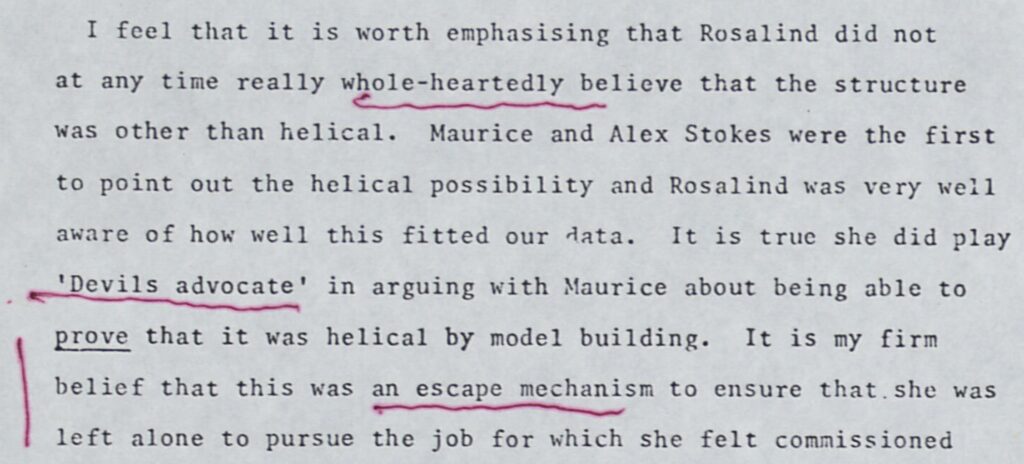
Seen in this light, the card aligns closely with Franklin’s broader approach to scientific work. She proceeded cautiously, resisting the urge to settle on a structural model before the data could fully support it. Her notebooks and reports show a consistent effort to work outward from evidence rather than inward from hypothesis. In that context, the mock obituary reads less like a dismissal and more like a refusal to accept an explanation she regarded as not yet earned.
It also reflects the strain of collaboration at King’s. Franklin and Wilkins worked on closely related problems but never established a stable partnership. Their disagreements extended beyond data to questions of authority, ownership, and method. In Cambridge, Watson and Crick operated in a more openly collaborative mode, testing ideas together and building iteratively on each other’s insights. At King’s, the work proceeded along adjacent, often disconnected lines. That difference helped determine the outcome, allowing Watson and Crick to arrive at a convincing model of DNA’s structure first.
This small, easily overlooked card captures that situation with unusual clarity. At the time it was written, the structure of DNA was still uncertain, and disagreement defined the work at King’s. What survives here is more than a joke. It is a record of how scientific problems are actually worked out, through argument, hesitation, and competing interpretations as much as through discovery.
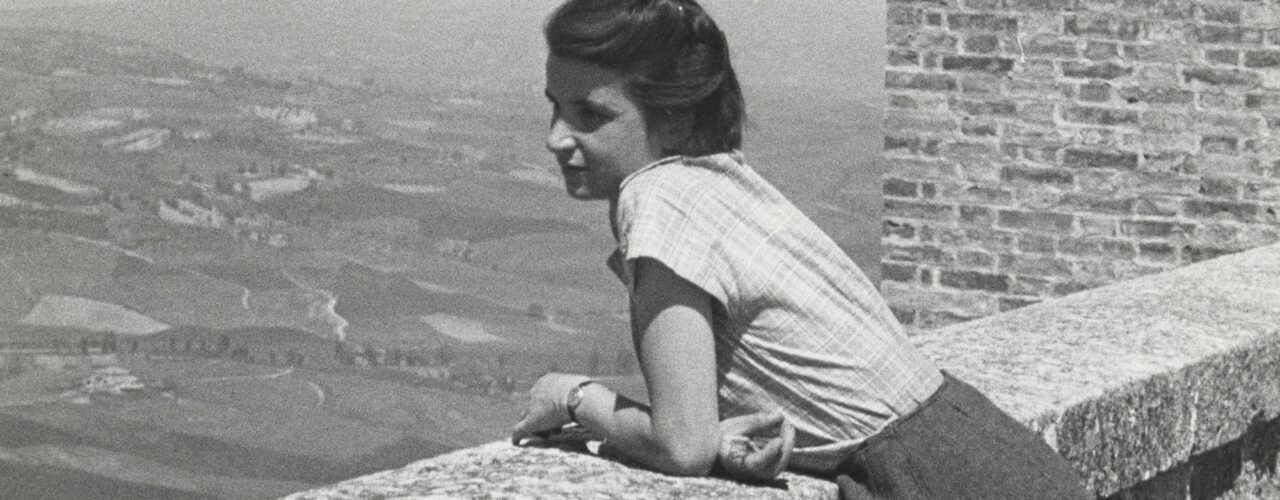
Featured image at top: Rosalind Franklin in Tuscany, Italy, 1950.
Curating an exhibit on student notebooks.

Bringing the past to life with an obsolete video format.
Highlighting the research projects of our current resident scholars.
Copy the above HTML to republish this content. We have formatted the material to follow our guidelines, which include our credit requirements. Please review our full list of guidelines for more information. By republishing this content, you agree to our republication requirements.