A Dance with the Occult
What Theosophy reveals about a moment when science and the occult were not so neatly opposed.
What Theosophy reveals about a moment when science and the occult were not so neatly opposed.
My introduction to Theosophy began 15 years ago on an art blog, where I discovered an image of a neatly arranged grid of vibrant blocks of color, each ascribed a particular meaning. At the time, I was looking for different types of color wheels to inspire an electronica project (it was 2011; this is what we did back then). Looking more closely at the image, I saw that deep indigo was connected to “pure religious feeling,” while the description for a gray block marked with red streaks read “jealousy.” I wanted to know who created this color key and how they came to develop this system of associating colors with specific feelings. Who knew that my amateur attempt at making dance music would lead me to an historical moment when the boundary between science and the occult was far more permeable than it is today?

The image that fascinated me came from a 1905 book titled Thought-Forms by Annie Besant and C. W. Leadbeater, both members of something called the Theosophical Society (more on them in a minute). The book defines “thought-forms” as artistic representations of visualizations of thoughts and feelings one would be able to see, the authors assert, after a period of deep meditation and tapping into one’s extrasensory abilities.
Intriguing stuff, but I was an easily distracted twentysomething, more interested in music and dance than esoteric philosophy. My fascination with this book (and the mysterious society behind it) quickly waned until 15 years later, when I came across the same authors’ later publication, Occult Chemistry (1919), in the Othmer Library’s collection. With renewed interest, I had to know more about the connection between these two titles, the Theosophical Society, and why one of their publications would be in a history of science library.
An all-too-brief summary of the Theosophical Society would describe it as an occult religious organization founded by a medium in New York City in 1875. Look a little closer, however, and you might see some familiar scientists listed as members, including Thomas Edison and William Crookes. Keep digging and you might connect the group to other secret societies, such as the Golden Dawn or the Freemasons, which each linked their origins with even older alchemical pursuits.
According to religious scholar Stephen Prothero’s “From Spiritualism to Theosophy: ‘Uplifting’ a Democratic Tradition,” this is precisely how the Theosophical Society would come to see itself in the United States: as a modern surfacing of these older traditions. Those other secret societies also often acted as “incubators of democracy” and modern science, allowing open dialogue between their members without the scrutiny that comes with sharing ideas in a public space. Was this the case in the Theosophical Society as well?
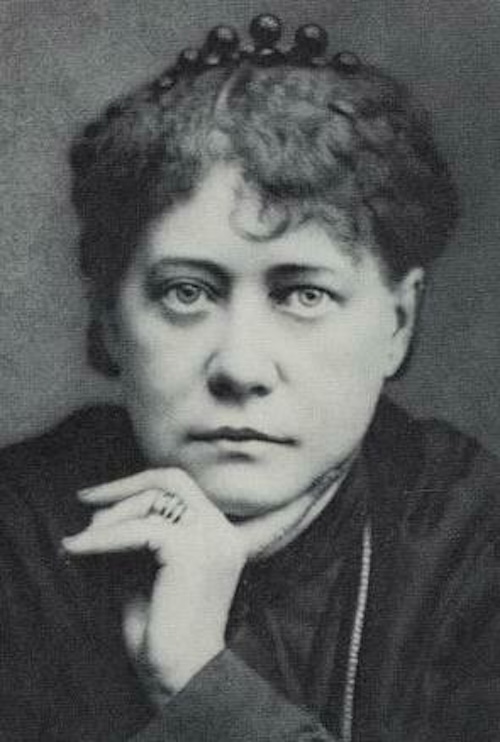
Before we can answer that question, we must get to know the founder of the Theosophical Society, Helena Petrovna Blavatsky (1837–1891). More commonly referred to as Madame Blavatsky, she was born in the Russian Empire and, well, I will have to leave it to you to seek out the various claims to her global travels and activities before arriving in the United States in 1873. (There is enough material for its own book, after all). The important thing to know is that during her travels she became well-versed in both Western and Eastern esoteric traditions.
In the U.S., Blavatsky embraced American Spiritualism, a 19th-century movement whose members attempted to contact the spirit world, among other things. But she soon became a divisive figure. Blavatsky held séances herself, but she challenged the contemporary Spiritualist assertion that the entities contacted during those rituals were souls of the deceased. She maintained that they were more like lower astral entities or forces of nature occupying the shells of the dead. She deviated further from spiritualist orthodoxy by promoting Eastern religious ideas like reincarnation and karma, syncretizing them with Western esotericism.
In 1875 Blavatsky founded the Theosophical Society, an organizational body separate from the Spiritualists. In 1888 she published her magnum opus, The Secret Doctrine, which both defined her theory of the universe’s origin and attempted to reconcile her philosophy with modern science. Appropriately subtitled The Synthesis of Science, Religion, and Philosophy, the book relies on Blavatsky’s knowledge of religious and philosophical tenets to draw together myth, religion, philosophy, and science.
These ideas were drawn out and expanded on by other members of the Theosophical Society, including C. W. Leadbeater and Annie Besant. Whereas Blavatsky saw clairvoyance as a rare ability to perceive reality across time and space, Leadbeater and Besant saw it as a tool for empirical investigation. After Blavatsky’s death in 1891, Leadbeater and Besant’s interest in clairvoyant investigation marked an early division among Theosophists.
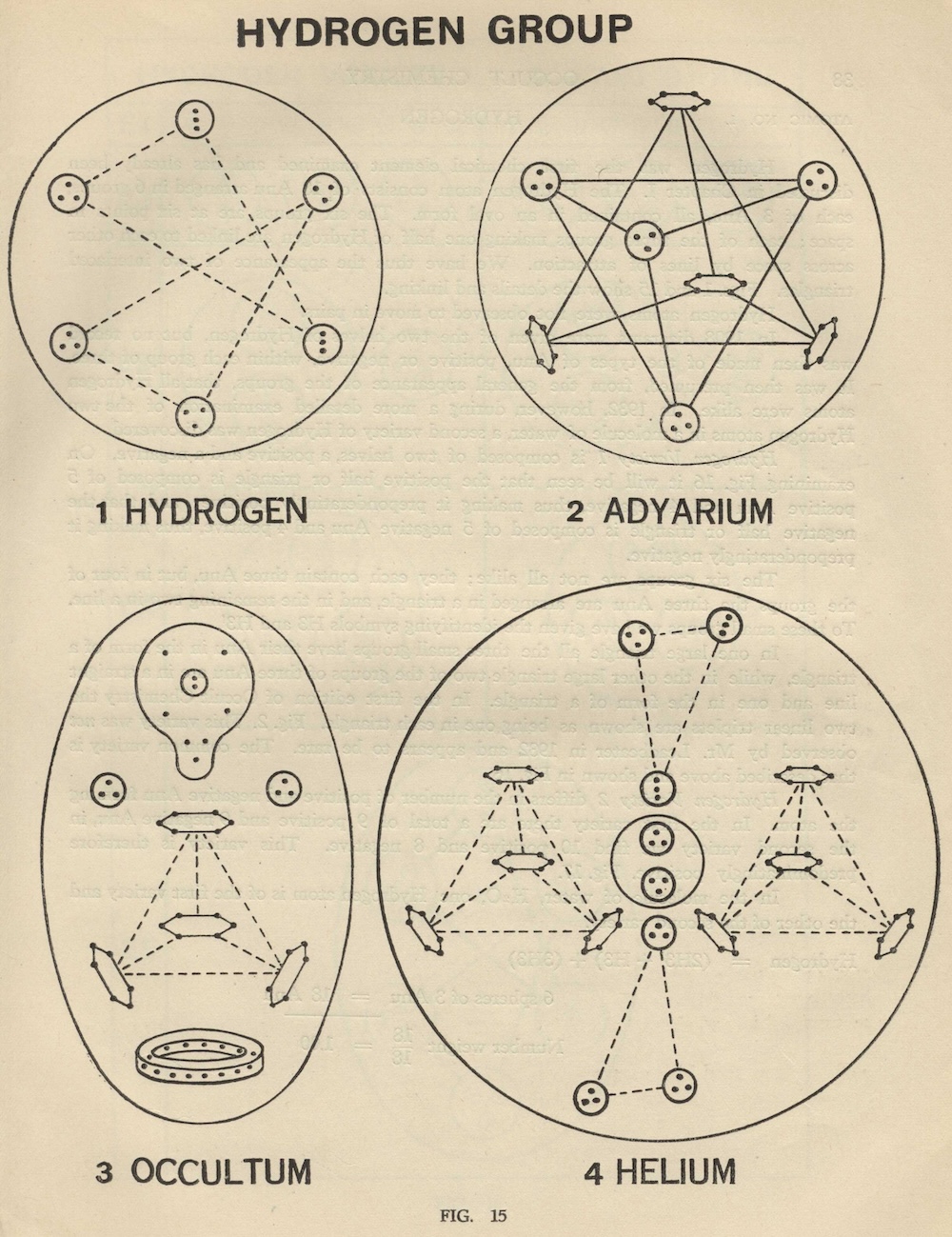
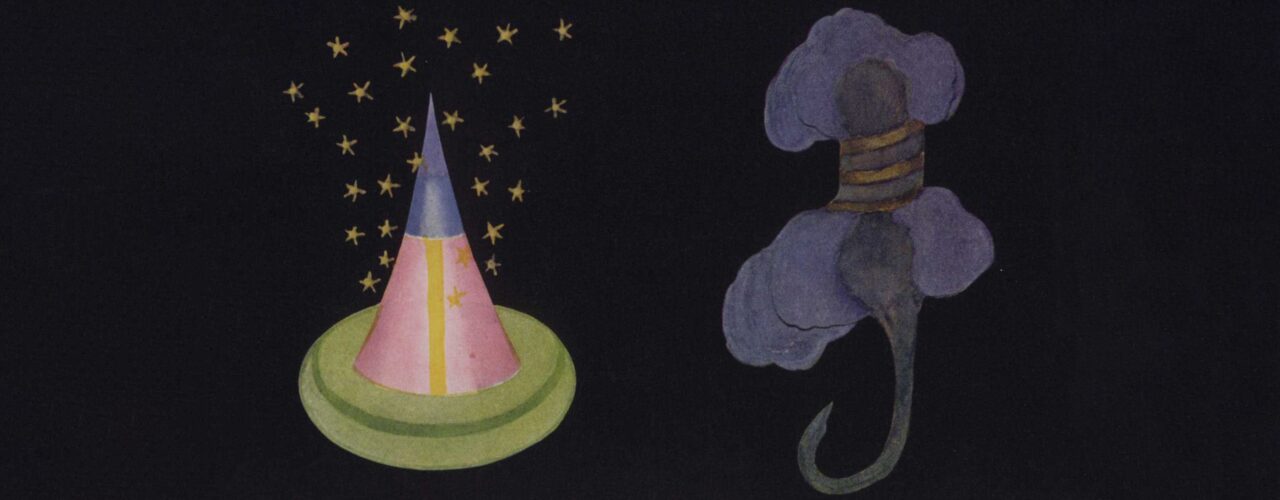
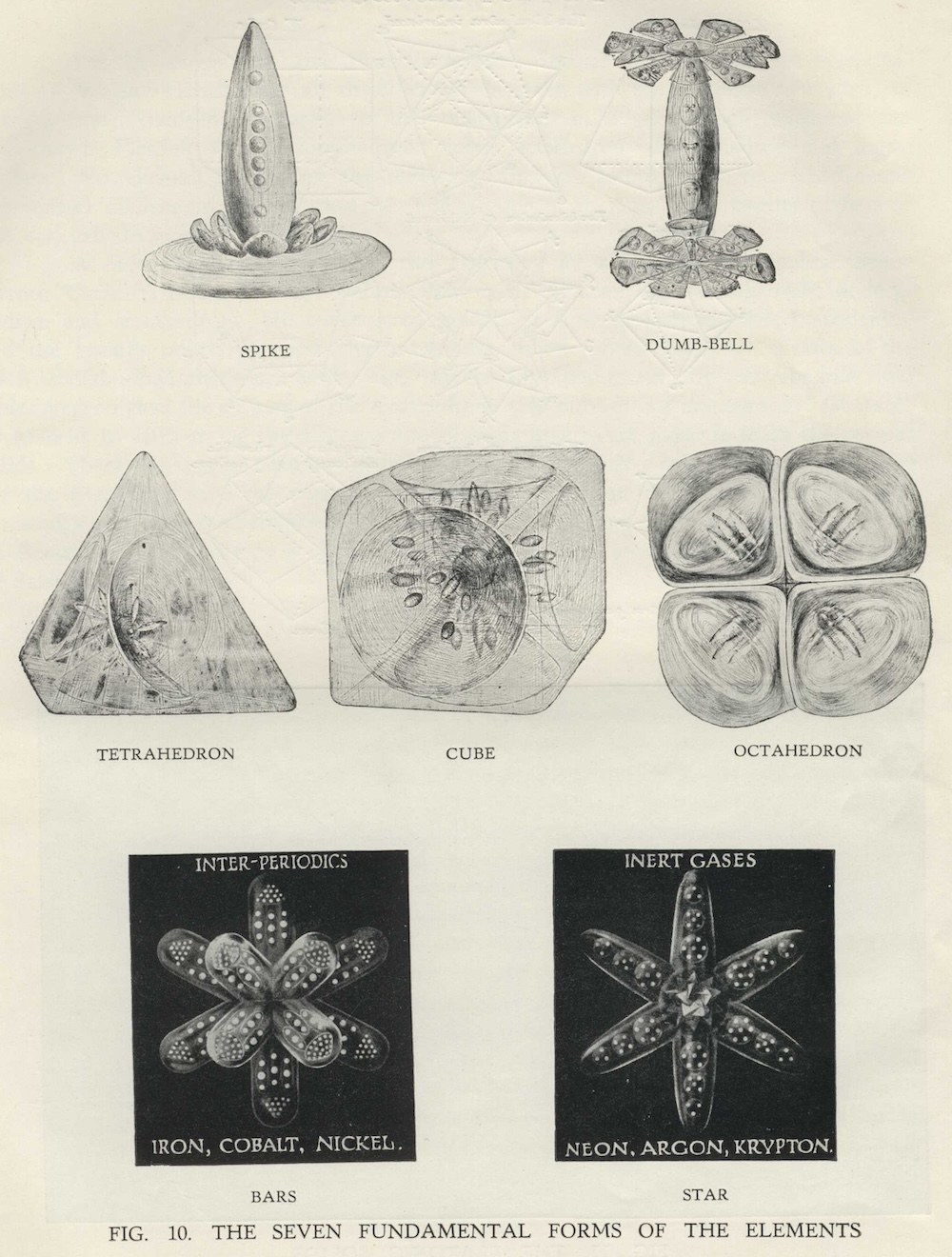
Occult Chemistry is a prime example of Leadbeater and Besant’s version of Theosophy, distinct from Blavastsky’s. In the book, they describe using a clairvoyant technique to observe chemical elements (including some not recognized by mainstream science, such as “occultum,” pictured above). The results of this technique were published alongside images of the elements as they personally observed them. The illustrations depict the variety of geometric forms that elements can take, including cubes, tetrahedrons, “spikes,” and “stars.”
Methodology aside, Occult Chemistry was not unlike other early 20th-century scientific books that included illustrations of microscopic images. But it is important to note that contemporary mainstream scientists viewed the claims of Leadbeater, Besant, and other Theosophists with skepticism. If that’s the case, then why were respected scientists Thomas Edison and William Crookes associated with the society?
Early Theosophists had a penchant for bringing famous figures into their orbit. Creative thinkers like Mark Twain and Oscar Wilde, for example, were interested enough to discuss ideas with the society or attend séances. Celebrities were not always willing to admit their fascination, however. Publicly, Edison denied joining the movement until Henry Steel Olcott, cofounder and first president of the Theosophical Society, sent him a copy of his signed membership form, perhaps as a reminder.
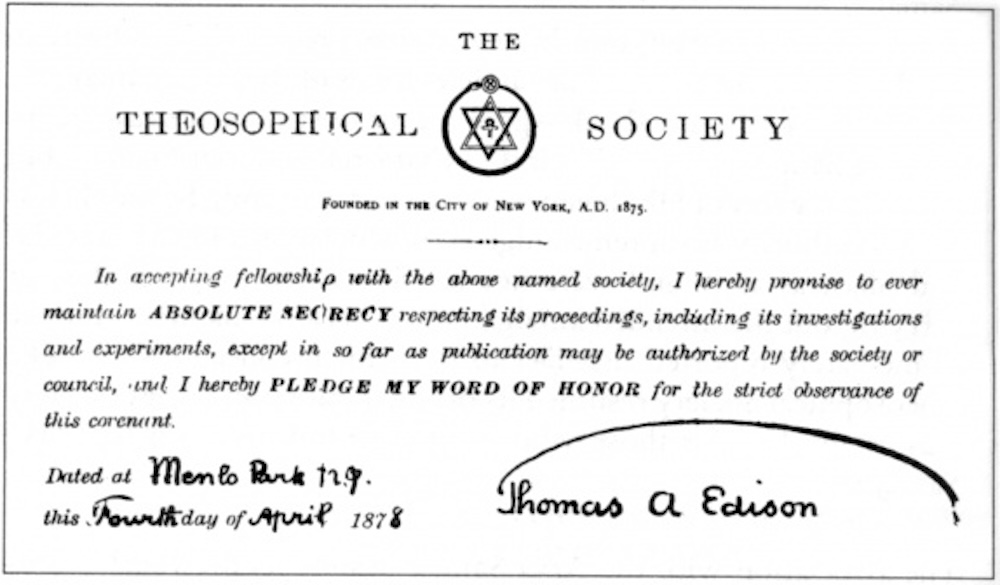
In Olcott’s Old Diary Leaves, he recalls a conversation he had with Edison in 1878 in which the two discussed “occult forces,” with Edison admitting to conducting “some experimenting in that direction.” Apparently, Edison intended to “try whether a pendulum, suspended on the wall of his private laboratory, could be made to move by will-force.” Olcott’s book appears to be the only source of this conversation.
By 1885 Edison denied any connection to the Theosophists and considered contemporary instruments being used to commune with the dead as unscientific. He did, however, envision that science could facilitate communication with the spirit world. In his diary, Edison discussed constructing “an apparatus so delicate that if there are personalities in another existence or sphere, this apparatus will at least give them a better opportunity to express themselves than [. . .] the other crude methods now purported to be the only means of communication.” In the same passage, he entertains the proposition of developing an instrument that would allow “psychics” to test their assertions scientifically. An article in The American Magazine described Edison’s invention of a “spirit phone” in 1920, but a prototype was never found. While Edison may have rejected Theosophy and Spiritualism, he remained interested in communicating with the dead later in life.
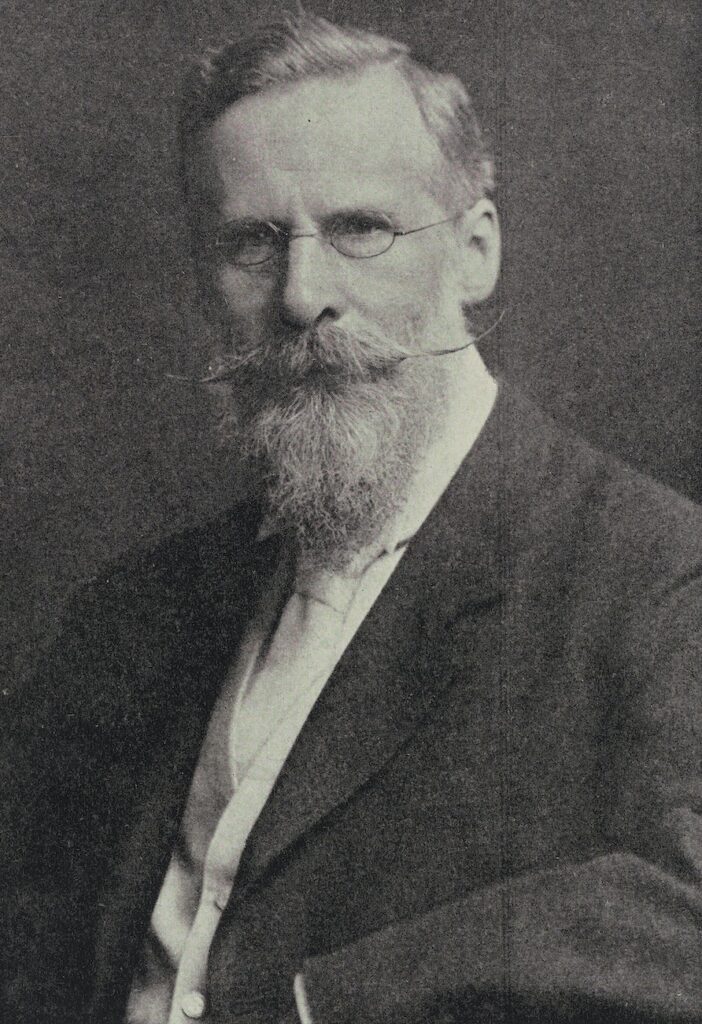
William Crookes was already interested in the esoteric before meeting the Theosophists. He was primarily a chemist credited with the discovery of the element thallium. But by the 1870s, he was investigating mediums and psychical phenomena—experiences that appear to contradict physical laws, like telekinesis or extrasensory perception—in addition to his scientific work.
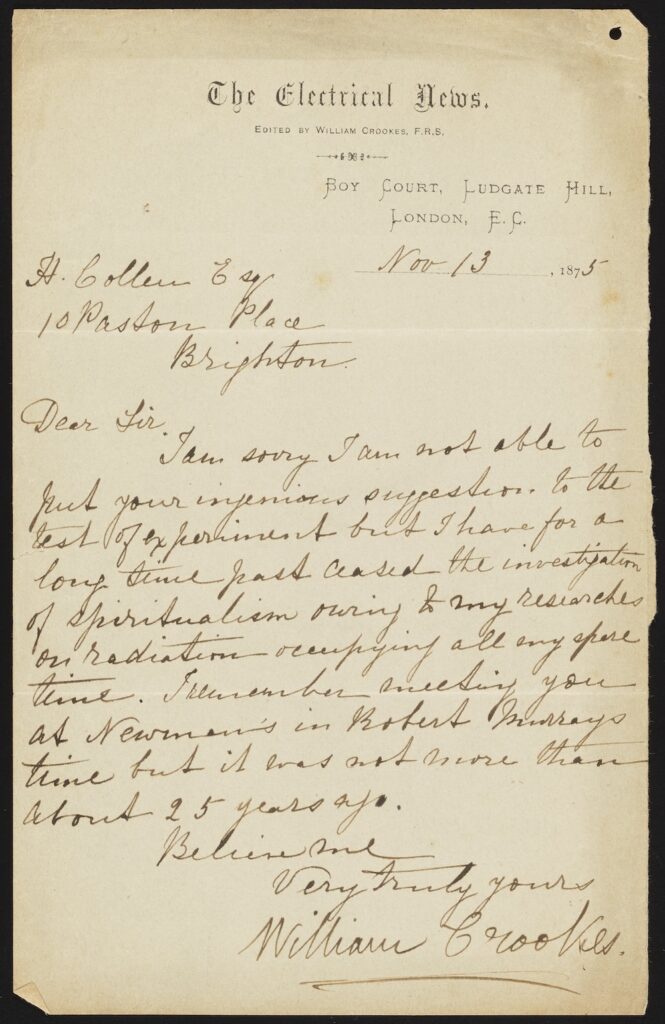
An 1875 letter from Crookes to Henry Collen (digitized and available in the Institute’s archives) implies a move away from spiritualism, stating “[. . .] I have for a long time past ceased the investigation of spiritualism owing to my researches on radiation occupying all my spare time.” Eight years later, Crookes would join Blavatsky’s movement, moving in overlapping circles with Theosophists and psychical researchers. The Theosophists found Crookes’s work useful to support their own ideas and Crookes appeared to be excited about theosophist, spiritualist, and psychical thought.
Of course Crookes’s work was grounded in formalized science, not theosophical doctrine. Nevertheless, Theosophists were attracted to his writings on invisible agencies and anomalous effects, and were eager to claim him as part of their world. His studies of “radiant matter”—a fourth state of matter that would later become known as plasma—were especially attractive to Theosophists because they seemed to offer a scientific language for realities they wished to describe. While Crookes’s engagement with the Theosophical Society is not as well documented as his early psychical and spiritualist interests, occultism appears to have remained an interest for the rest of his life.
Over time, theosophical figures and their ideologies elicited stark criticism from scholars and religious figures alike. Blavatsky herself was labeled a fraud in light of accusations of staged phenomena, and by the end of her life, her reputation was quite damaged. After Blavatsky’s death, the Theosophical Society’s publications linked theosophical studies to scientific discoveries and inventions, despite lacking proof.
One could be left with the impression that the Theosophical Society was a small, niche community of potentially fraudulent occultists from a time gone by; its influence, however, cannot be understated, especially in the arts. Theosophical ideas have inspired great painters, including Hilma af Klint (who joined the society in 1904), Piet Mondrian (1909), and Wassily Kandinsky, who was not a member, but praised the society’s attempt to uncover hidden truths in On the Spiritual in Art, published in 1946. The Theosophical Society itself is still active, and with all its chapters considered, boasts a global membership of 26,000 across 70 countries. The movement has greatly evolved since the late 19th century into a modern community that hosts public programs and local group activities, including yoga, tarot card reading, and circle drumming. That said, the society remains interested in exploring the spiritual and esoteric.
When one looks at the history of alchemy and its gradual evolution into formalized chemistry, it comes as no surprise that science and the occult were significantly entangled, and that even some of history’s champions for scientific thought got caught in a tug-of-war between irrationality and reason. Perhaps it would be more accurate to describe Theosophy’s relationship with science as one that flourished during a time of cultural overlap. Theosophy did not produce scientific breakthroughs, but it did offer an arena where scientists could imagine the unseen as investigable and accessible rather than irrational and forbidden. The Theosophists, much like the secret societies that preceded them, gave scientists and other thinkers a space to consider more radical inquiries and think more openly about ways to uncover truths about the world.
If you want to lift the veil and explore more of the history behind this article, request an appointment to visit the Othmer Library at the Science History Institute! Recommended titles include:
I’d also like to thank the members of the United Lodge of Theosophists in Philadelphia who were generous enough to allow me and my colleague, Jahna Auerbach, to pore through a few of the titles in their library in preparation for this article.
Featured image at top: “At a Funeral,” from Thought-Forms by Annie Besant and C. W. Leadbeater, 1905. The illustrations depict “thought-forms” made visible through clairvoyance captured from two mourners. The form on the left represents feelings of devotion toward the deceased, while the form on the right reveals an attendee’s despondence and horror.
Curating an exhibit on student notebooks.
Bringing the past to life with an obsolete video format.
Highlighting the research projects of our current resident scholars.
Copy the above HTML to republish this content. We have formatted the material to follow our guidelines, which include our credit requirements. Please review our full list of guidelines for more information. By republishing this content, you agree to our republication requirements.