“The Kids’ Corner”
How do science books for kids today compare with those that have come before?
How do science books for kids today compare with those that have come before?
In 1955, the American Association for the Advancement of Science (AAAS) launched the Traveling High School Science Library Program. With support from the National Science Foundation, the initiative was interested in “assuring sufficient scientific manpower for the future.” During its first year, the Traveling Library delivered trunks containing 150 books on science and mathematics to 66 schools around the country. “Biographies and autobiographies,” its director summarized, “histories of science and mathematics,” and books on “applied science” dominated the collection. Program architects used circulation records and questionnaire results to update trunk selections in the following years. Such analyses gave rise to The AAAS Science Book List for Children in 1960, the journal Science Books & Films in 1965, and the AAAS/Subaru Prize for Excellence in Science Books in 2005, sponsored by Subaru of America.
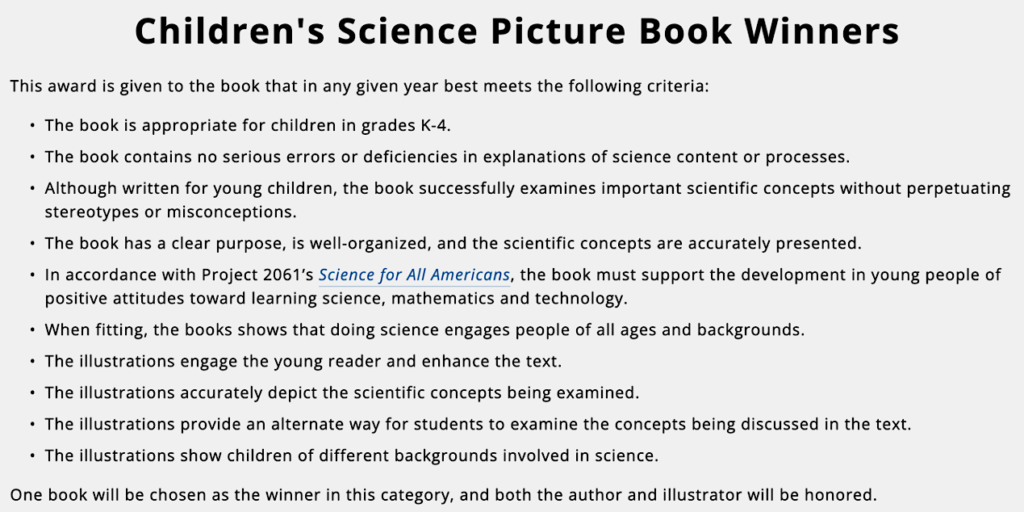
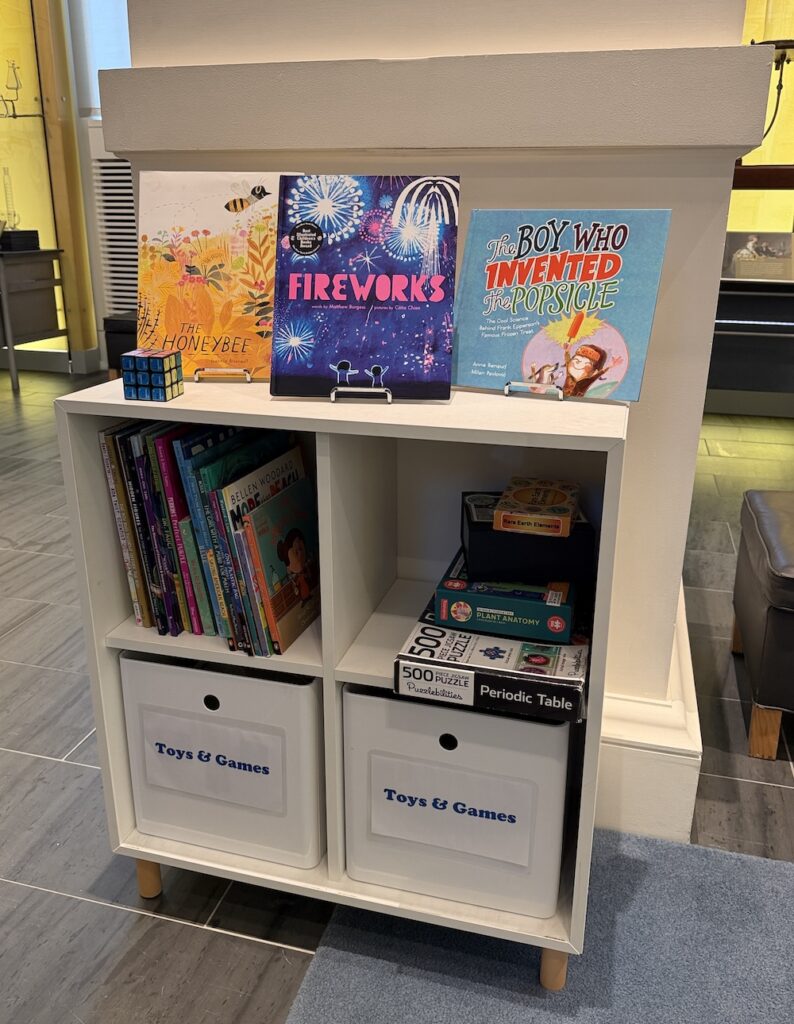
This shape-shifting enterprise—an attempt to promote scientific cultures and concepts among U.S. kids through literature—is one that resonates with a lot of the public-facing work we do at the Science History Institute. Visit the “Kids’ Corner” in the museum’s main exhibition hall, and you may find a recent AAAS/Subaru Prize winner on the shelf of its small, but colorful collection of books for younger visitors. On a recent visit, for instance, I spotted someone curled up with the 2021 awardee in the “Children’s Science Picture Book” category, Mario and the Hole in the Sky: How a Chemist Saved our Planet (2019).
As someone who routinely moves back and forth between the Institute’s museum and library, I have often found myself thinking about the similarities and differences between the storytelling comprised in these two “collections.” The auxiliary collection in the museum reflects the content of the Institute’s permanent and rotating exhibitions, the diverse backgrounds visitors bring to the museum, and the value of entertainment in the pursuit of public history. It was put together initially by museum education staff who were looking to engage families through storytime programs. Books for children in the Othmer Library, on the other hand, reflect a carefully considered collections policy that seeks to preserve the history and historiography of science—in this case, the history of science education.
What happens when we set books published in the last few years next to those that were written in earlier periods? What can such comparison tell us about the histories of science, publishing, and the ways in which childhood has been understood?
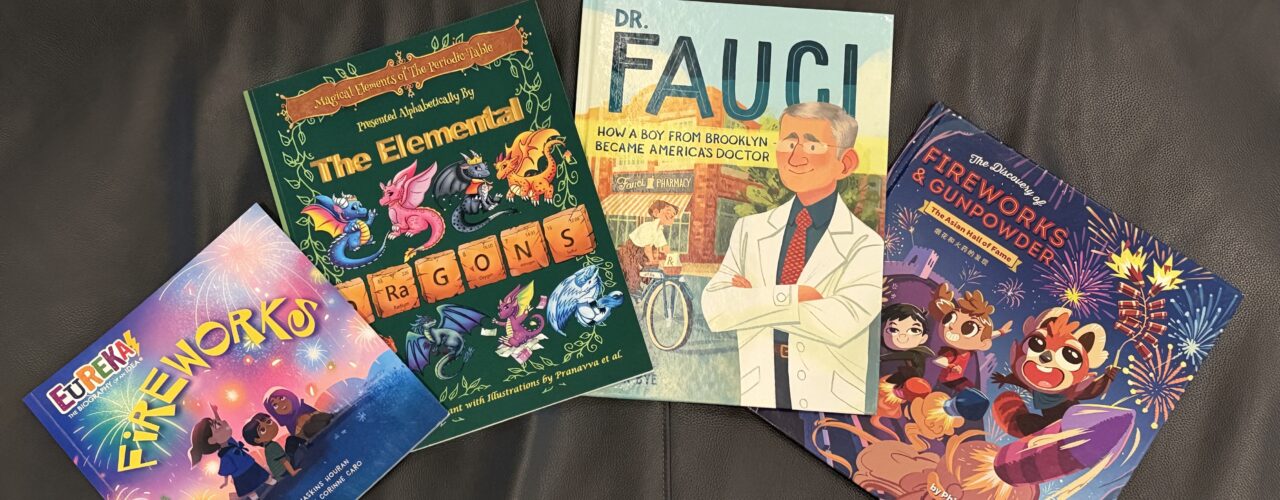
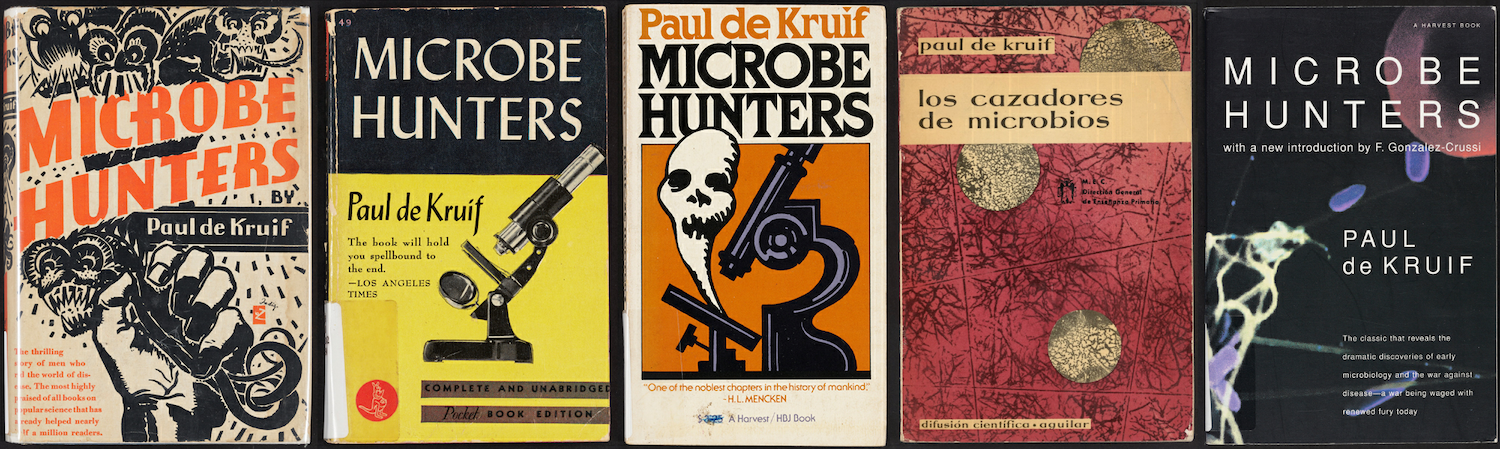
The preference for life stories—biographies and autobiographies—is one thing that seems to have remained constant over time. The majority of the books in the museum’s Kids’ Corner are about scientific heroes. One can learn, for example, about inventor Frank Epperson in The Boy Who Invented the Popsicle (2019), about physician Anthony Fauci in Dr Fauci: How a Boy from Brooklyn Became America’s Doctor (2021), or about the inspiring story of marine biologist Melissa Cristina Márquez in The Mother of Sharks (2023). These titles extend the tradition of biographical science writing that reaches back, at least, to Paul de Kruif in the 1920s.
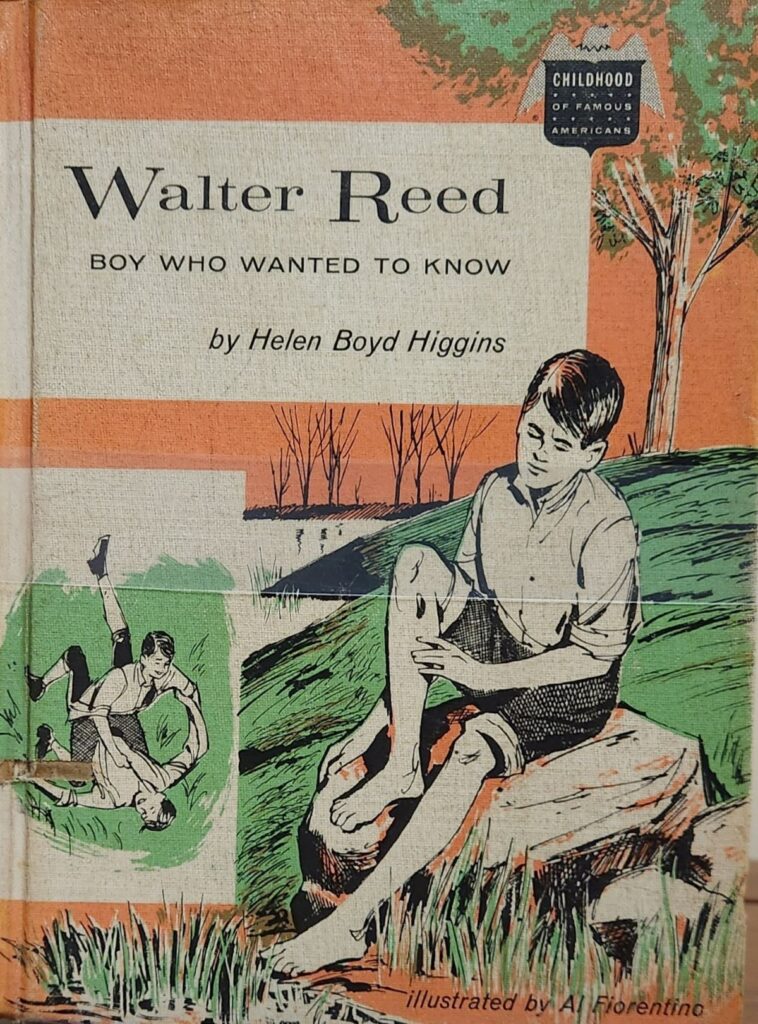
That said, these 21st-century books portray the scientists as children to a greater degree than was done in the past. Rather than describing the childhood of someone who went on to become a scientist, they invite readers to identify with the scientist’s youthful questions, experiments, and designs. A quick survey of the Othmer Library’s historical holdings suggests that this approach dates to the 1950s, when investments in U.S. science education were sky high. Prior to that time, authors were more likely to appeal to a child’s desire to grow into a fully formed hero figure through an emphasis on their adult accomplishments.
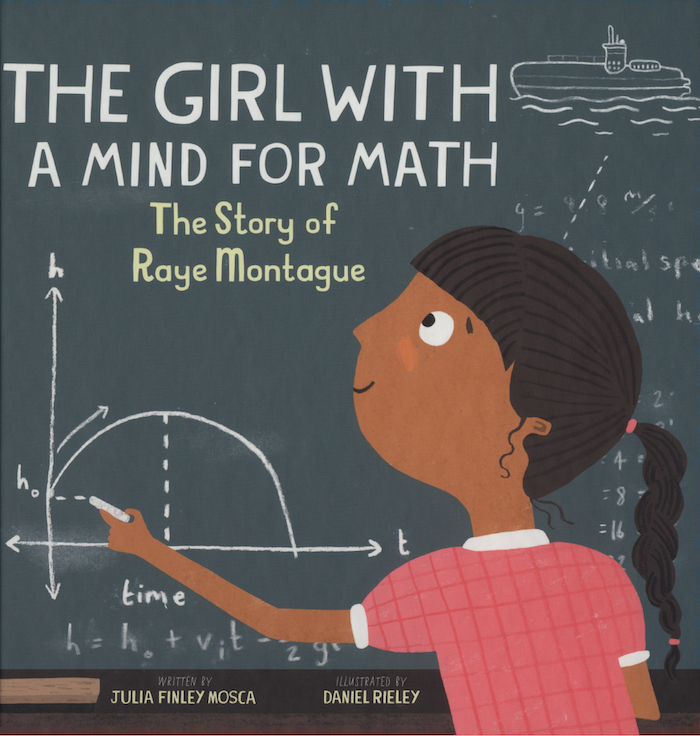
The contemporary books for young visitors in the museum are richly illustrated, with certain features in common. They tend to emphasize the values of science, including things like curiosity, multiculturalism, struggle, and service. For example, in Perkins Perfect Purple: How a Boy Created Color with Chemistry (2020), readers are hooked by a question that English chemist William Henry Perkin is said to have asked himself: could he cure rich and poor with chemistry?
Though the emphasis on diverse cultures and backgrounds seems to distinguish the contemporary literature from earlier exemplars in the Othmer Library, an impulse to instill shared values through children’s storytelling is evergreen. We see it, for example, in the books historian of science Bert Hansen donated to the library in 2023. Reflecting on titles like Alexander Aggasiz: Pioneer Oceanographer and William Crawford Gorgas: Tropic Fever Fighter, Hansen said in an interview that they bring “to light the U.S. public’s feelings and ideas about what science does, what it contributes to society.” These biographies, in particular, convey the sense that research is exciting, “optimistic,” and “future-oriented”—that it is in the business of opening up new frontiers.
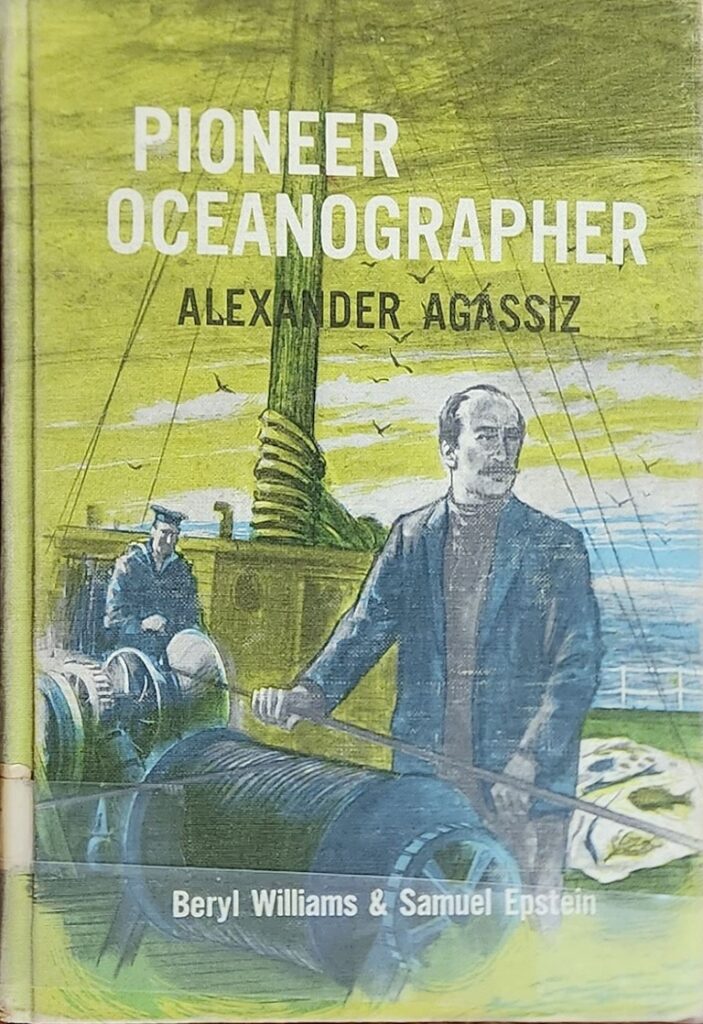
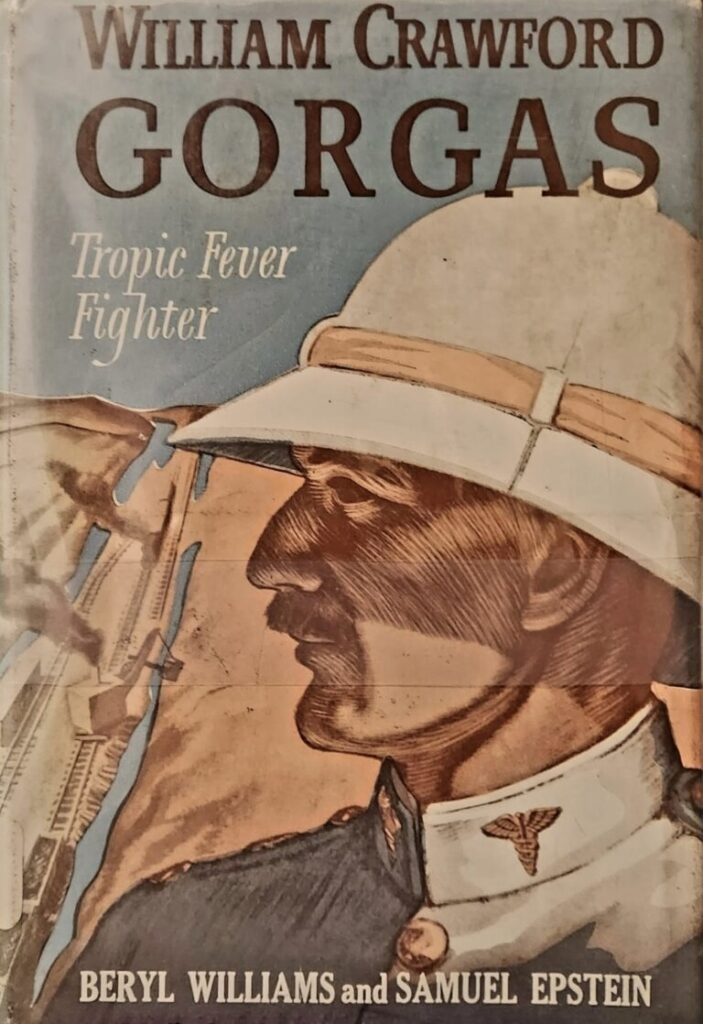
Two books from Bert Hansen’s donation to the Othmer Library: Alexander Aggasiz’s Pioneer Oceanographer (1948) and William Crawford Gorgas’s Tropic Fever Fighter (1962).
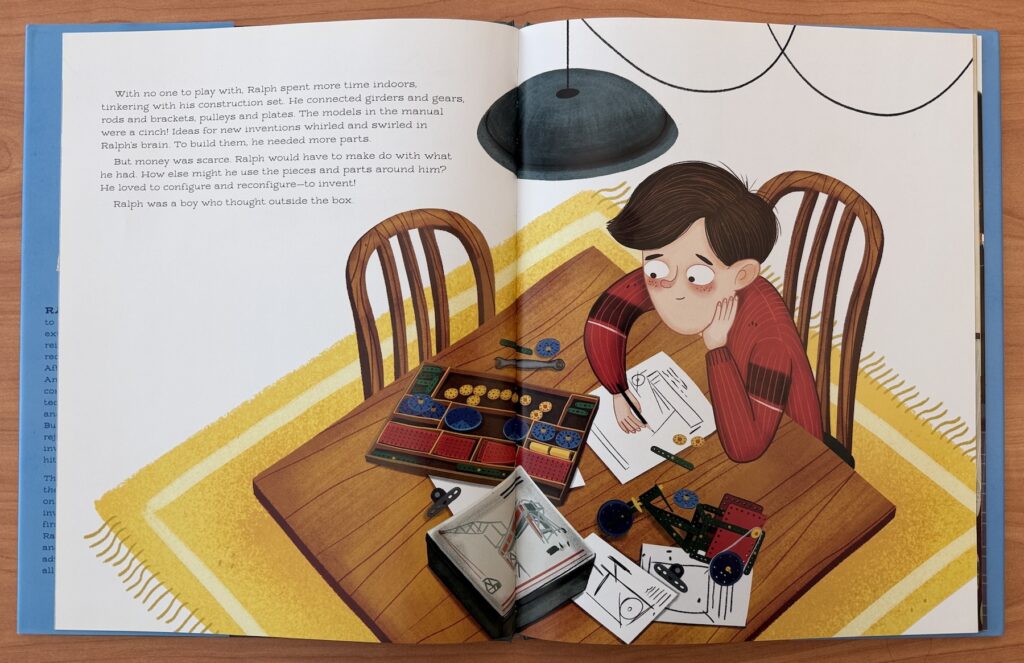
While the values that come across in contemporary science books for children often loft high, their authors and illustrators make every effort to ground these stories in references that will feel familiar to young readers today. Domestic objects—kitchen equipment, backyard finds, and other “spare parts” feature prominently in representations of scientists’ lives.
Assumptions about the everyday material circumstances of young readers are similarly, if surprisingly, conveyed through the remarkable volumes of La Science Amusante in the Othmer’s rare book collection. Authored in the late 1800s by engineer and educator Arthur Good under the pen name “Tom Tit,” and richly illustrated by Louis Poyet, these books bend, dangle, invert, and otherwise manipulate the objects of middle-class fin de siècle Parisian life into more than 300 physical experiments and demonstrations.
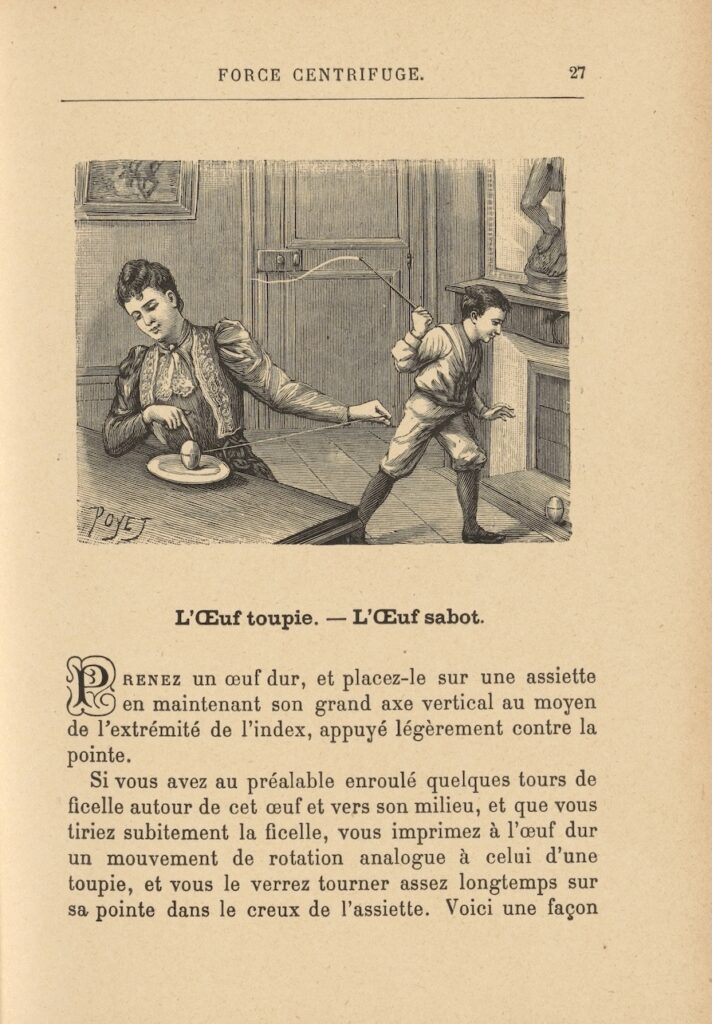
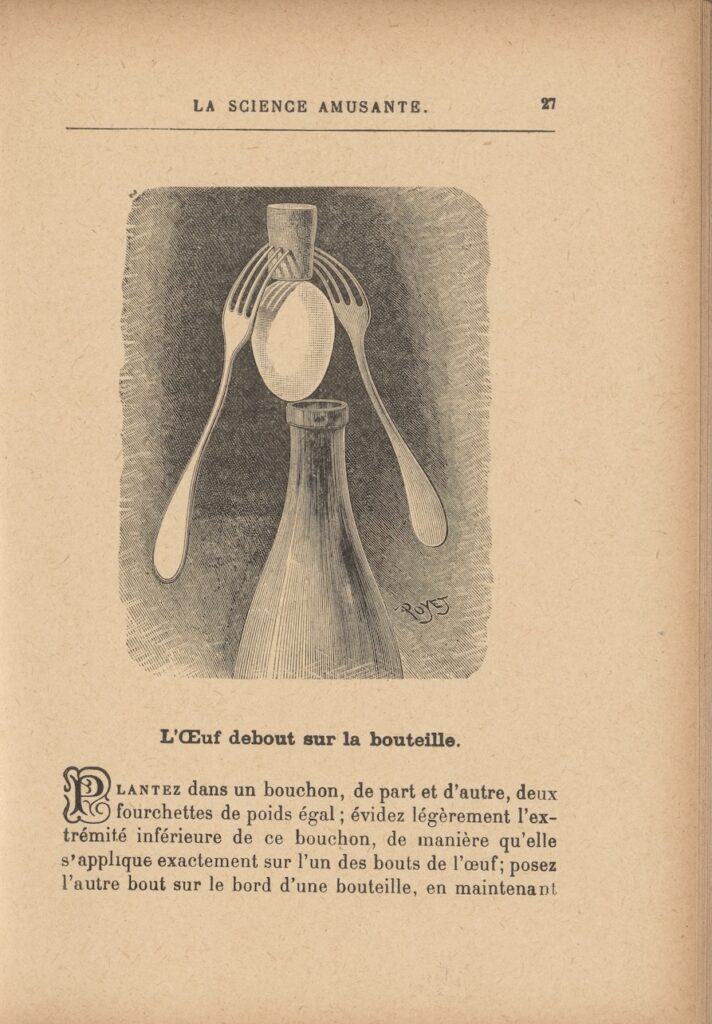
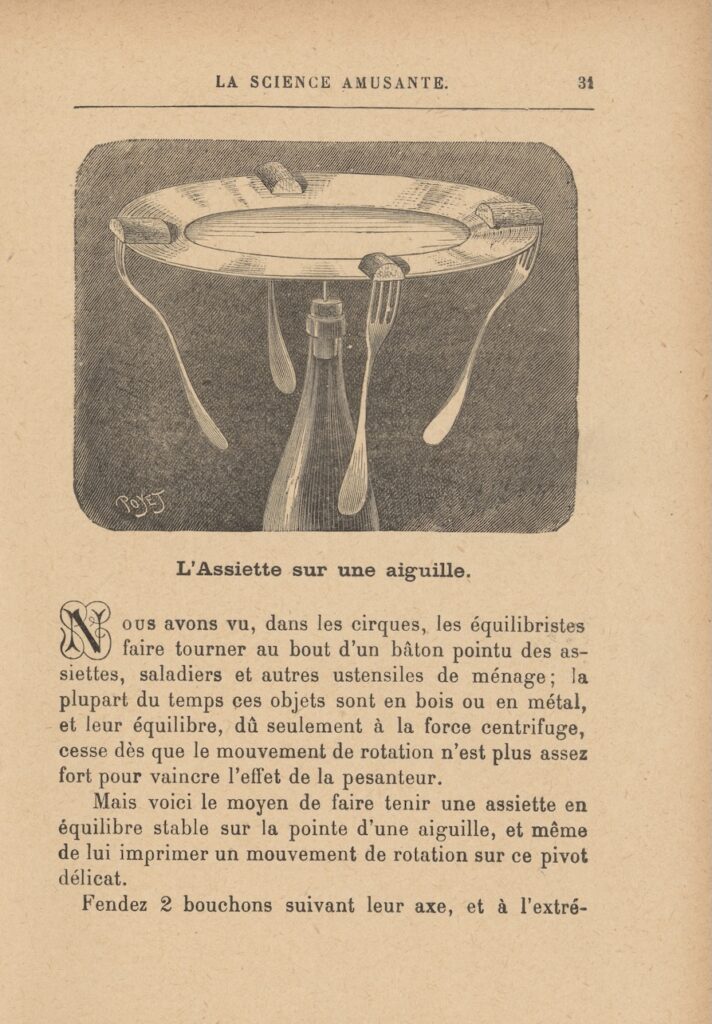
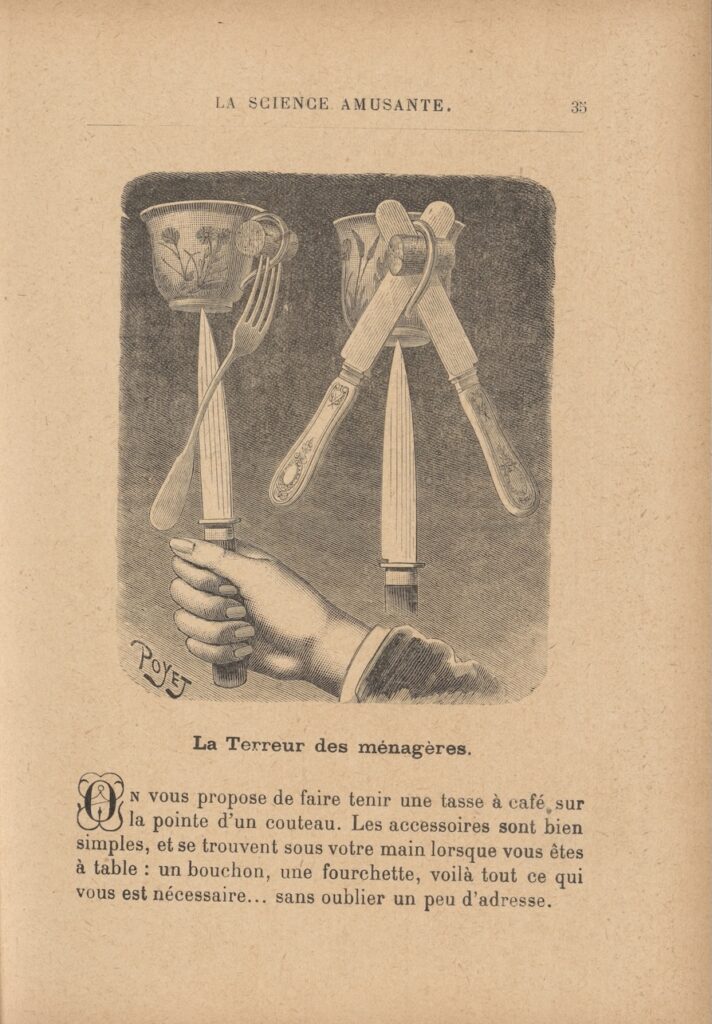
Experiments involving everyday objects from Vols. I and III of Tom Tit’s La Science Amusante.
From Poyet’s engravings, it looks like fowl and alcohol were abundant in late-19th century France. He shows children engaged in diverting science experiments with their families, true to Good’s aim, which was to provide his own children with a “souvenir…of the happy moments we have spent together trying the experiments and constructing the apparatuses.”
La Science Amusante does indeed raise questions about the role(s) of parents and other educators. To what extent are the books in these two “collections” written for children to read themselves and to what extent do they assume that adults are present to facilitate?
Eliza A. Youmans’s The First Book of Botany, Designed to Cultivate the Observing Powers of Children (1870) is explicitly addressed to “teachers,” or “those concerned in the work of education.” Youmans’s own biography helps to explain her framework. To assist her brother—Edward Youmans, who was blind—Eliza read aloud and narrated her experiments in chemistry. She took chemistry classes to become a better tutor, galvanizing her own interest in science. Given this personal experience, it would have seemed natural to her that the “observing powers of children” were to be cultivated through some sort of mediation. Youmans’s The First Book of Botany also shows how commitments to progressive education were bound up with nature study and underwritten by an enlightened publishing company.
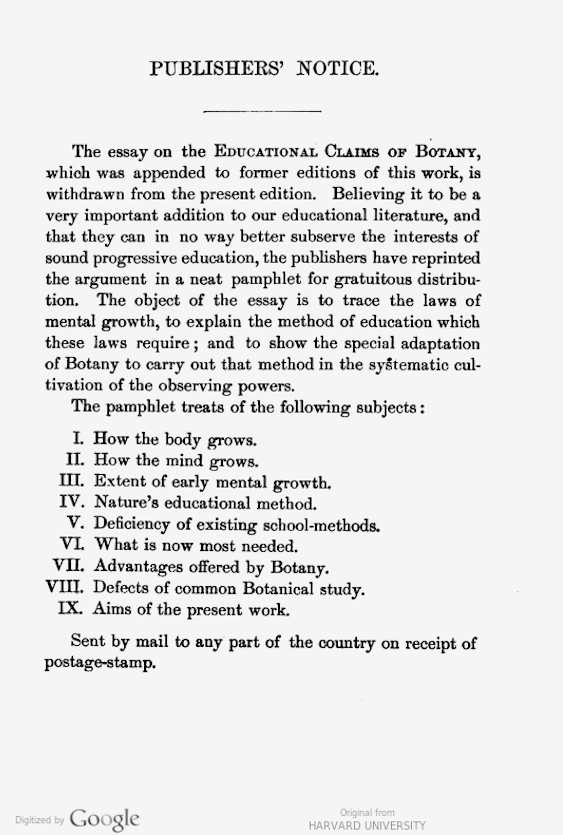
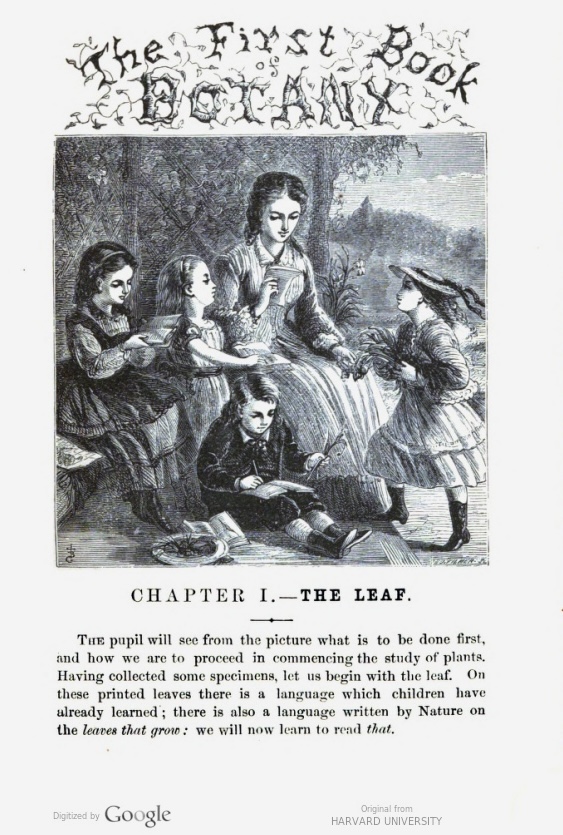
Pages from The First Book of Botany, Designed to Cultivate the Observing Powers of Children (1870).
Roughly 150 years later, we find clues that publishers are still targeting intergenerational audiences. Many of the books in the museum’s collection, for instance, have detailed appendices, glossaries, and sources for continued learning. Such features highlight the extent to which reading is (or can be) a group activity.
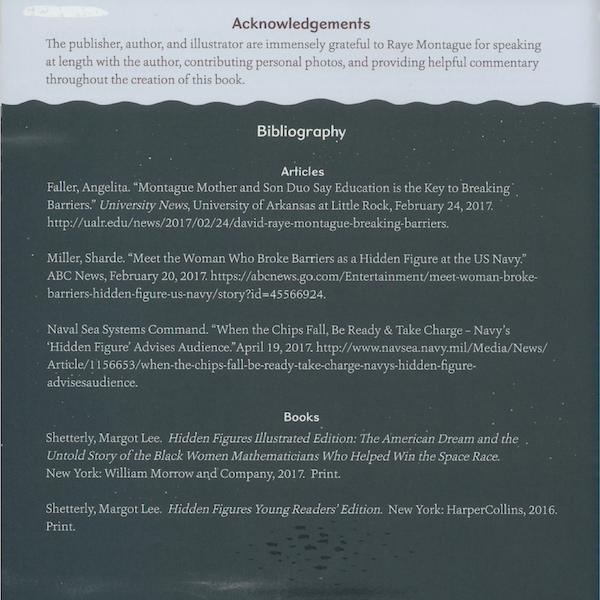
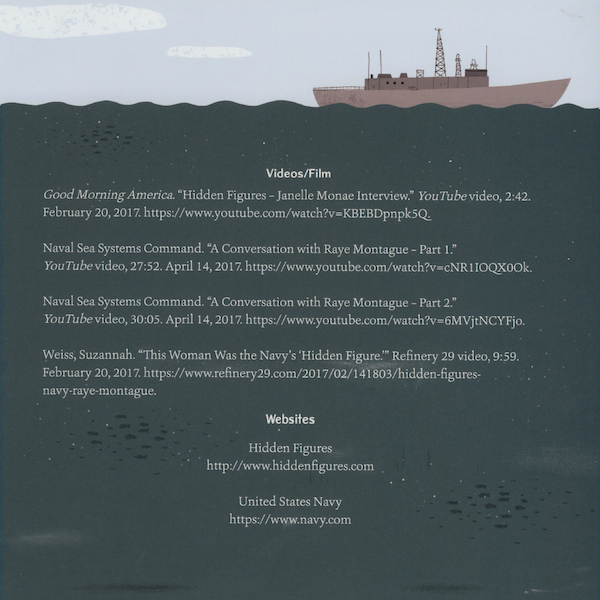
Source pages from The Girl with a Mind for Math (2020).
The Fairy-Land of Science (1878) preserves a record of such human encounters. Adapted by English writer and science educator Arabella Buckley from a series of lectures given “last spring, in St. John’s Wood, to a large audience of children and their friends,” the book is a direct appeal to children, framed in the language of fantasy.
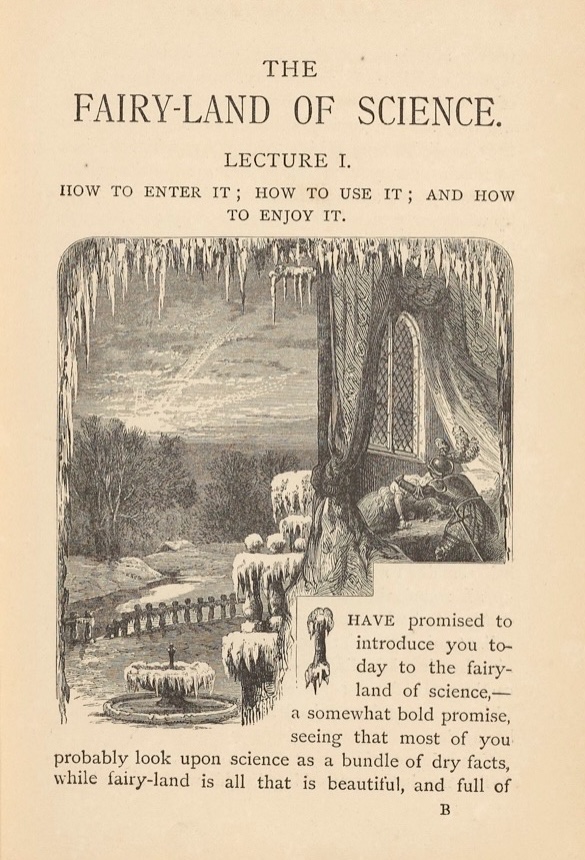
The opening lecture of Buckley’s The Fairy-Land of Science.
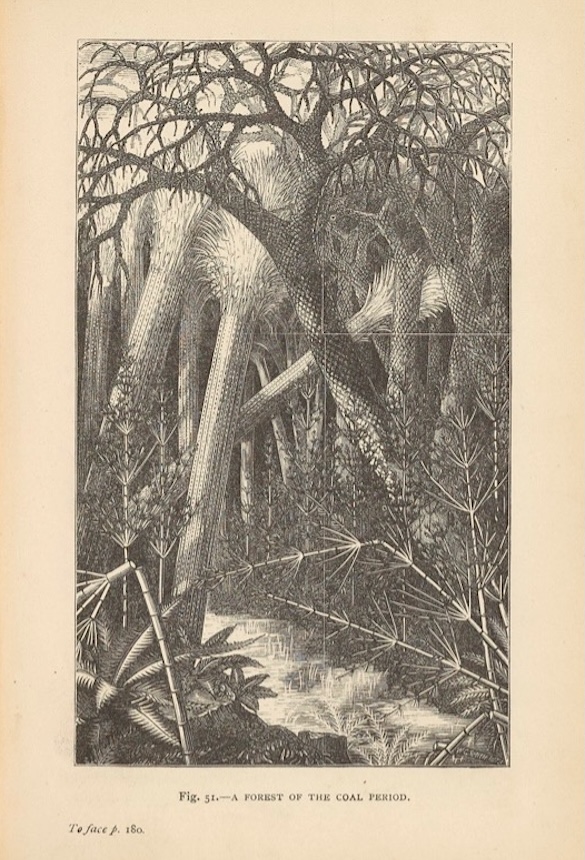
Flipping to Lecture VIII, “The History of a Piece of Coal,” Buckley invites readers to “take an imaginary journey with me to a coal-pit near Newcastle.” Entering into the scene, she paints a vivid picture:
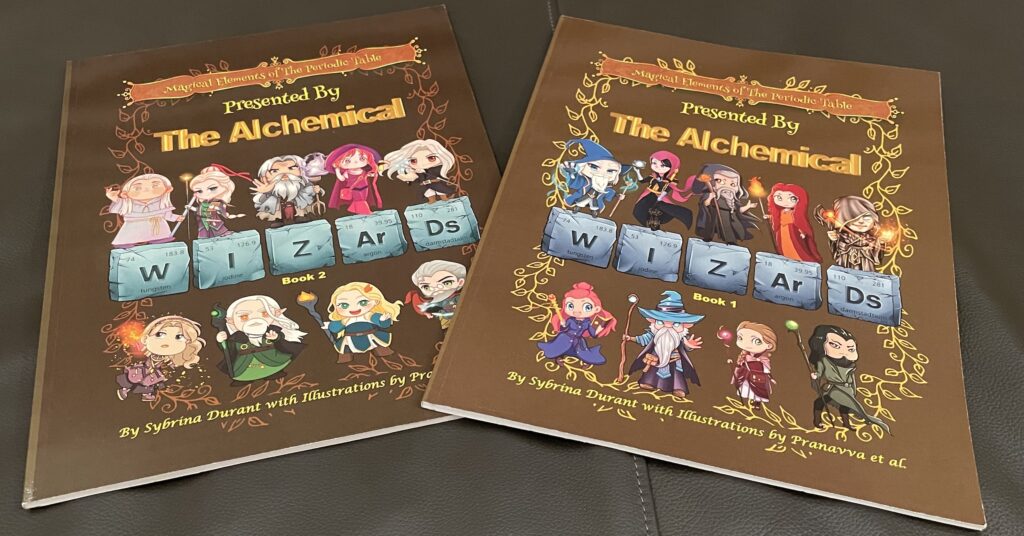
Though the content and form are quite different, I was intrigued to find books in the Kids’ Corner that also used familiar figures of fantasy—dragons and wizards—to communicate foundational chemical knowledge.
Sifting through these diverse examples, the questions I keep coming back to are: what have adults thought kids need to know about science and how has that changed over time?
While a tinkerer’s ethic underlies both The Boy Who Thought Outside the Box and the Tom Tit books, I detected a shift in this preliminary survey from a primary concern with foundational knowledge of physical principles to “making stuff”— or, one could say, from science to technology. There has also been a greater emphasis on artwork, which has taken up a correspondingly greater percentage of the pages of these books over time. Finally, the 21st-century literature seems much more concerned with matters of identity and representation, extending a more inclusive invitation to science-curious youth.
Despite these differences, I was struck by the underlying consistency of the children’s science literature over a period of some 150 years. Values of curiosity and sociality run through these books; they have tried to make science relatable by invoking familiar objects and circumstances; they have, in practice, addressed hybrid audiences; and they have appealed to a sense of wonder through pictures—both in the mind and on the page.
Featured image: A selection of children’s books available in the Kids’ Corner in our museum.
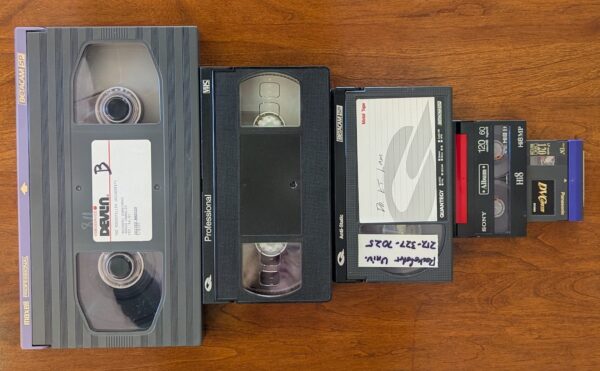
Bringing the past to life with an obsolete video format.
Highlighting the research projects of our current resident scholars.
Morris A. Robbins and a tale of autonomy.
Copy the above HTML to republish this content. We have formatted the material to follow our guidelines, which include our credit requirements. Please review our full list of guidelines for more information. By republishing this content, you agree to our republication requirements.