Utopian Scholastic
The optimism of science education at the turn of the millennium.
The optimism of science education at the turn of the millennium.
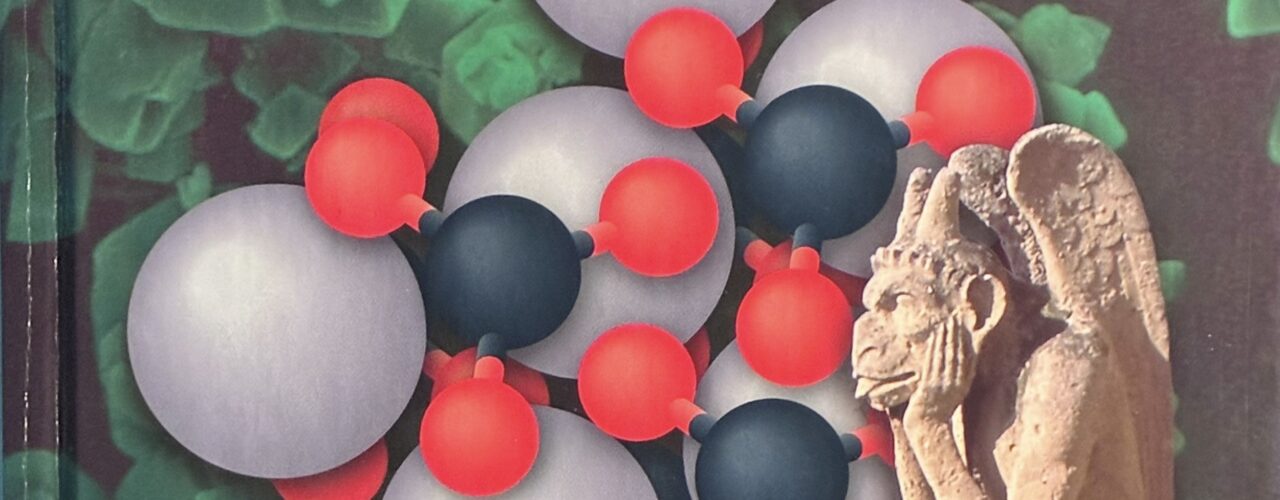
If you took (or taught) a college science class in the 1990s or 2000s, you probably remember the textbooks. Unmistakable products of their era, they tended to feature stock images of natural splendor, juxtaposed with impossibly regular geometric figures, tiled out to infinity. A central preoccupation is light—a metaphor for information—bouncing off shiny surfaces. And there’s often an element of surrealism: that one funky element that doesn’t quite fit the rest of the collage.
These textbooks and their glossy covers elicit an aching nostalgia in the librarians here at the Science History Institute. And we’re not the only ones, as it turns out. It’s recently come to our attention that this familiar cluster of visual tropes has a name: “Utopian Scholastic.” The Aesthetics Fandom wiki attributes the term to Suze Huldt and Karl Kraft, who created it in the early 2020s to describe the unique graphic design sensibilities of 1990s–early 2000s educational resources. Commonly cited examples of the style are Microsoft Encarta graphics, early computer games like Myst, the opening credits to Reading Rainbow, and other touchstones of 1990s futurism.
It should come as no surprise that the Othmer Library of Chemical History, founded in the 1980s, holds a sizable collection of chemistry textbooks and handbooks from the Utopian Scholastic era. Here are some of our favorites:
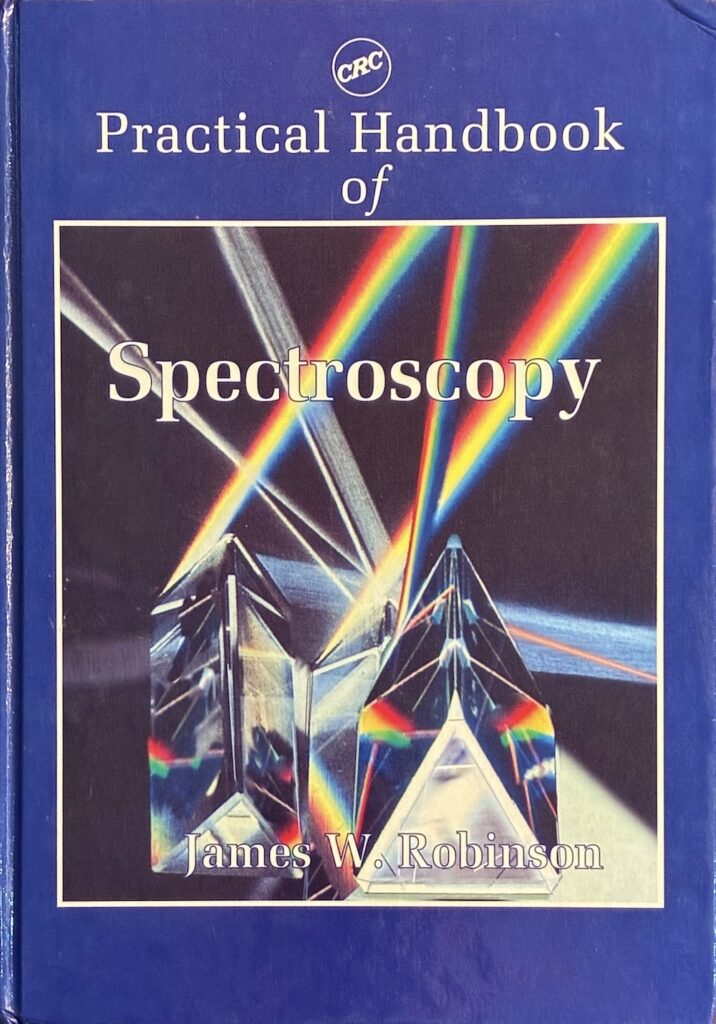
By 1991, music CDs, with their reflective rainbow surfaces, were already part of daily life, and CD-ROMs were just making their debut. But this cover design, with its analog rainbows, still has one foot in the pre-digital world. The design also places it in a century-long tradition of spectroscopy and optics books featuring eye-catching rainbows.

Our entire planet, neatly contained inside a round-bottom flask: a perfect visual metaphor for the global, post-Cold War scientific future awaiting new chemists.
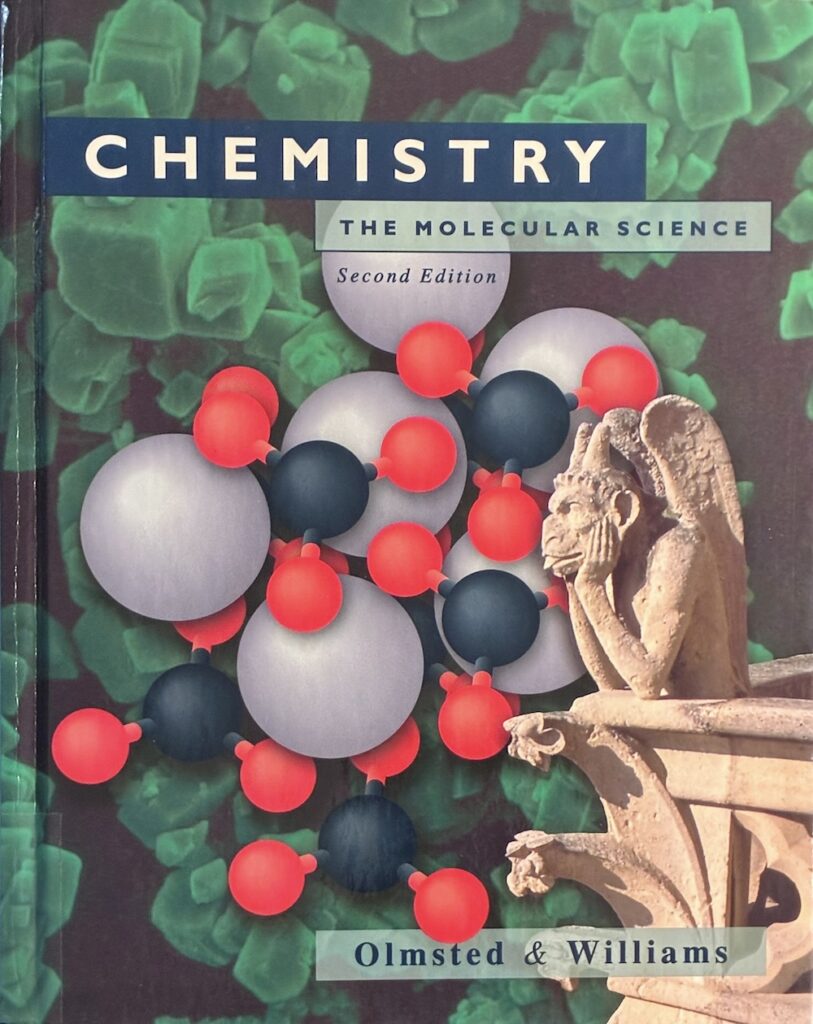
Over the course of the 1990s, new ray-tracing software like POV-Ray allowed graphic designers to simulate the path of light bouncing through artificial scenes on increasingly powerful computers. By 1997, raytracing was ubiquitous, and it appears here in the gray, red, and black surfaces of the molecule included in this collage. As for the pensive gargoyle, it’s not as out of place as you might think. From hip-hop to Utopian Scholastic, the 1990s maintained a fascination with surrealism, incongruity, and the grotesque.
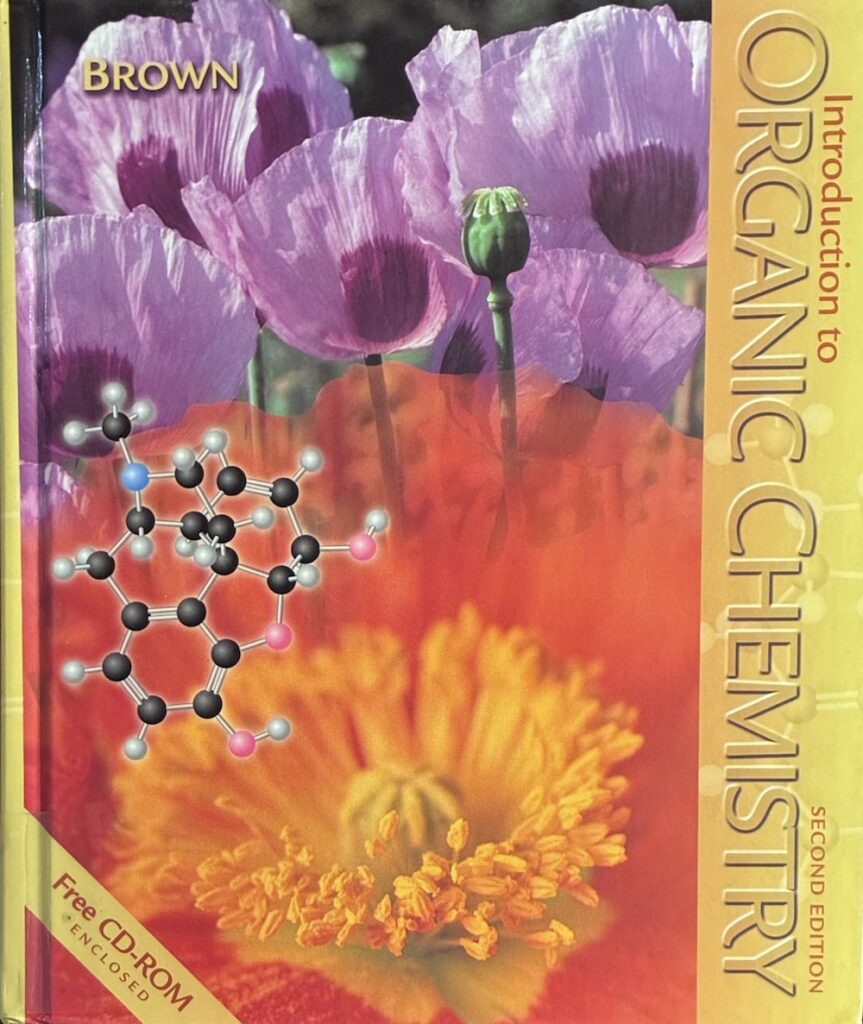
By the turn of the millennium, Utopian Scholastic was in full swing, here with a trippy surrealist collage, a free CD-ROM, and, once again, a ray-traced ball-and-stick model of a molecule. (If you guessed “morphine,” you’re right).
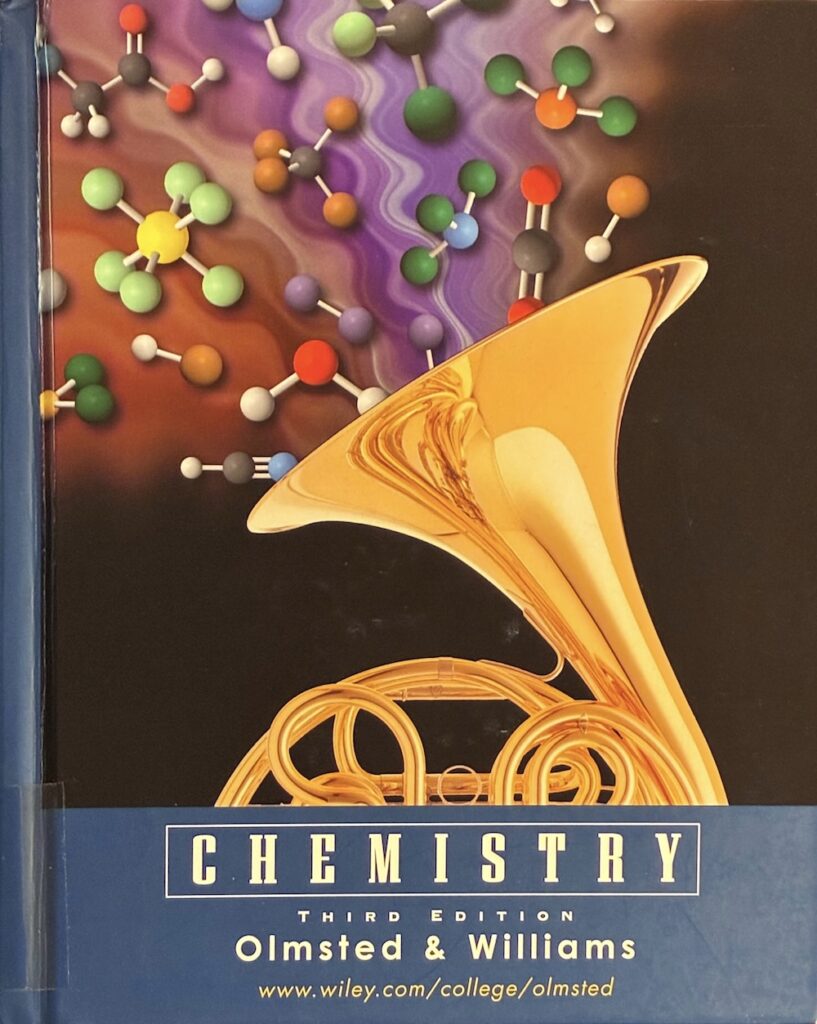
Truly a triumph of surrealist raytracing, this French horn of molecular plenty is our pièce de résistance. Note that by 2002, CD-ROMs had largely been displaced by small educational websites, as evidenced by the fact that the URL for the textbook’s website is printed on the cover of this third edition of the Olmsted and Williams textbook series.
Science textbooks from the 1990s and 2000s hinted at a glamorous online future in which technology would democratize knowledge, making it accessible to learners of all ages, everywhere. In some ways that future—perhaps best captured in Francis Fukuyama’s 1992 book, The End of History and the Last Man—has indeed become our present. Wikipedia is perhaps the most shining example of those ideals, put into practice over two decades of international collaboration.
But there is, of course, a darker side to the story. Since the 2010s, smartphones have given students access to a mind-boggling amount of content. Parents and educators who 15 years ago were enthusing about “computer literacy” are now fretting about “screen time.” Perhaps that’s why these textbooks, with their CD-ROMs, feel so nostalgic to us: we miss the excitement about the technology more than the technology itself.
Featured image: Detail of the cover of Chemistry: The Molecular Science, second edition, by John Olmstead and Gregory Williams, 1997.
Curating an exhibit on student notebooks.
Bringing the past to life with an obsolete video format.
Highlighting the research projects of our current resident scholars.
Copy the above HTML to republish this content. We have formatted the material to follow our guidelines, which include our credit requirements. Please review our full list of guidelines for more information. By republishing this content, you agree to our republication requirements.