Who’s Afraid of the Microfilm Collection?
Making peace with an old—but still useful—format.
Making peace with an old—but still useful—format.
Today’s post explores what is probably one of the least known, and perhaps least liked, parts of our library: the microfilm collection.
For older library users, the word microfilm may spark memories of clumsily threading a roll of film onto a machine, then experiencing motion sickness as page after page flew by as you tried to find the article you needed. For those who came of research age in the past 20 years, as microfilm gradually gave way to digitized resources, the format is unfamiliar, perhaps intimidating, and most likely inconvenient.
However, as a, er, “seasoned” librarian who once spent hours poring through old newspapers on microfilm at the New York Public Library to find articles and photographs related to the Charles Lindbergh baby kidnapping for a musical, I am a microfilm defender. And in honor of the forthcoming purchase of a new microfilm reader for our reading room, I’ve decided to give our microfilm collection some love.
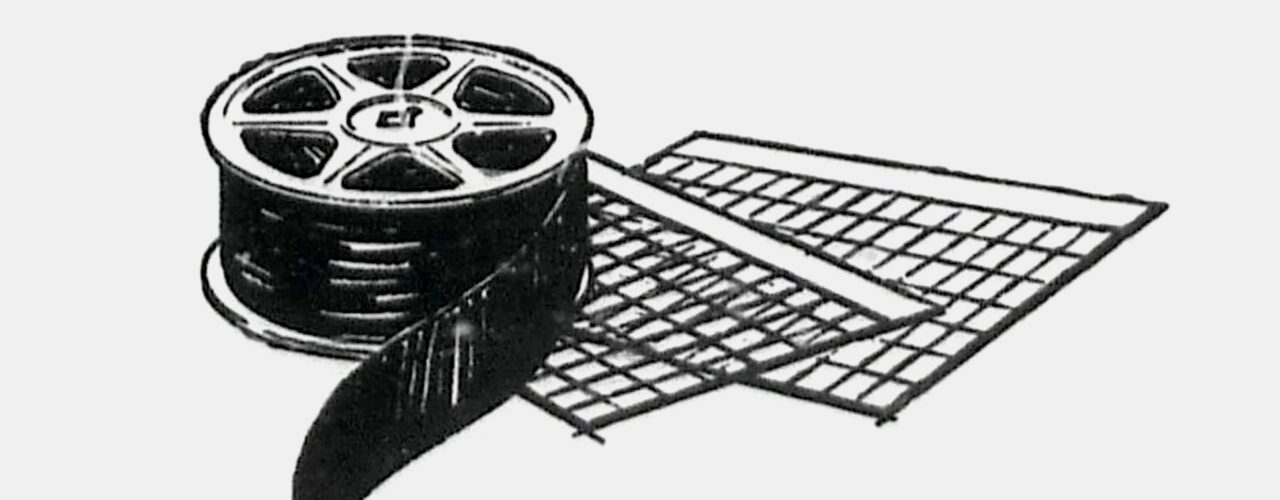
But first, some definitions and history. “Microfilm” refers to rolls of 16 or 35mm film that contain miniature reproductions of pages or documents. The broader category “micromaterials” includes microfiche, microcarts, microprints, and microopaques, but since we have primarily microfilm, I’ll focus on that.
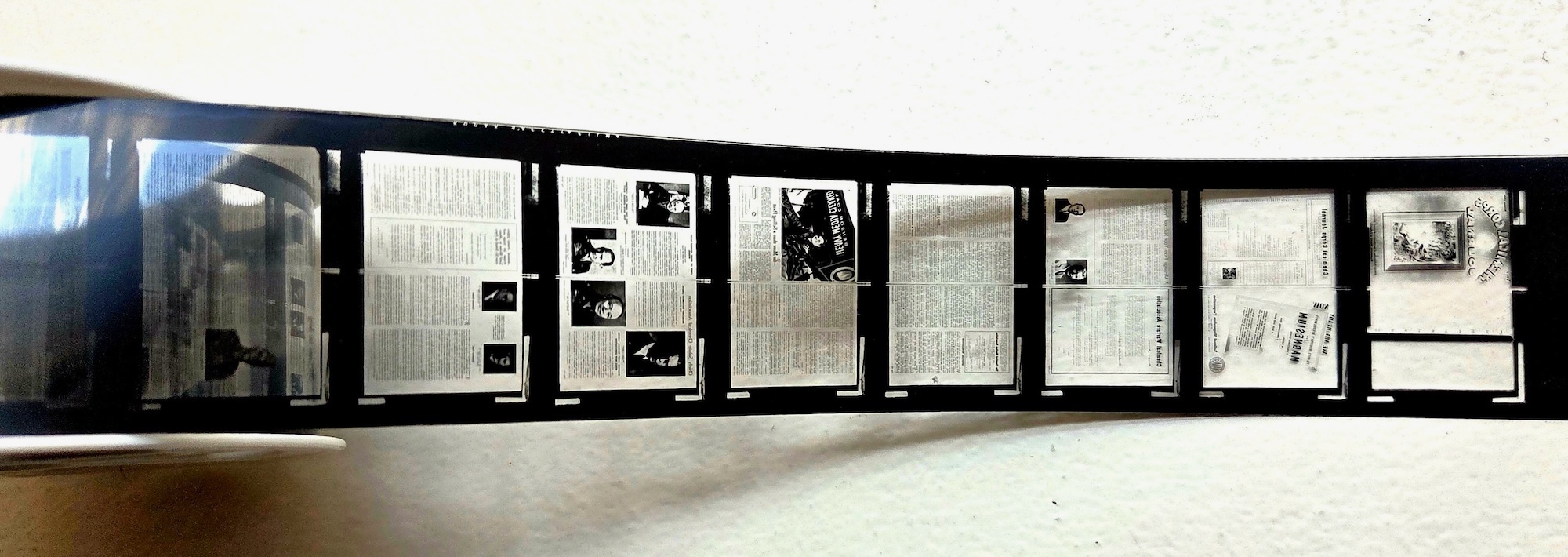
A 100-foot roll of 35mm film can hold 600–800 images; a 100-foot roll of 16mm film: 2,400 images. Depending on the film material and storage conditions, microfilm can last 500 years. Its data capacity and longevity made it a natural fit for libraries, which must always balance space with collection growth to preserve materials for the future.
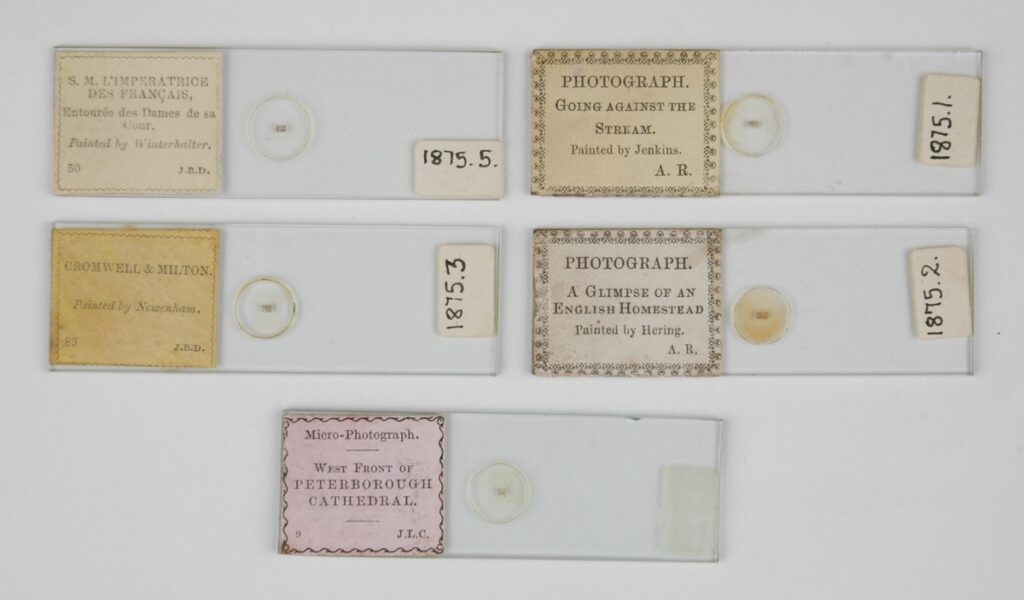
The origins of microfilm technology lie outside the library, however. In 1839, British scientific instrument maker John Benjamin Dancer (1812–1887) pioneered microphotography, which reduced standard photographs to the microscopic size of a few millimeters.
His original results weren’t great, but by the 1850s, he’d perfected a way to reduce images and fix them on microscope slides. Using Dancer’s process, French optician René Dagron (1817–1900) received the first patent for microfilm in 1859. Microphotographs of landmarks, sites, famous people, and texts became popular with Victorian consumers.
The technology was primarily used to produce novelties and trinkets until the Siege of Paris (September 1870–January 1871) during the Franco-Prussian War, when the head of France’s carrier pigeon program contracted Dagron to develop a process that reduced images of newspapers and documents even further. This made the resulting microfilm rolls light enough for pigeons to carry, allowing information to be delivered into the besieged city.
Sixty years later, both Britain and the United States used microfilm technology during World War II to get mail to soldiers on the front, thereby circumventing shipping delays, blockades, and paper shortages, and freeing cargo space for equipment and supplies. In the U.S., letter writers composed messages on standardized letter sheets, which were reviewed, sometimes censored, and then photographed onto microfilm. Once delivered, the microfilm was printed and letters given to soldiers.
Microfilm was also heavily used for espionage during World War II, including by no less a towering figure of literary modernism than Samuel Beckett, who had been living in Paris since 1937. In 1941, he joined Gloria SMH, a French Resistance group that gathered information about the Occupied Zone controlled by German Nazi forces. Beckett received documents, translated them into French, then delivered them to a photographer that microfilmed them for secret transport to London.
American librarians and archivists were also directly involved in wartime information gathering, as Kathy Peis’s Information Hunters (2020) documents. Under the auspices of the Interdepartmental Committee for the Acquisition of Foreign Publications (IDC), part of the Office of Strategic Services, librarians and archivists traveled to both neutral and occupied areas to microfilm enemy publications and records.
Microfilm’s role in espionage persisted after the war and was a mainstay of Cold War spy stories, both real, such as 1953’s Hollow Nickel Case, and cinematic. At the same time, several forces drove the increasing adaptation of microfilm technology by libraries and museums. Microfilm projects conducted by the Library of Congress and the Harvard University Library in the 1930s, as well as the IDC’s World War II experience, showed microfilm’s utility as a method for capturing and preserving extant materials, including hard-to-acquire foreign publications, large format newspapers on acidic paper that quickly decayed, and original documents and records.
Microfilming was also a way to manage the postwar information explosion fueled by wartime science and technology research and the growth of research universities. Bulky periodicals and large archival collections could be reduced in size to a drawer of film rolls that would last for hundreds of years—and those rolls could be used by offsite researchers via interlibrary loan.
Microfilm’s popularity began to wane in the 1990s, as full-text journal article databases and then digital reproductions of books, journals, and archives became increasingly cost-efficient to produce and store. Large-scale microfilming operations such as UMI (University Microfilms, Incorporated) stopped creating new films in the early 2000s, and many libraries discarded their microfilm machines.
But some with substantial microfilm collections kept their machines and upgraded them as capabilities improved. Today’s machines allow you to save multiple pages to a thumb drive or send them to your email, save an OCR-ed PDF of a page, magnify a page with the click of a mouse, and much more.
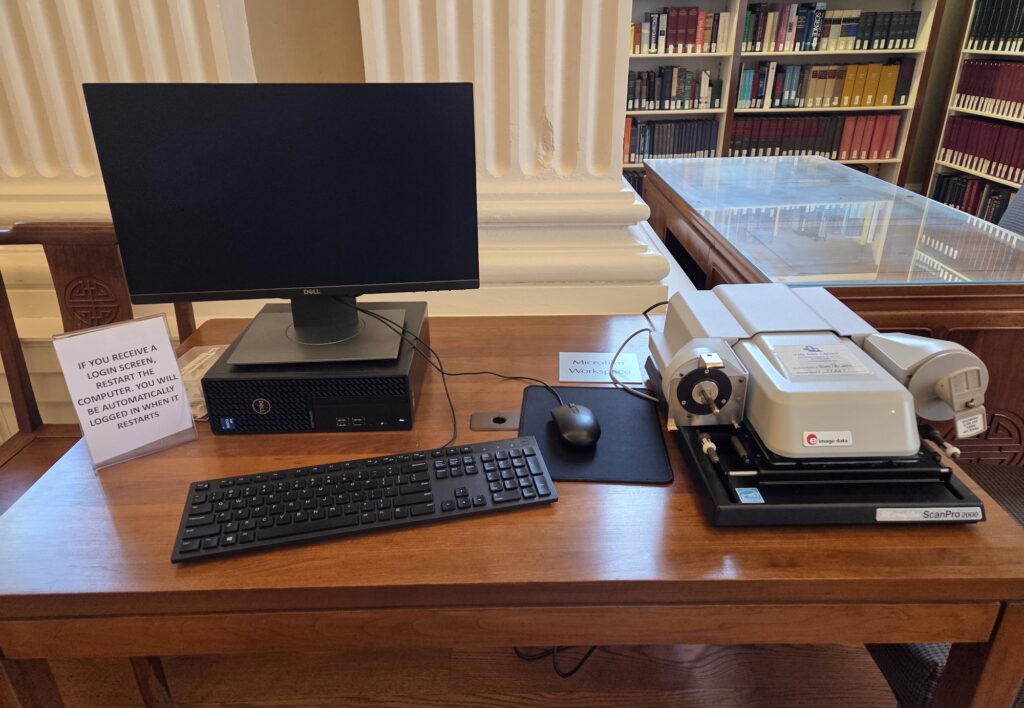
If the aura of espionage or the promise of a fancy new machine is not enough to tempt you to peruse our microfilm collection, perhaps I can dazzle you with some statistics and some collection highlights.
The Othmer Library has 801 records for works on microfilm: 629 serials, 167 books, and 1 archival collection. Among these are 761 reproductions of print originals held by 100 or fewer libraries according to WorldCat.org—i.e., the print versions are scarce or require researchers to travel to use them. A little over 10% of our microfilm collection are foreign language works: 44 German, 33 French, 2 Italian, and 8 in multiple languages.
Each library approaches microfilm collecting according to its own policy. At the Othmer Library, we have used microfilm both to “fill the gap” in a run of print periodical issues and to obtain works we didn’t have in print. Of the 801 microfilm titles in our collection, 384 are titles we hold only on microfilm.
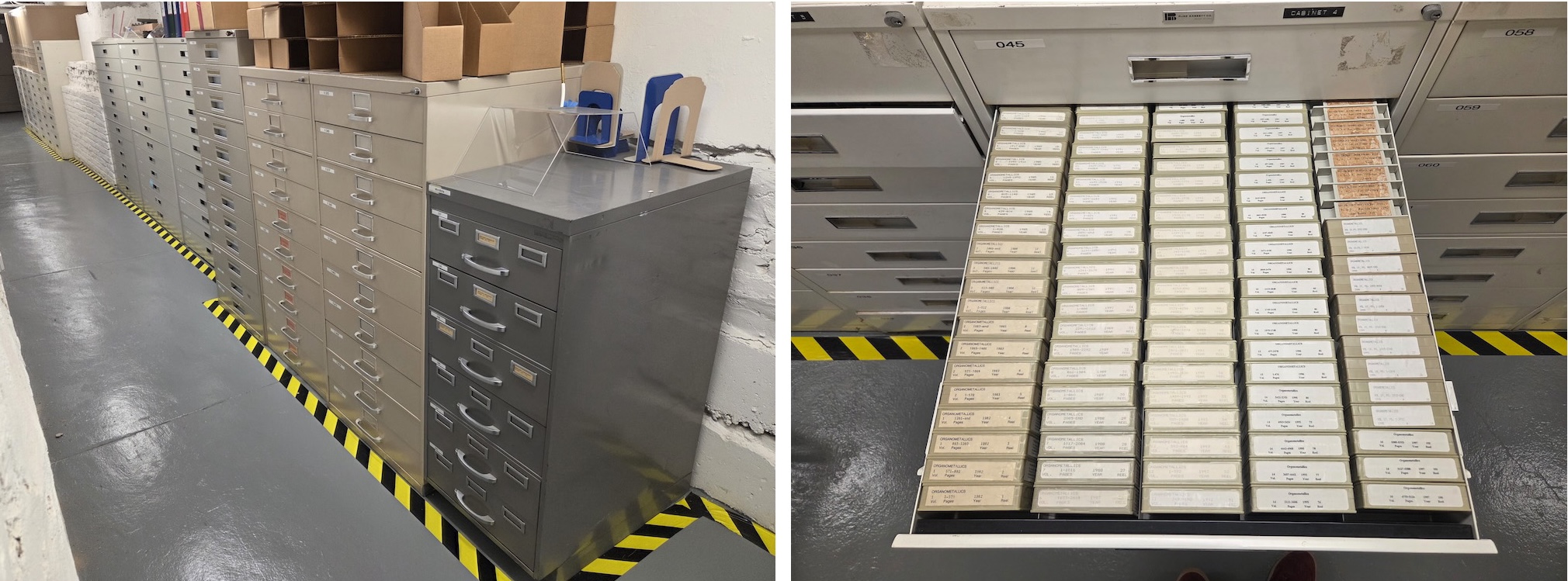
Let’s take a look inside some of these drawers!
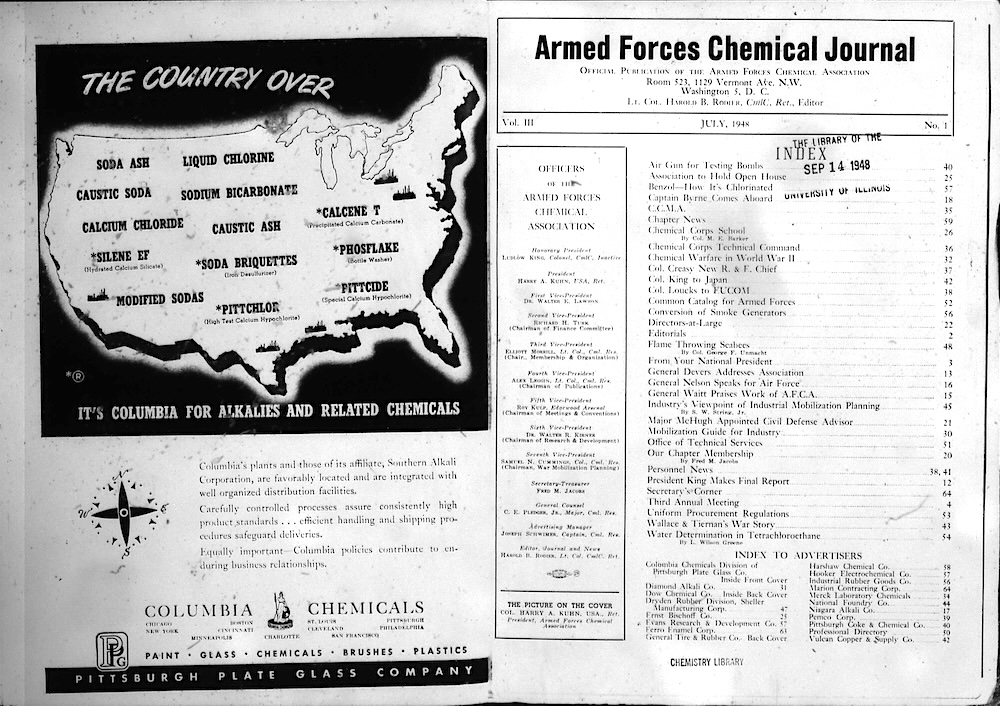
Our first find is the Armed Forces Chemical Journal, which is held in print by only about 60 North American libraries. Published from 1948 to 1964, it was the successor to the Chemical Corps Journal (1946–1948), the “official publication of the Chemical Warfare Association” (CWA). The CWA was an independent organization formed after WWII to bring together chemical warfare officers, chemists, and industry executives to continue research into chemical weapons, rather than lapse into a false sense of demobilized security.
The journal’s founding issue argues that the “almost indecent speed with which our people dropped the pursuits of war and hastened to achieve a resumption of a normal, peaceful life appears to have been a major error of judgment,” and pleads for continued collaboration among chemical science, industry, and the U.S. Army Chemical Corps. While the Armed Forces Chemical Journal is available online from the HathiTrust Digital Library, you are limited to search-only results and cannot read entire articles or issues. Our microfilm collection, by contrast, allows you to read all 18 volumes, tracing the military-industrial complex from the end of World War II to the Vietnam era!
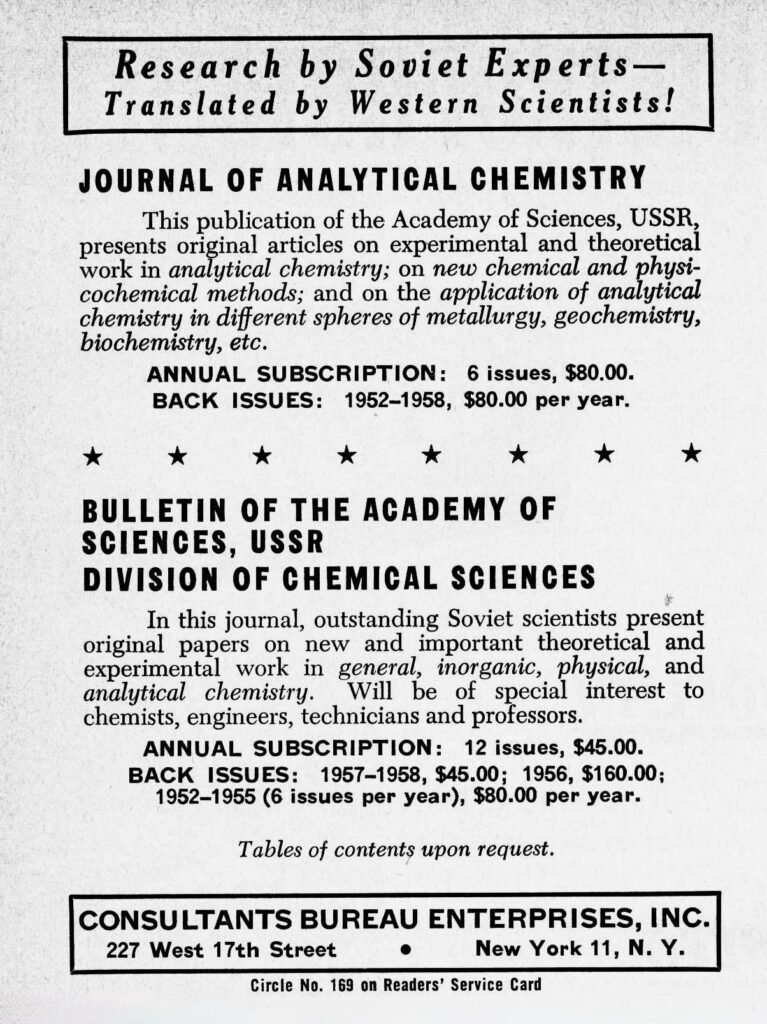
Our microfilm copies of journals published by the Consultants Bureau are another fascinating artifact of post-WWII U.S. science and geopolitics. The Consultants Bureau, located in New York City, was an independent translation service and academic publishing company founded in 1946 by married couple Earl (1916–2009) and Frances Coleman (1915–2000). It became well known for cover-to-cover translations of Russian scientific and technical journals during the Cold War. Eventually, the Consultants Bureau evolved into Plenum Publishing Corporation.
I’m curious to know what motivated Earl and Frances’s decision to focus on translating scientific and technical literature, as neither were scientists by training or affinity: Earl wrote fiction and poetry, and later founded Da Capo Press, a humanities imprint of Plenum. And before and after her marriage to Earl, which ended in 1965, Frances worked in photography.
Leaving that question aside, it’s clear that the Consultants Bureau’s translations of Soviet scientific research enabled Western scientists, policymakers, and intelligence agencies to monitor the USSR’s scientific and technological progress. In fact, its work was so valuable to the U.S. government that the Bureau received CIA funding. We have 16 Consultants Bureau publications on microfilm, including the Bulletin of the Academy of Sciences of the USSR, Division of Chemical Sciences (1952–1991), the Journal of Applied Chemistry of the USSR (1950–1992), the Journal of General Chemistry of the USSR in English Translation (1965–1992), and Chemical and Petroleum Engineering (1965–).
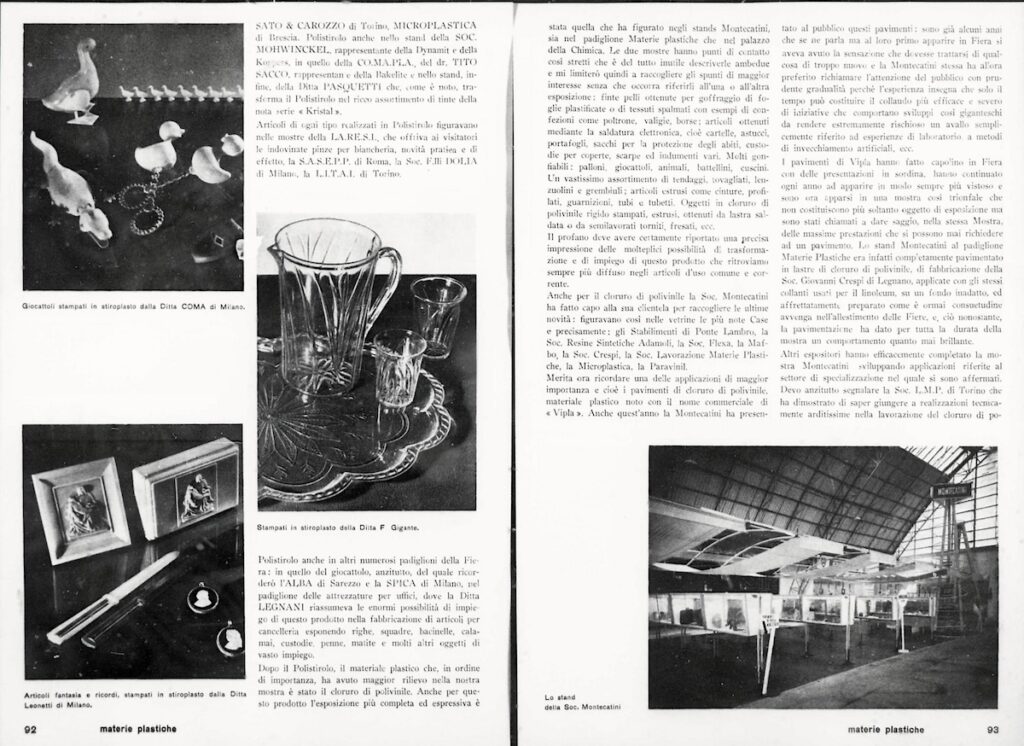
Libraries also turned to microfilm reproductions to acquire foreign publications that were otherwise difficult to source or expensive to purchase. Our microfilm holdings of Gazzetta chimica Italiana include issues from 1931 and later that aren’t fully accessible via the HathiTrust Digital Library. Also hailing from Italy is Materie plastiche, a plastics industry journal published from 1934 to 1962. Sadly, we do not have the full run, but enthusiasts of midcentury plasticware, as well as serious researchers of the history of science, will enjoy the issues we do have.
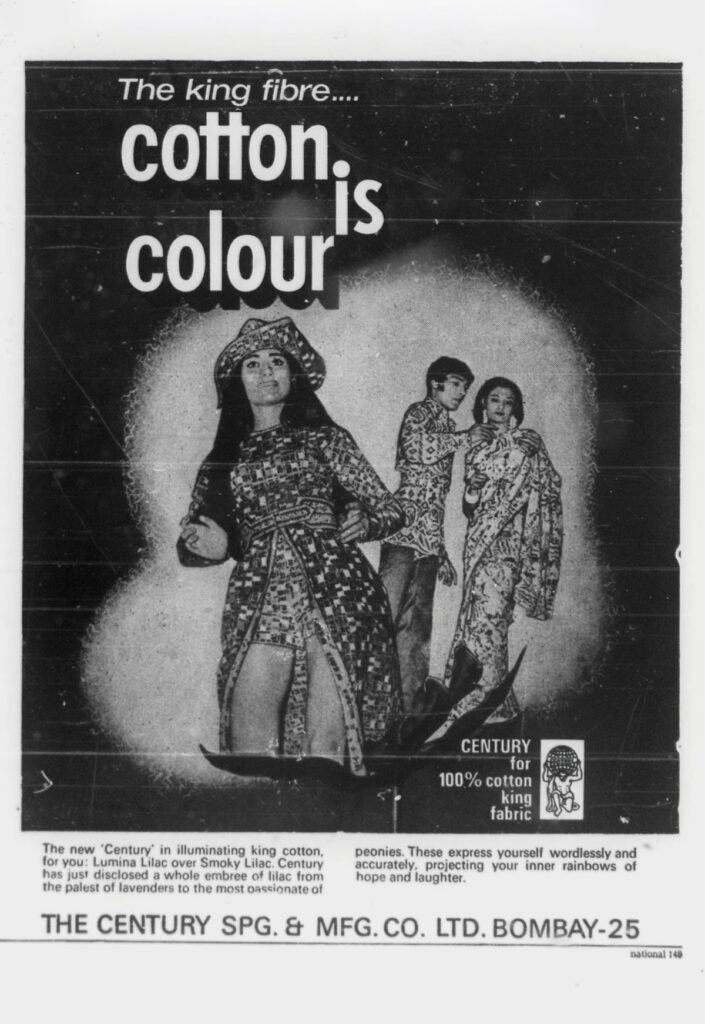
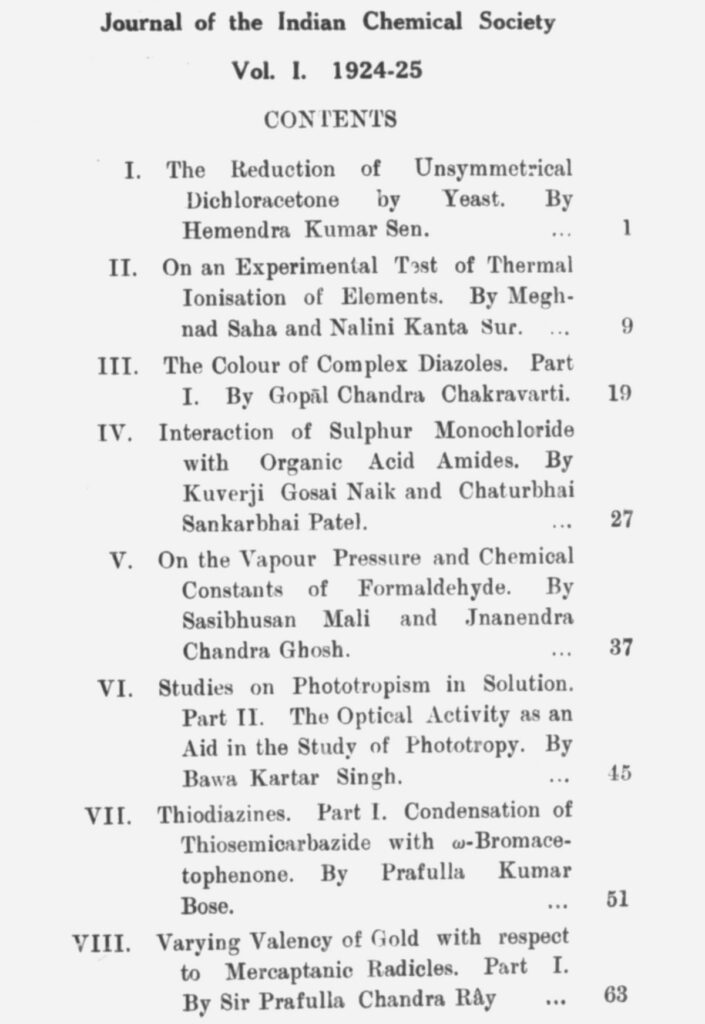
Left: Advertisement for Century cotton from a 1978 issue of the Indian textile periodical Colourage; right: table of contents from the inaugural 1924–1925 issue of the Quarterly Journal of the Indian Chemical Society.
From India, we hold several issues of Colourage (1954–), a Bombay-based textile industry periodical focused on dyes and dyeing, as well as the Quarterly Journal of the Indian Chemical Society (1924–1927) and its successor, the Journal of the Indian Chemical Society, through 1972. Because much of our microfilm was donated, often by a chemical company’s R&D library that passed on no-longer current issues, our holdings of a journal are sometimes idiosyncratic!
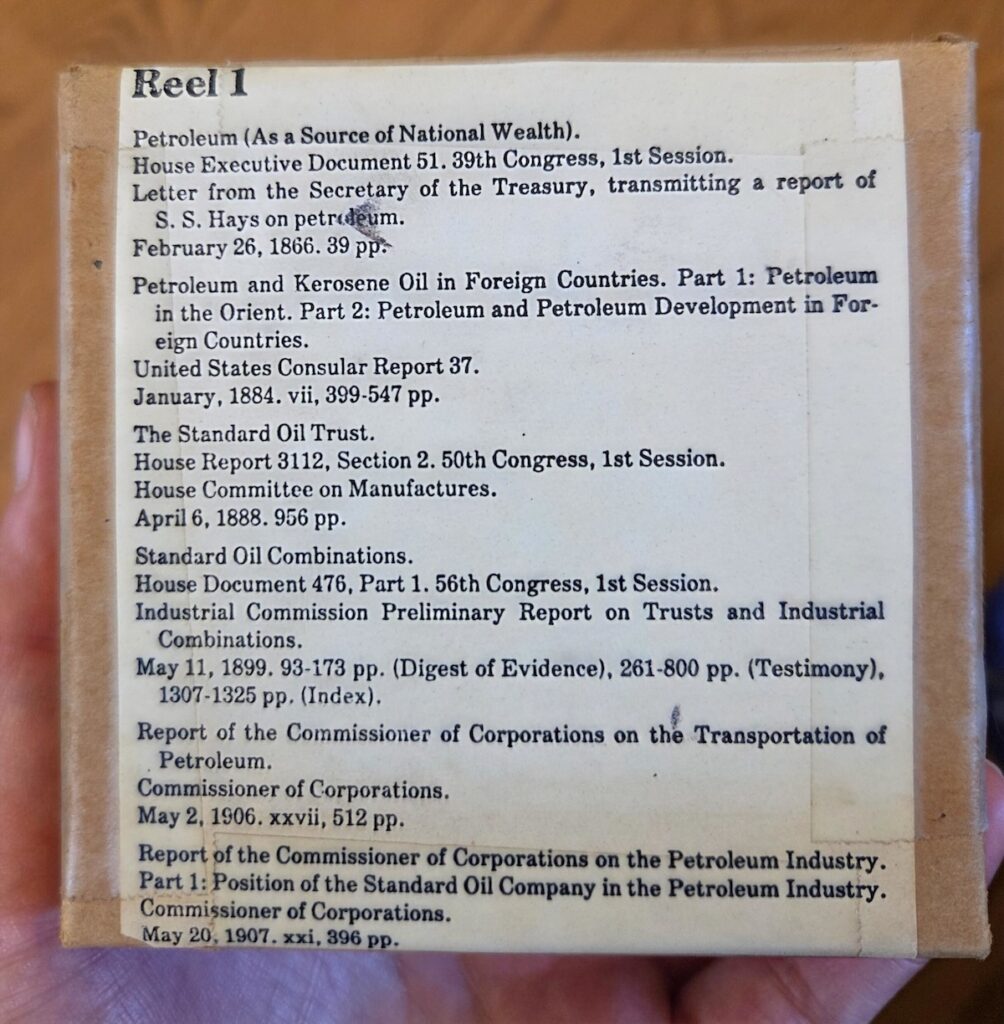
Another feature of the microfilm era was the microfilm set: a series of reels that brought together disparate sources on a particular topic. I think of these as pre-Internet versions of today’s “featured collections” in a digital library or a social media hashtag. A curated microfilm set was meant to give the user easy access to important works around a subject. Our collection includes Oil: The Federal Investigations, a set of nine reels containing reports, correspondence, and transcripts of U.S. government hearings about petroleum policy and resources from 1866 to 1975. It would be a chore to find all of these works on your own!
These are just a few of the unique and compelling works found among our hundreds of microfilm reels. If you are curious to see what else we have, check out the entire collection in our library catalog, and please schedule a visit if you see something that catches your eye! After writing this post, I’ve become an expert at using our machine, and I’m here to help even the most microfilm-adverse researcher.
Featured image: Detail of an advertisement for the microfilm version of Japan Plastics, from the January/February 1976 issue of the same journal.
Bringing the past to life with an obsolete video format.
Highlighting the research projects of our current resident scholars.
How do science books for kids today compare with those that have come before?
Copy the above HTML to republish this content. We have formatted the material to follow our guidelines, which include our credit requirements. Please review our full list of guidelines for more information. By republishing this content, you agree to our republication requirements.