Mary Agnes Chase
A pioneer in the study of grasses, Chase discovered numerous species in the U.S. and South America, building an extraordinary scientific career without formal academic training.
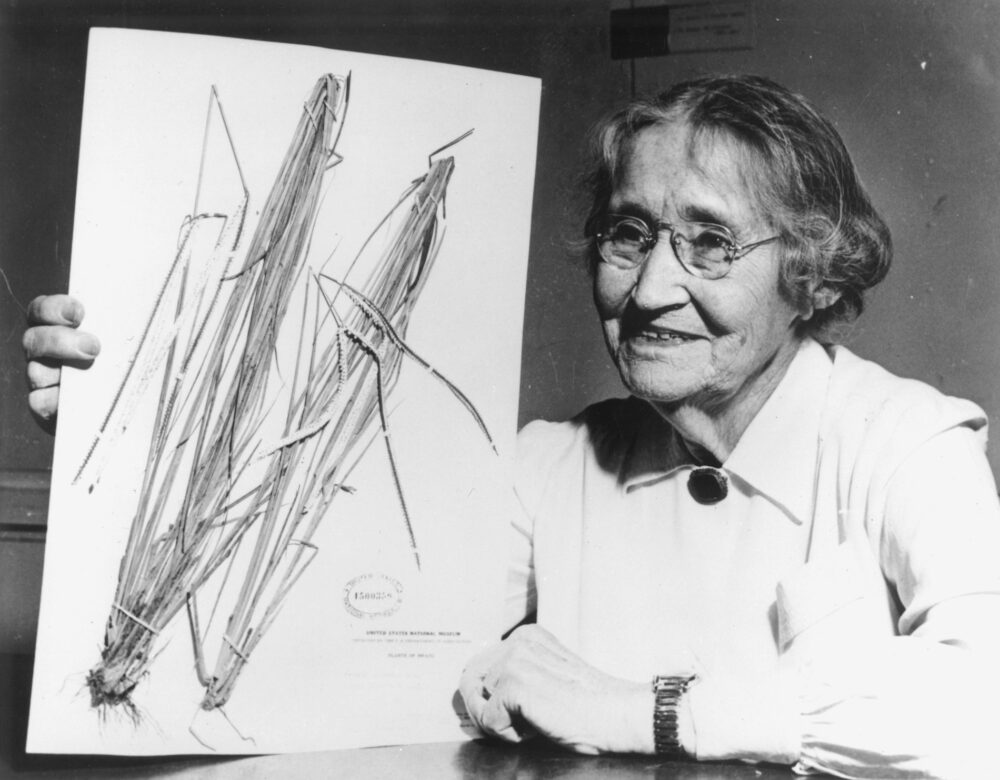
At a time when grasses were poorly understood and women were largely excluded from the scientific enterprise, Mary Agnes Chase (1869–1963) transformed careful observation and botanical illustration skills into a lifelong research career. Over six decades, she helped define the modern study of grasses through extensive fieldwork and collaboration with leading scientists at the United States Department of Agriculture (USDA) and the Smithsonian Institution. Chase completed an annotated index identifying 80,000 specimens of Gramineae, a common family of grasses; published over 70 scientific papers; and authored two landmark books on grass taxonomy. These works helped shape the field of agrostology.
An Early Observer
Agnes Chase was born Mary Agnes Meara in Watseka, Illinois, on April 20, 1869. She was the third daughter and second youngest of six children. Her father, Martin J. Meara, was a railroad blacksmith from Ireland and her mother, Mary Brannick Meara, was born in Louisville, Kentucky. After the violent death of her father when Agnes was two years old, her mother moved the family, including her siblings and maternal grandmother, to Chicago. The family changed their last name to Merrill, hoping for a fresh start.
In a rare recollection of her childhood, Chase described giving a bouquet of grasses she had picked to her grandmother, who insisted that grasses did not have flowers. Chase pointed out the small blossoms at the ends of the stems, proving her grandmother wrong. She later traced her enduring fascination with grasses to their central role in human society, writing that “of all plants, grasses are the most important to man.” Chase recognized that grasses were among the most widely distributed plant families and that “grasses furnish the principal food supply” for the human race. While they may call manicured lawns to mind, grasses actually include grains, rices, corns, bamboos, and reeds, as well as the lawn varieties.
From Illustrator to Scientist
Chase’s formal education ended after secondary school. College was not an option for her as a woman from a relatively poor family. She later recalled, “I had to just pick up my education as I went along.” She began her working life as a proofreader and typesetter for the School Herald, a newspaper intended to support rural schoolteachers. The paper was edited by William Ingraham Chase, whom Agnes married in 1888. But less than a year later, her husband died of tuberculosis, leaving Chase widowed, unemployed, and responsible for his unpaid debts. Even in this dark time, she found herself intrigued by the natural world around her, reflected in her early writing on birdwatching for the Wilson Bulletin. Her observation of and appreciation for the natural world would be a central theme throughout her life.
Chase continued proofreading in Chicago to support herself after her husband’s death. She helped publish Inter Ocean, a newspaper for people working in business. A turning point came with the 1893 World’s Columbian Exposition in Chicago, where plant-collecting exhibits sparked Chase’s interest in botany. In her spare time, she began studying the flora of northern Illinois and Indiana, collecting plants with her nephew and with local groups of amateur collectors. She began to record her collections in 1897. The next year, while collecting flora around the Des Plaines River, Chase met the Reverend Ellsworth Jerome Hill (1833–1917), a Presbyterian pastor who was also a high school science teacher. Hill collected and published papers on mosses and hornworts and hired Chase to illustrate his papers on byrology.
Hill employed Chase for five years, and he taught her to use the compound microscope. He was not just Chase’s employer and mentor, but a friend who introduced her to Charles Frederick Millspaugh, curator of botany at the Field Museum of Natural History. Millspaugh hired Chase as an illustrator for two museum publications, Plantae Utowanae and Plantae Yucatanae. Ultimately, Hill urged Chase to apply for a position as a botanical illustrator at the USDA’s Bureau of Plant Industry in Washington, D.C., which she accepted after passing a qualifying exam. She began working there on November 1, 1903. Her salary was $720 per year, well above the average pay for women at the time, many of whom worked in manufacturing.
LEARN MORE
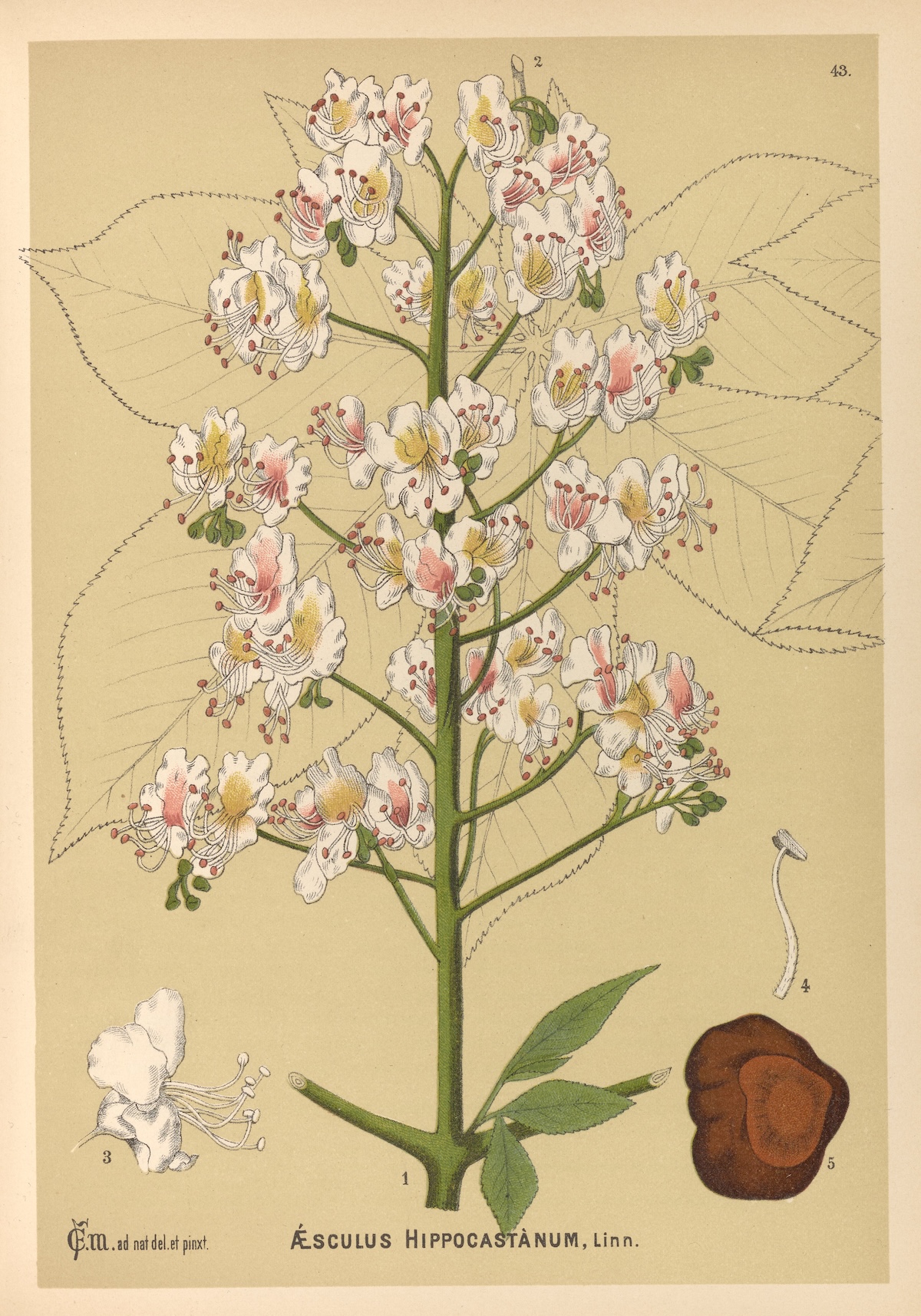
Charles Millspaugh investigated medicinal uses of plants in other works. He was an accomplished artist who did his own drawings before meeting Chase. Comments on the importance of botanical illustration in Medicinal Plants (1892) are striking in relation to his later collaboration with Chase.
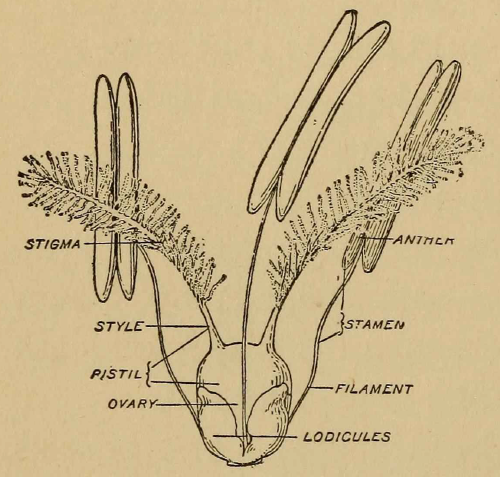
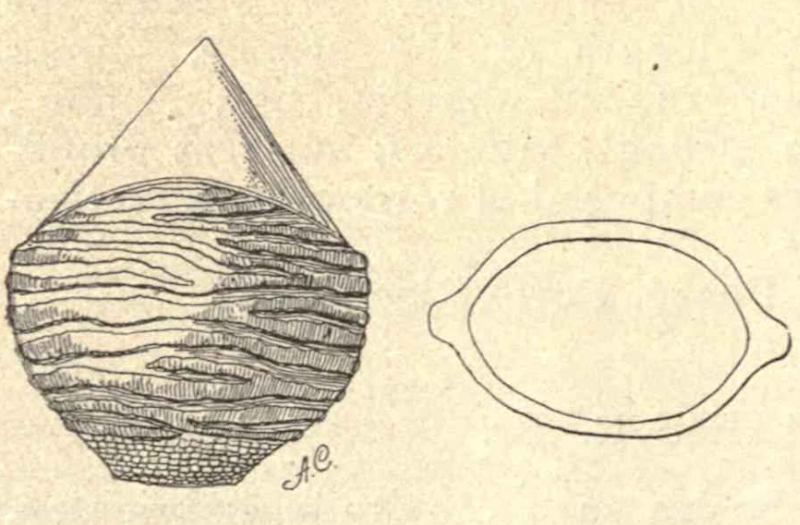
Compare Millspaugh’s colored plate of aesculus hippocastanum with Chase’s drawings. How do they differ? What different kinds of information do they present? Who do you think these images were for?
That said, Chase was not hired as a scientist, which meant that there was a limit to how much she could earn at the USDA. The role of scientist would have assumed formal training and knowledge of taxonomy, or formal plant classification, which was considered more appropriate for men. While botany was a field that had long attracted women interested in nature, women’s contributions to the scientific study of plants were often limited to illustration, transcription, and proofreading. By the late 1800s, things were changing. The U.S. needed to increase food and material production for an expanding nation, which prompted new scientific interest in the cultivation of plants. This led to the founding of the Bureau of Plant Industry in 1901, a unit created within the USDA, where researchers studied crop production, plant disease, and the introduction of plants from abroad. Although most scientists at the USDA around 1900 were men, the creation of the Bureau of Plant Industry nonetheless created new entry points for women through divisions dedicated to plant-based research.
Agrostology had been supported by the USDA from its founding, and Chase went to work in the Bureau’s Division of Grass and Forage Plants for two years. While her main responsibility was to illustrate publications for the Division, she also took advantage of the USDA’s grass herbarium, where she studied Paniceae, a large and predominantly tropical subfamily of grasses. Chase continued working in herbaria—first as an unpaid assistant custodian of grasses at the USDA grass herbarium, and later as an honorary curator at the Smithsonian’s National Herbarium—until her death. Chase’s illustration skills helped her in her curatorial work.
In 1906, Chase published her first paper as a professional scientist, Notes on the Genera of Paniceae, combining her artistic and research skills. The following year, she was promoted to scientific assistant in systematic agrostology, a low-paying position frequently assigned to women, but one that acknowledged her growing scientific credentials. She soon began working closely with Albert Spear Hitchcock, the USDA’s leading authority on grass taxonomy. Hitchcock traveled extensively throughout the United States and abroad, and he published more than 250 works, many in collaboration with Chase. By 1931, Chase was being called upon to identify an average of 8,000 to 10,000 specimens each year for the government, as well as various schools, colleges, and museums worldwide. Hitchcock strongly supported Chase’s research and relied on her expertise during the preparation of his monumental Manual of Grasses of the United States (1935). Reflecting on their collaboration, one of their colleagues later remarked, “Without Chase, it is doubtful if Hitchcock could have accomplished as much as he did.” In 1936, after Hitchcock’s death, Chase became the principal scientist in charge of systemic agrostology at the USDA.
Discovering New Grasses
Chase did not remarry or have children; she dedicated much of her personal time to the collection of grass species. Between 1905 and 1912, she collected specimens in 19 states, becoming an expert on the distribution and habitats of U.S. grasses. Without official support, Chase funded her own fieldwork, traveling in 1913 to Puerto Rico to collect grasses. She contributed her findings to Grasses of the West Indies, published in 1917, which she co-authored with Hitchcock. The book described the grasses found in a large swath of Caribbean islands including Bermuda, the Bahamas, Jamaica, Puerto Rico, the Cayman Islands, and Trinidad and Tobago. She and Hitchcock emphasized the importance of this region for the study of grasses, noting that “the flora of the West Indies has been studied from an early date.” They cited works from the colonial period in support of this claim, when sugar cane was cultivated intensively in the West Indies. Sugar cane was bound up with centuries of colonial exploitation and the forced displacement of millions of Africans.
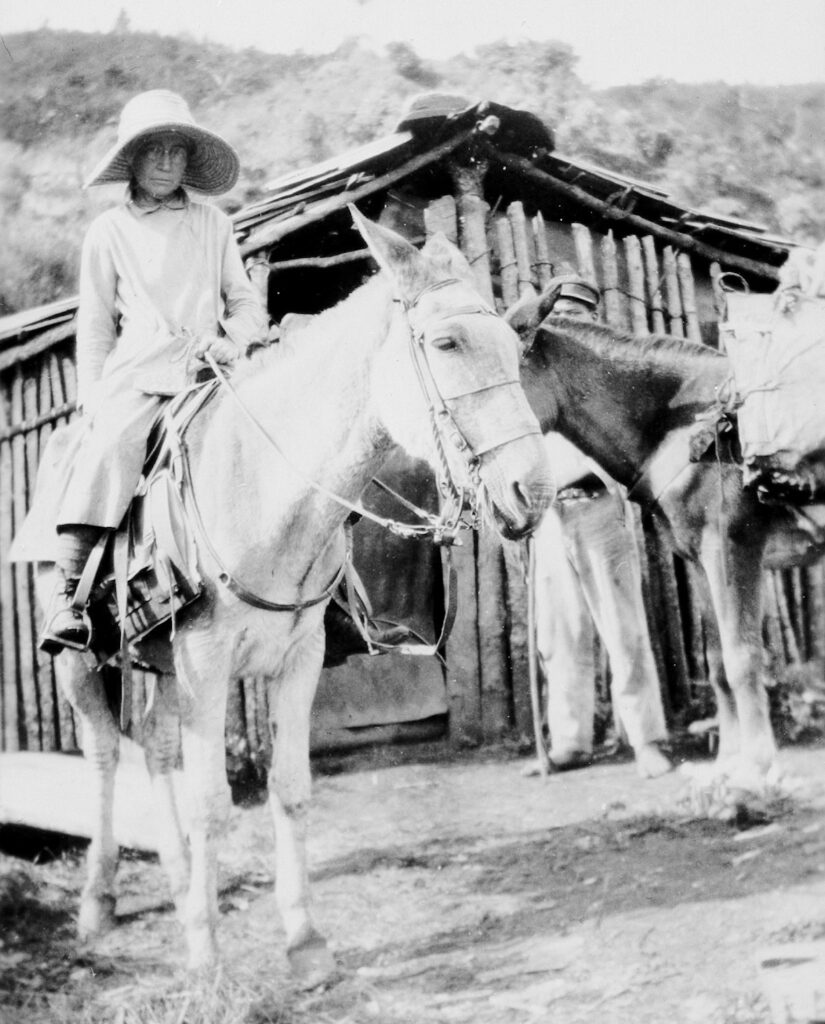
From Puerto Rico, Chase traveled to the Hackel Herbarium in the Natural History Museum of Vienna in 1922. While in Europe, she visited herbaria in Florence, Pisa, Geneva, Leiden, Brussels, and Paris. Chase published her First Book of Grasses in 1923, a text that was well-received and, even at the time of publication, recognized as a foundational text in the field. One reviewer praised Chase’s “careful drawings,” writing that “Mrs. Chase has demonstrated, contrary to the practice of the ordinary ‘How to Know’ botanical literature, that scientific method need not be sacrificed in order to make the subject attractive to the beginner.”
After she was done with the book, Chase sailed to Rio de Janeiro in 1924 to study and collect the grasses of Brazil. She was provided grant funding from several institutions for a yearlong expedition, and the project was so rewarding that she returned to Brazil in 1929. In total, Chase collected 20,000 plant specimens, 5,000 of which were grasses. Her fieldwork in Brazil reportedly added considerably to the world’s knowledge of Brazilian grasses. In 1935, she returned to France during an unpaid leave to work at herbariums in Caen and Paris. In 1940, at the age of 71, she made her last trip abroad to Venezuela as a guest of the country’s Ministry of Agriculture. There, Chase collected grasses with Zoraida Luces de Febres, who went on to become one of the country’s leading botanists. She recommended that Luces de Febres come stay with her while studying grasses at National Herbarium in Washington D.C. Chase’s support helped launch the scientific career of Luces de Febres, who translated her mentor’s First Book of Grasses into Spanish in 1960.
Through her research, Chase learned to speak Portuguese, French, German, and Spanish. Her language skills undoubtedly helped her maintain relationships with the female scientists she mentored. Her commitment to women’s suffrage supported this as well. Chase was twice arrested for demonstrating in front of the White House, marching alongside Alice Paul and other suffragists to demand women’s right to vote. She remained an active member in several social change organizations including the Women’s Party, Socialist Party, the Woman’s Christian Temperance Union, and the National Association for the Advancement of Colored People.
Dean of Agrostology
In 1939, Chase retired from the USDA at age 70. She continued to serve as a central authority for agrostologists across the United States. In this capacity, she verified specimens, confirmed new regional records, and gave advice on grass identification. Her expertise shaped several subsequent studies involving careful side-by-side comparisons of plant structures. This was an important part of how scientists did their work and it spread Chase’s research throughout the life sciences.
Although Chase built a career without formal academic training, professional recognition came steadily in her later years. In 1953, the Botanical Society of America awarded her a certificate of merit for distinguished achievement in botanical science. Colleagues began referring to Chase as the “dean of living agrostologists” after she was recognized with an honorary doctorate degree from the University of Illinois in 1958. The Smithsonian Institution named Chase an Honorary Fellow in 1958 and published a third edition of First Book of Grasses in 1959, reflecting the continuing relevance of her work to both professional botanists and broader audiences.
Together with Albert Spear Hitchcock, Chase donated her extensive research library to the Smithsonian. The Hitchcock-Chase Collection of Grass Drawings—2,713 illustrations representing hundreds of grass genera—is now on loan to the Hunt Institute for Botanical Documentation, a research division of Carnegie Mellon University. Here, her work continues to be a touchstone for botanists, biologists, and conservationists who use historical data to investigate research questions of contemporary significance.
LEARN MORE
Compare the career path of Mary Agnes Chase to these other women botanists in our Scientific Biographies:
• Helia Bravo Hollis
• Edith Coleman
• Vera Katharine Charles
What similarities and differences do you observe? How do you think Chase’s background in plant illustration influenced her scientific outlook?
Glossary of Terms
Agrostology
The branch of botany focused on the scientific study of grasses, including classification and management.
Back to top
Bryology
The scientific study of bryophytes, including mosses, liverworts, and hornworts, including their classification, ecology, biodiversity, and environmental uses.
Back to top
Herbarium
A collection of plant specimens, usually dried or pressed, that have been preserved and described for scientific study.
Back to top
Further Reading
Bonta, Marcia Myers. Women in the Field: America’s Pioneering Women Naturalists. Texas A&M University Press, 1991.
Chase, Agnes. Mary Agnes Chase Notes, 1922 Trip. Smithsonian Institution.
Furman, Bess. “Grass Is Her Liferoot.” New York Times, June 12, 1958, 37.
Henson, Pamela M. “‘What Holds the Earth Together’: Agnes Chase and American Agrostology,” Journal of the History of Biology 36 (2003): 437–460.
USDA. “USDA Turfgrass History.” (Accessed April 14, 2026).
Support
Support for this biography was made possible by the Wyncote Foundation.
You might also like
DIGITAL EXHIBITIONS
AstroTurf: A Surface of Contention
Explore the history of artificial grass playing surfaces and the controversies they sprout.
DISTILLATIONS MAGAZINE
Sesame Plots
Diaspora in twenty-one openings.
THE DISAPPEARING SPOON PODCAST
Sugar: The Most Evil Molecule
Trace how such a sweet treat has caused so much harm—from slavery to the Nazi death machine.