Mikhail Vasil’evich Lomonosov
Known as the “father of Russian science,” Lomonosov used art to advance the natural sciences and chemistry in Russia.
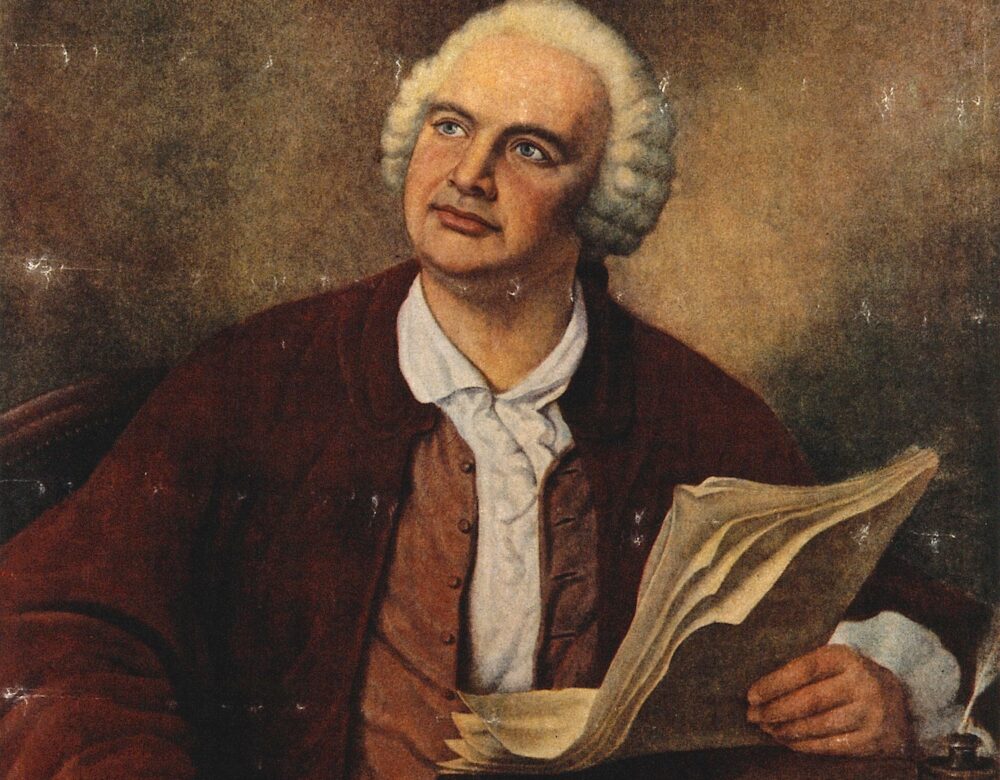
Mikhail Lomonosov’s (1711–1765) scientific interests were broad and ambitious. They ranged over chemistry, physics, cosmology, oceanography, the earth sciences, poetry, history, and even ventured into business. While he is usually celebrated for his scientific achievements, this biography shows that it was his public promotion of the natural sciences through art—specifically, poetry and mosaics—that helped cement his legacy as the “father of Russian science.” In this way, Lomonosov built lasting support for scientific research in Russia.
Early Life, Education, and Expertise
Lomonosov was born on November 19, 1711 (O.S. November 8), in the village of Mishaninskaia on an island in the Dvina River, part of the Governorate of Arkhangelgorod in Northern Russia. He was educated at Moscow’s Church Academy, the University of Marburg, and the Freiberg School of Mines. Upon completing his studies under chemist Johann Henckel in 1741, he gained employment at St. Petersburg’s Imperial Academy of Sciences, first as a physics instructor in 1741 and then as a professor of chemistry in 1745.
LEARN MORE
From the 1700s to 1918, people in the Russian Empire used the Julian calendar. This “Old Style” (shortened to “O.S.” above) differs from the Gregorian calendar by a matter of days. You can learn more about these calendars here. Using one of the calculators in this tutorial, can you convert the day you were born into the Julian system?
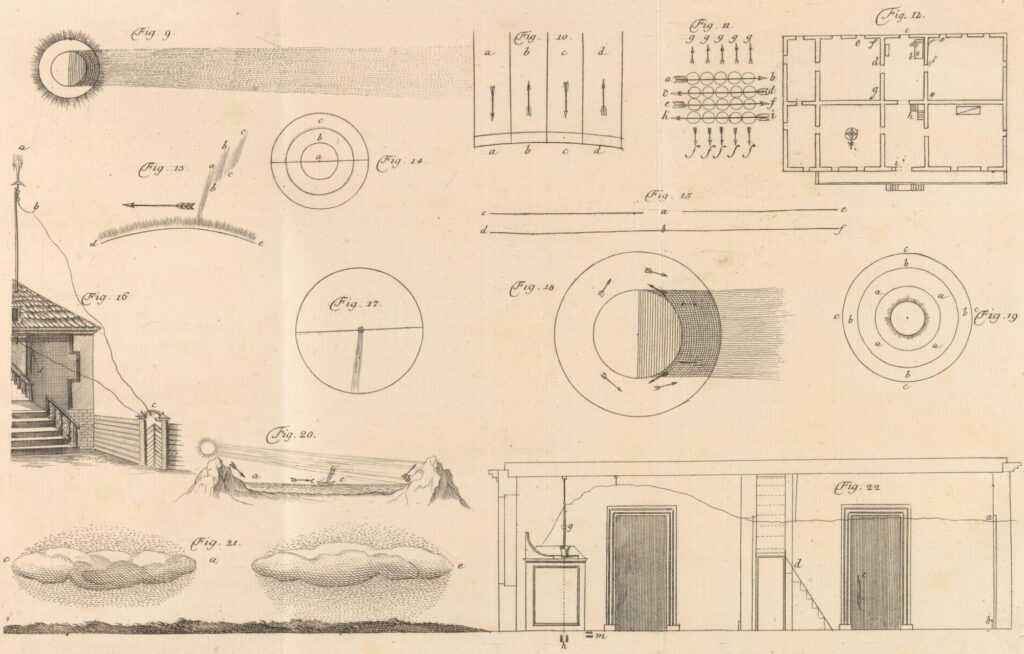
Though his professorship was in chemistry, Lomonosov’s interests extended well beyond that field. His writings cover a dizzying array of subjects: the structures of tiny particles; the causes of heat and cold; urban geography; ice mountains; Russian grammar and rhetoric; the elasticity of air; the physical properties of gas; the nature of light and the properties of color; the nature of earthquakes; electricity; the measurement of atmospheric pressure; astronavigation; population growth; and many other topics. Though it may seem surprising today, Lomonosov’s intellectual range was not unusual for his time, when the boundaries between disciplines were still fluid. This was necessary for an academic trying to make a living through science in the 1700s, especially in Russia.
Making a Living in Science
In the 1700s, as now, academics taught and wrote to make ends meet. University positions were hard to come by. Even if an academic was lucky enough to find one, they would need to self-advertise to attract students, who paid for their teachers’ salaries directly.
In Russia, professors were salaried employees, but payments were often delayed. The pay structure varied by subject matter and nationality. Even a permanent position at the Imperial Academy of Sciences, Russia’s premier scientific institution, did not guarantee stability. While academics in Europe often supplemented their income by writing, this was not viable in Russia, where literacy levels were low and scientific works were not in demand.
Securing a wealthy patron was the most effective way for a scientist to attain professional and social stability. It was also an important way of gaining political influence. Patronage and public opinion, moreover, were intimately related. Academics needed to offer ideas that nonspecialists could appreciate, and in turn support.
A shrewd cultural observer, Lomonosov knew that he would need to produce something of value to catch the eye of a high-ranking patron with money. Without abandoning his academic research, Lomonosov wrote poems and made glass mosaic pictures to do just that. He knew that funding was critical for scientific research, especially in a field like chemistry, which required expensive equipment and a regular supply of materials for laboratory upkeep. Thus, doing academic chemistry in Russia required active fundraising. Through his artworks, Lomonosov won support for his research and shaped interests in chemistry and the natural sciences for generations to come.
Promoting the Sciences Through Poetry and Prose
For Russian aristocrats, poetry was a key source of entertainment. Lomonosov recognized this and channeled his energies accordingly. He composed lyrical and narrative poems (odes, hymns, and didactic poems) on a wide range of themes. His literary output helped others see him as the “father of Russian science.”
To modern audiences, Lomonosov’s poems may seem over the top. His specialty was the ode, a dramatic genre intended to praise a person or object. Promoting chemistry this way meant celebrating its achievements while calling on audience support, as in this poem from 1750:
With your keen gaze,
Reveal the precious treasures,
That lie within Russia’s bosom;
Multiply the glory of the homeland
And strengthen the dominion even more,
Pursue artful nature,
Clothe yourself in colors resembling it,
And what is beautiful only in the summer,
Make it eternal through your mastery.
FOR DISCUSSION
Do you think this ode says more about the glory of chemistry or the glory of Russia? What words in the poem support your interpretation?
Less prevalent, but no less popular, were Lomonosov’s didactic poems, which were meant to educate the reader. These had a more practical tone. For instance, in his Letter on the Use of Glass (1752), Lomonosov emphasized the moral connotations and versatility of glass by describing its common and special uses:
Lomonosov’s poems played an important role in popularizing the study of science and chemistry, particularly among those who ran Russia’s cultural, educational, and political institutions.
Glass Factory
Between May 1753 and August 1755, while still working full-time as a professor, Lomonosov founded a colored glass factory in Ust’ Ruditsa that specialized in the production of picture mosaics, decorative objects, dishes, and jewelry. He skillfully used these objects to attract the attention of Russian elites, who believed that such objects had the power to enlighten and inspire.
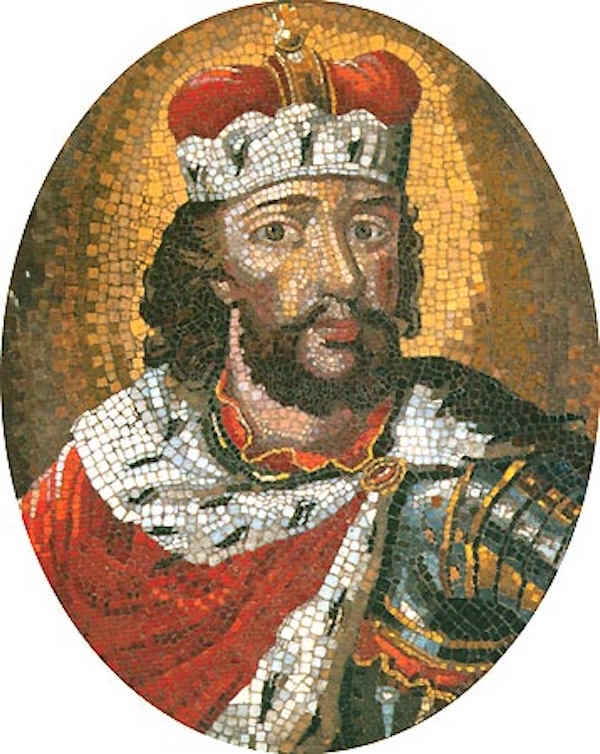
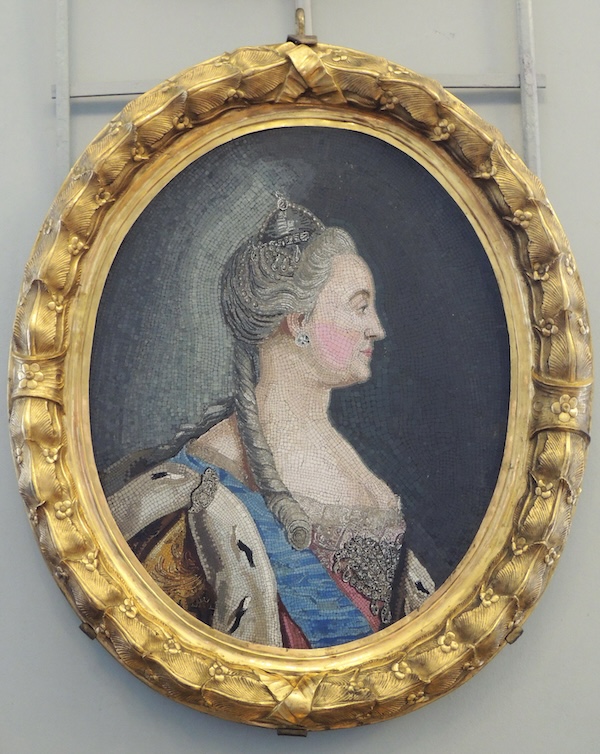
Mikhail Lomonosov created these glass mosaics honoring Prince Alexander Nevsky and Emperess Catherine II.
Although chemical factories were steadily increasing in Russia at the time, Lomonosov insisted that his factory was the first of its kind. His technique for dyeing glass was developed through meticulous experiments undertaken in his academic laboratory at the Imperial Academy. His glassworks thus materialized cutting-edge chemical knowledge for prospective patrons and his competitors.
Mosaic pictures quickly became the most valuable objects to emerge from Lomonosov’s factory. They were used to decorate royal palaces, state institutions, and the homes of Russian elites, infusing the spaces of the well-to-do with artifacts of chemical knowledge.
Most of Lomonosov’s mosaic pictures were icons. This choice was strategic: by associating his products with Russian Orthodox religion, he highlighted a connection between chemistry and Russian culture. By using the medium of colored glass, which he developed and perfected through his chemical expertise, his mosaic icons became the physical embodiment of his chemistry and the divine proof of its superiority. Icons were understood to facilitate worshipers’ interactions with the divine as “windows to heaven.” By making icons out of chemical glass, he turned his knowledge into an instrument of the divine.
Colored Glass and Academic Chemistry
Lomonosov’s factory kept him busy, but it did not distract him from his commitment to academic chemistry. During his experimental trials, he developed a staining technique that involved mixing glass melts with mineral pigments. The mineral pigments were prepared by dissolving metal salts, such as copper sulfate or iron sulfate, in water. He then added either ammonia or potassium hydroxide to these solutions to make an insoluble solid, either a hydrous oxide or a basic salt of a heavy metal. Finally, these precipitates were dried and added to glass melts. He would also add organic dyes to modify colors.
Lomonosov’s experimental trials with colored glass informed the experimental portion of his new course on academic chemistry, “Physical Chymistry,” which addressed the study of salts in solutions. This was the first time chemistry was taught as an academic science in Russia, independent of pharmacy and metallurgy. His fundraising efforts, in other words, directly informed the content of the chemistry that earned him fame as the “father of Russian science.”
Artisans at the Corning Museum of Glass demonstrate a process for coloring glass.
Legacy
In both Soviet and modern Russia, Mikhail Lomonosov has been hailed as a towering figure whose intellect knew no bounds. This title surely honors his vast scholarly output, but it only hints at the full scope of his achievements, which also included works of art and industry.
With striking clarity, he recognized that scientific success depended on more than brilliant ideas and research output: science (or natural philosophy as it was then known) also needed to be culturally relevant. In an empire where the infrastructure for scientific research and training was still taking shape, Lomonosov strategically championed chemistry and the natural sciences through the production of objects of intellectual prestige and beauty.
By ambitiously uniting science and art, he transformed science into a cause worthy of Imperial patronage. In doing so, he advanced his own career and laid the foundations for the flourishing of chemistry and scientific inquiry in Russia.
Glossary of Terms
Cosmology
The study of the universe as a unified whole involving astronomy and physics.
Back to top
Patronage
Often associated with support for the arts, patronage is the act of providing financial, material, social, and other forms of support to those who make culture and create new knowledge. Patronage relationships are often documented through lavish gifts that convey thanks for that support.
Back to top
Icons
Sacred devotional images used in Eastern Orthodox worship that depict holy figures or biblical scenes in a highly stylized form.
Back to top
Further Reading
Crease, Robert P. and Vladimir Shiltsev. “Fueling Peter’s Mill: Mikhail Lomonosov’s Educational Training in Russia and Germany, 1731–1741.” Physics in Perspective 20 (2018): 272–304.
Menshutkin, Boris N. Russia’s Lomonosov: Chemist, Courtier, Physicist, Poet. (Princeton: Princeton University Press, 1952).
Ullman, Reut. “Projecting Chemistry in Lomonosov’s Russia (1741–1765),” Journal for the History of Knowledge, 6 (2025): 163–187.
Usitalo, Steven A. Invention of Mikhail Lomonosov: A Russian National Myth. (Boston: Academic Press, 2013).
Werrett, Simon. “Enlightened Icons: Mikhail Vasil’evich Lomonosov and Glass Icons in 18th-Century Russia,” Centaurus: Journal of the European Society for the History of Science, 66, (2024): 645–666.
Support
Support for this biography was made possible by the Wyncote Foundation.
You might also like
DIGITAL EXIBITIONS
How to Fake an Emerald in 1653
Historical re-creations reveal the working world of alchemists.
SCIENTIFIC BIOGRAPHIES
Margaret Lucas Cavendish
Cavendish authored more than 20 books about nature. She used her prominent social position to challenge gender and scientific norms of the 1600s.

DIGITAL COLLECTIONS
Gilbert Glass Blowing Manual
Manual for introductory level glassblowers, especially middle to high school-aged boys, 1938–1954.