Distillations magazine

Unexpected Stories from Science’s Past
March 19, 2026 People & Politics

Fitter for a Stable Than a Table

A potted history of porridge.

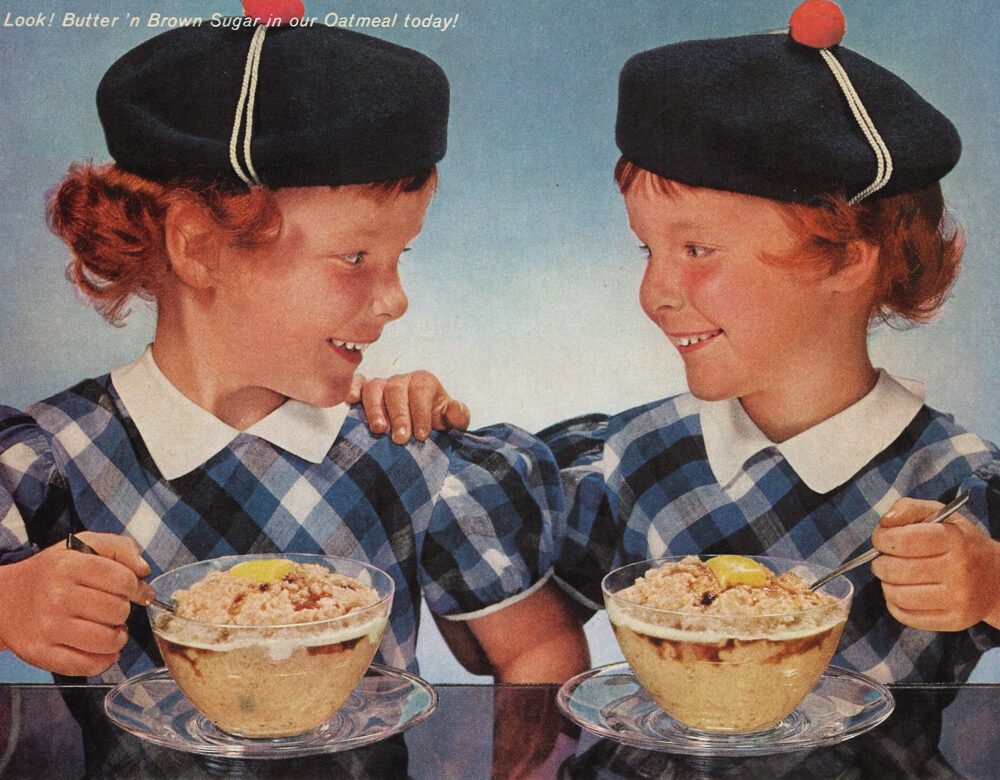
Twin girls in Scottish costumes eating bowls of oatmeal at a table
About SUPPORT OUR WORK

I am a strong believer in the age-old saying that breakfast is the most important meal of the day. Specifically, I could enthuse for hours—and probably cumulatively have—on the curative and culinary powers of a large bowl of porridge. Porridge made with milk and all the toppings: berries and bananas, creamy yogurt, a scattering of mixed seeds for fiber and cinnamon for flavor, perhaps a handful of rich walnuts and a swirl of almond or peanut butter. I start every day this way and go to bed looking forward to my next bowl, already soaking overnight in the fridge to be eaten cold or zapped in the microwave. A weekend breakfast is a chance to simmer it on the hob, stirring slowly with a traditional wooden spurtle, or perhaps to chef up oat-based pancakes or muffins.

Yes, my culinary life is so oat-centric to be considered just a little sad, but I’m not alone. Market research carried out in 2022 found that 39% of Gen Zs consume porridge for breakfast and 33% choose cold overnight oats, a move made in pursuit of health. Oats, from baked to blended, have become something of a food fad. Even my father’s beloved Bircher muesli, once a breakfast for cranks and the Swiss, has experienced an Insta-worthy upgrade. On social media and in the health pages of newspapers, experts extol the health benefits of the humble oat—it lowers cholesterol, increases feelings of satiety, and provides vital nutrients, protein, and dietary fiber. Concurrently, oats have been subject to a Goldilocks-level of scrutiny, with concerns around unsafe levels of the pesticide glyphosate in oatmeal and unsubstantiated claims about oats causing blood sugar spikes and the catch-all wellness bogeyman “inflammation.”
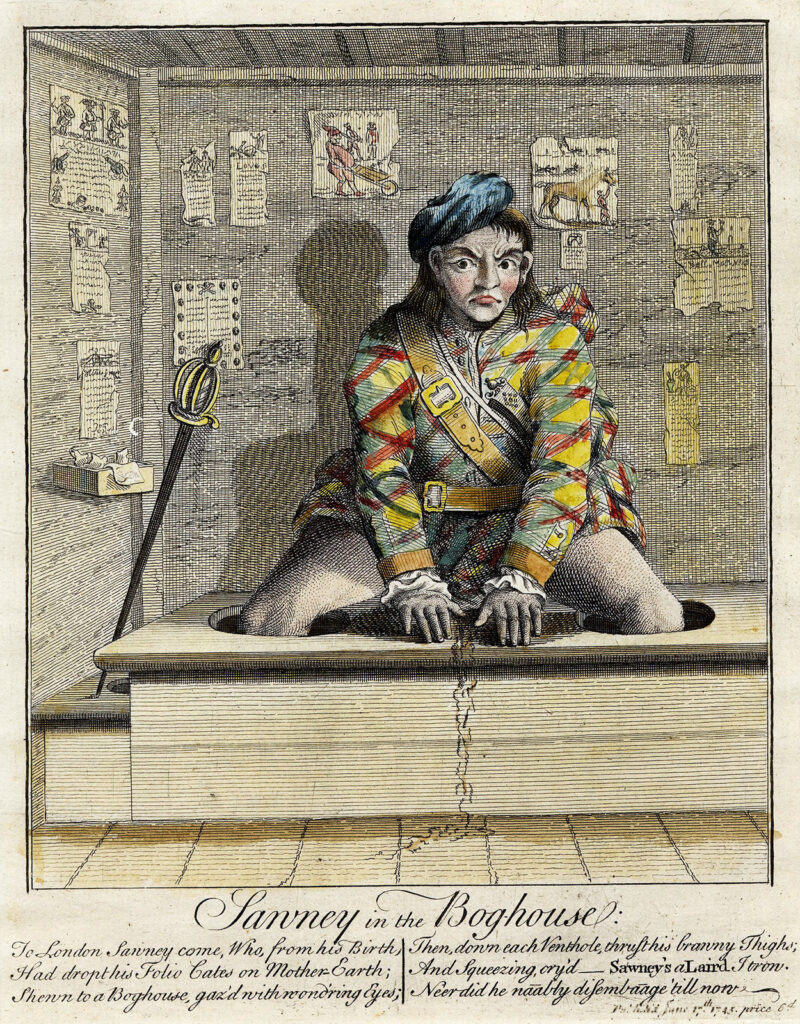
A man sitting in an outhouse with both legs in the toilet holes. Urine is running down the seat and onto the floor

This mixed assessment isn’t new. People have always been skeptical about the virtues of oats. Samuel Johnson defined oat as “a grain, which in England is generally given to horses, but in Scotland supports the people.” Johnson’s verdict is assumed to be born of 18th-century xenophobia and personal animosity toward Scotland, which he once branded a “vile country.” In 1755, when Johnson completed his Dictionary, England was reeling from the Jacobite Risings, a series of revolts that sought to restore the Catholic descendants of the deposed Stuart King James II to the throne. The 1707 Act of Union joining the two nations was—even a half century on—still an uncomfortable alliance.

Britain spent the century embroiled in a series of global conflicts, including the War of Spanish Succession, Seven Years’ War, and American and French revolutionary wars. In this context, stereotypes about food and eating behaviors served to consolidate national identity and set it against foreign “others.” The English, personified in the red-blooded figure of John Bull, ate hearty roast beef and quaffed tankards of ale. By contrast, the French, with whom the English were at war for much of this period, were more likely to be found slurping watery soup, sloppy ragout, and worse: frogs. Scottish diet was often invoked in anti-Jacobite attacks, with haggis—a dish made of offal and oatmeal—a particular target. Diet also played a polemical role in tying old Scottish stereotypes to the cannibal folk character Sawney Bean. Patriotic Scottish poet Robert Burns responded to such attacks by embracing haggis, oatcakes, and porridge in his work; in “The Cotter’s Saturday Night” (1786), it is “the halesome parritch, chief of Scotia’s food” that a loving family of laborers enjoys for supper.

Yet Johnson’s caustic definition of oats had a far older and more illustrious precedent, one rarely recognized by his modern editors. Second-century Roman physician Galen, whose ideas about health and the body would influence European thought for centuries, regarded oats with suspicion. In On the Properties of Foods, Galen called them “a food for animals, not humans, unless the exigencies of famine at any time necessitate it being made into bread.” Galen, of course, was writing at the heart of the Mediterranean world rather than dreary Britain. If I woke up to uninterrupted sunshine and an azure sea, I’d probably opt for something other than porridge too. Yet Galen’s assessment wasn’t based simply on a lack of familiarity but on contemporary understandings of the body and its digestive faculties, particularly the system of humorism he did much to refine.
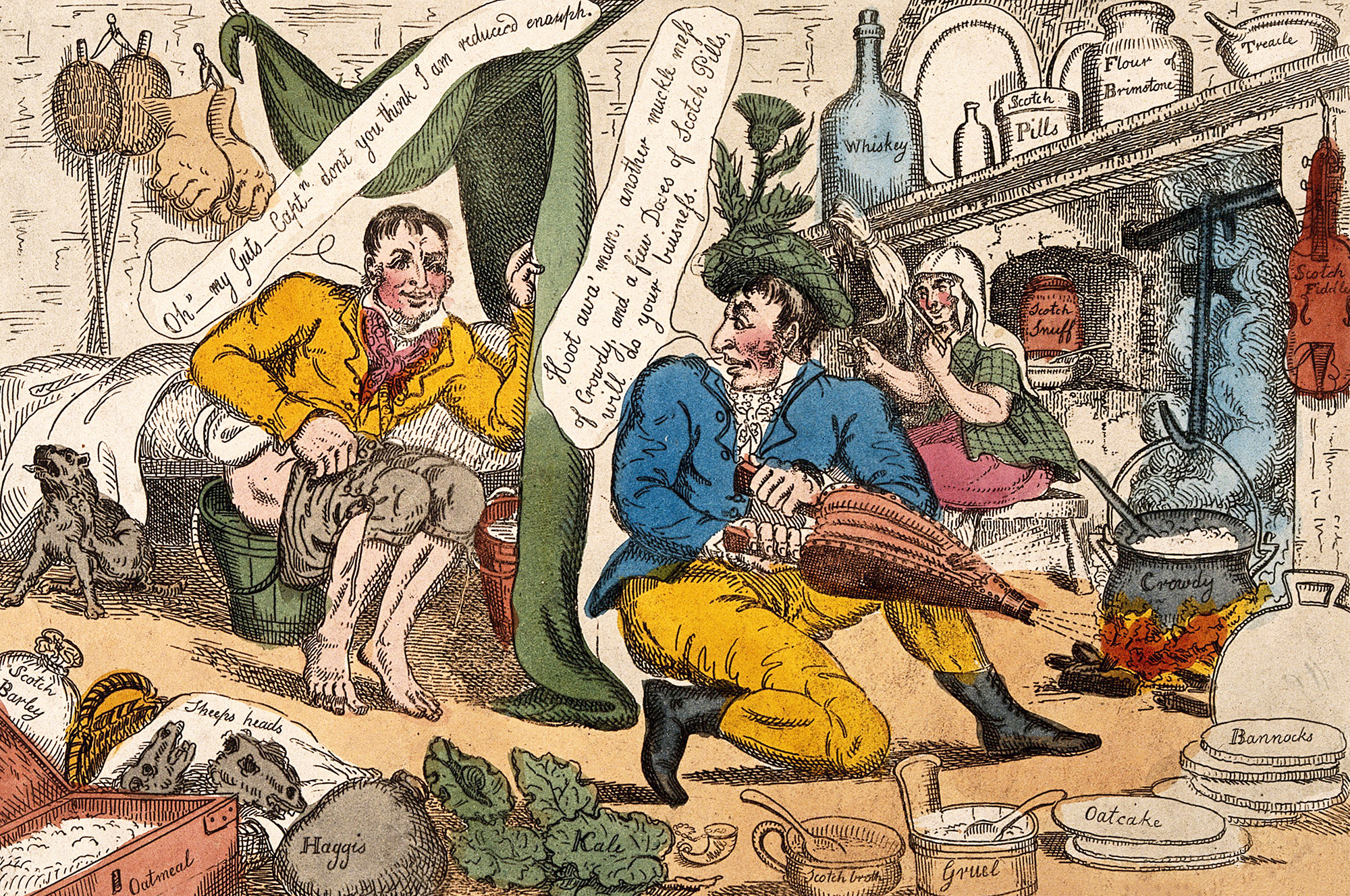
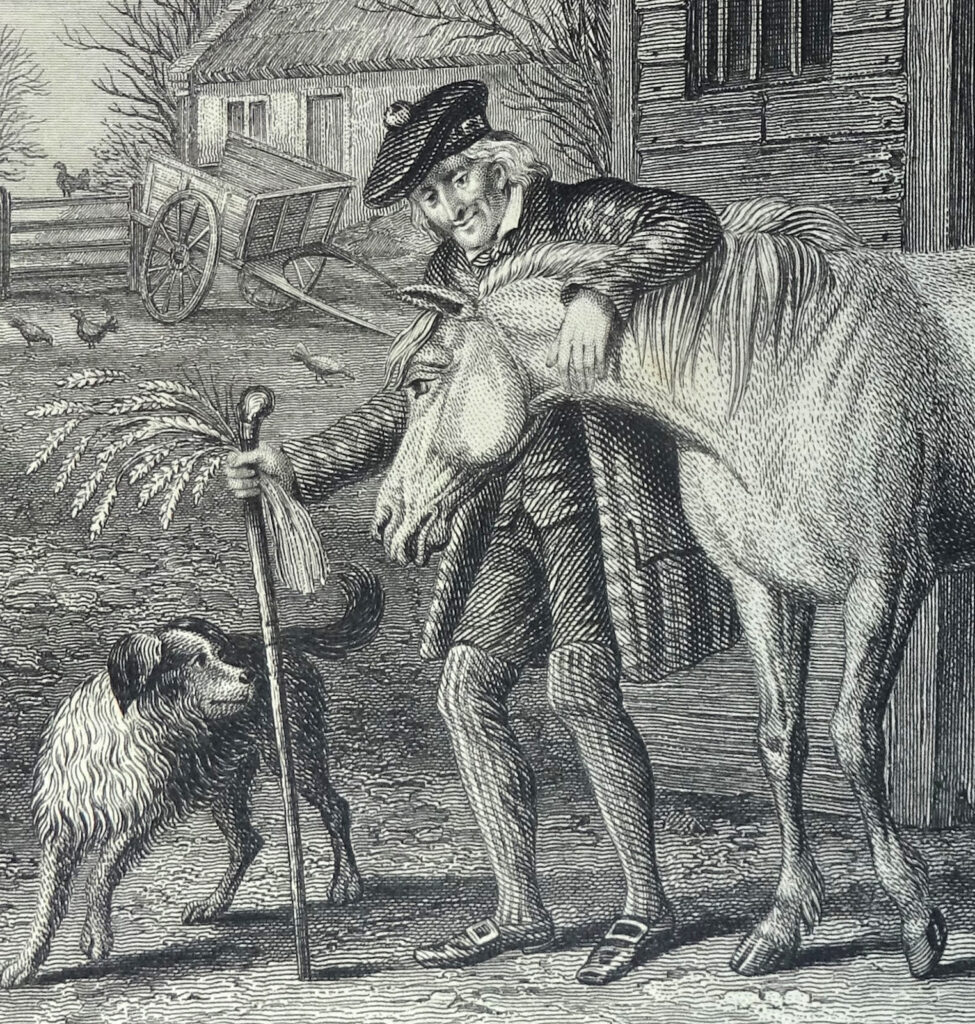
Illustration of two men and a woman in a kitchen surrounded by food items. One man is sitting on a toilet, while the other is operating a bellows in front of a fireplace. A pot marked “Crowdy” is cooking over the fire.
Scotch Training for a Milling Match, by British caricaturist William Elmes, 1811. In this satirical cartoon, a Scottish trainer prepares a boxer for a match by feeding him various Scottish foods, including gruel, haggis, and crowdy, a mixture of oatmeal and water. The trainer offers the boxer “Scotch pills,” likely referencing a common purgative.

Under the Galenic theory of digestion, eating a foodstuff transferred its qualities to the eater; the food one ate both reflected and created the eater’s humoral complexion, which varied according to gender, nationality, and ethnicity, as well as their physical condition. Foods possessed properties such as cold, hot, dry, and wet, and it was important to ensure the appropriate balance for each individual complexion. Some properties were best avoided altogether, such as “grossness” or “crudeness” found in tough meats, root vegetables, or unrefined grains. These were relegated to animal feed or left for the poor, thought to possess more hardy stomachs. While oats possessed “a sufficient share of heat,” according to Galen the grain was also “hard, which is why it affords very little nourishment to the body” and could be difficult to digest. An “unpleasant” bread made from oats had no costive or laxative effect on the body—not bad, but not exactly good either. Generations of medical and dietary writers largely echoed Galen’s ambivalent assessment.

By the late 16th and early 17th centuries, however, ancient authority was under attack from a novel empiricism and experimentation. As historian Ken Albala has shown, English food writers were “willing to criticize the ancients and strike out with their own opinions,” emphasizing local custom, social prejudices, and personal experience rather than classical “nutritional dogma.” Physician Thomas Cogan, for instance, lauded the indigenous oat in The Haven of Health (1584). Had Galen lived in England, Cogan claimed, “hee would have said, that Oates had beene meat for men.” When boiled with water and salt, oats “make a kind of meat which they call water-Pottage, and of the same boyled in Whey, they make Whey-pottage,” a meal that sounds rather a lot like contemporary porridge and that Cogan praised as “very wholsome and temperate, and light of digestion.”

A farmer feeding oats to a horse outside a stable, with a dog at his feet

As historian David Gentilcore explains, the late medieval period saw the development of hulling, which removed the grain’s hard outer husk, making it easier to prepare and digest. Cogan’s reassessment might have been a response to this new processing technology. It was also deeply, and ironically, tied to the kind of culinary nationalism that would later lead Johnson to condemn oats. As Albala notes, The Haven of Health was one of many turn-of-the-century dietaries aimed at a newly literate, middle-class audience, a group developing a strong national and social identity. Notably, Cogan does not mention Scotland in his discussion of oats, preferring to write an English dietary for English constitutions (though his dietary manual also accused the Scots of practicing cannibalism). Similar nationalist motives inspired another of Cogan’s heterodoxies. If Galen had “eaten of the biefe of England,” he would never have condemned the meat but “judged it otherwise.”

Efforts to rehabilitate oats continued. In his 1662 History of the Worthies of England, Thomas Fuller described oats “growing commonly all over England.” According to Fuller, historically oats had been “eaten by people of the primest quality,” including William the Conqueror. He urged his readers to “say not oates are horse-graine, and fitter for a Stable then a Table,” but to enthusiastically patronize the native crop.

By the mid-18th century, when Johnson compiled his dictionary, the ancient humoral system had been supplanted. Nonetheless, many of its assumptions remained current, including the association between diet, digestion, and disease, and the link between food and complexion, particularly national character. Despite the efforts of Cogan and other pioneering English physicians to convey oats from countryside to town, for the most part, the country’s well-off city dwellers still considered the hard grains unsuitable for their refined digestive sensibilities.

A world away from the dining table debates of educated urbanites, oats increasingly filled the bellies of the men pressing colonial expansion and international commerce in the 17th and 18th centuries. English sailors detested the rations of oats that sometimes replaced salted fish. “’Tis the least lik’d of all their victuals,” physician William Cockburn remarked, despite being slower to spoil and a break from the monotonous and constipating regular fare. Noting that porridge possessed a “cleansing power and vertue to keep the belly open,” Cockburn urged those provisioning ships to supply butter to “sawce” the oatmeal, asserting “that if that part of the victualling were made more grateful and agreeable to the sailers, ’twould infinitely contribute to the preservation of their health.”

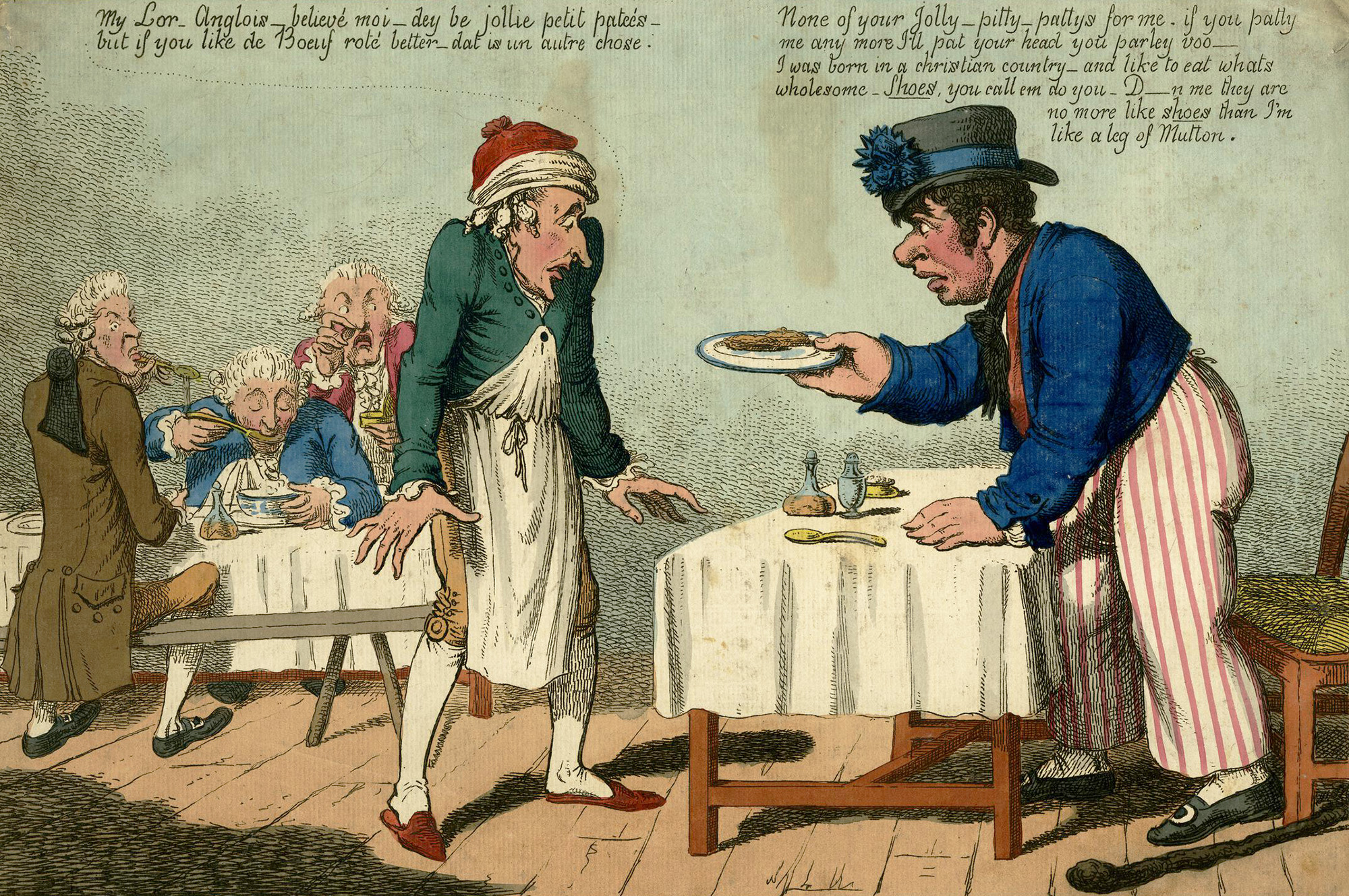
Illustration of a man in a blue sailor's clothes returning a plate to a chef. At a nearby table, three French guests react with surprise
An English sailor rejects French cuisine, in British caricaturist George Moutard Woodward’s An English Sailor at a French Eating House, 1805.

The Royal Navy Victualling Board took Cockburn’s advice and replaced meat and fish with oatmeal and other dry goods on voyages to warmer latitudes, a move which, according to historian John Keevil, “was reluctantly accepted in official circles and aroused open opposition among the men.” Ironically, their use in naval provisions may have helped further dislodge oat-based dishes from breakfast tables back home. England’s increasing naval efficiency in the 18th century helped drive the colonial expansion that delivered a surplus of exotic new commodities, including tea, coffee, and sugar, to a growing middle- and working-class consumer market in England’s towns.

By the end of the 18th century such addictive, refined commodities were causing health problems across England’s classes, including a rise in corpulence. In his Observations Concerning the Diet of the Common People (1797), physician William Buchan, himself a Scotsman, called for the replacement of tea and buttered white bread with “more wholesome” traditional loaves made of oats or mixed grains or dishes such as “milk-porridge.” Buchan followed Burns into the battle of the oats launched by Johnson, scorning the “ridiculous definition” of “a late Author, a man of learning but the dupe of prejudice” who “endeavoured to represent oats as proper food for horses only.” Contrasting Scotland’s healthful oats to the “starchy” white bread and cakes that clogged English bellies, Buchan expressed a wish that “the horses in England devoured a smaller quality of that grain, and the people more”!

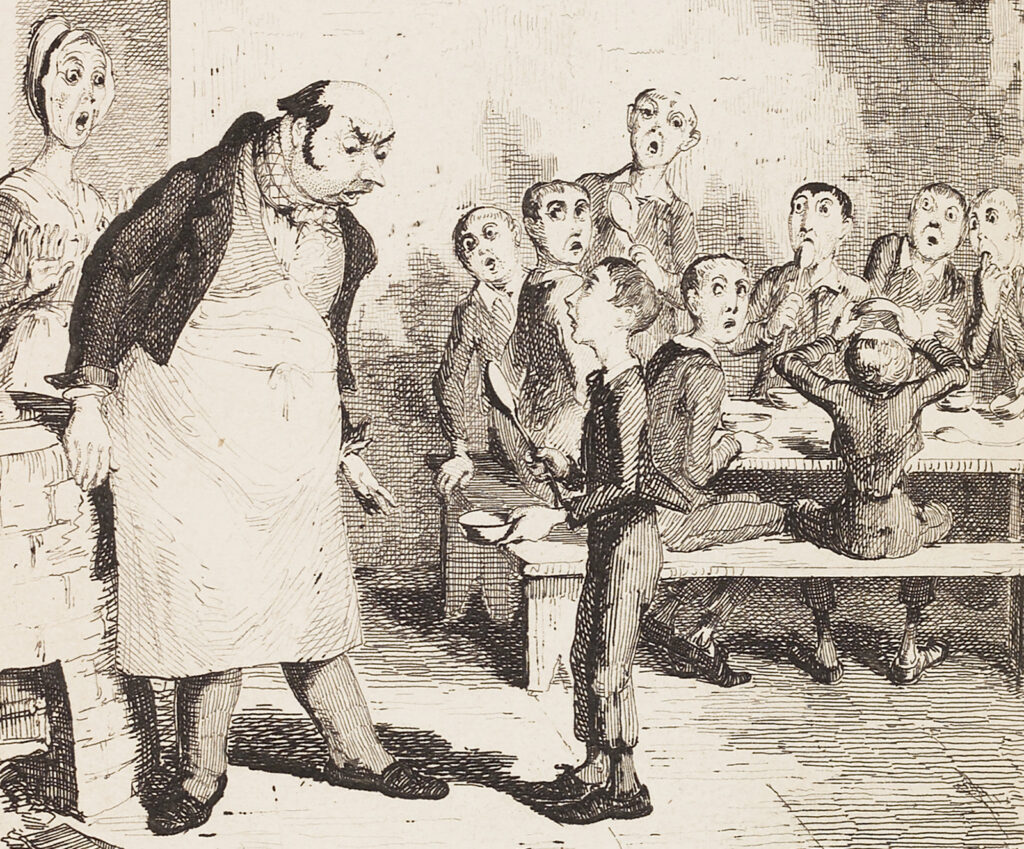
A boy holding a spoon and an empty bowl stands in front of a man with an apron, with several other boys sitting at a table behind them watching the interaction.

Cheap, long-lasting, and now recognized as nutritious, oats became an increasingly important institutional foodstuff. The 19th century saw the state take a greater share of responsibility for the health and fitness of its citizens. In this context, oats offered a way to feed growing populations, particularly the urban poor, at little expense and with little regard for preference or taste. Following the 1834 Poor Law, a kind of watery, cheap oat porridge known as gruel was served in Victorian workhouses, a diet immortalized by Charles Dickens in Oliver Twist. No “sawce” here. As if to underscore this unsavory reputation, in 1950s Britain “doing porridge” became slang for serving time in prison, as oatmeal had formed a mandatory part of prison breakfasts since the 1800s.

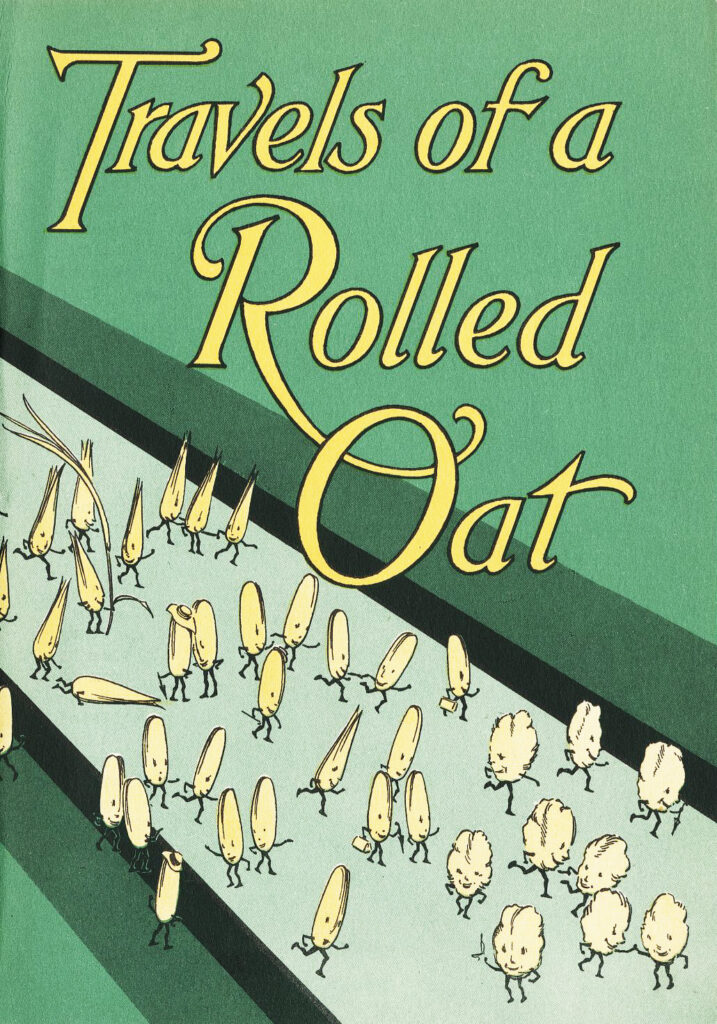
It was only in the United States in the second half of the 19th century that oats were fully rehabilitated from their dubious reputation, as businessmen saw an opportunity to commercialize oat production on an industrial scale. Many Americans had inherited the English attitude that oats were no better than “horse feed,” reported “Oatmeal King” Ferdinand Schumacher, who first sold the grain as breakfast food during his youth in Germany. In the 1870s Schumacher introduced a steaming and rolling process that turned oatmeal into thin, regular flakes. Rolled oats were quick and easy to cook, and their mild flavor and soft texture were better suited to Anglo-American palates. This and other innovations in milling and refining grains, coupled with the need to feed ever-growing industrial populations, drove the success of two mega-brands—Schumacher’s Quaker Oats in Ohio and Scott’s in Glasgow—that continue to dominate cereal shelves today.

Book cover featuring an illustration of small anthropomorphic oats standing on a factory conveyer belt.

In marketing their brands to still-skeptical consumers, oatmeal entrepreneurs placed porridge at the heart of contemporary Anglo-American debates about national health and nutrition. This was an era of rampant healthism, including the rise of vegetarianism, hydrotherapy, and temperance reform, a campaign Schumacher was active in. In response to the pressures of urban-industrial life and a perception that the nation’s health was rapidly declining, reformers looked back to a “natural” diet, one based in wholesome, rural simplicity.

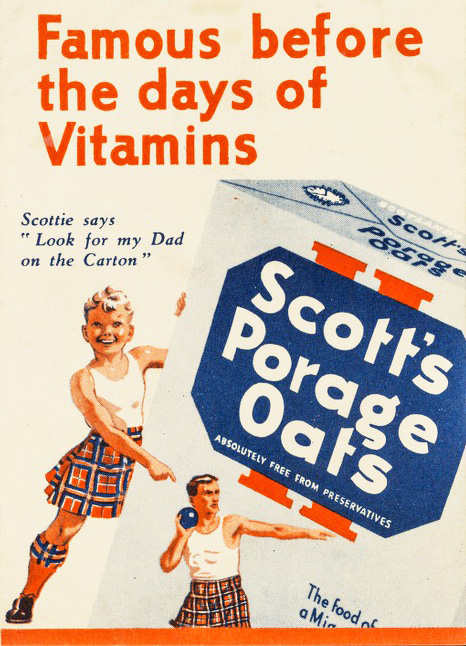
Most famously, the late 19th century saw the rise of the cereal innovator and health guru John Harvey Kellogg, a Seventh-day Adventist who pioneered healthy eating as the path to spiritual and physical salvation and developed new products such as granola and cornflakes to fuel the journey. Cereal makers underscored their products’ link to health and well-being. Quaker, according to the company’s website, chose its name and iconic logo as a “symbol of good quality and honest value”; in early iterations of the logo, the Quaker brandishes the slogan “pure” to reinforce the moral fortitude of company and product. Similarly, Scott’s Porage Oats adopted an athletic, kilt-clad Scotsman as its mascot, turning earlier stereotypes of Scottish brawn on their head to sell to a British market. Both brands contrasted oat-eating with meat-eating, emphasizing the health benefits and affordability of the former for the everyday consumer.

Illustration of a boy in a kilt pointing to a box of oats. Large text above the box reads: “Famous before the days of Vitamins.”

Health reformers and cereal manufacturers encouraged ordinary citizens to mind their health and well-being more than they ever had before. But 19th-century healthism had a darker side. Efforts to reform American bodies and souls often came with racialized, gendered, and class dimensions. According to scholar Sabrina Strings, Kellogg’s drive to improve his nation’s health was spurred by his desire to “guarantee the preservation of the superior Anglo-Saxon race.” Kellogg worried about “race degeneracy,” arguing that public health and nutrition were vital to prevent the “depreciation” of the “civilized” (that is, Anglo-Saxon) part of humanity. In this context, the “purity” espoused by the Quaker mascot and his prominent box of refined “white oats” are tangled in a web of beliefs about the ideal body and its social purpose, much as Samuel Johnson’s rejection of Scottish oats had been a century and a half earlier.

A Quaker ad from 1911 provided survey results suggesting that the wealthiest and most “highly intelligent” families fed their children oats. By contrast, Quaker claimed, “a canvass of 61 poorhouses shows that not one in 13 of the inmates came from oatmeal homes” and “only two per cent” of prisoners “had oatmeal in their youth.” Quaker had flipped the association with the Victorian workhouse, depicting oatmeal as an indispensable part of physical, intellectual, and national improvement, and made consumer choice a moral responsibility. A morning bowl of oatmeal wasn’t just the most important meal of the day for an individual child, it was vital for the future of civilization itself.

In the 1940s, advertising further emphasized national strength and stamina as part of the war effort. Oats fed soldiers and were pitched to rationing homemakers as a meat substitute or a way to bulk out sausages, bread, or biscuits. This was especially true in Britain, where German U-boat blockades stymied food imports. One 1942 cookbook issued by the Board of Education emphasized that “oatmeal and rolled oats are valuable foods: they are home produced, plentiful and reasonable in price.” Oats could add to the “nourishment” of a dish like soup or stuffing, “especially when bacon is scarce.” When the end of rationing did away with necessity, oat manufacturers had to find a new selling point; ads in the United States’ prosperous postwar years shifted the focus to fun and (often artificial) flavor.

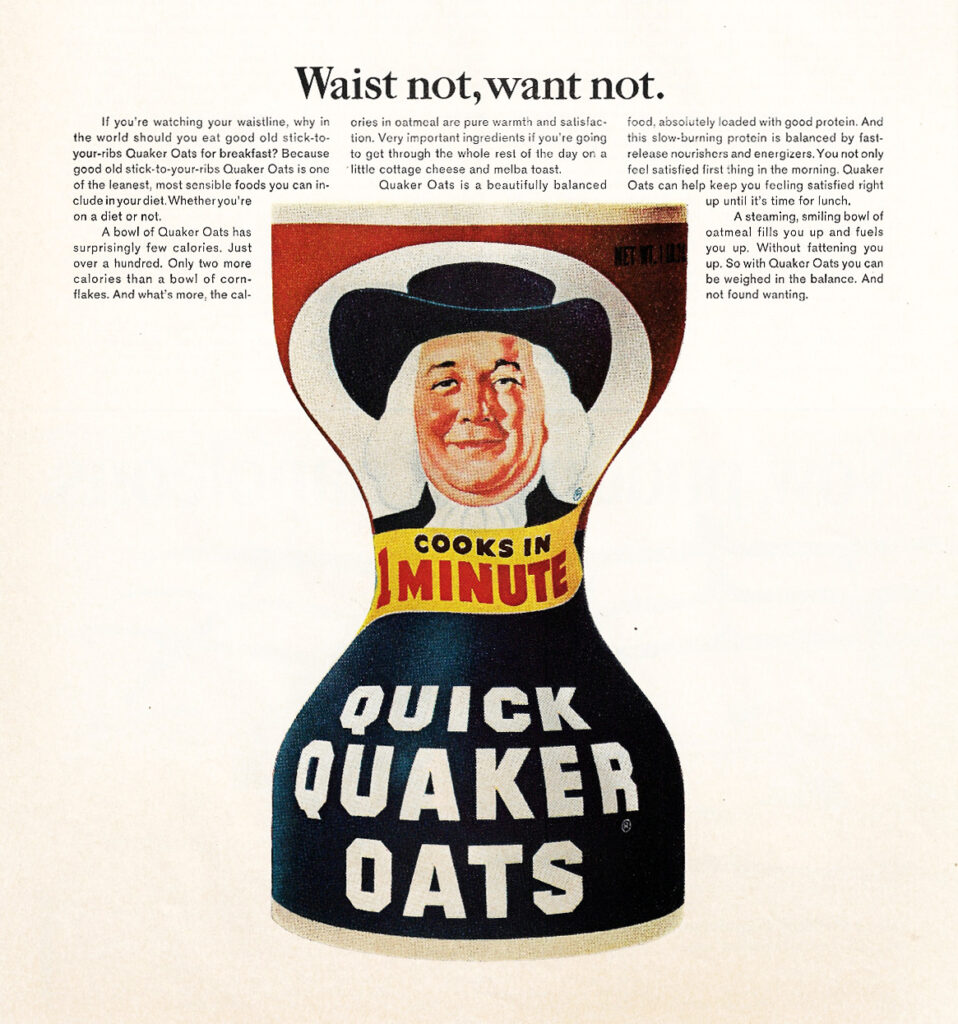
A canister of Quaker oats edited into an hourglass shape. A paragraph of text is positioned above the image with a title that reads: “Waist not, want not.”
Quaker Oats ad, 1967.

In recent years brands have begun emphasizing health again, partly a reaction to governmental pressure. In 1997, Quaker petitioned the FDA for permission to advertise its cereals as “heart-healthy,” while in 2012 the brand’s mascot was given a 21st-century makeover, slimmed down to fit modern body ideals, a move seemingly at odds with the brand’s 2001 takeover by junk-food giant PepsiCo. Last year even saw the birth of “oatzempic,” a trending drink blending oatmeal and lime juice that some wellness influencers claim can mimic the effects of GLP-1 weight-loss medications. It might sound about as appetizing as gruel, the sort of concoction that could only be cooked up on social media, but the oatzempic phenomenon speaks to the many roles oats have played throughout their long culinary history.

As horse feed and as hyped-up health food, a sign of social distinction and a marker of identity, oats can tell us much about the meanings we attach to what we eat. A tool of institutional power and a cog in the capitalist machine, they have also played an important role in the development of our modern food system—if never an entirely comfortable one. Developments in industrial production, medicine, and marketing have all influenced their fate. Now social media seems set to shape their future. The history of the oat offers a hearty reminder that whatever we choose to eat for breakfast, we fill our bowls with far more than just food.

More from our magazine

A historical illustration depicts an experiment with a suspended person, possibly related to scientific studies or demonstrations.
DISTILLATIONS MAGAZINE

When Electricity Met Democratic Revolution

The science that animated a political idea.

A large white bird standing near a chick on a ground nest with the ocean and a ship are visible in the background.
DISTILLATIONS MAGAZINE

A Game of Cat and Mouse

A predator stalks Marion Island, and it weighs less than an ounce. Scientists are racing to stop it.

Sésamo seco en manojos en el campo contra un cielo azul profundo
DISTILLATIONS MAGAZINE

Parcelas de ajonjolí

Una diáspora en veintiún movimientos.

    Republish

    Copy the above HTML to republish this content. We have formatted the material to follow our guidelines, which include our credit requirements. Please review our full list of guidelines for more information. By republishing this content, you agree to our republication requirements.