Distillations magazine

Unexpected Stories from Science’s Past
December 18, 2025 Arts & Culture

Red the World Over

How a tiny cactus parasite called cochineal became one of the Spanish Empire’s most lucrative commodities.

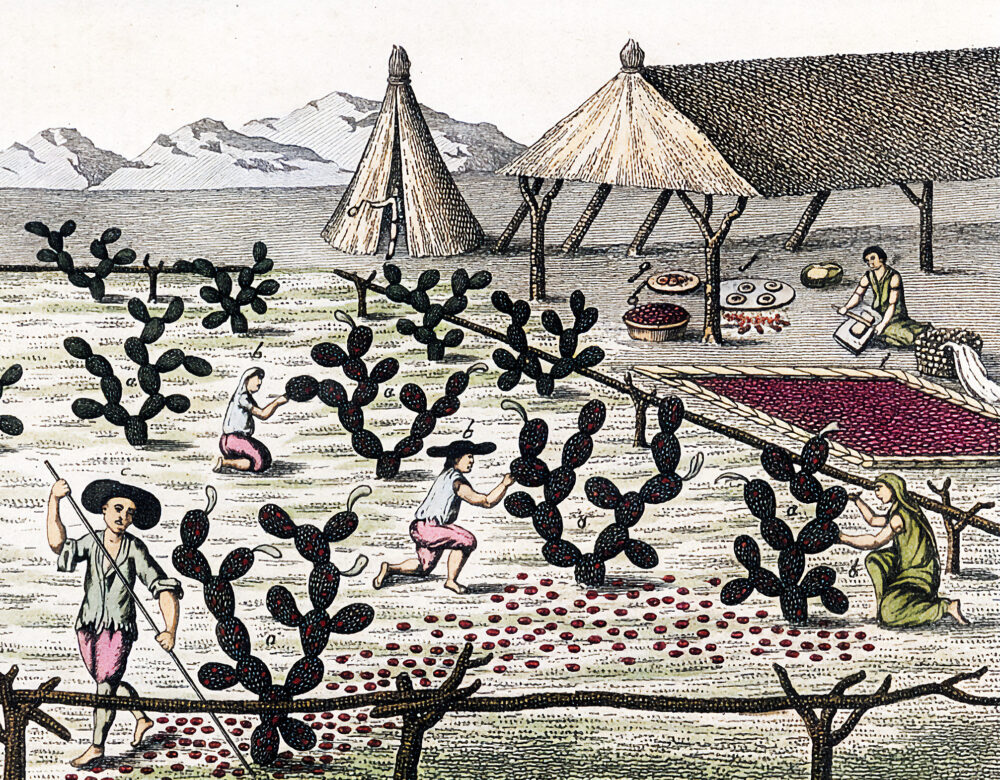
Illustration of farmers harvesting red insects from cacti in a field and drying them
About SUPPORT OUR WORK

On an April day in 1585, four Indigenous noblemen from the central Mexican province of Tlaxcala presented a list of urgent concerns to King Phillip II of Spain.

Spanish colonists kept encroaching on their territory, the men complained, allowing livestock to roam free and destroy cropland. Every decade, it seemed, another disease or famine swept through the highlands of central Mexico, leaving death and disability in its wake. The province’s population continued to plummet, but tribute payments demanded by the Crown stayed stubbornly constant, which had compelled these emissaries, like others before, to beg for mercy.

It had been nearly a year since the nobles—Antonio de Guevara, Pedro de Torres, Diego Tellez, and Zacarías de Santiago—began their trek across the Atlantic for an audience with the king. So, with such pressing topics in mind and no moment to waste, why would they spend time, as they did that day, defending the reputation of a local insect?
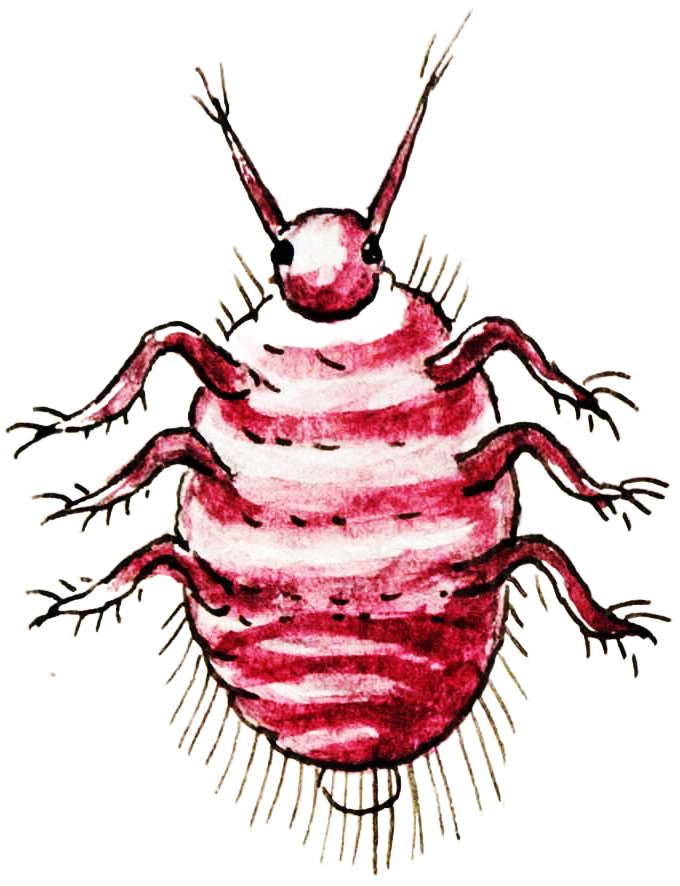
Illustration of a round red insect

As it happens, that insect was cochineal—at the time the most important cash crop in New Spain. Though cochineal is a tiny, unassuming white bug that spends its entire three-to-four-month life on prickly pear cacti, the inside of its body is an intense red. Dye made from cochineal was one of early modern Europe’s most sought-after substances, used to make vibrant clothes, paints, makeup, and even medicine. Although other insect-based red dyes existed, cochineal dye was far more concentrated, which allowed artisans to achieve deeper reds while using less raw material.

The Spanish Crown enjoyed a monopoly on the colorant through its holdings in Mexico and Peru, where cochineal was traditionally grown and produced. Depending on the year, cochineal could be worth half its weight or more in silver, the only export to consistently outpace cochineal in the wealth it delivered to the Crown over three centuries of colonial rule. It was so valuable and so frequently stolen by rival European powers that in 1674 Spain required all shipments of cochineal be transported on, or with the protection of, its warships.

The oldest Mexican textile known to contain cochineal is approximately 2,300 years old, but scholars aren’t sure how long the dye has been produced in Tlaxcala. Only a few pre-Hispanic books from Tlaxcala survived Spanish friars’ fanatical hands, and none describe cochineal production. Evidence of cochineal usage, though, is embedded in the pages themselves. Chemical analysis of their still-vibrant pictographs shows that by the 1400s Tlaxcalteca were using cochineal-based paints to document calendrical and astronomical events.

But where people used cochineal doesn’t necessarily tell us where they produced it. In the 1400s, trade networks were extensive; archaeologists have shown that people in central Mexico had access to turquoise from as far north as New Mexico and ceramics from as far south as Costa Rica.
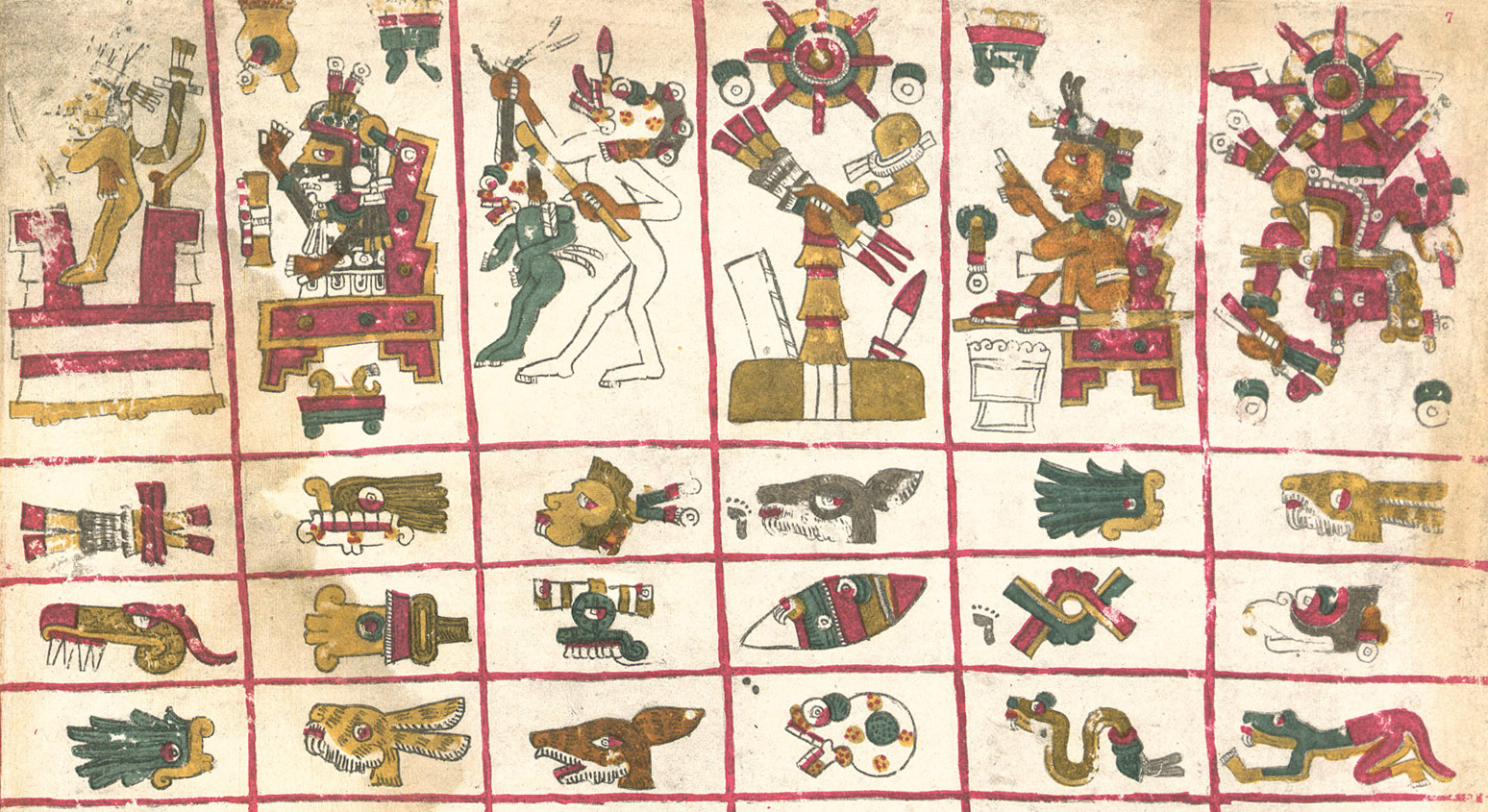
Mesoamerican illustrations of animal, people, and gods in a grid
Detail of a divinatory calendar from an 1898 facsimile of the Codex Yoalli Ehecatl (also known as the Codex Borgia), created in central Mexico, ca. 1500s. Reds in the original were made with cochineal.

What’s clear, though, is that by the mid-1500s cochineal production was booming in Tlaxcala. Spanish chronicler Antonio de Herrera claimed in 1600 that more cochineal was grown there than all the other regions of New Spain combined. That year, an estimated 150,000 pounds of cochineal were shipped out to Spain; by almost any metric, Tlaxcalteca were sending hundreds of millions of dried-up insects to Spain every year.

Accounts of cochineal’s importance to 16th-century Tlaxcala come not only from Spanish colonial documents but also from the Indigenous Tlaxcalteca themselves. In an unusual feat of record keeping, 22 years of meeting minutes from the Tlaxcalteca Indigenous council were preserved in their entirety. Even more remarkable is the passionate language used to record one 1553 meeting in an account now known as “The Evils of Cochineal.” In it, Tlaxcalteca nobles blame nearly every social “ill” on cochineal production, from haughty commoners and insufficient Christianization, to laziness, drunkenness, and famine. Yet they also walk back earlier threats to ban the practice entirely, perhaps unwilling to risk their own financial stakes in the industry.

Scholars are split over the impact this trade had on Tlaxcalteca society and who benefited most, nobles or commoners. But most agree that, as the industry grew, it brought great wealth to Tlaxcala, wealth that allowed the province’s Indigenous council to fund expensive legal battles and trans-Atlantic voyages to defend its interests.

This profit, though, all depended on European and Asian consumers believing the cochineal they were spending so much money on was high quality. In the same statement in which Herrera praised Tlaxcala’s cochineal, he also complained about the extent of fraud and falsification taking place in the industry. It’s hardly surprising, then, that the four noblemen felt it necessary to defend the quality of Tlaxcala’s cochineal to the king. Inferior cochineal from other provinces, they argued, was being mixed with their superior product. They wanted Tlaxcalteca cochineal labeled separately, with a stamp that ensured its origin—kind of like the protected designation of origin, or D.O.P., labels seen today on Italian olive oil and French wines.

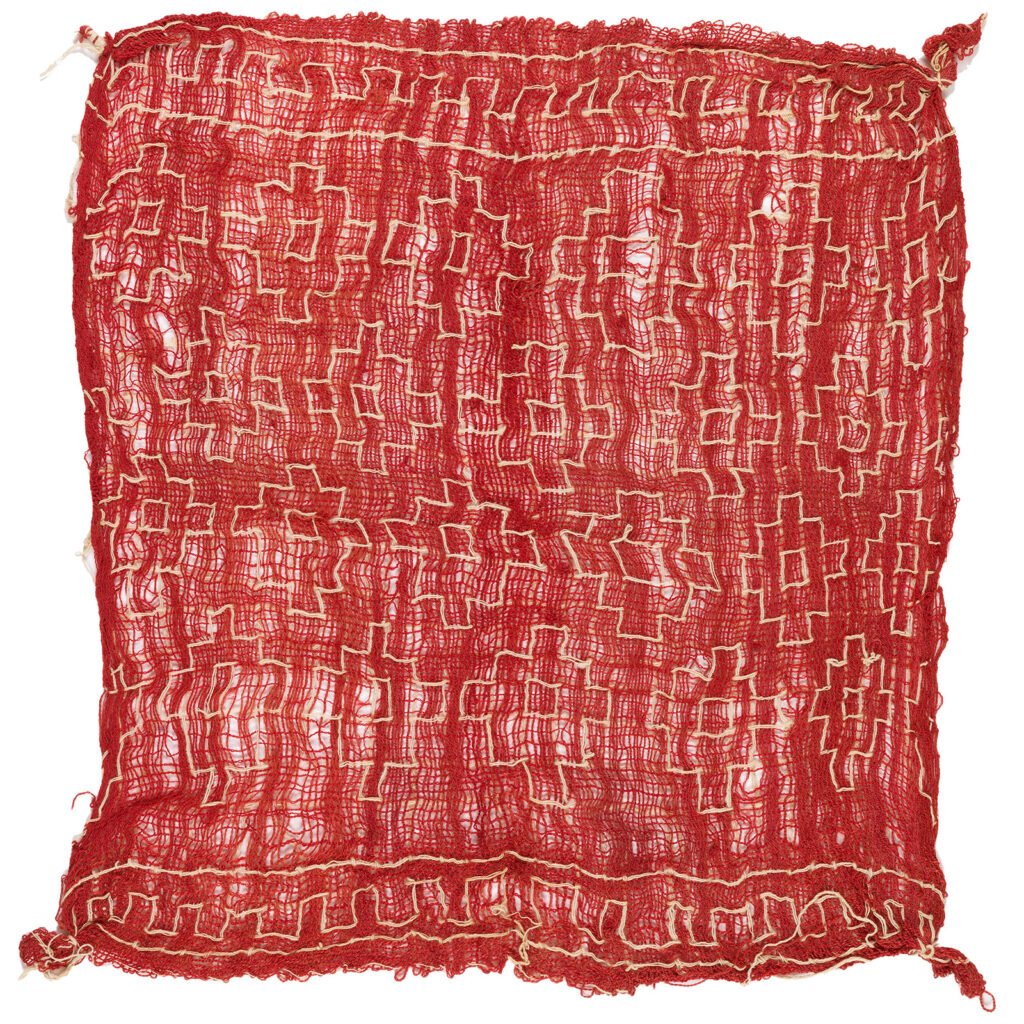
Photograph of a red cloth on a white background

The roots of this Tlaxcalteca exceptionalism extended far beyond the cochineal industry and reach back to well before the Spaniards’ arrival. In the 1400s it was one of the few powers in the Basin of Mexico to repel incursions by the Mexica-Colhua Triple Alliance, better known as the Aztec Empire, just 60 miles away.

Tlaxcallan, as the confederation of city-states was then known, also was unique for its collective governance model and relatively high social mobility. Successful warriors, for example, could enter the ruling class, a system that likely contributed to Tlaxcallan’s continued independence. Tlaxcalteca leaders also welcomed refugees fleeing Aztec warfare and imperial dominance, reasoning that the enemies of their enemies were their friends. And when the Aztecs tried to strangle Tlaxcallan with trade embargoes, it managed to circumvent them, ensuring its residents had access to desirable foreign staples, such as obsidian and cotton. It’s perhaps unsurprising, then, that the Tlaxcalteca developed a strong patriotic identity based not only on military prowess, but also multiethnic coalition building and animosity toward the Aztecs.

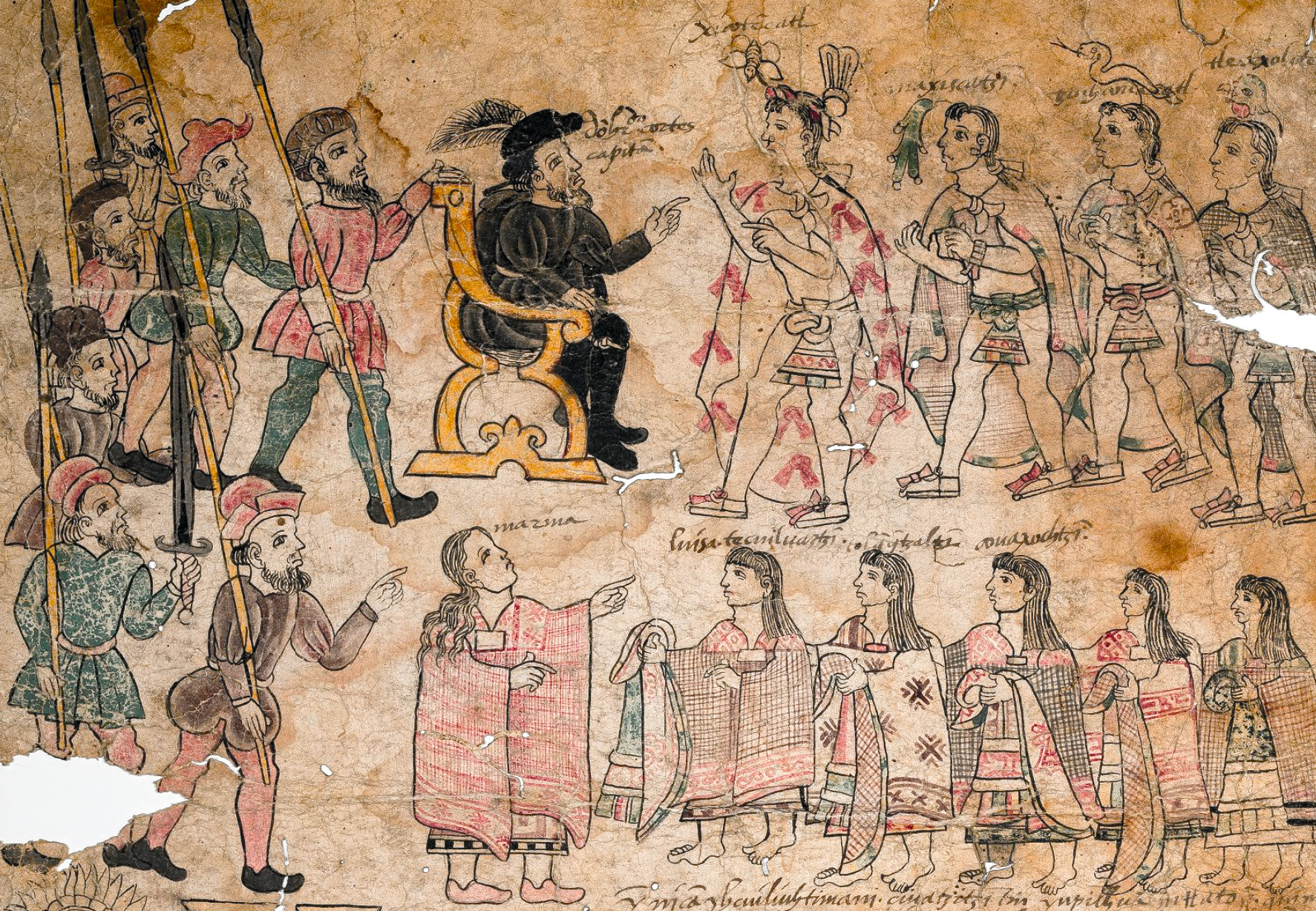
This historical animosity led Tlaxcalteca nobles to ally with Hernán Cortés in 1519 in an effort to gain control of the region. As a reward for their early support, Tlaxcala’s nobles were granted several privileges that those in other regions of New Spain were denied. For instance, they were exempted from the encomienda system, which awarded Spanish conquerors land grants and a portion of the labor of the Indigenous people on that land. Tlaxcala was not the only polity to assist Spanish conquerors and receive privileges, but its nobles proved especially adept at navigating the Spanish legal system to protect those privileges.

Illustration showing a seated Westerner being greeted by men in Indigenous dress
Detail of a drawing, likely a study for a now-lost larger painting, recording the Tlaxcallan alliance with Hernán Cortés (seated), ca. 1530–1550. Tlaxcallan regent Xīcohtēncatl the Younger is depicted here with other nobles.

Still, Tlaxcala’s nobles lost many of their cases, and the four noblemen who sailed to Spain in 1584 failed to secure a royal stamp attesting to the superior quality of the province’s cochineal. Instead, Tlaxcala would continue sending its cochineal south for inspection and grading in Puebla de los Ángeles, a city built for and controlled by Spaniards. It’s easy to imagine how much this infuriated the Tlaxcalteca, who resented being treated as subordinates to their neighbor.

The Spanish colonial government, of course, saw things differently. It didn’t care about defending the reputation of Tlaxcala’s dye so much as it cared about the reputation of all New Spain’s cochineal. How, then, would Spain protect cochineal’s reputation as a high quality good to its Eurasian buyers?

Generations of cultivation had made the bug delicate, vulnerable to predators, diseases, and competition from closely related wild species. A single rainstorm could destroy a person’s entire cochineal harvest for the season. Cochineal growers had to be vigilant in monitoring their gardens and the skies.

Most peninsulares and creoles—people of Spanish descent born in Spain or New Spain, respectively—wouldn’t think to perform this menial labor themselves. Instead, many took jobs as agents for the colonial government, documenting how Indigenous methods of producing cochineal might impact its quality. Armed with this information, the colonial government passed legislation to force producers to use its preferred methods.

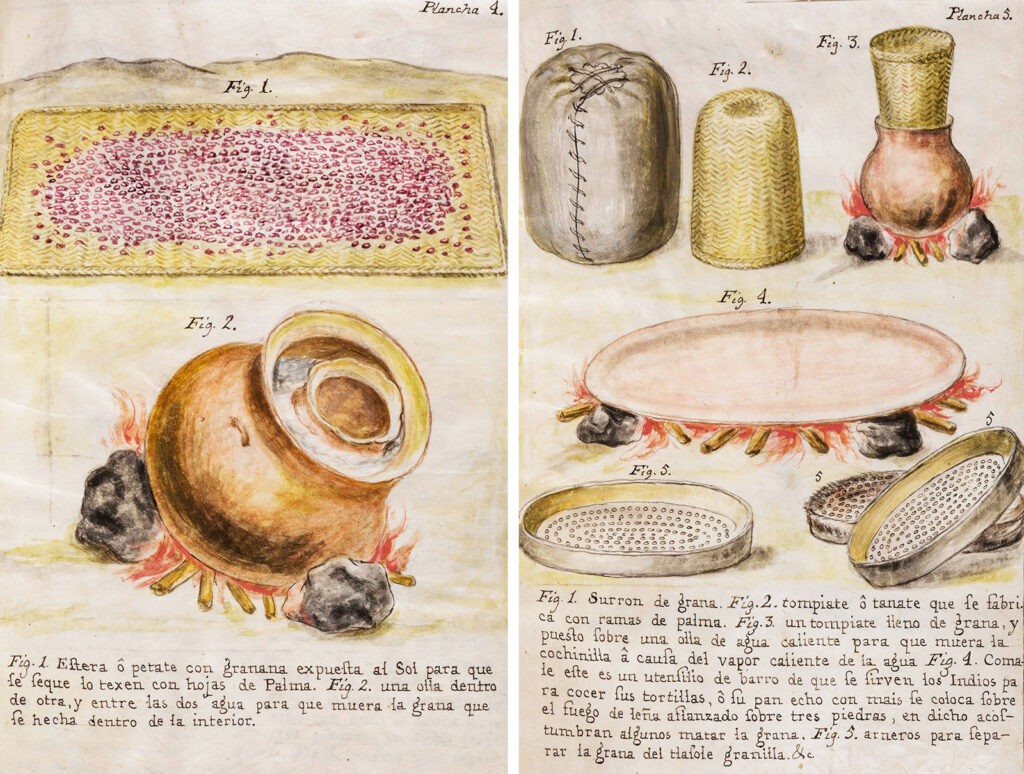
In 1572 Martín Enríquez, the fourth viceroy of New Spain, created a new government position, cochineal judge, based in Puebla de los Ángeles, to enforce cochineal regulations. The next year, Enríquez enacted a law requiring all producers to kill their cochineal by drying it in the sun, banning all other methods. But passing bans and stifling Indigenous practices were separate feats—colonial observers found that many Indigenous producers resisted these laws and continued to kill cochineal as they always had.

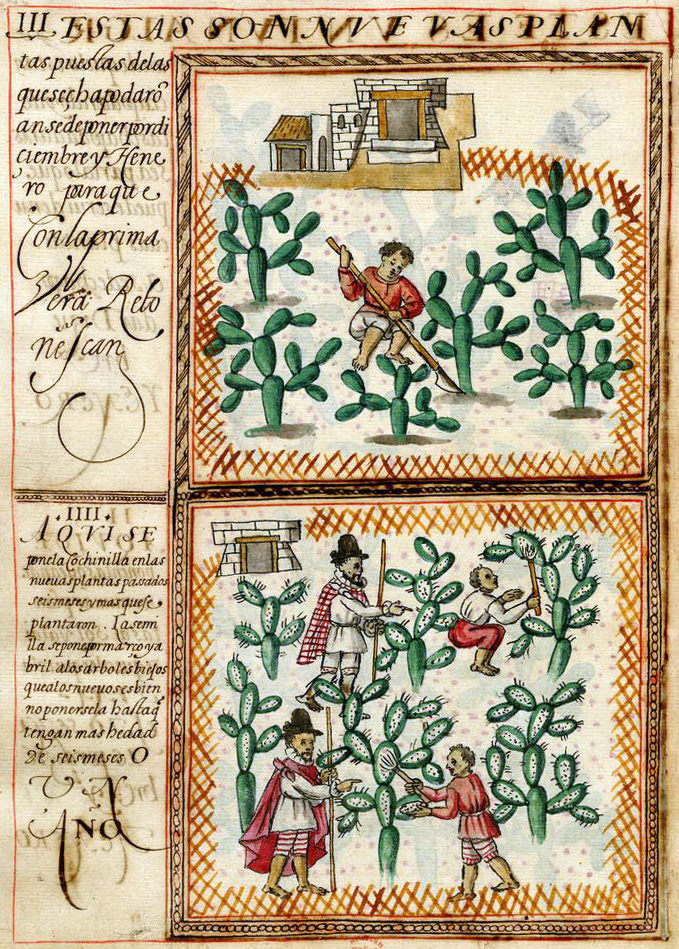
Illustration depicting two scenes of farmers in a field of cacti

One of these observers was Gonzalo Gómez de Cervantes. The grandson of a Spanish conqueror of the Aztec city Tenochtitlan, Gómez de Cervantes was born into a privileged family of encomienda owners. He served many roles within the colonial bureaucracy, including judge and later governor of Tlaxcala and surrounding areas. These roles put him in direct contact with both the Indigenous noble council of Tlaxcala and the region’s cochineal producers. Based on his experiences, he wrote The Economic and Social Life of New Spain at the End of the 16th Century (1599), a set of policy recommendations for the Spanish king. His chapter on cochineal is considered the most valuable account of cochineal agriculture in the 16th century.

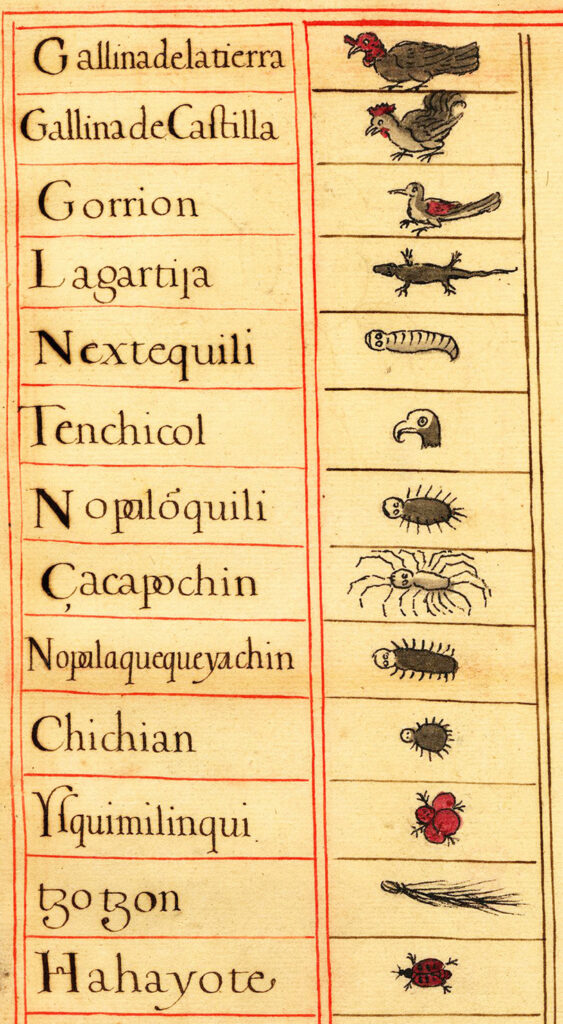
The value of this manuscript comes from its meticulous documentation of Indigenous agricultural practices, which paints a comprehensive picture of the life cycle of cultivated cochineal. Gómez de Cervantes was fluent in Nahuatl, the dominant Indigenous language of central Mexico. This allowed him to directly interview cochineal growers and record the knowledge embedded in their practices, including the numerous Nahuatl terms for pests and predators that afflict cochineal and its cactus hosts.

He emphasized personal observation, gathering evidence rather than relying on the testimony of others. This may seem obvious, but before the 1500s most European scholars gained expertise not through personal observation but by studying the works of classical Greek, Roman, and Islamic authors. But as descriptions of plants and animals from the Americas flooded 16th-century Europe, it became increasingly clear that old writings had limited utility in explaining the natural world. Scholars needed to make their own evaluations, and Gómez de Cervantes’s manuscript is an early example of a broad movement away from reading-as-expertise to observation-as-expertise.

Illustrated chart showing and naming birds, insects, and reptiles: gallina de la tierra, gallina de Castilla, gorrion, lagartiija, nextequili, tenchicol, nopalóquili, cacapochin, nopalaquequeyachin, chichian

Gómez de Cervantes’s report was instigated, at least in part, by the colony’s new viceroy, who ordered him to find out whether there was any merit to the outlawed killing methods. The seriousness of this demand is apparent in Gómez de Cervantes’s text; the section on killing cochineal is far more systematic in its observations than the others.

To answer the viceroy’s question, Gómez de Cervantes conducted a series of experiments, purchasing cochineal and ordering Indigenous growers to use five different methods to kill it. These included sun drying, boiling the cochineal in pots of water, variants on each of these methods, and shaking the bugs in a jar. As he observed these practices, he calculated the time spent and measured how much final product each method yielded. He found that the Spaniards’ preferred method, sun drying, took the longest time and delivered the smallest yield. (No wonder Indigenous producers resisted.)

Gómez de Cervantes was not satisfied with quantitative data alone. He needed to know which method produced the highest quality cochineal. He had heard in his social circles that sun drying produced the best cochineal, but what did “best” even mean?

To answer this question, he turned to a technique now common in scientific trials— “blinded” evaluators. He gathered a group of local Indigenous cochineal producers and showed them the five cochineal samples, but he didn’t tell them which sample came from which method. That way, he could be confident that their evaluations of the cochineal’s quality would not be biased by their own preferences for one method over another. Although there was no universal agreement, the majority pointed to the boiled cochineal as the best product.

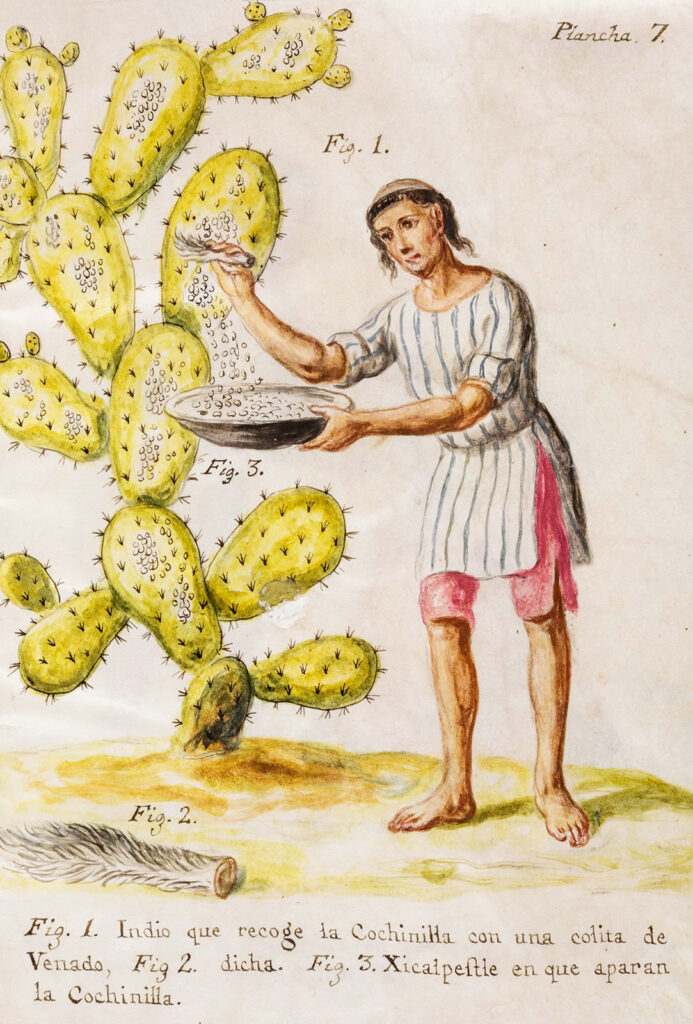
Illustration of man brushing insects off a cactus into a bowl

Gómez de Cervantes ultimately concluded that it was pointless to try to force people to use one killing method over the others. Spanish observers had assumed that fraud motivated Indigenous producers to resist sun drying. On the contrary, Gómez de Cervantes found that Indigenous producers chose killing methods based on personal preferences and perceived benefits.

This conclusion is especially striking for how it contrasts with the rest of his report, which dismissed Indigenous perspectives and proposed new laws to force producers to raise and make cochineal the way he thought best.

Gómez de Cervantes repeatedly demeaned Indigenous people as lazy and childlike, using these racist stereotypes to justify forced labor and other oppressive policies. He complained that some peasants allowed their cacti to flower and produce prickly pear fruits for food. This provided less nutrients for the insects, stunting their growth and infuriating Gómez de Cervantes. Of course, this was a perfectly rational choice in famine years, when food prices skyrocketed and farmers needed to prioritize edible crops over cash crops. Rather than recognizing growers’ foresight in adjusting their production to avoid starvation, he arrogantly assumed that he alone was intelligent enough to correctly identify the inverse relationship between raising cacti for food and raising cacti for cochineal.

It’s ironic Gómez de Cervantes momentarily escapes his own biases only after designing a study to remove the biases of his Indigenous evaluators. As it turned out, his experiment had little impact on colonial opinion. His peers were far more inclined to embrace his prejudice and calls to control Indigenous growers than they were to consider that their stereotypes were wrong. In 1620 an anonymous writer complained that cochineal grown in Tlaxcala and its surrounding areas was mediocre because its producers chose bad killing methods. By the 1700s, the center of cochineal production had shifted south to Oaxaca. The primary cash crop of Tlaxcala had become pulque, a mildly alcoholic beverage fermented from agave.

By then creoles had created a color-based grading system for cochineal. Cochineal that looked white on the outside, they claimed, was the best and purest. This whiteness could only be achieved with “gentle” killing methods, such as drying in the sun. They lamented that Indigenous producers continued to use killing methods that “ruined” this whiteness—first and foremost, by boiling. Neither Gómez de Cervantes’s observations of Tlaxcalteca growers nor centuries of failure could convince creoles of the pointlessness of regulating Indigenous practice.

Left image shows cochineal on a woven mat and a pot inside another pot over fire. Right image shows a sack, baskets, a pot over fire, a griddle, and flat sieves.

Mention Tlaxcala to people in Mexico today and you’re likely to be told a common joke: “Tlaxcala doesn’t exist.” Tlaxcala is Mexico’s smallest state, easy to miss. Because of its early alliance with the Spanish, it receives more than its fair share of the blame in popular discourse for colonization. Tlaxcala’s reputation for cochineal production—and its producers’ resistance to Spanish oppression—is little known.

When I mention my research on cochineal production to people in Mexico City, they often assume I work in Oaxaca, since that’s the state most Mexicans associate with cochineal today. So strong is the Oaxaca-cochineal association that the British Museum, which owns Gómez de Cervantes’s original manuscript, lists it as belonging to the Mixtec culture of Oaxaca rather than the Nahua of Puebla-Tlaxcala regularly mentioned throughout the text. This isn’t all that surprising. The oldest evidence of cochineal production comes from Oaxaca, and the state is home to five different cochineal species—higher than any other state in Mexico.

But the association between cochineal production and Oaxaca is grounded more in history than contemporary reality. When synthetic aniline dyes were invented in the 1850s, the cochineal industry rapidly declined, unable to compete with these cheaper colors. And while a renewed interest in “natural” dyes since the 1970s has given cochineal agriculture a global market once more, most of this cochineal is grown in Peru, not Mexico.

Still, if you look closely enough, you can find small cochineal farms in the highlands of Mexico—in Oaxaca, in the state of Puebla, in an agricultural borough of Mexico City, and even in a tiny town in northeastern Tlaxcala.

More from our magazine

A color photo of a woman in a crowd walking past a painted blue wall with street art that reads: Quito sin minería (Quito without mining).
DISTILLATIONS MAGAZINE

Good Living

Does nature have rights? In 2008, Ecuador said yes. Doing so forced a reckoning with the country’s mining past.

Photo of an older woman, posed on a microwave oven
DISTILLATIONS MAGAZINE

Madame Microwave

Meet Jehane Benoît, Canada’s grande dame of culinary nationalism.

Color illustration of an oversized car battery surrounded by a crowd of people. The outer ring of the crowd is shaded in blue, while the inner ring is shaded in yellow. The title of the advertisement reads: “Lucas Batteries: Top secret out!”
DISTILLATIONS MAGAZINE

Politically Charged

How shady car battery additive AD‑X2 sparked a showdown between the U.S. political and scientific establishments.

    Republish

    Copy the above HTML to republish this content. We have formatted the material to follow our guidelines, which include our credit requirements. Please review our full list of guidelines for more information. By republishing this content, you agree to our republication requirements.