Evangelina Villegas Moreno
Biochemist Evangelina Villegas codeveloped Quality Protein Maize, a nutritionally fortified corn that was central to a period of intensive agricultural development called the “Green Revolution.”
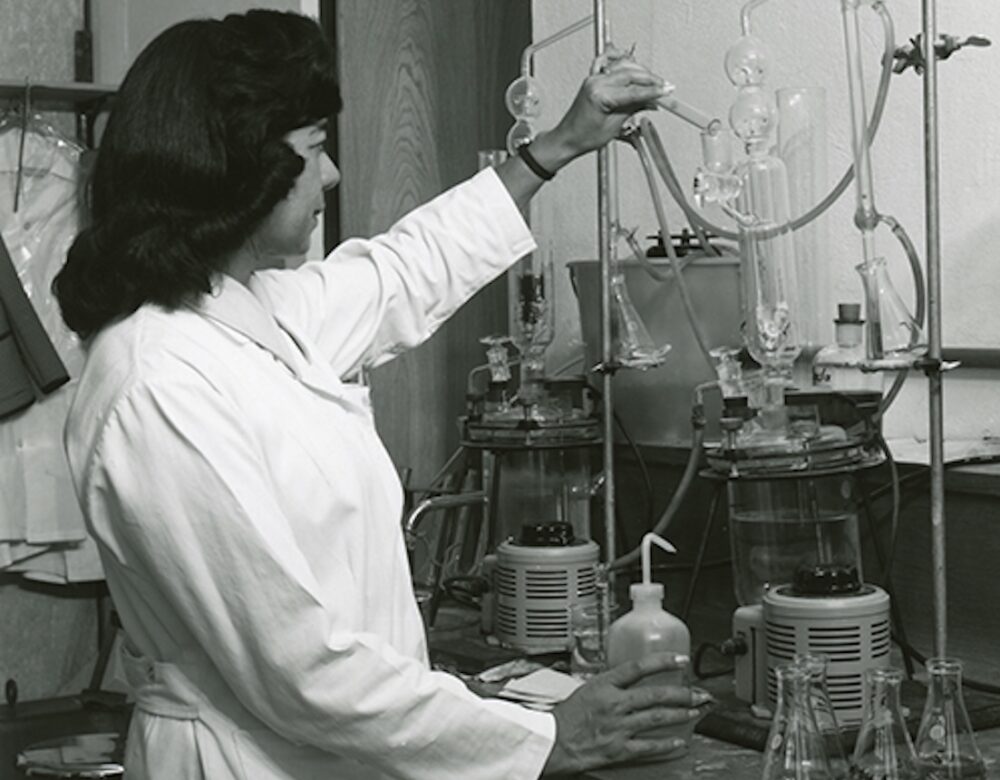
Evangelina Villegas Moreno (1924(5)–2017) was a biochemist who saw an opportunity to create a superfood from the world’s most widely consumed crop. Alongside Indian geneticist and plant breeder Surinder Vasal (b. 1938), she developed Quality Protein Maize (QPM), a type of corn with nutritional values comparable to those of skim milk. This international collaboration facilitated the spread of corn from Mexico to countries around the world. From South America to Asia and Africa, farmers started growing QPM to address famine and nutritional deficiency.
Going with the Grain
Born in Mexico City, Evangelina Villegas Moreno showed an interest in food and nutrition from a young age. She studied the chemistry of living things at the National Polytechnic Institute, earning a bachelor’s degree in biology in 1948. In 1950, she joined the National Institute of Medical Sciences and Nutrition as a chemist. At the same time, she was working as a librarian for the Office of Special Studies (OSS), which oversaw the Mexican Agricultural Program. The OSS was tasked with increasing the quantity and quality of farm products in Mexico, and it was supported in part by the U.S.-based Rockefeller Foundation. There, she was a founding member of the Wheat Industrial Quality Chemical Laboratory in 1957, which sought to ensure that Mexican wheat would be nutritious. In addition to its agricultural and nutritional goals, the OSS cared deeply about training Mexican scientists like Evangelina Villegas, who dedicated the rest of her career to research on the nutritional quality of cereal crops.
Villegas pursued graduate education in the United States with fellowships from the Rockefeller Foundation. She earned a master’s degree in the Department of Flour and Feed Milling Industries at Kansas State University in 1963 and went on to earn a PhD in the Department of Cereal Technology at North Dakota State University in 1967. The work was not easy, but she persevered.
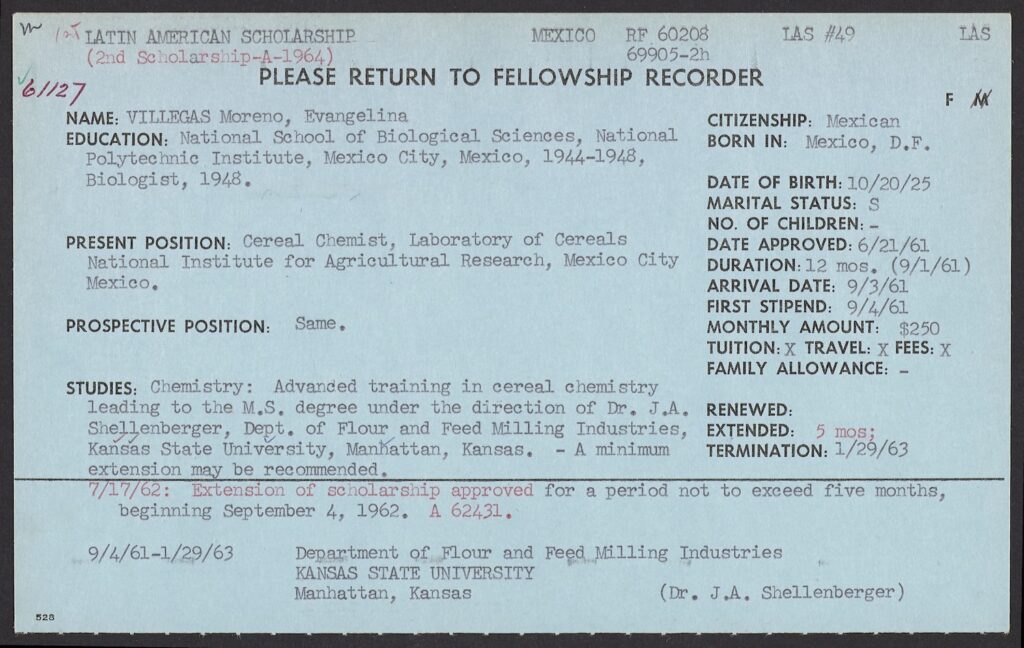
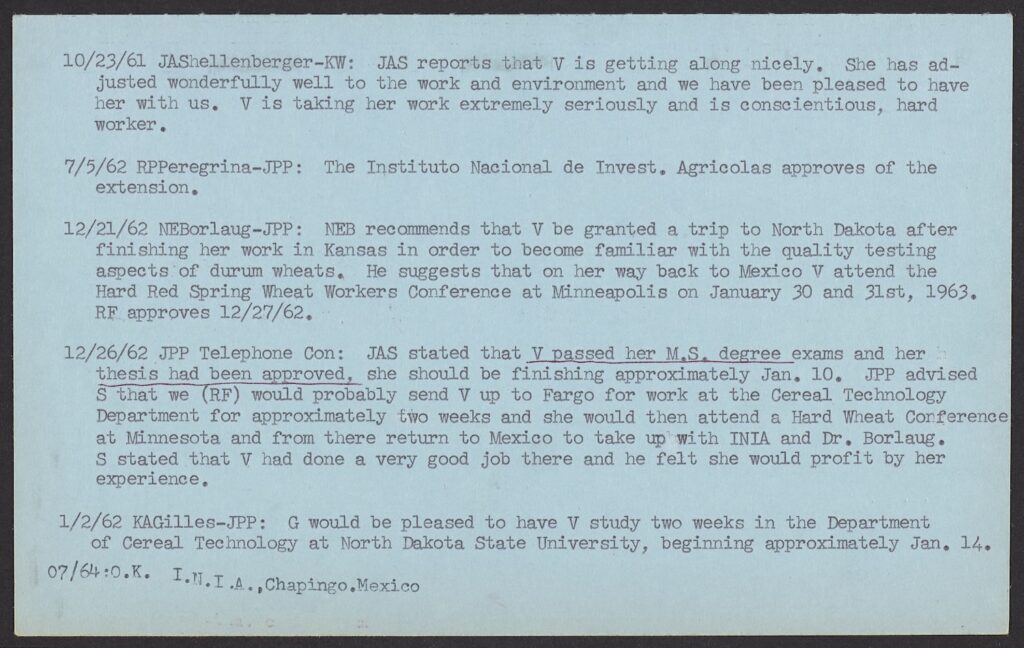
This fellowship recorder card is a key source for biographers: it gives Evangelina Villegas a different birthdate than other sources and it includes direct commentary on her personality from the perspectives of her advisors.
After her graduation, Villegas returned to Mexico as planned. The landscape for research had changed during her six years abroad. The OSS, which promoted Mexican agriculture specifically, had ceased to exist; the International Maize and Wheat Improvement Center (CIMMYT), which focused on global agricultural exchange, took its place in 1966. Now a PhD scientist, Villegas was appointed director of the CIMMYT’s Protein Quality and Nutrition Department.
In this role, she initially analyzed wheat variants produced by Norman Borlaug, a U.S. scientist with degrees in forestry, plant pathology, and genetics. His objective at the CIMMYT was to develop wheat variants that could withstand pests and harsh weather conditions, and Villegas worked closely with him. Not only did the CIMMYT develop techniques for Mexican farmers to increase and improve crop yields, it also became a model for agricultural development programs around the world. Results were so positive that many other countries facing food shortages and malnutrition—India, for example—soon followed CIMMYT’s lead. Borlaug and his team spread semi-dwarf wheat variants and mechanized sowing techniques to India and Pakistan, doubling wheat production in those countries. This was part of what became known as the Green Revolution.
Quality Protein Maize
At the beginning of the 1970s, Villegas teamed up with Indian geneticist and plant breeder Dr. Surinder Vasal to develop new maize variants. Though maize is the most widely grown cereal crop in the world, it can lead to severe malnutrition if eaten on its own. This is because it is low in lysine and tryptophan, two of the nine essential amino acids that the body needs to produce protein.
LEARN MORE
In addition to concerns about protein, some of the vitamins in maize cannot be digested by humans without special preparation. Ancient Mayan and Aztec cooks developed a process called nixtamalization, which involves soaking and boiling corn in alkaline water to unlock its nutritional potential. Listen to “The Ancient Chemistry Inside Your Taco,” an episode from our Distillations podcast. What similarities and differences do you observe between these ancient approaches and the CIMMYT research from the 1900s?
Scientists by this time had already discovered the gene called opaque-2, which they could manipulate to increase lysine and tryptophan. But this discovery had little practical impact at first because opaque-2 maize did not taste good, its texture was chalky, and it was hard to grow. Vasal, who had just taken a postdoctoral fellowship at CIMMYT, started breeding and crossing crops to improve these characteristics. His goal was to identify desired traits (flavor, pest-resistance, etc.) from different breeds and to ensure they were passed on to the offspring of the more nutritious variant. The process was refined, which allowed for a faster and more efficient crossing between the variants and their offspring. Vasal sent the variants obtained in this way to Villegas, who analyzed them for protein quantity, tryptophan content, lysine, and other amino acids. She, in turn, would suggest further modifications, and the process was repeated—as often as 26,000 times in just one year. This back-and-forth exchange lasted for over a decade as the team developed thousands of maize variants.
A team known as the “Bird Boys” also played a crucial role in the development of QPM. This group of local youth was hired to protect experimental crops by scaring birds away from the fields. But they also made observations on how the crops were growing, some of them being so skilled that they were promoted to the rank of master technicians at the CIMMYT. Reyes Vega Ruiz, for example, was said to have “created a new protocol for wheat breeding.”
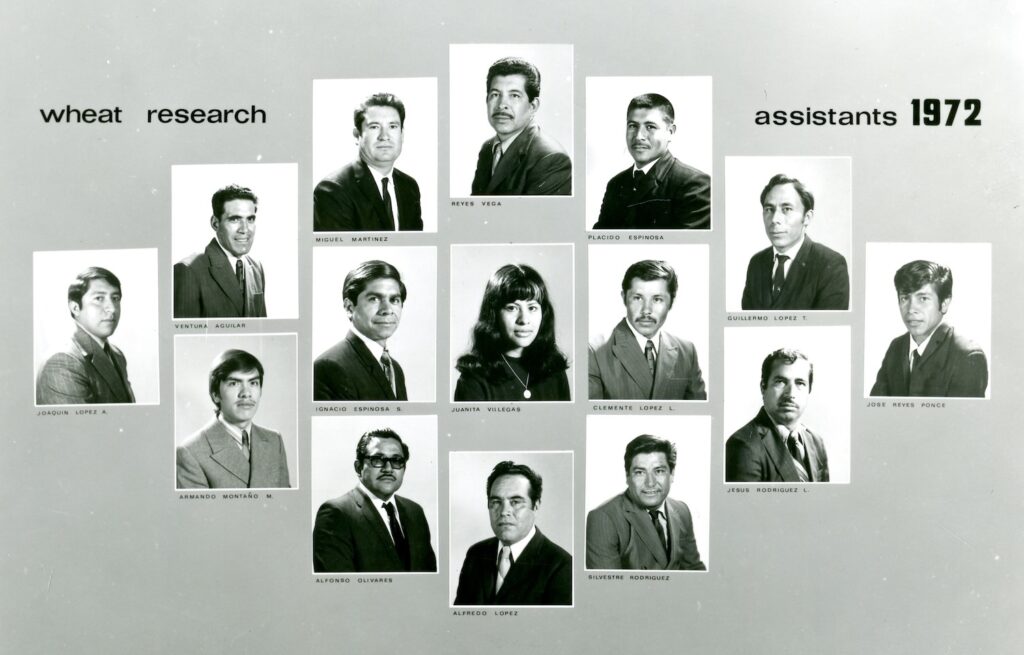
Villegas helped to create a scholarship fund for the Bird Boys, which allowed many of them to finish their schooling and pursue a career in science. Arturo Hernández, another member of the group, used this support to earn a PhD from the University of Minnesota in 1981. His thesis, “Recurrent Selection Methods in Wheat,” describes the careful observations he was making on the length of the seed head while waving off birds in the fields. These observations were vital to the success of CIMMYT research because longer seed heads are associated with higher crop yields.
The benefits of QPM were slow to catch on. In 1973, international agencies like the United Nations and the World Health Organization began to prioritize the importance of raw energy consumption (sugars and fats) over protein content, which reduced interest in breeding higher protein maize. Many believed that it would be more convenient to add protein to the diets of malnourished populations through complementary sources like skim milk powder because such products were already mass-produced and widely distributed. Villegas disagreed. She said, “Quality Protein Maize provides the poor with a way they can improve their diet.” Rather than depending on the continued distribution of international aid, QPM would place the power to improve nutrition directly in the hands of local populations.
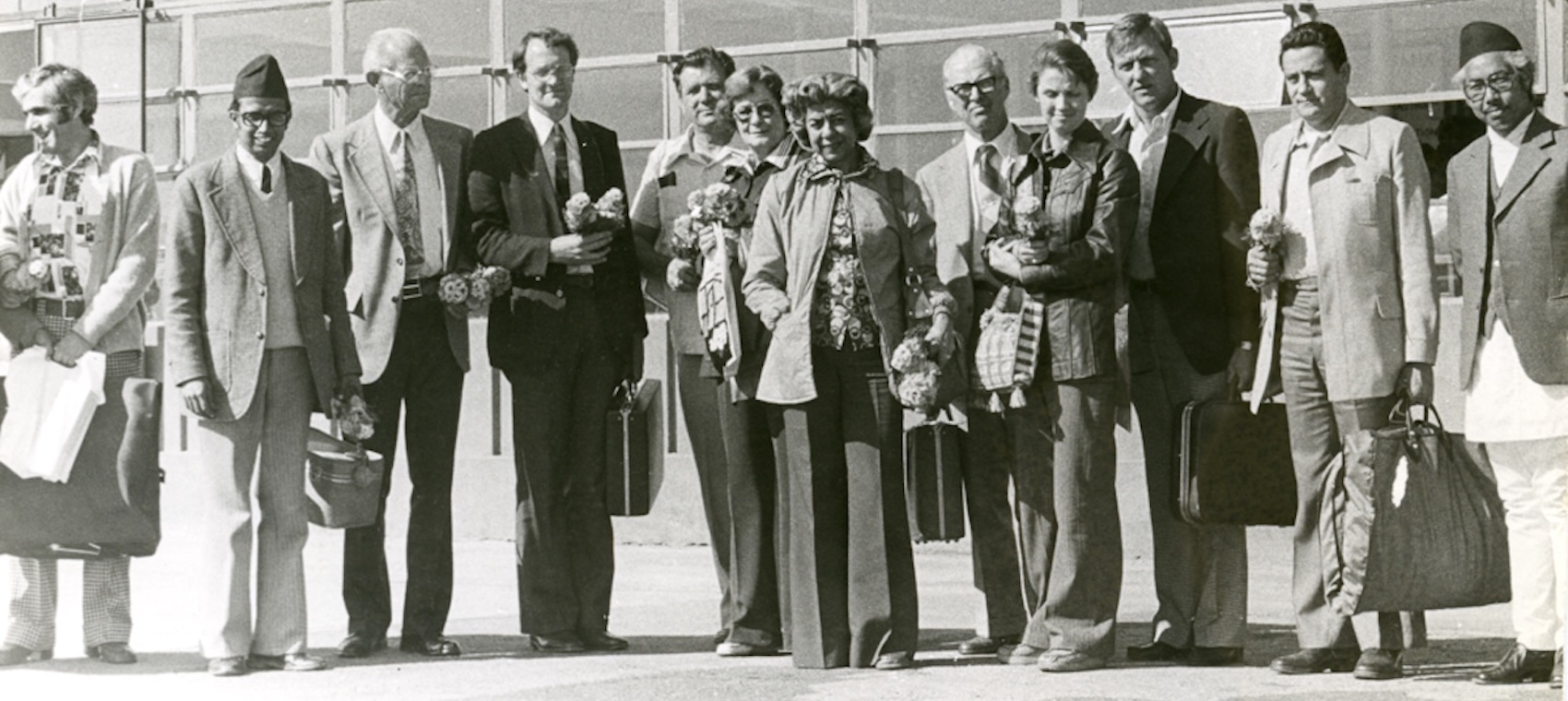
It wasn’t until the early 1990s that CIMMYT received international support and funding to expand its QPM crops to other areas around the world. Ghana and other African countries were among the first beneficiaries of a successful program that allowed them to develop and study QPM. Eventually, QPM crops were planted in Asia, Central America, and Europe with positive results. By 1999, around nine million acres worldwide were covered by QPM, feeding not only adults and children, but also pigs and poultry. Local research led to the development of QPM variants that were better acclimated to the weather. In some areas, such as Ghana and Guizhou, one of China’s poorest provinces, QPM became the dominant crop. Despite these successes, Villegas and Vasal went relatively unnoticed in media coverage of the Green Revolution then circulating in wealthy northern countries.
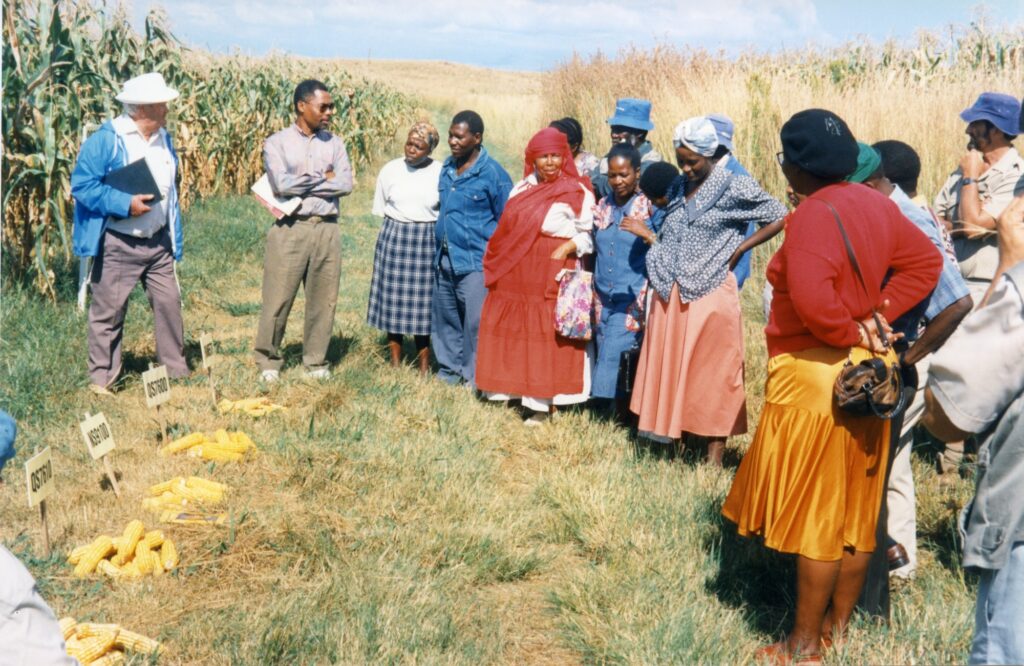
In the second half of the 1990s, Villegas found more opportunities for her work to grow. She nourished researchers and institutions by sharing her knowledge widely, working as a maize and wheat quality consultant for CIMMYT affiliates in Latin America, Africa, and Asia. She cultivated crops and young scientists until 1989, when she retired from CIMMYT. She then joined Sasakawa Global 2000, an international program that aims to teach modern farming techniques in Sub-Saharan Africa. From an international institute rooted in the very soil where maize first originated, Villegas’s work spread to feed people around the world.
Awards and Later Life
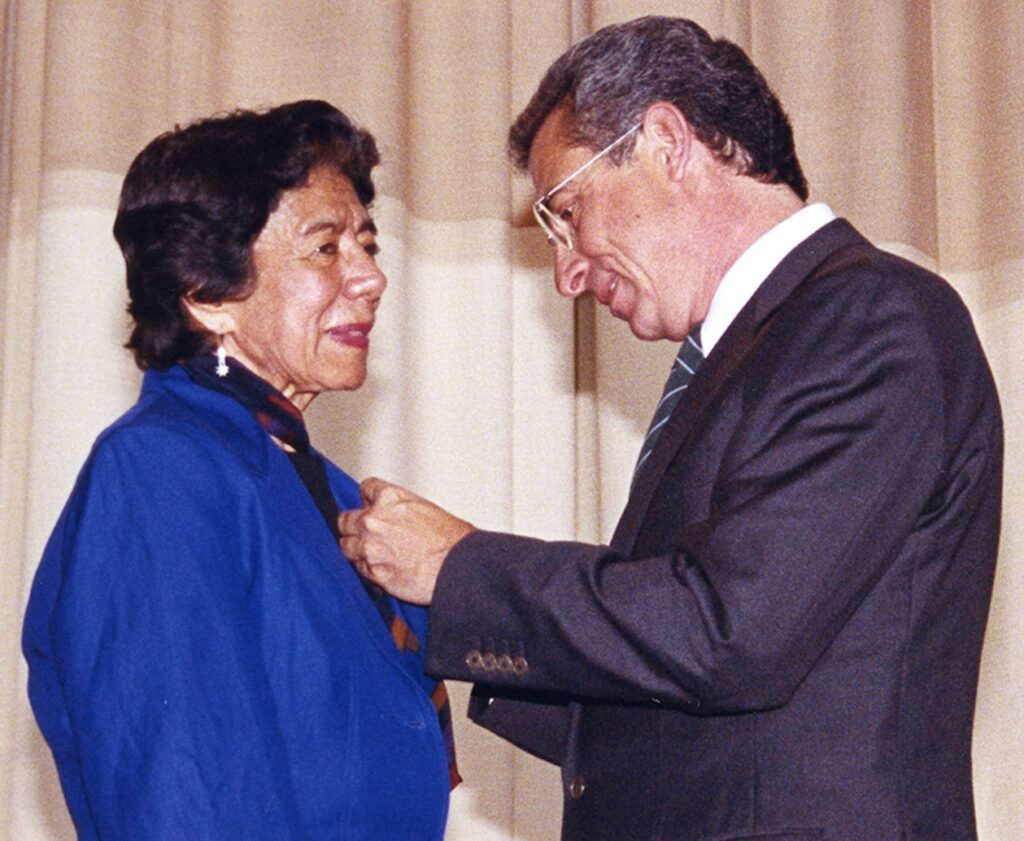
When Norman Borlaug received the Nobel Peace Prize for his work on wheat in 1970, he approached the Nobel Committee to request that they add an award for advances in nutrition and agriculture. His petition was declined, so Borlaug established his own World Food Prize in 1986. Villegas and Vasal were jointly awarded this prize for their work on QPM in 2000, making Villegas the first woman to receive this prestigious recognition.
In an interview on the occasion, Villegas said, “For me, the greatest honor, as a Mexican, would be to see the fields of Mexico overflowing with QPM maize.” Though she collected top honors from the Mexican Women’s Association, the National Institute for Agricultural Research, the National Polytechnic Institute, Kansas State University, and the Autonomous University of Chapingo, she never wavered in her focus on the work at hand.
Evangelina Villegas passed away on April 24, 2017, at the age of 92 in the same city where she was born. To pay tribute to her life’s work, CIMMYT renamed its maize quality laboratory in her honor. During this ceremony, CIMMYT’s former director, Martin Kropff, said, “This center is proud to have counted among its ranks a professional like Dr. Villegas, a pioneering Mexican scientist whose contributions to nutrition and food security will continue to resonate in impoverished regions.”
Today, QPM grows in many countries around the world, providing farmers and communities with the means of self-reliance.
Glossary of Terms
Rockefeller Foundation
Established in 1910, the Rockefeller Foundation is the second oldest major charitable organization in the U.S. It has donated billions to public health and medicine over the years, including controversial support for eugenics research in the early 20th century, which sought to “improve” the human population by manipulating patterns of reproduction.
Back to top
Green Revolution
This term was coined by William S. Gaud, head of the U.S. Agency for International Development, in 1968. It refers to a period in which new practices of agricultural cultivation involving the use of new seed varieties, chemical fertilizers, pesticides, and mechanical equipment replaced traditional farming practices around the world. This led to significant gains in human health but also increased greenhouse gas emissions.
Back to top
Further Reading
Aitziber López, “Evangelina Villegas Moreno: la bioquímica que desarrolló la QPM; ciencia contra la desnutrición.”
Evangelina Villegas, Edwin T. Mertz (1971), “Chemical Screening Methods for Maize Protein Quality at CIMMYT,” Research Bulletin No. 20, CIMMYT.
Gabriela Soto Laveaga (2023), “Worker Once Known: Thinking with Disposable, Discarded, Mislabeled, and Precariously Employed Laborers in History of Science,” Isis 114: 687–899.
Mike Listman, “CIMMYT Renames Lab to Honor Evangelina Villegas, World Food Prize Laureate,” CIMMYT.
Muhammad Amir Maqbool, AbduRahman Beshir Issa, Ehtishaman Shakeel Khokhar, (2021), “Quality Protein Maize (QPM): Importance, Genetics, Timeline of Different Events, Breeding Strategies and Varietal Adoption,” Plant Breeding, 140 (3), 375–399.
World Food Prize Foundation, 2000: Vasal & Villegas, Laureates.
Support
Support for this biography was made possible by the Wyncote Foundation.
You might also like
SCIENTIFIC BIOGRAPHIES
Calvin Ross Sperling
Sperling was a plant explorer who dedicated his life to preserving biodiversity through seed banking for ecological and agricultural purposes.
DISTILLATIONS MAGAZINE
Sesame Plots
Diaspora in twenty-one openings.
DIGITAL COLLECTIONS
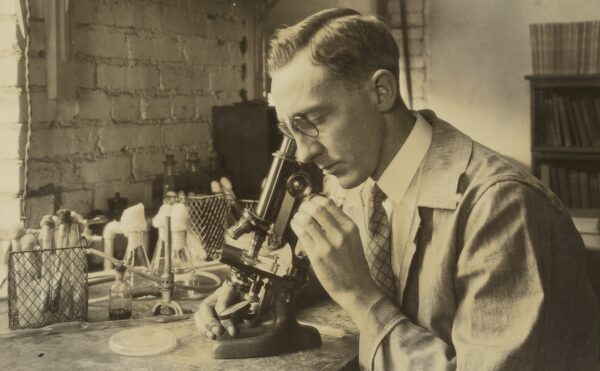
Travis P. Hignett Collection of Fixed Nitrogen Research Laboratory Photographs
Photos of the USDA lab and other sites from the 1920s through the 1950s.