Giambattista Della Porta
This Italian writer, one of the most (in)famous authors of his age, turned magic into scientific knowledge.
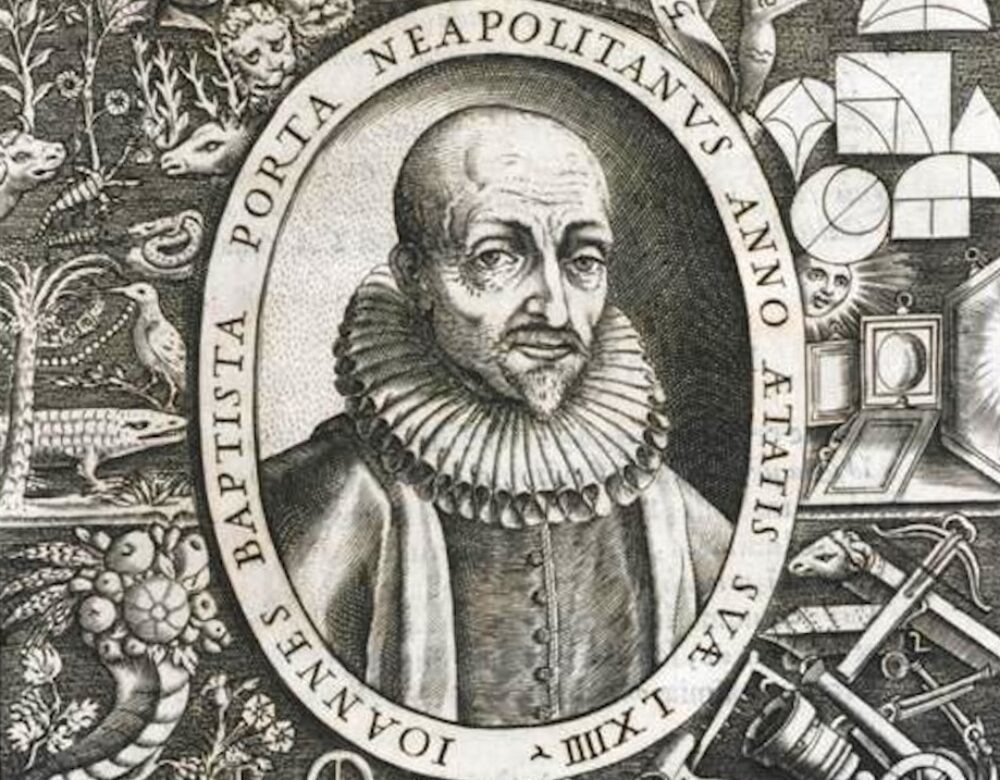
Giambattista Della Porta (ca. 1535–1615), also known as Giovanni Battista Della Porta, was a bestselling author with wide-ranging expertise. He allegedly wrote his most famous work, Natural Magic (Magiae naturalis, 1558), when he was a teenager, and he went on to found Europe’s first-ever scientific society. Even though he claimed to exclusively study natural phenomena of the world around him, Della Porta became associated with the occult and was accused of sorcery. Like many other alchemists of his time—individuals who sought to understand and manipulate matter—Della Porta attempted to discover the “philosophers’ stone,” a mythical substance that could turn base metals into gold and yield the elixir of life.
Natural Philosophy and Natural Magic
Della Porta was born into a wealthy noble family from Naples. His father, Nardo Antonio, had Della Porta and his brothers trained to be young gentlemen. To prepare for their lives as members of society, the boys received a well-rounded education, including lessons in music, philosophy, and mathematics. This upbringing fostered Della Porta’s diverse interests and his expertise in a variety of subjects, including natural philosophy, what we call “science” today.
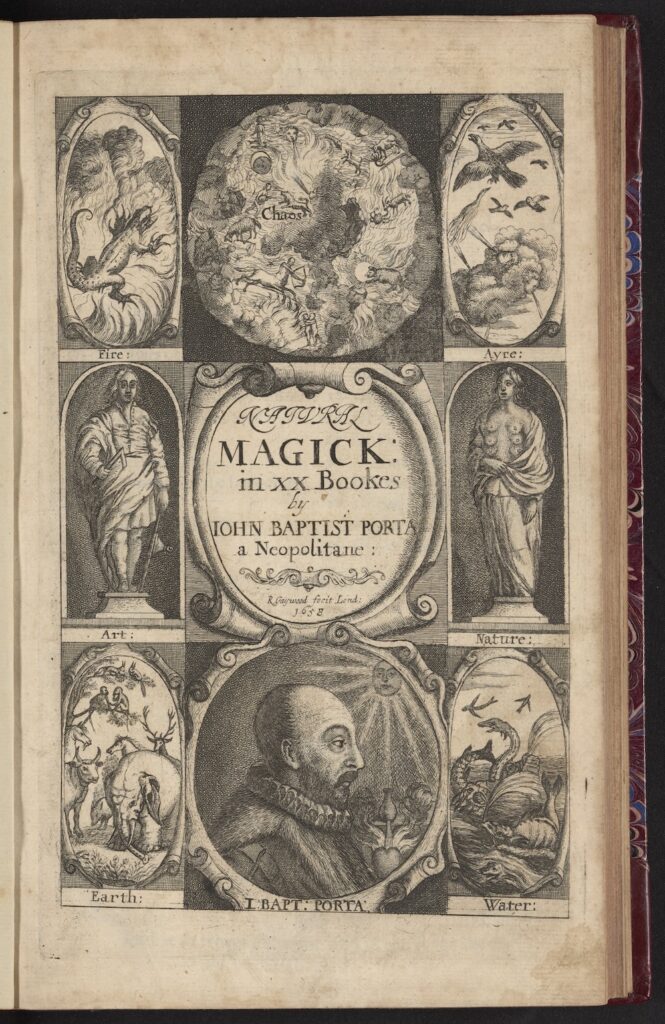
According to Della Porta, he wrote Natural Magic when he was only 15 years old, although this claim has been questioned. He would have been about 23 years old when the book was published. Domenico Pizzimenti, an alchemist and scholar of ancient literature who had been Della Porta’s tutor, later claimed the work was actually his. Regardless, when Della Porta was a teenager, he would have been conducting experiments and studying the occult. Shortly after the publication of Natural Magic, he became internationally famous. He traveled across Europe and even visited the court of the King of Spain, who was a patron of philosophy and alchemy.
In Della Porta’s lifetime, there was no singular, agreed upon definition of “magic.” He defined this practice, which others called “natural philosophy,” by saying:
“There are two sorts of Magick: the one is infamous, and unhapie, because it hath to do with foul spirits, and consists of Inchantments and wicked curiosity; and this I called Sorcery; an art which all learned and good men detest . . . The other Magick is natural; which all excellent wise men do admit and embrace, and worship with great applause . . . I think that Magick is nothing else but the survey of the whole course of Nature.”
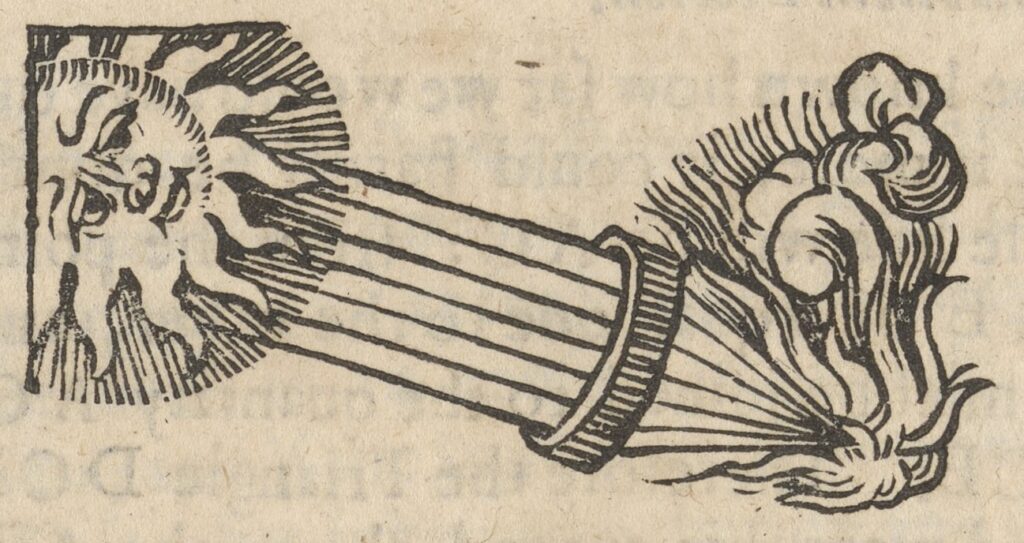
Here, Della Porta identified a difference between evil sorcery, which was not a subject of scientific interest, and the magic of the natural world, which could be subject to experimentation and investigation. He did not deny the existence of evil magic done by sorcerers, but he did insist that his approach to magic was a worthy practice for those interested in knowing how the world worked. For Della Porta, natural magic included things like experiments with magnets and observations on how a concave glass could concentrate sunlight to start a fire.
Natural Magic dealt largely with instruments, philosophy, and Della Porta’s own experiments. It was immediately popular and was translated from Latin into Italian, Spanish, Dutch, English, and Arabic. In continuous demand, Della Porta published an expanded 20-book version of the text in 1589 that covered everything from counterfeiting gold to beautifying women. In this later edition, he also removed some of the most controversial sections of the original text.
A Controversial Renaissance Man
In 1560 when Della Porta was 25 years old, he founded the Academy of the Secrets of Nature (Academia Secretorum Naturae) in Naples. This was the first of many scientific societies that were formed across Europe. Societies like the Accademia dei Lincei and the Royal Society in London served as spaces for community and debate among experimentalists.
In the early stage of his career, Della Porta also published a book on secret codes (De furtivis literarum, 1563), given to King Philip II of Spain, and a work on memory (L’arte del ricordare, 1566), a testament to his broad interests. While he continued to be an active member of the Neapolitan scientific community, he did stop publishing between 1566 and 1583. This was likely due to the growing controversy surrounding his work.
Despite his leadership, Della Porta was not universally beloved by the early scientific community. Jean Bodin, for example, a French legal theorist, accused Della Porta of sorcery in 1580. Bodin’s complaint against Della Porta pointed to the inclusion of a witches’ salve in Natural Magic. Della Porta strongly protested this claim, but he also deleted the recipe for the salve in his 1589 edition of the book.
During Della Porta’s lifetime, the Catholic Church adopted a new approach toward magic and heresy. The Roman Inquisition was established in 1542, and it quickly became responsible for the censorship of books. It was in this context that Della Porta conducted his experiments and published his work.
As a result of his rising fame and his association with magic and astrology, authorities began to scrutinize Della Porta’s writings. He was denounced to the Inquisition, and he went before tribunals in both Rome and his native Naples. In 1574, Neapolitan authorities permanently shut down his Academy of the Secrets of Nature. Although it is not exactly clear when, sometime prior to 1578, Della Porta was arrested by the Inquisition. His arrest and examination questioned his approach to natural philosophy and the extent to which magic demons were involved. Ultimately, his trial resulted in an inconclusive verdict. Della Porta was labelled a “heretic,” but the Inquisition lacked evidence against him.
Inventor, Experimenter, Philosopher
When Della Porta returned to print, he was particularly fascinated with parallel structures and the correlation between exterior appearances and interior characteristics. In 1586, he published De Humana Physiognomonia, which provided an analysis of human intellect and personality types based on facial features and the structures of the body. While now considered a pseudoscience, Della Porta argued that a good analyst could “read” a person’s body like a book, and he compared human features with other animal bodies, such as lions, dogs, bulls, donkeys, and cats. According to his analysis, donkey-looking men would act like donkeys.
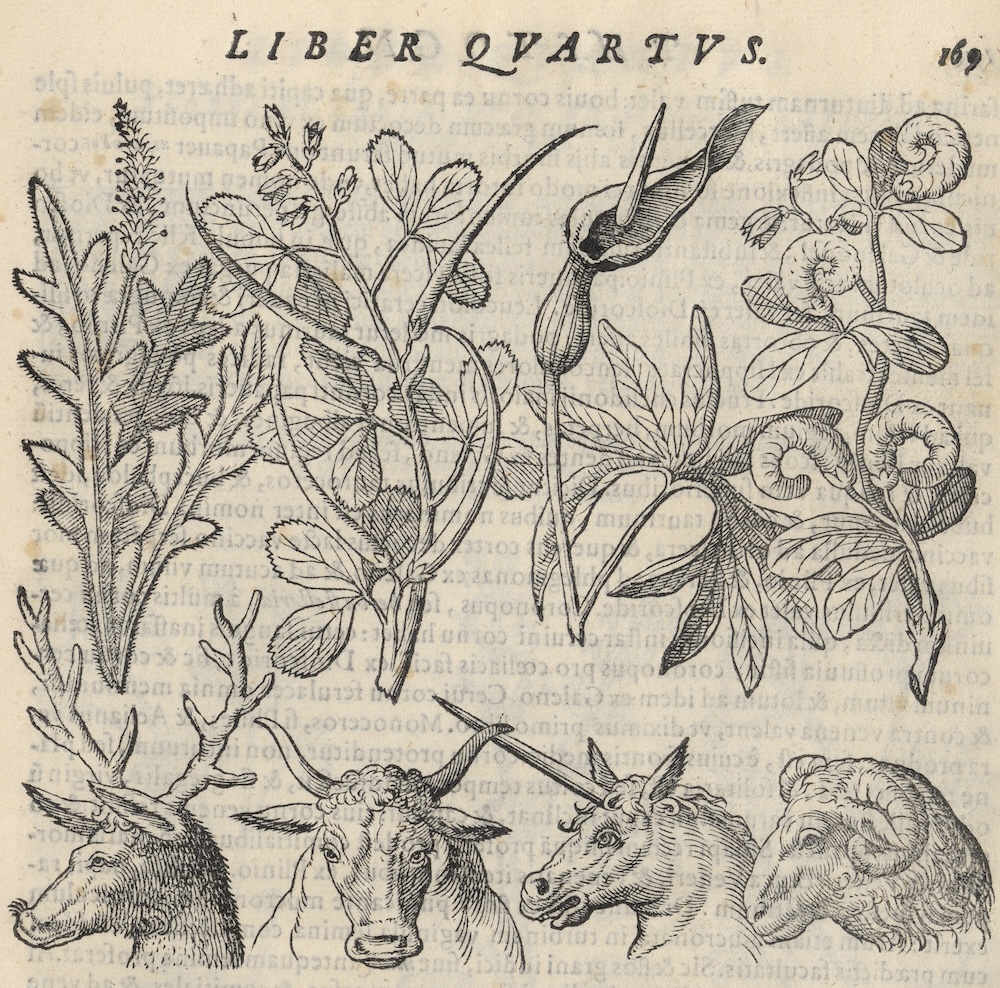
Two years after the publication of De Humana Physiognomonia, Della Porta published Phytognomonica (1588), a book about botany. Similar to his earlier work on human forms, Della Porta argued that the exterior structure of plants could be a guide to their behaviors and medicinal value. He compared the structures of the horns of a deer, an ox, a unicorn, and a goat to those of plants in order to understand botanical properties. For example, the plant with structures similar to the goat’s horns were supposed to be good for clearing out kidney stones, just like other medicine produced from goats.
Della Porta’s publications show that he was working on even more diverse subjects in his late career. Along with his many plays, he published on the physics of light (De refractione, 1593), the mechanics of pressurized liquids (Pneumaticorum, 1601), distillation and alchemy (De distillatione, 1608), and Earth’s atmosphere (De aeris transmutationibus, 1609). He even claimed to have made the first-ever telescope. In the fall of 1614, just before his death, Della Porta began developing a new form of telescope, which was a project that he discussed with Galileo Galilei.
LEARN MORE
Della Porta conducted his experiments and wrote about the natural world before the term “scientist” came into use. Today, his work is often described as walking the line between science and the occult. How do you define science and non-science? Is a hydraulic organ, such as the one shown below left, scientific? What about the distillation device shown below right? Why or why not?
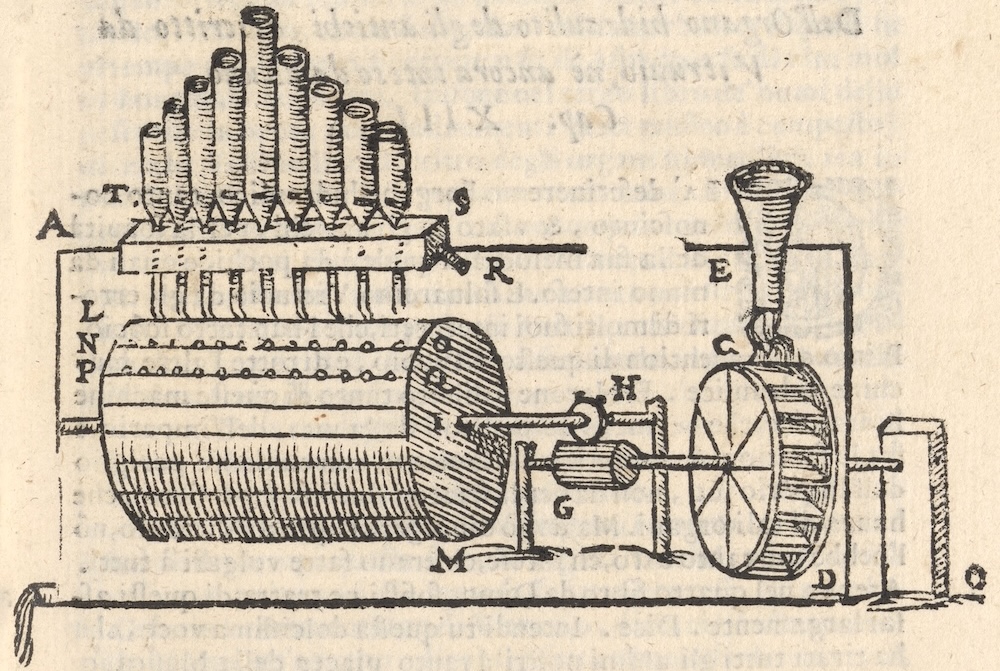
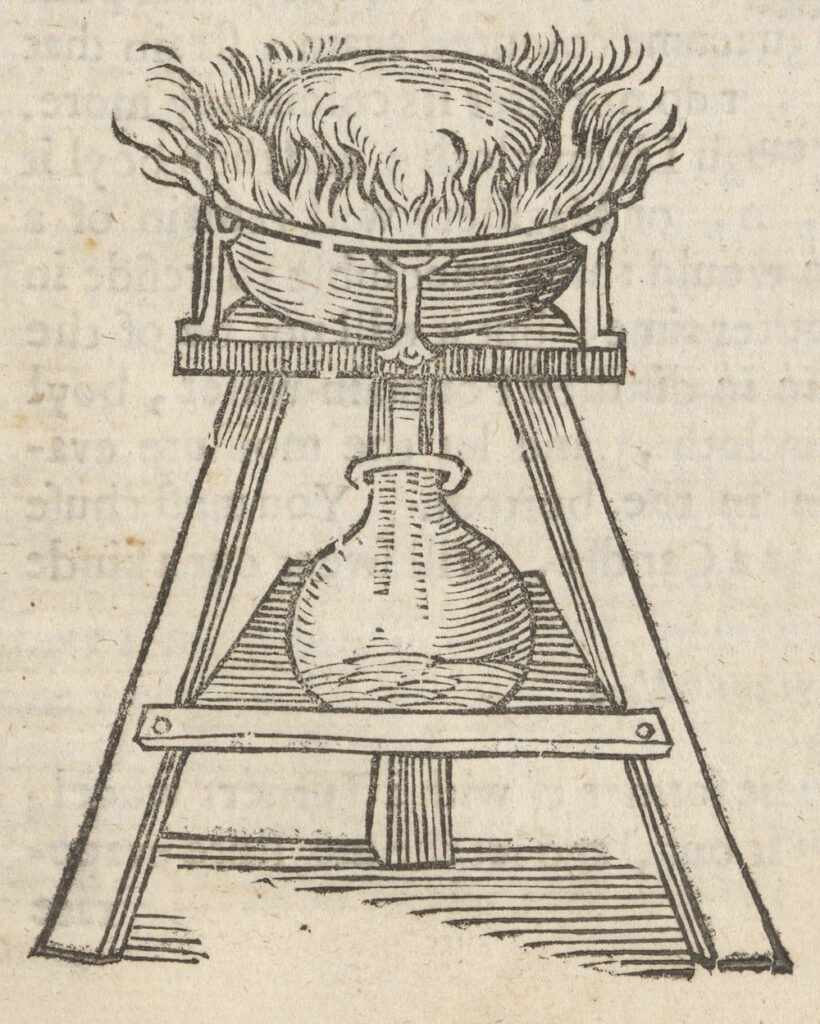
Left: This hydraulic organ was one of Della Porta’s numerous inventions, from I tre libri de’ spiritali (1606). Right: An instrument for distillation using fire in order to create the essence of aqua vitae, or the water of life, from Della Porta’s Natural Magic (1558/1658).
Glossary of Terms
Natural Philosophy
This term was used to refer to the systematic study of nature from ancient Greece until the mid-1800s. It encompassed fields now considered to fall under the umbrella of science including chemistry, physics, and astronomy.
Back to top
Further Reading
Eamon, W. The Professor of Secrets: Mystery, Magic and Alchemy in Renaissance Italy. National Geographic, 2010.
Marcus, H. Forbidden Knowledge: Medicine, Science, and Censorship in Early Modern Italy. University of Chicago Press, 2020.
Tarrant, N. “Giambattista Della Porta and the Roman Inquisition: Censorship and the Definition of Nature’s Limits in Sixteenth-Century Italy,” in The British Journal for the History of Science 46, no. 4 (2013): 601-625.
Voelkel, J. “Laws of Attraction,” 2013.
Zambelli, P. White Magic, Black Magic in the European Renaissance. Brill, 2007.
Support
Support for this biography was made possible by the Wyncote Foundation.
You might also like
EXHIBITIONS
Fire and Gold: The Art of Alchemy (1450-1850)
This permanent exhibition features paintings and rare books that explore the alchemist’s quest to uncover nature’s secrets.
COLLECTIONS BLOG
A Dance with the Occult
What Theosophy reveals about a moment when science and the occult were not so neatly opposed.
DISTILLATIONS MAGAZINE
Of Mummies, Moss, and Magic
A conversation on the weapon salve, a sensational cure.