Blood Work
Processing the William D. Hawker Clinical Chemistry Collection.
Processing the William D. Hawker Clinical Chemistry Collection.
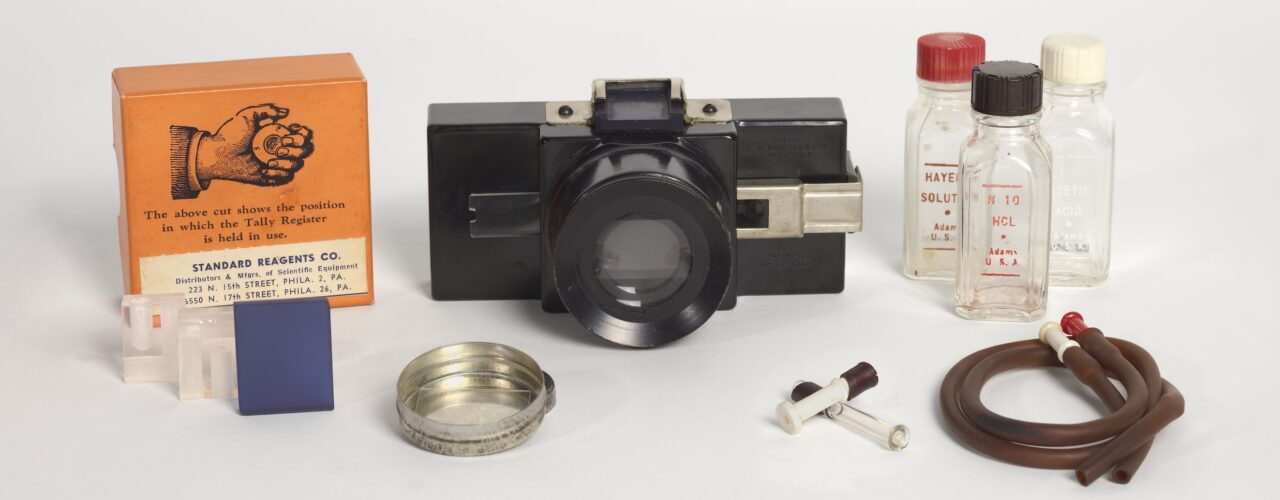
I am no stranger to hemoglobin tests. When I became eligible to donate blood at 16 years old, it became part of my personality. Before donating, a hemoglobin test is mandatory to ensure that the donor has the proper amount of iron in their blood. As a frequent donor, I have witnessed the evolution away from finger pricks to light sensors in a relatively short period of time. This experience drew me to the William D. Hawker Clinical Chemistry Collection and its hematological and diagnostic instruments housed at the Science History Institute.
It takes time for collections acquired by a museum to be made available for research or display. Bill Hawker, a clinical software CEO, began collecting instruments as a way, per his initial catalog of the items, “to document the growth and development of clinical laboratory technology from the late 19th century until about 1960, and to illustrate how that technology permitted biological specimens and biochemical physiology to become increasingly subject to scientific measurement and precision.” Hawker donated these collected items to the Institute in 2017.
The Hawker Collection contains approximately 130 clinical laboratory instruments, per its deed of gift (the legal paperwork used by museums to document the transfer of items into their care). It also includes several manuals and textbooks, which can now be found in the Othmer Library here at the Institute. In my time as a curatorial intern, I’ve been working to process the objects in this collection, with priority for diagnostic instruments. The goal of collections processing is to make the objects Hawker donated discoverable (by creating catalog records and inventories) and useable within the museum collections.
Before even seeing the collection with my own eyes, I began researching the history of early hematology. I scanned the indexes of the collection’s written material and other library resources for manufacturer names I found in the catalog Hawker created, such as Hausser, Zeiss, Duboscq, and Beckman, a name common in the collections. This gave me more insight into what objects to prioritize and how they might be used.
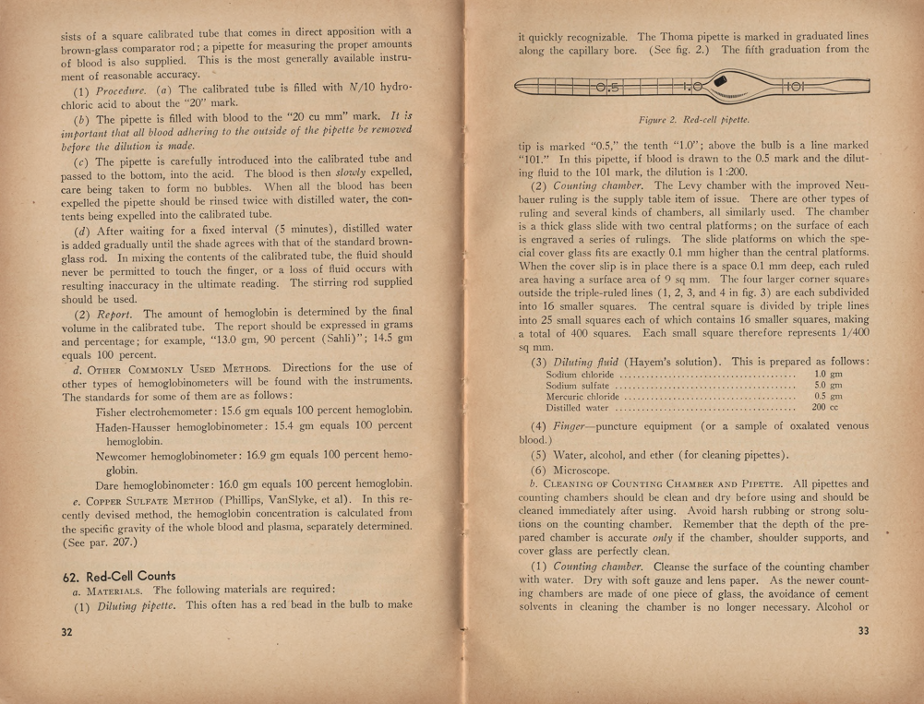
With object research still ongoing, I started working on what I found to be my favorite step of collections processing: condition reports. As I was being trained in this step of the process, the Institute’s assistant collections manager, Erin Gavin, told me that everyone likes to do conditions reports in their own way. Soon, I found my groove, my order of things. I would start by creating a tag labeled with the object’s title and 10-digit ID number, primarily because I’ve always loved a label.
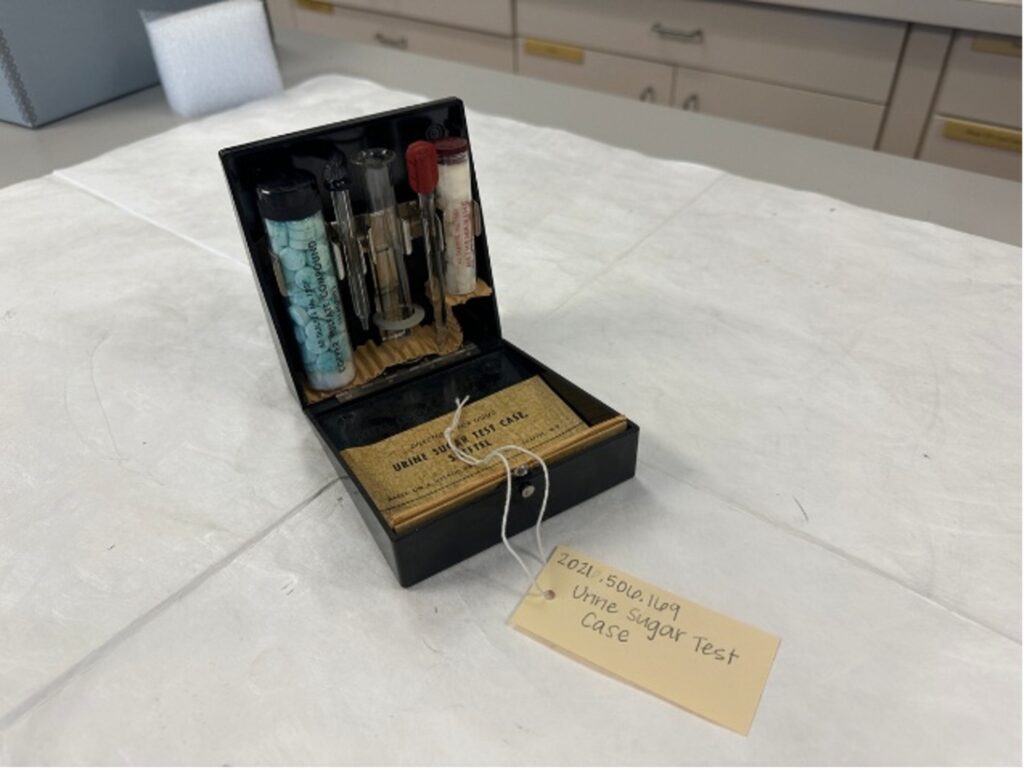
Next, I’d document the dimensions of the object along with other identifying information, such as title, material, and manufacturer. In this collection, almost everything is contained inside a case, meaning that almost every object had additional dimensions to be taken down. At first, I’d get so tripped up by the hinges and clasps, which sneakily added to the final measurements of open cases.
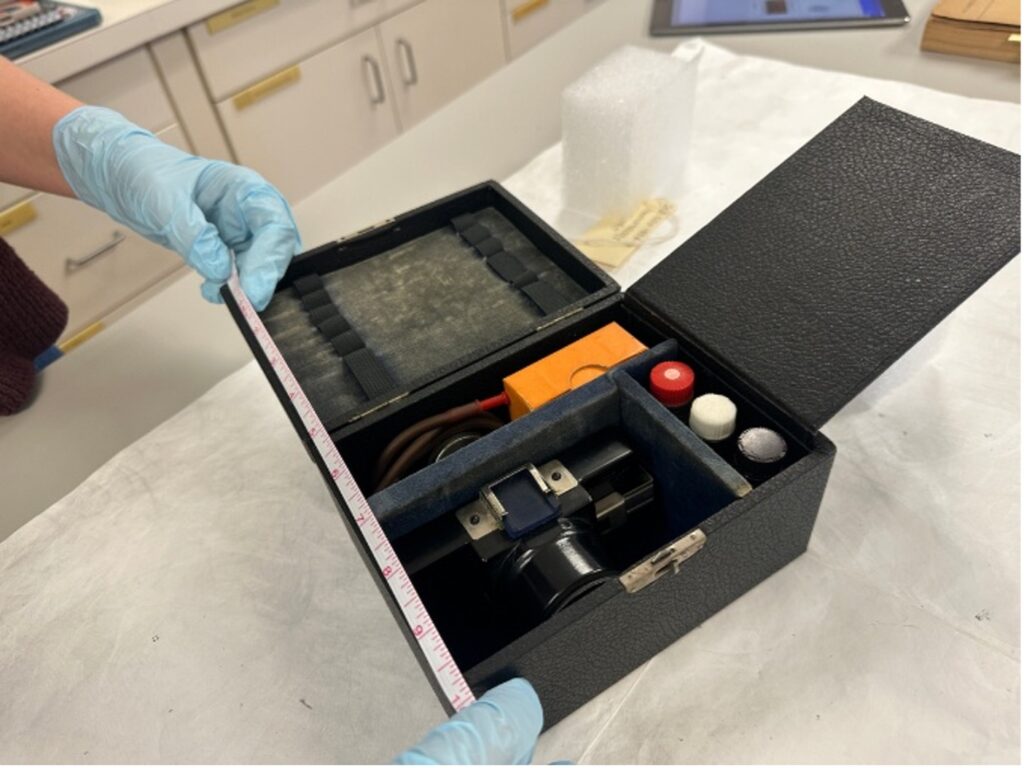
I’d then photograph the object, doing my best to capture an overall view that minimized the number of pictures I’d need to take, given concerns about file size and digital storage space. While taking the pictures, I’d also think about damages that I might need to note in my report later. A lot of the objects in the collection had common “wear and tear”: dings, scratches, and fading. I never saw paper material that wasn’t discolored, and it was common to find metal passively corroded. An old spiderweb at the bottom of a test tube was easier to notice, but other kinds of damage, like distorted glass or rubber, were less obvious. I soon developed an eye for subtle damage that I otherwise might have assumed was just how things look when they’re old.
One mark (called an “accretion” in our condition reports) immediately struck me. In a hematology outfit that included a hemoglobinometer, an instrument that uses colorimetry to estimate the concentration of hemoglobin in blood, a box for a mechanical cell tally counter had been marked with a drawing of a hemocytometer, a completely different method of cell counting than the hemoglobinometer, but one that I had seen in a technical manual during my research. This helped me discover that this hematology outfit had originally included a hemocytometer (and some associated materials) like the one in the drawing. Among all this normal wear and tear, such as the passive corrosion on the counter, was a sign of a real person, of intention.
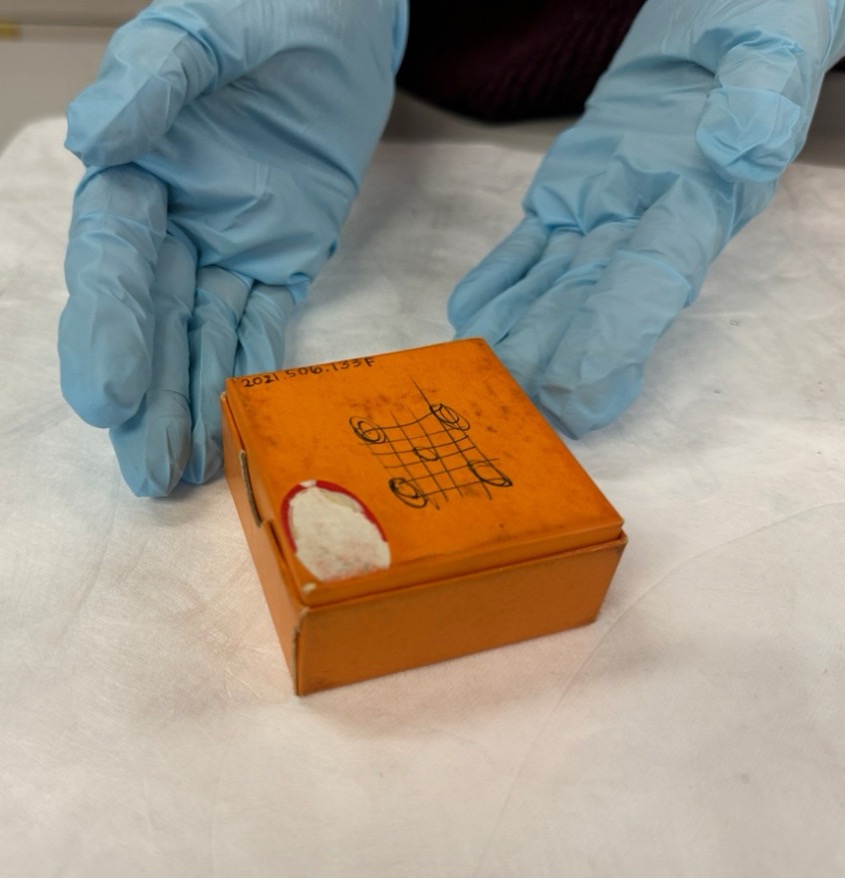
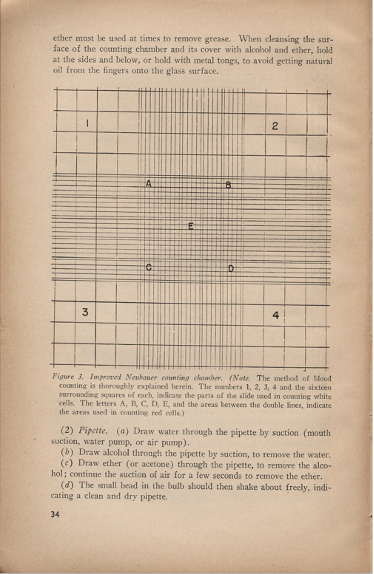
Left: Back of a tally counter box with a drawing of the center of a blood cell counting chamber, ca. mid-20th century; Right: Illustration of a counting chamber, from Methods for Laboratory Technicians, 1946.
As the report and associated images were uploading into the Institute’s file server, I got to work marking the objects with ID numbers to make sure we can still identify them even if they lose their tags. I marked them in discrete parts and gave the barrier coat, ink, and topcoat time to dry before returning them to collections storage.
Finally, it was time for cataloging the objects in the museum management software, PastPerfect. Here, more historical and classifying descriptions take place to prepare the object to be uploaded to the Institute’s collections database. The software can be a bit unintuitive and tedious to use. However, parts of it are exciting, like the hazmat prompt, which is used to denote dangerous materials in the collections. I got to use this designation for two items in the Hawker Collection because they contain chemicals (specifically bromosulphalein, copper sulfate, and methenamine), which is rare for Institute acquisitions. It took me back to my chemistry lab roots by giving me a reason to look at safety data sheets (SDS). An SDS, which is essentially a list of hazards, is a familiar staple in the lab setting but can be helpful for knowing any danger potentially found in museum collections.
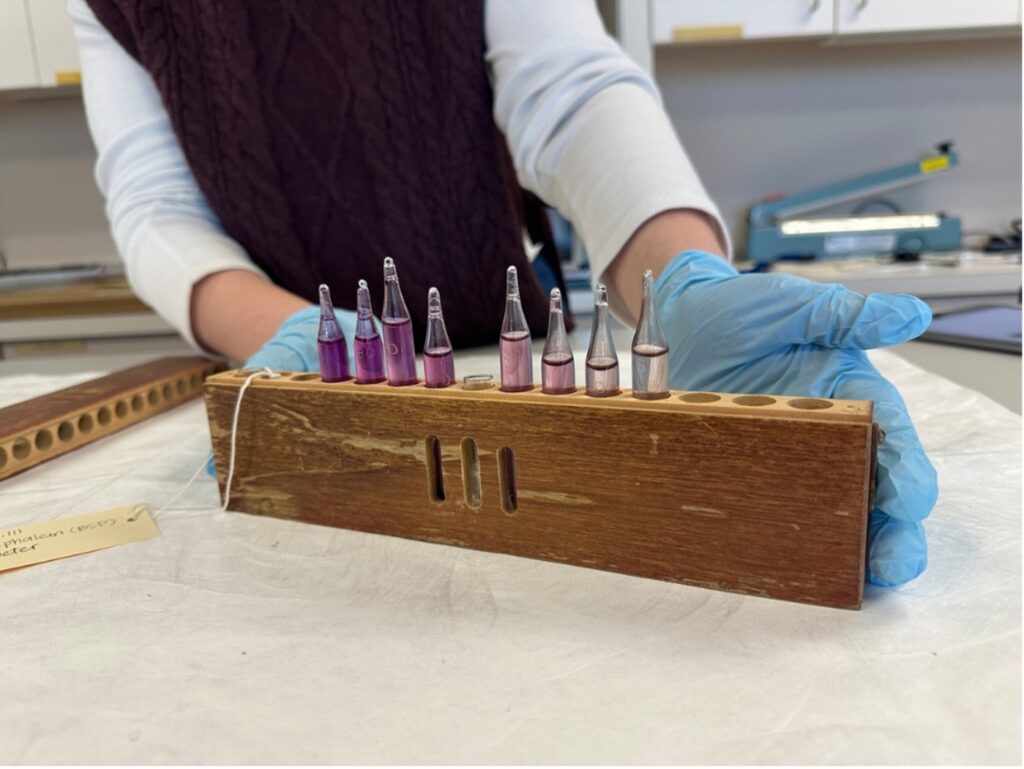
While collections cataloguing may sound dull and mechanical, I found the experience of processing the Hawker Collection to be stimulating and meditative. Objects have lives before they come to a museum, but those lives don’t end when the objects are donated or collected. They are encountered by donors, staff, and in some cases, visitors who continue their stories by interacting with these historical objects in the museum gallery. Yes, there were repetitive steps and duplicative objects in the collections process, but each of the objects had its own history, damage, name, and story to tell.
Featured image: Hemoglobinometer used in the early 20th century to measure hemoglobin levels in blood, ca. 1940.
Bringing the past to life with an obsolete video format.
Highlighting the research projects of our current resident scholars.
How do science books for kids today compare with those that have come before?
Copy the above HTML to republish this content. We have formatted the material to follow our guidelines, which include our credit requirements. Please review our full list of guidelines for more information. By republishing this content, you agree to our republication requirements.