
The Slurry Solution
Carbogel’s post-oil embargo take on “clean coal.”

Carbogel’s post-oil embargo take on “clean coal.”
In the 1970s, the world’s energy economy—a dynamic assemblage of fossil fuels, machines, data, laws, workers, contracts, and corporations—was thrown into chaos. The Organization of Arab Petroleum Exporting Countries (OAPEC) had voted to embargo petroleum exports to countries that supported Israel during the Yom Kippur War, while the 1979 Iranian Revolution caused additional disruption to petroleum supplies.
When the 1970s energy crises are brought up in conversation, many people think of long lines at the gas station and cars inching incrementally toward machines that fill their tanks while gutting drivers’ wallets. But petroleum shortages impacted more than just individual consumers. The power supplies for entire utility companies, electrical grids, chemical feedstocks, and ways of life were threatened.
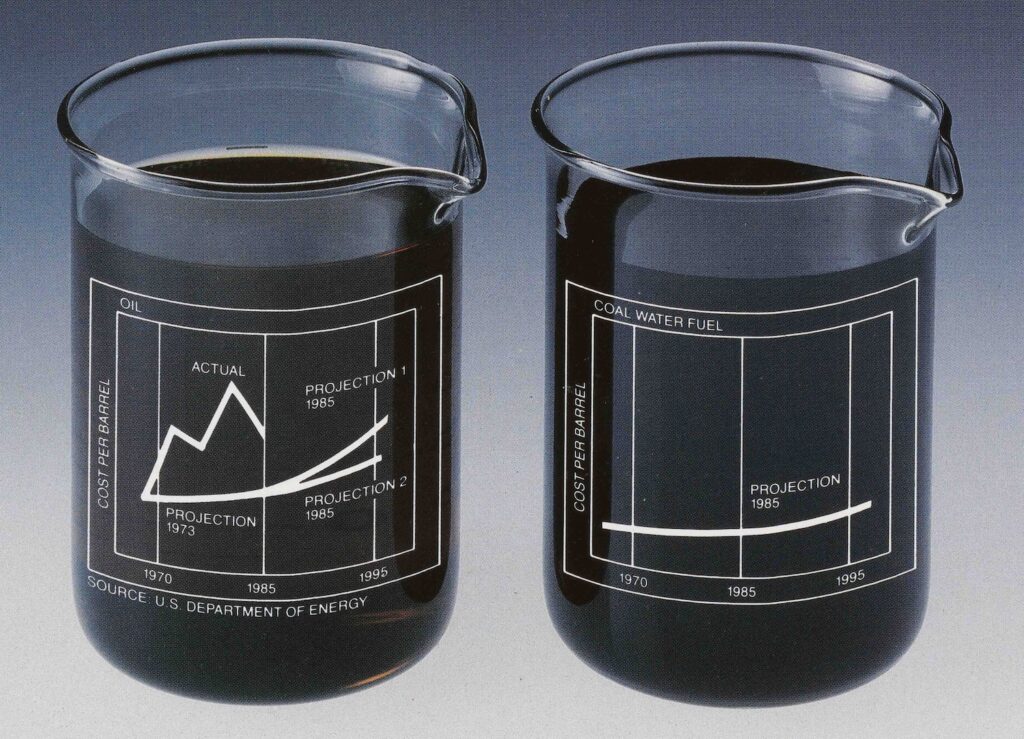
Crises like these required adaptation and innovation. While the shortages abated by the end of the decade, risk-averse energy and utility companies saw the shortages as motivation to fund the development and use of petroleum alternatives.
One of the key petroleum alternatives was (and still is) coal. In the United States, coal production had declined by the 1970s thanks to petroleum’s cheapness and abundance, but rising prices incentivized the federal government and multinational corporations to expand its use. To increase the market for coal, it needed to be easier to transport and use. And as environmental regulations increased, it also needed to be “cleaner” than oil. Achieving these goals meant modifying coal’s chemical and physical properties.
The New Jersey-based fuel development company, Carbogel, Incorporated, founded in 1983, was in the business of developing and licensing methods to slurry coal to create what became known as coal-water fuels (CWFs). Carbogel promised public utilities and industry a “secure and environmentally safe energy supply” that would insulate them from both the volatility of the oil economy and the costs of complying with increasingly stringent environmental controls. CWFs could also be transported via pipelines, a more cost-effective method than railroad coal delivery.
To understand the story of Carbogel—a story of initial promise and ultimate failure—one needs to understand how Carbogel tried (and failed) to capitalize on fears of future oil shortages and anxieties about the economic impacts of emissions regulations by developing and marketing CWFs as environmentally friendly and locally producible petroleum alternatives.
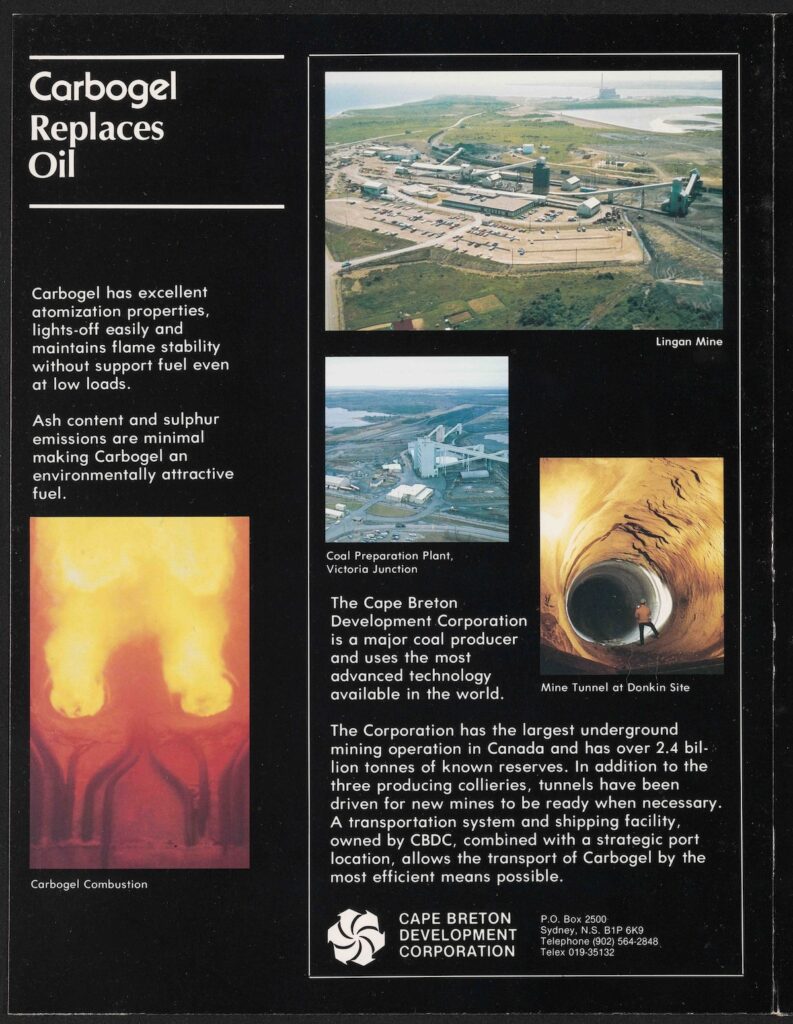
To learn more about Carbogel’s rise and fall, I examined the Records of Carbogel, Incorporated, housed in the archives of the Science History Institute. The collection was donated by Richard M. Goodman, a surface chemist with a long history in coal beneficiation (the process of stripping ash and impurities from coal). Though he spent only a few years as the director of research at Carbogel, Goodman’s rich collection includes lab reports featuring readings from scientific instruments, atomization, and combustion tests; correspondence with its parent companies AB Carbogel and Foster Wheeler and its sister companies Carbogel Japan and Carbogel Canada; advertisements for Carbogel and competing companies’ products; and other materials. The collection highlights how the coal industry, chemical manufacturers, and utility companies worked simultaneously to create a profitable market niche in response to fuel shortages and to changing emissions standards.
In the years following the passage of the Clean Air Act of 1963, coal-firing utilities faced a choice: modify power plants (through, among other methods, the addition of CO2 scrubbers to smokestacks) or burn cleaner fuels. Concerns about emissions were not limited to the U.S., and more countries followed suit by imposing their own regulations. Carbogel’s main goal was to help utility companies across the world develop CWF formulas adapted to their specific needs and local coal stocks, which, in turn, would allow for greater domestic fuel production and energy security.
In 1974, AB Carbogel, one of Carbogel’s parent companies, set out to ease the regulatory, geopolitical, and economic burdens facing utility and coal companies. Their strategy was to develop new, coal-based liquid fuels—and licensing the formulas for those fuels—that mitigated transportation costs, complied with changing environmental regulations, and more or less aligned with the specifications of fuel pipeline and electricity-generating technology.
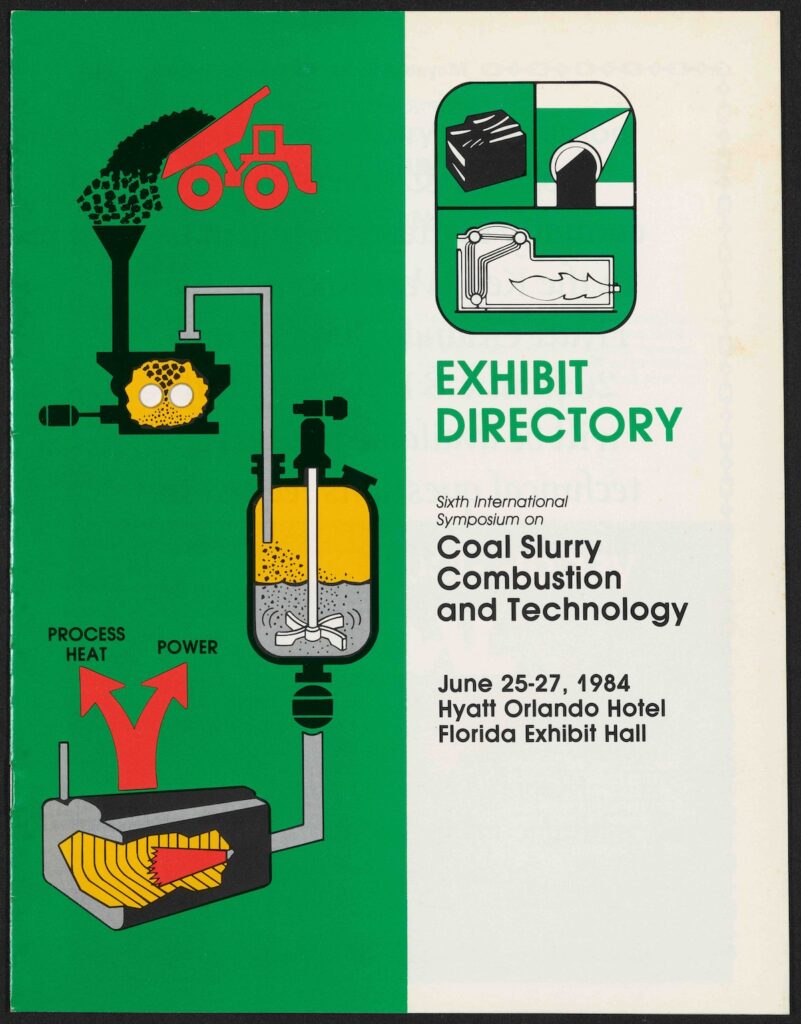
Producing Carbogel required “cleaning” coal, or in coal industry terms, “beneficiating” it: removing sulfur, ash, and other impurities that, when combusted, released pollutants like sulfur dioxide (SO2), particulate matter, and heavy metals. These pollutants, alongside carbon dioxide (CO2) and methane (CH4), were regulated by the Clean Air Act of 1963. Revised acts passed in 1970 and 1977 further strengthened these regulations.
Once coal was beneficiated, it was easier to slurry. That said, slurrying coal was not simply a matter of mixing milled coal into water like hot cocoa mix. The process required several chemical agents. After the milled coal was added to water, it was kept in suspension thanks to proprietary mixtures of surfactants (which made it harder for coal particles to clump up once suspended in water), dispersants (which kept the milled coal in suspension and prevented the CWF from turning into a concrete-like morass), and defoamers (which prevented excess foaming of the solution).
While energy companies and utilities worked to install CO2 scrubbers and other emissions-mitigating technologies, geopolitical crises unfolded that would threaten the very fuel of American life. In response to the 1970s oil crises and anxieties about the economic impacts of emissions regulations, Carbogel would follow the examples of other CWF producers and explicitly market CWFs as the product of innovation caused by challenging questions around energy efficiency, geopolitical security, and environmental regulation compliance.
In the following section, we will see how Carbogel (and the licensees who would produce the fuel on an industrial scale once Carbogel had developed the fuel’s formula) aimed to ensure that coal’s place in global energy markets would persist, even as those markets were reshaped by regulatory regimes, economic conditions, and geological constraints.
As an energy product, Carbogel’s selling points were its fuels’ purported environmental friendliness; its use of locally abundant lignite, bituminous, and subbituminous coal stocks in North America; and the fuels’ fluidity, which resembled denser petroleum products such as No. 6 fuel oil, used to power electricity-generating turbines and maritime engines. These factors became central to the marketing efforts of companies selling CWFs and CWF additives.
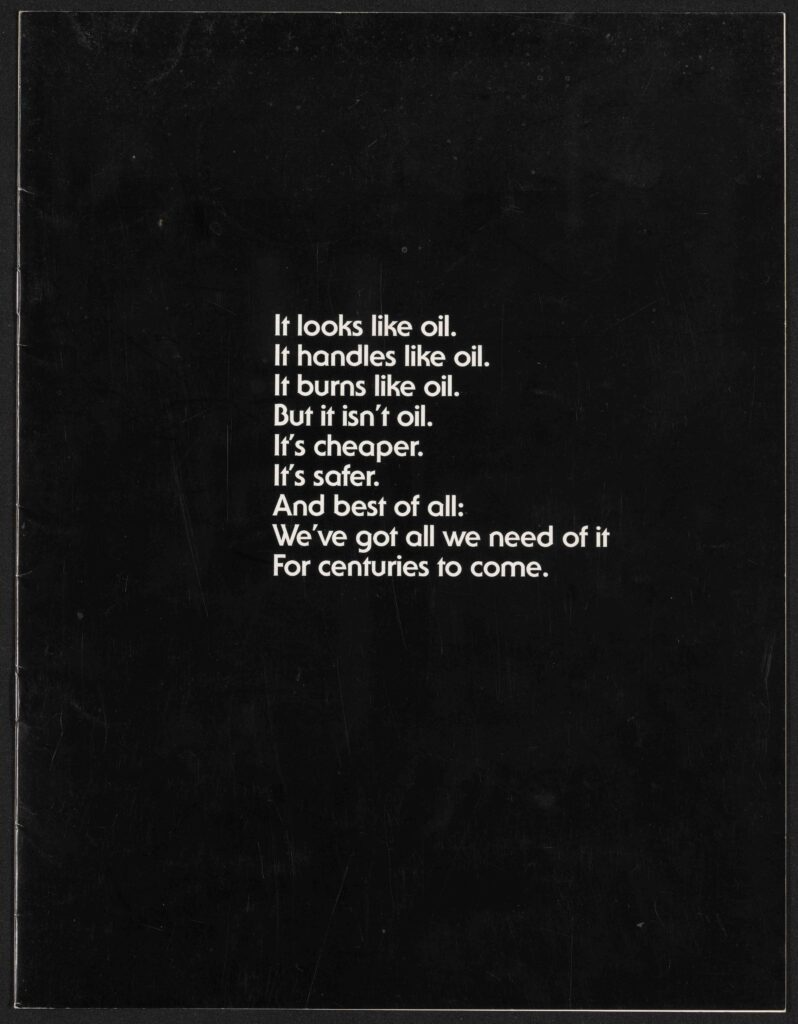
The above ad from Canadian Pacific Consulting Services extols CWFs’ similarities to oil while highlighting its virtues as an oil replacement. The last line stood out to me: “We’ve got all we need of it for centuries to come.” While Canadian oil sands have been in the news lately, Canada’s long history of domestic coal production is highlighted as a source of resilience and growth in this ad.
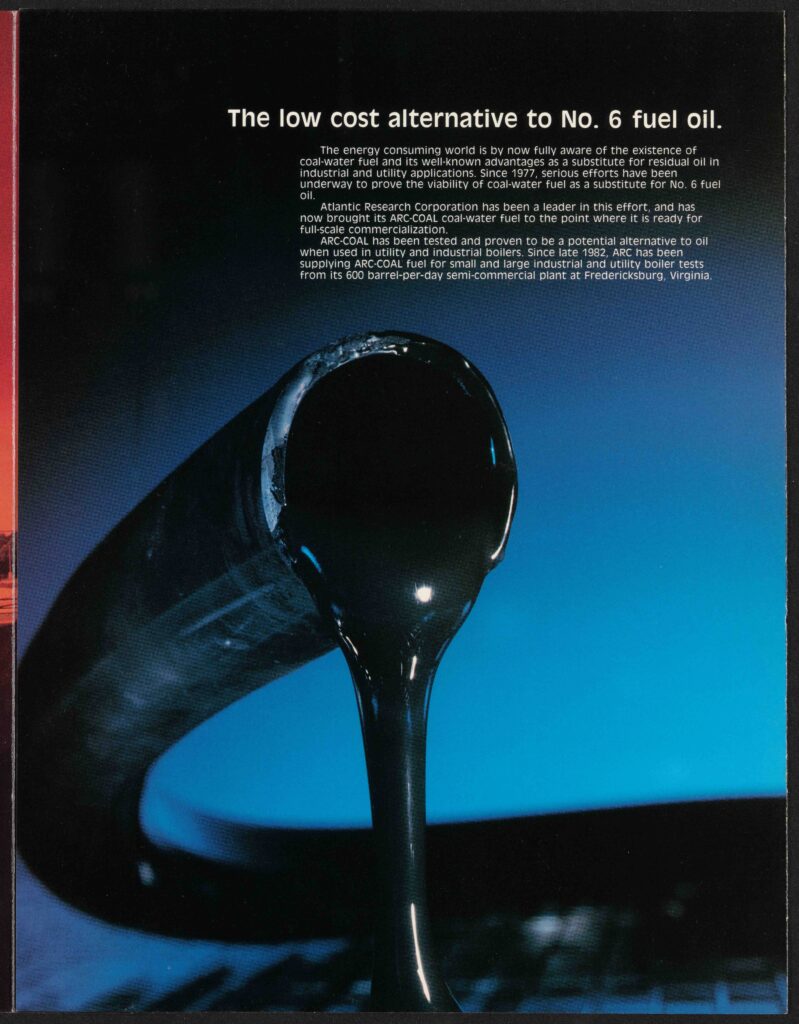
Much like the previous ad, Arc-Coal, a coal-water fuel produced by Carbogel competitor Atlantic Research Corporation, shows the world it has a “low cost alternative to No. 6 fuel oil” coming down the pipe. Once again, Arc-Coal demonstrates how CWFs’ fluidity, its origin from abundant and domestic coal feedstocks, and its energy content make it a good choice in a world defined by energy insecurity.
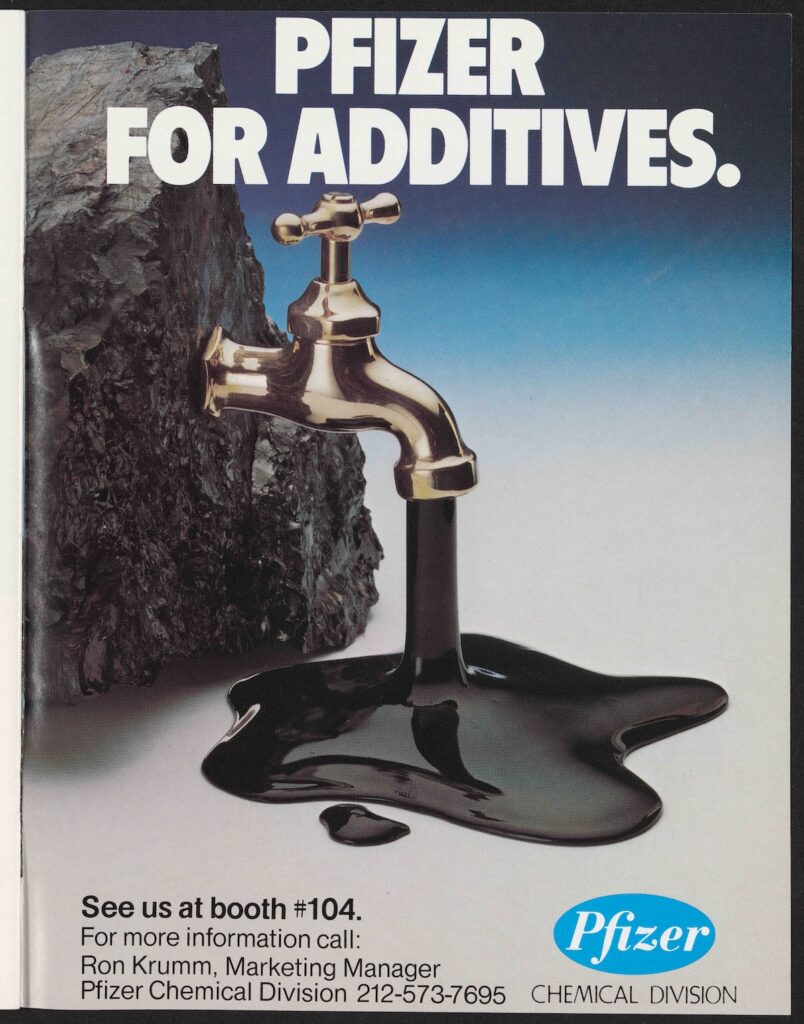
Even Pfizer’s Chemical Division got in on the action! Their additives allowed CWFs to flow as smoothly as they could.
Carbogel competed with other CWF companies, such as the Atlantic Research Corporation, Allis-Chalmers Fluidcarbon Corporation, and others, to secure utility companies, coal producers, and other industries as clients. In these advertisements from the Institute’s archives, CWFs’ material properties are front and center. Look at that flow! Look at that gloss! Picture in your mind the energy in those hydrocarbons!
Despite the company’s efforts, Carbogel and other CWF companies wouldn’t survive the precipitous drop in No. 6 fuel oil prices in the mid to late 1980s, which made it much cheaper than this “clean coal” alternative. Carbogel also faced manufacturing and distribution setbacks that damaged its reputation. One notable setback (notable enough to make it into the background note of the collection’s finding aid!) occurred in 1984 when part of a shipment of Carbogel fuel to the Cape Breton Development Corporation’s coal preparation plant in Nova Scotia was lost after the coal failed to remain in suspension. This occurred because the CWF was not properly agitated. The mishap indicated that CWFs’ material properties (if not managed properly) could restrict Carbogel’s ability to tap into global energy markets.
These combined factors ultimately spelled the end for Carbogel. While Goodman’s donated materials cover the years 1958 to 1990, Carbogel would last slightly longer, finally closing in the early 1990s. In 1992, one corner of a Toronto newspaper was occupied by a disclosure that Carbogel Canada had ceased its operations. While the characteristics of Carbogel’s licensed CWFs (fluidity, energy content, chemical properties, etc.) were central to the company’s marketing campaigns, those same material properties also challenged their use and transportability.
Carbogel’s efforts to develop and license CWFs may have ended in failure, but stories about failed innovations such as this present an increasingly timely story about marketing, geopolitics, and energy.
Featured image: Detail of The Low Cost Alternative to No. 6 Fuel Oil, ad for the Atlantic Research Corporation’s Arc-Coal coal-water fuel, 1984.
Curating an exhibit on student notebooks.
Bringing the past to life with an obsolete video format.

Highlighting the research projects of our current resident scholars.
Copy the above HTML to republish this content. We have formatted the material to follow our guidelines, which include our credit requirements. Please review our full list of guidelines for more information. By republishing this content, you agree to our republication requirements.