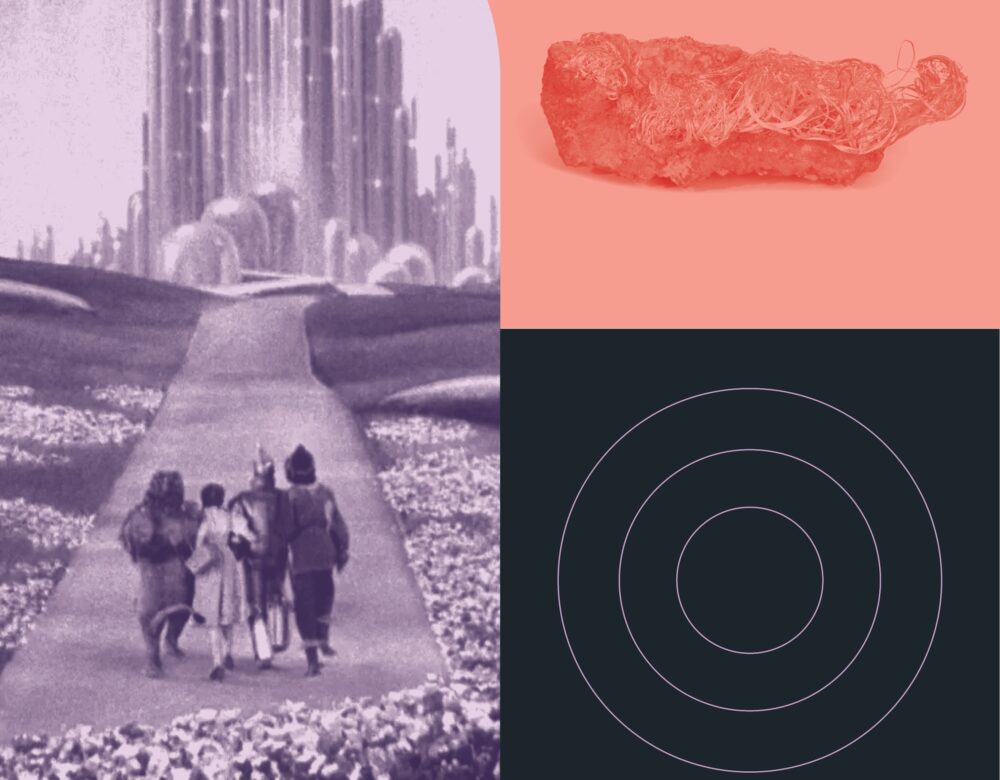
How long have people been pinning their hopes on silver? And what makes it valuable to us? Is it just because it’s shiny and pretty or do we care about its practical uses too? Join us as we go down the rabbit hole to find out how Nevada got its nickname as the Silver State, how The Wizard of Oz might have actually been a hidden story about money, and how a trio of billionaire brothers managed to control more than a third of the world’s silver supply. Along the way, we’ll find the science in a story about a volatile asset.
Credits
Host: Alexis Pedrick
Executive Producer: Mariel Carr
Senior Producer: Rigoberto Hernandez
Sound Design: Seth Samuel
Fact-Checking: Alexandra Atiya
Music by Blue Dot Sessions
Resource List
CBS Reports: Inflation – How Much and How Long?. Hezakya News and Films. May 24, 2021.
Comstock Lode. Encyclopedia Britannica. September 27, 2024.
Comstock Lode. Wikipedia. September 21, 2026.
Cross of Gold Speech. C-Span. September 23, 2011.
Dighe, Ranjit S. The Historian’s Wizard of Oz: Reading L. Frank Baum’s Classic as a Political and Monetary Allegory. Praeger. 2002.
Floor Trader for the Hunt Brothers Opens Up. The Morgan Report. February 9, 2024.
Legrand, Gaelle. Inside the silver squeeze: Why the metal the world forgot suddenly took off. CNBC Explains. November 28, 2025.
Liebhold, Peter. Populism and the World of Oz. National Museum of American History. November 2, 2016.
Meadow, Golden. Silver Demand From Data Centres Is Larger Than Investors Realised. Investing.com. August 20, 2026.
Nation: He Has a Passion for Silver. Time Magazine. April 7, 1980.
NET Journal, H.L. Hunt: The Richest and the Rightest. American Archive of Public Broadcasting. June 3, 1968.
Nevada: The Silver State. 1960s Travelogue Film. Reno, Carson City, Las Vegas, America.
Peter Thomas. The Money Show.
Peters, Savannah. A shortage of silver has prices for the precious metal surging. Marketplace. October 21, 2025.
Radomski, Przemyslaw. A tenth of the silver in electronics is heading to one buyer. Kitco News. August 20, 2026.
Silber, William L. The Story of Silver: How the White Metal Shaped America and the Modern World. Princeton University Press. 2019.
Silver Thursday. Encyclopedia Britannica. March 20, 2026.
Stock Market Drops Sharply Over Tariffs. PIXII News. April 4, 2025.
The Hunt Brothers | Silver Thursday | Silver Market | (1980). The Economics Archives. January 26, 2022.
Transcript
Alexis Pedrick: From the Science History Institute, I’m Alexis Pedrick and this is Distillations, American Vice: Risk, Science, and the American Experience. Last year, our senior producer, Rigoberto Hernandez, found himself gambling–kind of. Here to tell us about it is Rigo himself. Hi, Rigo.
Rigoberto Hernandez: Hi, Alexis.
Alexis Pedrick: So tell me where this all started for you.
Rigoberto Hernandez: Yeah. So this all started when I bought a shiny thing.
Alexis Pedrick: A shiny thing?
Rigoberto Hernandez: Yes, a bar of silver from the internet.
Alexis Pedrick: Oh, boy.
Rigoberto Hernandez: It was kind of nerve-racking. I did read up on reputable sources, but I was kind of taking a leap of faith. Anyway, I ordered ten ounces of silver for $325, and a couple of weeks later, a small, regular looking package arrived at my house. I opened it up and it was this little silver rectangle. It weighed more than a smartphone, but less than a brick for sure. And I just put it on my desk drawer and I didn’t think about it for eight months.
Alexis Pedrick: I feel like we need to back up. Why did you order the silver in the first place? Wait. First of all, you can just buy silver on the internet? And it was just in your desk drawer? Was it–you know what? I feel like this is going to be a long story, and I think you should just take it from here.
Rigoberto Hernandez: I bought that bar of silver in a state of panic. It was April 2025, and Trump had just announced new tariffs.
PIX11 News: …Breaking news on another brutal day on Wall Street. Stocks tumbling across the board.
PIX11 News: If you have a 401k, if you have a pension, bad day to look at it. An even worse day. If you’re trying to sell investments to buy a house in the coming weeks. There’s very real concern this will drive up inflation, especially when it comes to cars and foods…
Rigoberto Hernandez: I was worried about inflation, about groceries costing more, and I was looking for somewhere safe to park my money and also maybe make some money. I realized I wasn’t alone. I stumbled into a whole subculture of silver buyers, sellers, and stackers who had the same hopes and anxieties.
Rigoberto Hernandez: Now that I was in the silver business. It made sense to talk to the pros. A local coin shop became my gateway into that world.
Andrew Edelman: My name is Andrew Edelman and I am the owner of Edelman’s Coins here in Jenkintown.
Rigoberto Hernandez: Jenkintown is a suburb just north of Philadelphia.
Andrew Edelman: So this year we are celebrating our 100th year in business. Family owned for all 100 years. We started out in a pawnshop actually in West Philly, and we moved here to Jenkintown in 1966.
Rigoberto Hernandez: Nowadays, the store is packed to the brim with silver kitchen utensils, gold and silver bars on display cases and art depicting different kinds of currencies. It feels lived in, but not cluttered.
Andrew Edelman: …Collectible coins. A lot of silver bullion…
Rigoberto Hernandez: That’s just when pure silver is pressed into a bar or a coin.
Andrew Edelman: In the last couple of years, selling silver is a really big part of our business. So we have trays with 100 different silver products, bars of all different sizes. The main showcases…
Rigoberto Hernandez: Andrew Edelman meets a lot of people like me who invest money in silver. I told him what brought me into his store in the first place.
Rigoberto Hernandez, on tape: And so then I noticed that the price of the dollar was going down, and then I saw that metals were rising, specifically gold. But I was like, I can’t buy gold. It’s like $4,000. So then silver look[ed] attractive.
Rigoberto Hernandez: Andrew told me that he agrees.
Andrew Edelman: When you buy an ounce of silver or like a 100 ounce silver bar, it’s not like going out and eating a really fancy meal where you spend all this money and then you are left with an empty plate. It’s a good place to have a lot of your wealth just parked there. It has shown over time to be a good, safe, conservative investment.
Rigoberto Hernandez: This was my plan too, to put the bar of silver in my desk drawer and leave it there until who knows when. But then something happened.
David Brancaccio, Marketplace: Silver hit an all time high last week, and it’s gone up more than gold this year.
Rigoberto Hernandez: When I bought my silver, it was $33 an ounce, but the price kept going up. I hadn’t planned on selling so quickly. It was supposed to be a conservative investment, right? A place to park my money. But I got a little obsessive, and I found myself checking the price of silver, sometimes up to three times a day. Each time the price went up, I got a little dopamine hit. I imagine this is how gambling feels. By early December, silver was $60 an ounce. So eight months after I got it, I took my bar out of the drawer and went to Edelman’s Coins to sell it. When I got there, the phones were ringing off the hook. There was literally a line out the door. People wanting to sell silver.
Andrew Edelman: From the months of October 2025 to February 2026. We had many, many days where there was never a break. Where it was constantly busy the entire day from open to close. And that was not normal. I don’t know if I’ll ever be quite that busy again.
Rigoberto Hernandez: I sold my silver bar for almost $600. I made $275 and I was elated. I went right to the Jenkintown Trader Joe’s, and I bought groceries for the week: Korean fried rice, buffalo-style popcorn. Hell, I even bought ground beef.
Rigoberto Hernandez, on tape: I was like, wow. I never win at investments.
Rigoberto Hernandez: This is me telling Andrew how exciting it was.
Rigoberto Hernandez, on tape: But then it’s weird because it’s like, oh, the reason why I’m winning is because the price is…This is not a good reason why I’m winning.
Rigoberto Hernandez: The reason the cost of silver spiked was that the dollar was losing even more value and inflation was going up. It was good for me and my Trader Joe’s shopping spree. But big picture, it was a bad indicator.
Andrew Edelman: When things are crazy around the world, honestly, when things are bad around the world, business for us is oftentimes really good. I’m like a normal, caring person. I would rather the world be really good and very peaceful and people prospering all over the world and me be not quite as busy because I’ll be just fine, right? And so I do feel conflicted when there’s a war in Ukraine and a war in Iran and mass tariffs hurting lots and lots of people where I am really busy and benefiting from that.
Rigoberto Hernandez: I could have ended my silver journey here, but I work for a history of science podcast and I have a habit of bringing my work home. Of asking questions like: how long have people been pinning their hopes on silver, and how does this connect to the ways that we’re thinking about risk this season? And how does science fit in? Where did we first find silver and how did we get it out of the ground? Does silver have any practical uses that made it valuable, or did we just decide it’s special because it’s shiny and pretty? I learned a lot of things like how Nevada got its nickname as the Silver State, how The Wizard of Oz might have actually been a hidden story about money, and how a trio of billionaire brothers managed to control more than a third of the world’s silver supply. I went down a bunch of rabbit holes and they took me in some unexpected directions.
Chapter One: The Goldilocks Metal
Rigoberto Hernandez: Silver is number 47 on the periodic table. AG. Right smack in the middle, one row above gold. It’s a highly malleable metal. It’s also resistant to corrosion, which is why it’s been used for thousands of years to make jewelry, utensils, and coins. This is Andrew Edelman again.
Andrew Edelman: You know, in ancient Greece, they were using gold as the highest denomination of their coinage, followed by the silver coins. And then the third most was the copper and the bronze coins, because they realized even in 500 B.C. that the earth does not have many of these metals.
Kris Lane: Mining is a one off. You dig in the ground and you find so much silver, and once it’s taken out of the ground, that’s it. There’s no more there.
Rigoberto Hernandez: This is Kris Lane, the author of Potosi: The Silver City that Changed the World.
Kris Lane: Silver has always kind of been in that sweet spot between gold and copper, that it’s just rare enough, but not too rare. Could gold have played that role? Probably not. Simply because it’s rarer in Earth’s crust.
Rigoberto Hernandez: Historically, the largest deposits of silver in the world have been in Bolivia and in central Mexico.
Kris Lane: The chemistry of the underlying crust allowed for high concentrations of silver minerals, some gold as well, but silver in particular, to be more abundant in parts of the Americas and easier to refine than in any other part of the world.
Rigoberto Hernandez: So what’s special about these places?
Eric Nystrom: The short version is that it’s a place where there’s a lot of connection between the deep parts of the earth and the surface.
Rigoberto Hernandez: Eric Nystrom is a historian at the University of Nevada, Reno.
Eric Nystrom: So it’s not quite volcanoes, although there’s maybe some of that, but it’s more like hot springs. And these hot springs carry minerals up from deep below the Earth’s crust. And they sort of work their way through the cracks in the rock. Well, it helps if the rocks have been, you know, cracked. Obviously faults and things like that.
Rigoberto Hernandez: All that shaking brings minerals to the surface, and the places with the most silver also have a lot of earthquakes. The silver in Bolivia and Mexico is also more pure than other parts of the world.
Kris Lane: So you do have silver deposits in Central Europe, China, and even India.
Rigoberto Hernandez: Kris Lane again.
Kris Lane: But they’re usually locked up in sulfur minerals and other compounds with arsenic and antimony. These are elements that, when you add them in a deposit, make it very difficult to get the silver out.
Rigoberto Hernandez: In the United States, the realization that the earth has only so much silver drove the same kind of rush that gold did, but it didn’t happen in California. It happened in the Silver Hills of Nevada, and it involved a man with a giant ego and a crazy nickname.
Chapter Two: A Man Called Pancake
Bonanza: On the 8th of June, 1859, two prospectors uncovered the rich deposits of ore that changed the destiny of the small settlement and of the state. And it was because of discoveries such as this that Nevada got its nickname, the Silver State.
Rigoberto Hernandez: Here’s how it happened.
Eric Nystrom: In the early days of the California Gold Rush, miners imagined that maybe there would be sort of a heart of gold in the mountain.
Rigoberto Hernandez: This is Eric Nystrom again.
Eric Nystrom: Like the caramel at the center of a candy or something like that. And from that heart was where all this eroded gold might come from. It’s that concept, actually, that gives us the name of the “mother lode” where the California Gold Rush took place.
Rigoberto Hernandez: You’ve probably seen all the photographs from the California Gold Rush. Bushy bearded men panning for gold in riverbeds, waiting for gold flakes to reveal themselves.
Eric Nystrom: That’s called placer mining, where the gold eroded out of the rock and it appears like Fruity Pebbles in your cereal.
Rigoberto Hernandez: But this is not usually how silver mining goes, at least not in Nevada.
Eric Nystrom: Once in a while it looks like that. But most of the time it’s trapped in that rock. Where we would imagine that gold sort of looks shiny, there’s something attractive about it if you see it there, silver doesn’t work like that. Silver oxidizes readily in the presence of the air. So at best it looks kind of dull gray, but it can also look sort of bluish. It can look almost black, depending on what other minerals it’s combined with at the time.
Rigoberto Hernandez: That was the reality that gold prospectors were walking into when they arrived in a place we now call Virginia City, which is about 35 miles outside of Reno, Nevada. They were looking for gold and were totally unaware of the silver fortunes underneath their feet. That is, until 1859, when they found something promising.
Eric Nystrom: In a place called Gold Canyon. They worked their way up these little ravines and eventually found a hill that seemed to be eroding out quite a lot of gold in it. And so they staked claims on this hill, which eventually was called Gold Hill.
Rigoberto Hernandez: There they met a Canadian miner named Henry Comstock, who people call “Pancake.”
Eric Nystrom: Because he was too lazy to make bread. He would just make pancakes instead.
Rigoberto Hernandez: America’s relationship with silver started with this man, Pancake.
Eric Nystrom: He was maybe a little mentally unstable, according to folks who knew him. And he was kind of a little bit of a bully, a little bit of a braggart, right? He was the best and he was the “this” and he was the “that.”
Rigoberto Hernandez: So when Pancake saw the two prospectors, he lived up to his reputation and confronted them.
Eric Nystrom: Comstock came rushing up the canyon and said: oh, oh, oh oh, this is–I’ve claimed this spring. This belongs to me. I’ve got a ranch.
Rigoberto Hernandez: This scene is actually depicted in the classic Western show called Bonanza.
Bonanza: Greetings, gentlemen. Henry T.P. Comstock brings you greetings and salutations. Did you gentlemen file a legal claim for this particular piece of land?
Bonanza: Legal claim? What kind of a question is that?
Bonanza: A simple enough question, friend. You didn’t file a claim. You’re trespassing on my property. I’m requesting you to move on.
Bonanza: Oh, Mr. Comstock, you can’t do a thing like that. You only just got here.
Bonanza: Son, the law’s the law. The law says a man don’t file a claim. He ain’t got any more right than a tinker.
Bonanza: Now, you Wait a minute. You just wait a minute.
Eric Nystrom: So he was pushy and he said, you need to cut me in on this discovery.
Rigoberto Hernandez: So maybe you’re wondering why this Pancake guy was able to lie about owning land and get away with it. Well, the reason was that there were no rules. What I’ve been calling Nevada was not an official state yet. In 1859, the territory had been part of the US for about a decade, after the Treaty of Guadalupe Hidalgo ended the war with Mexico. Technically, it was part of the Utah Territory, but it was so far away from the seat of power in Salt Lake City that there wasn’t really a functional government.
Eric Nystrom: They basically said that there’s not law in this area. We will form our own. Think of it as little democracies and they would have meetings and write up rules. Most of the rules were about who could claim what.
Rigoberto Hernandez: And this worked for a while, because for a long time there wasn’t much there people wanted.
Eric Nystrom: There was nothing there. Nothing at all prior to the discovery of the mines. And so then Comstock sold his part of it pretty early, but he stuck around for a few years. And he would tell anyone who might listen, and plenty of people who didn’t listen: he was the one who discovered it. It was due to his genius, and he deserved the credit. And so enough, people who didn’t really know all the backstory heard that, and it was eventually called the Comstock Lode.
Rigoberto Hernandez: This mine would become the biggest discovery of silver in America. It transformed the state and the region.
Eric Nystrom: Virginia City was created by and for the mines. The real peak is with the discovery of the big Bonanza, which was found in the consolidated Virginia and the California mines, and that was found in 1873. And really it lasted for almost nine years, that part of the lode.
Rigoberto Hernandez: Virginia City didn’t exist before the discovery of the Comstock Lode. Within a few years, it had a population of 4000, and within a decade it had ballooned to more than 25,000. Many of the people it attracted were immigrants looking to work in the mines.
Eric Nystrom: You had a tremendous number of foreign-born in the early part of the Comstock history. In the 1860s, something like a third of the population was born outside the United States. And then by the height of the Comstock in the 1870s, some estimates suggest that it was almost two thirds of the population was not born in the United States. The biggest ethnic groups were from Ireland and from a part of England called Cornwall, which had a long history of underground mining. So they had skills and they were really prized by the mines.
Rigoberto Hernandez: But they weren’t the ones getting rich.
Eric Nystrom: Most of the capital that was available to invest in these mines came from San Francisco. So there’s a long-standing understanding that the Comstock really built San Francisco.
Rigoberto Hernandez: California investors acted like the venture capitalists of their day. Even if no one used that term back then. Some of them got rich from the 1848 California Gold Rush. Others were merchants or bankers. Remember, San Francisco was the economic engine of the West. By this point they were flush with cash. These investors would front money to the mining companies. If the company struck gold, or silver rather, then they reap the profits. But when things didn’t go well, they had to fund the companies so they could survive and try again. Sometimes it paid off, sometimes it didn’t.
Eric Nystrom: If you wanted to invest in the companies that owned these mines, you had a difficult time figuring out who you could trust to give you an honest assessment of what was going on with the mine.
Rigoberto Hernandez: And a lot of stockbrokers took advantage of that. They might claim to own ground right next to a famous mine, but that didn’t necessarily mean anything.
Eric Nystrom: The fact is that the Comstock lode, the mineralization, was uneven. It was chocolate chips. It wasn’t a chocolate cake. You could have a really rich, productive mine located right next door to a piece of ground that was worth nothing whatsoever except for on the stock market. And they would sell this really worthless stock.
Rigoberto Hernandez: And this really gets to the heart of it.
Kris Lane: Mining towns are about hope and hype.
Rigoberto Hernandez: This is Kris Lane again.
Kris Lane: There’s just enough hope that we can do this. But we need the hype or else we won’t make that extra jump.
Rigoberto Hernandez: Eventually, the whole thing started slowing down. By 1878, there was hardly any aura left. Because remember, silver is a finite resource.
Eric Nystrom: It doesn’t matter whether that was 150 years ago. Or if that’s yesterday. You can’t grow more ore. So these mines simply got worked out. And so eventually Virginia City declined permanently. The mining never completely disappears. But it’s nothing at all like it once was.
Rigoberto Hernandez: The Comstock Lode Bonanza reminded me about my own silver speculation journey when I saw my bar for a nifty $275 profit. I felt like a financial genius. I felt like I was capitalizing on hype, but this wasn’t new. 160 years ago, more than 20,000 people felt it too, and they chased the hype to the mountains of Nevada. And it wasn’t just miners who pinned their hopes on silver. Farmers and industrial workers also chased silver down a yellow brick road.
Chapter Three: The Wonderful Wizard of Oz
Rigoberto Hernandez: One of my favorite discoveries I made in the Silver Rabbit hole is its connection to an iconic American film.
The Wizard of Oz: Toto, I’ve a feeling we’re not in Kansas anymore.
Rigoberto Hernandez: The Wizard of Oz has inspired countless Dorothy costumes, a gingham blue dress, a picnic basket, and a tiny dog.
The Wizard of Oz: Aren’t you forgetting the ruby slippers? The slippers? Yes. The slippers.
Rigoberto Hernandez: But in the 1900 book that the film was based on, Dorothy’s slippers are silver, not Ruby. The Wizard of Oz was one of the first color films so it makes sense that they went with red, sparkly shoes that would look great on screen. But the shoes might have been silver in the book for a reason. One theory, created by a former high school history teacher named Henry Littlefield, argued that the book’s author, L. Frank Baum, was selling a story about money and class struggle in the late 1800s.
Mitch Sanders: Henry Littlefield published an essay in 1964 called “The Wizard of Oz Parable on Populism.”
Rigoberto Hernandez: This is Mitch Sanders, a coin collector and columnist who does market research.
Mitch Sanders: It could operate at a couple of different levels, right? Like The Wizard of Oz–it’s a story about friendship. It’s a story about perseverance. It’s a story about self-reliance. But Littlefield’s thesis was that it’s also operating at another level.
Rigoberto Hernandez: He argued that it was a story about American economics. Littlefield worked out who each character represented.
Mitch Sanders: You have Dorothy, who sort of represents the American public as a whole. It’s her journey.
The Wizard of Oz: I am Dorothy, the small and meek.
Mitch Sanders: But along the way, she encounters Scarecrow. So, you know, an agricultural figure.
The Wizard of Oz: I haven’t got a brain, only straw.
Mitch Sanders: She encounters the Tin man representing industry.
The Wizard of Oz: The tinsmith forgot to give me a heart. No heart? No, heart.
Rigoberto Hernandez: And the allegory keeps going. But first, we need a little economic history. In 1873, the US adopted what was called the gold standard. Imagine your paper money is like a ticket. You could take that ticket to the bank and trade it for real gold anytime you want it. And because of that, the mint could only print as much paper money as they had gold to back it up.
Mitch Sanders: And the idea–this goes back to ancient times–is that monetary stability comes through a constraint. We cannot create more gold. We cannot create more silver. We can find it, but it’s fundamentally constrained as a physical commodity.
Rigoberto Hernandez: This system prevented inflation, and it worked pretty well until the Civil War, when all of a sudden we needed a lot of money more than we had backed up in gold, because war is expensive.
Bradley Hansen: And so to help finance the war. One of the things they do is they basically printed money.
Rigoberto Hernandez: This is Bradley Hansen, a professor of economics at the University of Mary Washington in Virginia.
Bradley Hansen: And during that time, you couldn’t stay really on the gold standard because you were saying: this is money. But you couldn’t convert it into gold.
Rigoberto Hernandez: After the war, we went back to the gold standard. But this caused deflation, which was especially hard for farmers.
Bradley Hansen: Farmers typically relied upon debt, and they’re constantly repaying loans with money that is worth more than the money that they borrowed when deflation takes place.
Rigoberto Hernandez: Imagine you’re a farmer and you take out a loan for $100 to buy seeds. But then deflation happens, and the price of the crops you’re selling drops. You still have to pay back the original $100, but now you can only sell your crops for $70. This created a lot of anxiety. So some people started thinking about how silver could help. Because silver might not be as valuable as gold, but there’s a lot more of it.
Rigoberto Hernandez: What about a system where the paper currency was backed by both gold and silver? This was known as bimetallism. You could still print a ton of money, but there’d be less deflation. But not everyone was on board. The bimetallism side was backed by populists, and they argued that it was the big banks that wanted to keep the gold standard in place because it benefited them, but it hurt regular people. And this hit a nerve because the 1890s was a time of extreme economic upheaval.
Bradley Hansen: Estimates suggest that unemployment was relatively high, probably double digit unemployment during parts of the 1890s. Some people actually referred to it as the Great Depression before the Great Depression of the 1930s.
Rigoberto Hernandez: This all came to a head in the 1896 presidential elections.
Bradley Hansen: Money was such a big deal. It was the first thing on the party platforms of both the Democratic Party and the People’s Party, and it was second only to tariffs in the Republican platform.
Rigoberto Hernandez, on tape: It’s all coming together.
Rigoberto Hernandez: The Democratic nominee was William Jennings Bryan, a bimetallism advocate.
Mitch Sanders: William Jennings Bryan. He’s known for being young. He’s known for losing the presidency three times.
Rigoberto Hernandez: This is Mitch Sanders again.
Mitch Sanders: But he’s also known for one of the most famous political speeches in American history, which is the cross of gold speech.
William Jennings Bryan: You shall not press down upon the brow of labor this crown of thorns.
Mitch Sanders: You shall not press down upon the brow of labor, this crown of thorns.
William Jennings Bryan: You shall not crucify mankind upon a cross of gold.
Mitch Sanders: You shall not crucify mankind upon a cross of gold.
Rigoberto Hernandez: Bryan lost the election. Some people called him a coward, likely because of his antiwar stance. But there’s a popular belief that it was also because he didn’t take a stronger stand against the gold standard. And all of this brings us back to The Wizard of Oz.
The Wizard of Oz: Lions and tigers and bears.
Mitch Sanders: She encounters a cowardly lion.
The Wizard of Oz: Oh my!
Mitch Sanders: And the Cowardly Lion is considered to be William Jennings Bryan himself.
Rigoberto Hernandez: And this makes sense once you know more about the real life William Jennings Bryan.
Ranjit Dighe: He was sometimes compared to a lion.
Rigoberto Hernandez: This is Ranjit Dighe, a professor emeritus in economics at SUNY Oswego.
Ranjit Dighe: Even looked a little bit like a lion with his hair flowing right out and everything.
Rigoberto Hernandez: And then there was the silver itself represented by Dorothy’s shoes, which, remember, were silver in the book. And then, of course, there was the yellow brick road.
Wizard of Oz: Follow the yellow brick road. Follow the yellow brick road…
Rigoberto Hernandez: The yellow brick road represented the gold standard.
Ranjit Dighe: The yellow brick road gets you to the seat of power, which could be Oz, could be like Washington, D.C. And the yellow brick road is not easy to walk on. Parts of it are a bit patchy, but Dorothy gets these silver shoes and the munchkins tell her they have this incredible power that we don’t quite understand. And then Dorothy, walking on her silver shoes along the yellow brick road, you know, is able to walk much better than she could otherwise.
The Wizard of Oz: We’re off to see the wizard, the wonderful wizard of Oz. We hear he is a whiz of a wiz, if ever a wiz there was. If ever…
Mitch Sanders: And ultimately, when they get to the Emerald City, she encounters a wizard who is a pretty ineffective politician. You know, pay no attention to that man behind the curtain.
Wizard of Oz: Pay no attention to that man behind the curtain.
Mitch Sanders: He’s a figurehead, whereas it’s the witches who have all the power. So, you know, that sort of represents political power being secondary to economic power in the United States at the time.
Rigoberto Hernandez: Did The Wizard of Oz author really intend to comment on bimetallism? Probably not, but it’s a nice, tidy story. According to the theory, there’s even a reference to the silver and gold connection in the title.
Mitch Sanders: The Wizard of Oz. Oz, which is a, you know, abbreviation for ounce.
Rigoberto Hernandez: As in gold and silver are measured in ounces. And it’s a great story for teaching.
Bradley Hansen: Economics had a reputation as being very sort of focused on mathematical models.
Rigoberto Hernandez: And here was a story, a narrative to spice things up.
Ranjit Dighe: People didn’t really bother to check out whether the story was and the intentions were there or not. They just thought it was a good story with memorable characters, with a memorable plot. And it’s not surprising that a lot of people would want to use it.
Rigoberto Hernandez: And just like people projected meaning onto The Wizard of Oz, people have been projecting meaning onto silver that is perhaps also misplaced. But remember, it always comes back to economic anxiety. Like farmers who are scared that the government was going to take their money away, or a rich, famous Texas family who didn’t trust the government at all.
Chapter Four: The Whale
Rigoberto Hernandez: Peter Thomas is a longtime metals trader whose love of shiny objects goes back to his childhood.
Peter Thomas: It was my 13th birthday. I’m laying in bed and I figured I’m going to sleep late. No school today.
Rigoberto Hernandez: But his dad ruined that plan when he came into his room and smacked him on the head.
Peter Thomas: I’m sleeping, he goes. It’s time to get a job. What do you mean you’re sleeping? I’m like, yeah. He goes: let’s go. You’re going to exchange. I’m like, it’s 5:00 in the morning. He goes, yeah, we’re a little late. Let’s go.
Rigoberto Hernandez: His dad worked at the Chicago Board of Trade, where he was in charge of trading silver and gold futures. Futures trading involves actual assets like gold or silver or beef. Whereas the stock market sells shares of a company, futures trading is basically where you buy a contract to buy or sell a commodity at a particular price in the future. So Pete started his new job as a runner on the trading floor. At just 13 years old, he was in charge of grabbing orders that came in and giving them to the floor traders.
Peter Thomas: All those guys standing in a circle, screaming and hollering at one another. Those were the floor traders. And I would hand one of those screaming and hollering individuals the order. He would make a hand signal–thousand, whatever it happened to be. And he would then execute the order, write it on the piece of paper and either throw it on the floor if it was busy, because they would have stacks of them, or he would hand it back to me. And that’s how it was executed and that’s how I started.
Rigoberto Hernandez: After college, Peter became one of those traders on the floor.
Peter Thomas: Now on the floor, you only have one thing: that’s your word. Nothing else matters.
Rigoberto Hernandez: One day he spotted a mistake on an order. So he called the man who placed it.
Peter Thomas: So I get this guy on the phone, big southern drawl, and I’m like, okay. You know, I go, sir, listen, I’m Pete Thomas, I’m the filling broker for this house, and the order is incorrect.
Rigoberto Hernandez: Pete told him he fixed it right away.
Peter Thomas: And he goes, that sounds really good. He goes, I don’t know you, but I’m going to trust you.
Rigoberto Hernandez: Peter didn’t know it at the time, but that simple fix was about to change his life.
Peter Thomas: He goes, this, that was a nice job you did with that. He says you’re working for me now, I said, I said I got a badge on my chest. It’s mine. Okay. Nobody owns me. Send all your orders to me. I’ll execute for you. But I’m not working for you. But I will execute for you. And he goes, he goes: okay. And he kind of chuckles. Right? And we hang up. And then the head of the silver pit comes running over to me with these big saucer eyes. And he goes, Bunker Hunt’s asking for you to fill his paper. I go, who the hell is Bunker Hunt? He goes, this is the whale. He’s the wealthiest man in the world.
Rigoberto Hernandez: Nelson Bunker Hunt was the man Peter was talking to on the phone. He was one of 15 children of the legendary Texas oil tycoon Haroldson Lafayette Hunt Jr, or H.L. Hunt. The father was as wealthy as he was eccentric.
NET Journal: H.L. Hunt: The Richest and the Rightest: In Dallas, Texas, where millionaires are not at all unusual. This man, carrying part of his lunch to work in a paper bag is something special. For among those who have amassed great wealth from petroleum. He has amassed by far the most.
Rigoberto Hernandez: This is from a documentary called H.L. Hunt: The Richest and the Rightest.
NET Journal: H.L. Hunt: The Richest and the Rightest: The richest man in America, the richest and one of the most controversial.
Rigoberto Hernandez: The Hunts were deeply distrustful of the government.
NET Journal: H.L. Hunt: The Richest and the Rightest: What motivates him to wage the battle of the far right? Perhaps it’s super patriotism, a simplistic view of the American way of life. Perhaps it’s love of his wealth. The fear that the communist or socialist, or even the liberals are plotting to take it away from him.
Rigoberto Hernandez: In the late 1970s, inflation was rampant, and the Hunts didn’t trust the government to do anything about it.
CBS News: Inflation has cost us dearly in the last year. One hidden cost is to our sense of freedom. Freedom in the marketplace, for one thing. Some things we cannot get anymore. Other things we cannot pay for anymore. Freedom of movement, too— limited by the cost of a new house, by the cost of gasoline. Even our freedom to dream. Our normal expectations of getting ahead are being reduced to hopes of holding on. Many of us are falling behind.
Rigoberto Hernandez: So the Hunt brothers did what I did when I freaked out and bought a bar of silver. Except, of course, they did it on a much bigger scale. Bunker Hunt partnered with his brothers, William Herbert and Lamar Hunt, to buy as much silver as they could. They had been doing this since the early 1970s, but their efforts really ramped up in 1979. They had a crazy plan to monopolize silver, drive the price up, and be the only silver game in town. And this is where Peter Thomas came in. Peter executed most of the Hunt brothers’ trades, but unlike other buyers, they weren’t satisfied with just a piece of paper that said they owned the silver. They wanted the actual silver.
Peter Thomas: I want it. Okay. Yeah. It sold. No, no, I want it.
Rigoberto Hernandez: When Peter started out, silver futures were about $5 an ounce. The Hunt’s single handedly drove the price up.
Peter Thomas: I didn’t realize the magnitude of it until we were at $7 or $8. And all of a sudden, you know, the Wall Street Journal is calling me going, hey, you know, we’d like to do an interview with you. And I’m like, oh, no way. I’m not talking about anything my customers are doing, you know?
Rigoberto Hernandez: Things are going well for Peter. He was working with the richest men in America, making a nice commission.
Peter Thomas: It was the right place, right time.
Rigoberto Hernandez: He started investing in silver, too. And he got his family and friends involved. As the price of silver kept going up, more and more people wanted in on the game. 1979 was an absolute silver frenzy.
ABC News, 1980: When the price of silver shot up toward $50 an ounce last year. Americans lined up in thousands to sell their silver bowls, candlesticks, knives, and forks to be melted down into bullion.
Peter Thomas: And everybody had silver and, you know, they were buying or selling silver tea sets. They were accumulating coins. They were going to the owners of laundromats and buying silver coins from them. It was just a lot of fun.
Rigoberto Hernandez: At its height, the price of silver reached $48 an ounce, up from just five, and then hit the fan. Government regulators saw it as market manipulation and decided to clamp down on it. Peter remembers a day when everything changed.
Peter Thomas: I was standing on the pit and this kid comes in and says, we have a stop trade order.
Rigoberto Hernandez: Regulators decided that they didn’t like what the Hunts were doing, so they clamped down on the amount of silver you could buy with borrowed money.
Peter Thomas: Government came in and said: sell only. It was bedlam. It was just like somebody set a bomb off in there, you know. It was just like everybody was in shock. It was scary. And when the market closed, it just dripping wet. You know, just covered in sweat.
Rigoberto Hernandez: As soon as he started selling, the price of silver went down. And as it kept going down, people started panic-selling. This all culminated on March 27th, 1980, a day that became known as Silver Thursday. On that day, the price of silver dropped more than 50%.
ABC News, 1980: That drove the price down and cost the Hunts more than $1 billion. And nobody knows how much was lost by small investors who jumped on the hunt silver bandwagon.
Rigoberto Hernandez: And it wasn’t just devastating to companies and investors, but also for him. He had invested heavily into silver. Peter lost millions of dollars in 20 minutes.
Peter Thomas: You know, everybody effectively went bust. It was kind of like going home. And you and you look at your wife, you go: honey? Yeah. You know that Mercedes I bought you. She goes, oh, I love that car. I go, you’re going to love your new Toyota. Some people never recovered. You know, never. It was a brutal day.
Rigoberto Hernandez: The Hunt brothers, meanwhile, lost billions of dollars. And this is 1980s money. In 1988, the federal government sued the Hunts for conspiring to corner the market. They were found responsible, and they had to pay $134 million to a mineral company that lost money. Because of their actions, the Hunts declared bankruptcy in one of the biggest filings in Texas history. Peter eventually recovered financially and he still sells precious metals today. The Hunt brothers are dead, but their heist lives on in metal collectors lore. Peter thinks of Bunker Hunt fondly.
Peter Thomas: He wasn’t being sneaky or doing something unethical. No, he was just buying the market and receiving the product.
Rigoberto Hernandez: The Hunt brothers exploited a system that already existed. They saw economic volatility and pounced on silver, just like people are still doing today. When I started my silver journey, I was told it was a reliable investment. But after hearing this whale’s story, I started thinking that it was more volatile than I was comfortable with.
Chapter Five: The Hot Potato
Rigoberto Hernandez: Remember when Bunker Hunt demanded the actual silver he was buying?
Peter Thomas: I want it. Okay. Yeah. Sold. No, no, I want it.
Rigoberto Hernandez: It was very unusual because when it comes to storing wealth, silver’s value is so hypothetical, so abstract, which makes it easy to forget that silver actually has long had real world value, including medicinal uses.
Michael DiRienzo: There is an old phrase that said, born with a silver spoon in their mouth, right?
Rigoberto Hernandez: This is Michael DiRienzo, the president and CEO of the Silver Institute, an industry group that represents the leading silver mining companies and refiners in the world.
Michael DiRienzo: That did not necessarily translate to wealth, as people like to think. In many cases, it translated to the fact that they would put a silver spoon in the baby’s mouth to ward off infection or any bacteria.
Rigoberto Hernandez: We are not recommending that you do this with your baby, but there is a sliver of truth in this. Silver acts as an antimicrobial agent. It can get inside bacteria and mess with the chemistry that keeps it alive. It jams up the proteins that bacteria need to survive and multiply. There are much better methods of killing bacteria these days, but it does point to the range of uses the shiny metal has outside of money.
Michael DiRienzo: Silver is the best electrical conductor of all the metals. It’s one of the best that can store energy. If it has an on and off switch, there’s a really high likelihood that silver will be a component. So it’s in your cellphone, your computers, your laptops. It’s in the light switches. It’s all over your automobile washing machine, refrigerators. It really does surround us all.
Rigoberto Hernandez: Electricity is made of tiny, invisible packets of energy called electrons that love to move around from atom to atom. Silver’s atoms have a loose grip on these electrons, so they break easily and start moving around. This creates kind of like a highway of electricity where atoms can travel freely. But silver’s expensive, so electricians usually prefer the second best conductor of electricity, copper. However, copper has a weakness. It corrodes, which means that there has always been a tiny amount of silver in most electronics for the bits where you can’t afford corrosion. So more than 95% of the time, copper uses the conductor of electricity, and the rest of the time they use silver. This has been the balance for more than 100 years, until just recently. This is Ed Hipps. He runs another coin shop outside of Philadelphia.
Ed Hipps: AI data centers needing silver was obviously the big story.
Rigoberto Hernandez: Every AI data center has many thousands of ounces of silver across its electrical equipment. And with every data center that comes online, the demand for silver goes up. A survey from 2026 says that the data centers alone will use more than 10% of all silver that goes into electronics. When I bought my silver back in April 2025, the price was $33 an ounce. By December, it went up to $60 and I kept checking the price. And I was floored when just a month later, it was up to $120 an ounce. What happened? It was the AI data centers.
Ed Hipps: That’s what drove silver up. That’s what brought that speculation into where we went from $44 in October, up to $120 in January.
Rigoberto Hernandez: The demand for silver and data centers, combined with inflation fears, drove up the price of silver, which created speculation which then drove the price higher when it got to $120. It created the ultimate game of hot potato and people lost money. In July 2026, I went to a coin show outside of Philadelphia to talk to silver enthusiasts. There I met a guy named Caden Schneibel who told me what happened at his coin shop.
Caden Schneibel: My boss–I work at a coin shop–he had 110oz that he bought, no, 300oz that he bought at $110 a piece. He lost $9,000 in a few days. I mean, it’s just crazy. People don’t know what to do. It’s a little bit of decision paralysis, gambling addiction, and FOMO.
Rigoberto Hernandez: In other words, people got caught up in the hype.
Andrew Edelman: I didn’t think it was a good thing. I thought it was very unhealthy.
Rigoberto Hernandez: This is Andrew Edelman again.
Andrew Edelman: I like to see precious metals as a safe and steady investment, not a speculative investment, and it felt to me like it had become speculative. I had people coming in and buying because they thought it was going to be worth more in a week or two. Not because they thought it was a good sound investment.
Rigoberto Hernandez: Since that peak of $120, silver has dropped back down to the original $60 per ounce and has held steady.
Timothy Royer: And logically, you’d think the price is lower and it’s going to be higher. You would think people are buying now, but they’re not.
Rigoberto Hernandez: This is Timothy Royer, who was selling silver and gold coins at the coin show.
Timothy Royer: So they’re scared also. That’s going to go even lower. So they’re waiting. They’re waiting. They’re waiting. Everybody’s waiting. So it’s just a big waiting game right now.
Rigoberto Hernandez: If silver has taught us anything, it’s that hype and speculation don’t always lead to the best outcomes. It becomes a game of hot potato, and you don’t want to be the one that gets burned.
Alexis Pedrick: So, Rigo, now that the silver mania has passed have you learned anything?
Rigoberto Hernandez: I think I learned that I shouldn’t be making investment decisions based on an asset that has a history of volatility. And actually, something really good came out of this. I started to research the best ways to invest, and now I have a very conservative retirement and savings account. I still like silver, but not the same way I used to. I think if I were to buy it again, it would be for sentimental or emotional reasons, because it’s just pretty to look at for me. And I can’t think of it as like some sort of something that I can, like, count on, like making me money again.
Andrew Edelman: And, and there’s nothing wrong with that. And you’re okay with maybe not making any money from it, but I think it’s important to understand that before buying it. And sometimes people come in here and they just look around, they’re like, oh, I really like that. I’m going to buy it because I really like that. And that’s awesome. I love when people do that.
Rigoberto Hernandez: The instinct to search for something solid when the world feels uncertain is as old as civilization itself. And I think Kris Lane says it best.
Kris Lane: There’s a human desire for these shiny things. We chase these shiny things, and yet they cause us problems. They don’t solve the problems we think they’ll solve, and they usually bring us more than we bargained for.
Alexis Pedrick: Distillations podcast is produced by the Science History Institute and recorded in the Laurie J. Landau Digital Production studios.
Our executive producer is Mariel Carr. Our senior producer is Rigoberto Hernandez. This episode was produced by Rigoberto Hernandez. It was fact checked by Alexandra Atiya, and the sound design was by Seth Samuel.
Support for Distillations has been provided by the Middleton Foundation and the Wyncote Foundation.
You can find all of our podcasts, as well as our videos and articles on our website at sciencehistory.org. And you can follow us on social media at @scihistoryorg for news about our podcasts and everything else that goes on in our free museum and library.
For Distillations, I’m Alexis Pedrick. Thanks for listening.