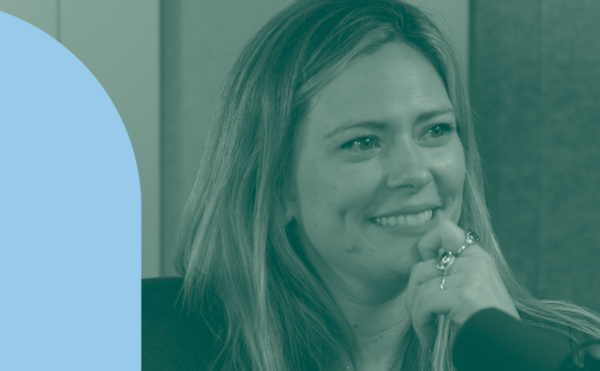
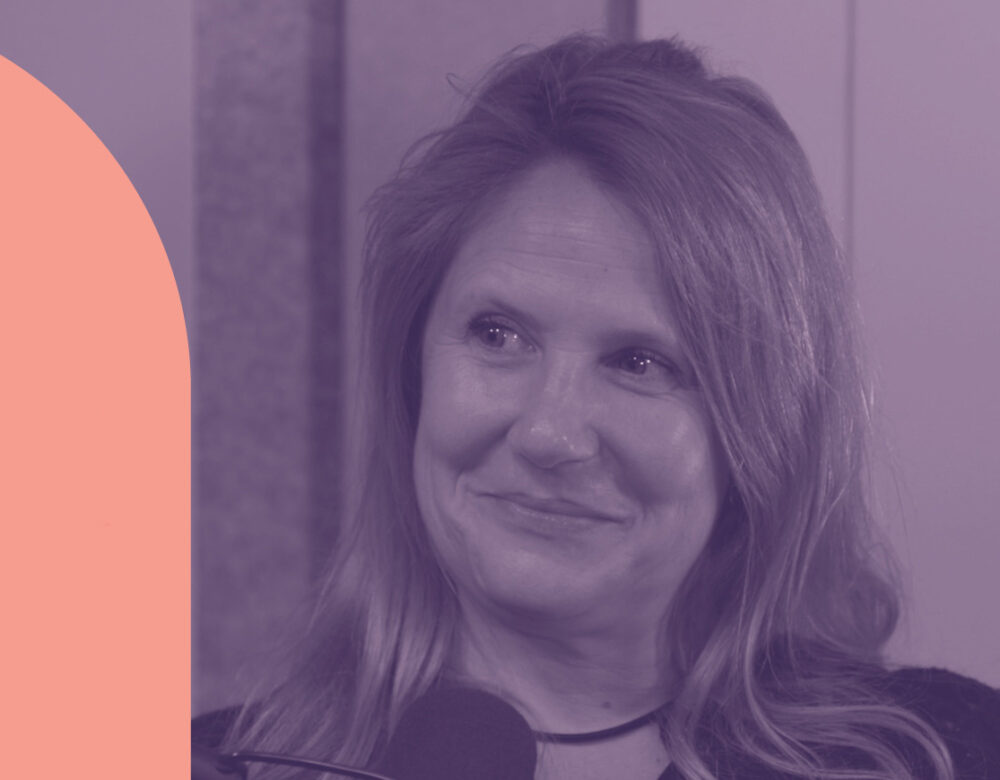
Many of us have heard of Long COVID, but few of us understand the depth and breadth of the diagnosis or the history leading up to it. We talk with medical anthropologist Emily Mendenhall about her book on invisible illnesses and what happens when medical symptoms are hard to explain. We discuss why patients are dismissed and how the history of hysteria, neurasthenia, and chronic fatigue syndrome all contribute to Long COVID denialism.
Credits
Host: Alexis Pedrick
Executive Producer: Mariel Carr
Senior Producer: Rigoberto Hernandez
Sound Design: Seth Samuel
Fact-Checking: Alexandra Atiya
Music by Blue Dot Sessions
Resource List
Mendenhall, Emily. Invisible Illnesses: A History, from Hysteria to Long COVID. University of California Press: 2026.

Transcript
This interview has been edited for clarity.
Alexis Pedrick: From the Science History Institute. I’m Alexis Pedrick, and this is our new season of Distillations, American Vice: Risk, Science, and the American Experience. This episode is an interview with medical anthropologist Emily Mendenhall about her book, Invisible Illness: A History From Hysteria to Long COVID. We filmed this interview in our studio, and you can watch it on our YouTube channel at youtube.com/sciencehistoryinstitute. We talked with Emily about the long history of dismissing patients with mysterious illnesses. How, when medical symptoms are hard to explain, patients are often told it must be in their head. We also talked about hysteria, neurasthenia, chronic fatigue syndrome, and long COVID denialism. Hi, Emily, thanks for coming.
Emily Mendenhall: Hi. Thanks for the invitation.
Alexis Pedrick: Awesome. Well, I’m excited to get into this conversation, but first, I always want to know from people what made you write this book?
Emily Mendenhall: Oh, that’s such a good question. I actually have been studying chronic illness for 20 years. And I started at Cook County Hospital in Chicago even before I started my PhD and I was working on this project on chronic illness among women—Mexican women—often undocumented, living with diabetes. And I started to figure out that their stories weren’t just about the illness pretty quickly.
Emily Mendenhall: And then I traveled around the world studying diabetes. And then when COVID hit, I ended up really focusing on COVID. I wrote a book called Unmasked: COVID, Community, and the Case of Okoboji, which was about my hometown in northwest Iowa. It was a critique of whiteness in COVID denialism.
Emily Mendenhall: And then I had a student who got really, really sick from long COVID, and it kind of shifted my orientation of what this pandemic was doing.
Alexis Pedrick: I think that brings up a really good point because I feel like Long COVID is something I’ve heard a lot. Like I’ve heard the term, but I realized I didn’t really have any idea what that was until I started reading this book. So for our viewers and listeners at home, like what is Long COVID really?
Emily Mendenhall: I think the reason why it was so hard to name and diagnose and it is hard to diagnose is that there’s a lot of heterogeneity of what Long COVID is. It’s a post-viral dysregulation of the body. And the virus triggers existing vulnerabilities and causes different types of manifestation of physical, cognitive and psychological dysregulation in sickness. So a lot of people who are athletes and had undercurrent heart conditions went into AFib after getting COVID, right. And that’s a manifestation of Long COVID. Some people had more illness manifestation, kind of like myalgic encephalomyelitis—chronic fatigue syndrome—where they had several combinations of cognitive dysfunction, memory issues, fatigue, migraine, all sorts of collections of conditions. And this was especially disabling for people with autoimmune diseases. So it’s not easy to measure and identify. Like diabetes, you look at insulin resistance, right?
Alexis Pedrick: Right.
Emily Mendenhall: And it’s like, okay, you’re pre-diabetic or you’re diabetic. These are your numbers. But there’s not really a test or a rash to identify Long COVID. So it’s a little bit less clear.
Alexis Pedrick: You have a lot of stories from people in the book and I was struck by how different everyone’s experience was. And I was thinking, like: oh my gosh, I heard this term and I assumed it was just like, “oh, okay, you have these four things and then that’s Long COVID.” So no, this was really, really interesting. And when you started the book, you framed it in a way I thought was really interesting. One of the first things you said really early on was that you hold two things in this book to be true about patients and clinicians. And I was wondering if you could talk a little bit about what those two things were and why they were important, because it struck me that they seemed like they could possibly be opposing things.
Emily Mendenhall: I think that’s what was so striking about the research for this book and about how it’s been received a little bit. I wrote the book so it would be an empowering advocacy book for patients. But also in a way that physicians would take it seriously because so many physicians I spoke to in my orbit where like Long COVID isn’t really real, right? Again and again and again. And it was really kind of upsetting after a while, after hearing so many patients’ stories. And I think that it proves something to us about medicine that they’re not training. Medicine doesn’t train you to look at complexity, which Long COVID pulls back the curtains to how complex chronic illness really is. And it’s a good example and critique of medicine.
Emily Mendenhall: So the two things I hold true are that when you have a complex chronic illness and one that’s not common, you often become one of the most educated person about your condition because you have a primary diagnosis. But there’s often a cluster, like a Venn diagram of conditions that co-occur. So you’ve probably done a ton of research. You’ve obviously had your unique embodied experience. So bringing that to the clinician really matters. And patients need to be understood, which I argue in the book, but also with some others that patients need to be knowledge partners in the clinical space.
Emily Mendenhall: But at the same time, I do think that clinicians really want to care for their patients. And I do think they really care. And I think many clinicians feel overwhelmed and kind of at a loss, which is really hard for clinicians who are often used to being the authority figures. And sure, there are many physicians who are humble enough to be like: I just don’t know. I need to share this. But I think a lot of clinicians, because of the expectation that they will have an answer, get defensive or punt the patient away and patients feel dismissed. So I think really understanding this vulnerability—there’s always more to the story with how people feel. But I think this is really at the heart of the issue, which I call structural silencing, where there are all of these structural issues where people, patients and clinicians have very short periods of time to connect. Which is a structural problem of our profit-based medical system. At the same time, clinicians don’t have the education to really understand in a deep way what these patients are going through. So that confluence really makes people feel completely dismissed.
Alexis Pedrick: You have this other term and I’m hoping that you can define it for us. You talk about “mind-body.”
Emily Mendenhall: Yeah. Well, I mean, the mind is of the body and the body is of the mind. And when you think about the gut, where a lot of people have symptoms, the gut is the enteric nervous system. It is the second brain. So I think it’s easy, especially in American culture, to kind of think about the mind and body as different things. And I mean, there’s stigmas around mental illness, for example, that people want to dismiss, but it’s impossible to untangle the complexities of complex chronic illness without realizing how deeply embedded psycho-physiologically these conditions are.
Emily Mendenhall: We know that there are theories that SARS-CoV-2 sits just like herpes virus or Epstein Barr virus. The virus sits on the nervous system, and that’s one of the places it hides or it hides in the tissues, which is why we can’t measure it in the blood. And it dysregulates the nervous system, which explains some of the symptoms. It’s one of many theories. There’s all sorts of biological theories and therapies that are emerging for different manifestations of Long COVID. Some people have been able to get better and some people are still struggling. And it just shows the depth of complexity, but also the breadth of symptomatology that people are having.
Alexis Pedrick: For sure. You had this really great metaphor around thresholds that COVID is the thing that once you’re over that threshold, then it’s like all of these other things start to erupt. And I thought that was really, really interesting because again, I guess I’m just so used to thinking of illness as like: you have these four symptoms. They’re checked on this list. And once you have all of them or three out of four, then you’ve got it. We give you the medicine, you’re done. And that’s not the case in any of this, really. Nothing is quite that straightforward.
Emily Mendenhall: Yeah. And you know, there are some people who are so severely disabled from this condition that whatever they do or have done, they’re still bed bound and absolutely forgotten by the medical establishment. Which is really severe and horrifying. There are others who have gotten well. It’s not by eliminating COVID, SARS-CoV-2 from the body. We don’t have a way—like herpes virus, for example—we don’t have a way of getting rid of it or directly necessarily minimizing it. Although for sure Valcyclovir and other medications can push it down.
Emily Mendenhall: Some people have found ways to overcome the condition. Sometimes it’s time, sometimes it’s multiple therapies—physical therapies of the body attacking different symptoms. And sometimes it is mind-body interventions. And actually the influence of mind-body I think is something that some really, really sick patients are quite frustrated about talking about. They don’t want to recognize that some people have gotten well through this kind of complex array, specifically targeting the psychophysiology, because they haven’t. And I think that conflation is really, really hard.
Alexis Pedrick: So there’s a lot in here that I think for me as a history person/nerd person was really fascinating and helped me wrap my head around this. You have this really great quote where you say: part of the myths we believe about Long COVID, in fact, are rooted in centuries old misogyny encapsulated in theories of hysteria. And so I’m wondering, for people who are unfamiliar, what really is hysteria? Because I think it’s permeated pop culture. I feel like people have heard it. But when we say “hysteria,” what did that diagnosis [mean]?
Emily Mendenhall: I mean, if we think 4000 years ago when women would be sick their sickness would be attributed to their womb. Or one’s “wandering uterus” is a favorite saying.
Alexis Pedrick: As it does.
Emily Mendenhall: But because such little attention and really legitimacy has been given to women and women’s suffering, women for so long have been dismissed and undermined in what is actually going on. And that is part of the reason why we don’t actually know how a lot of medicines affect women in older age, as well as in pregnancy, because they’re dismissed or ignored. But the hysteria diagnostic and cultural frame, which we know has long just been used to dismiss women and undermine women’s realities because women and men are different. Women of all different backgrounds are different and really taking seriously women’s legitimacy requires us to confront this really misogynistic framework.
Alexis Pedrick: Right. Because there’s this—it blew my mind when I read this—you were talking about how MS in women was originally just called hysteria. Like it was just diagnosed as hysteria. And I was struggling to wrap my head around that because it seems like there are so many clear physical symptoms. There are so many clear things that tell you this is not someone who’s just overwhelmed by their feelings or thinking too many thoughts. And I’ve been wondering, like, why our first instinct—and I think you’ve sort of touched on this already, we dismiss women—wasn’t to say, “oh, this is a real disease?” Like this is a real thing that’s happening instead of MS is just hysteria?
Emily Mendenhall: Well, I think hysteria is linked to this idea of an imagined condition, something that’s functional, something that is real and physical but has no biological origin. And I think that’s why MS is a great example. I’m glad you brought that up. Where MS transitioned within the field of medicine? When they were able to actually see plaques in the brain.
Emily Mendenhall: And it shows you the power of what a diagnostic and a physical marker of the condition does. Now, many Long COVID patients will tell you that they have multiple physical markers of dysregulation that reveals how sick they are. I mean, there’s even some tests that show that people’s mitochondria are lagging who have Long COVID. Like mitochondria is the energy, the battery of the cell, right? So yeah, there’s amazing biological evidence that shows that people’s bodies are dysregulated. But the difference with MS is that there is a clear marker in the brain that can be used as a diagnostic. And going into the clinical setting, we don’t have that yet for Long COVID, which makes it really hard for patients to be taken seriously.
Alexis Pedrick: Right, right. You talked about—I thought this was really interesting—Jean-Martin Charcot and Freud and the impact of their theories on hysteria. Because I feel like Charcot sort of did this 180 and went from like: oh, this has some shape, this has some reality to it, there must be something going on here. To defaulting to: oh, it’s in your mind, it’s in your brain. It’s not really real. And I guess women were not considered reliable reporters of their own symptoms. Like if you said you felt something, no one took it seriously?
Emily Mendenhall: Which I still think happens. I think that piece of the book is really interesting as a cultural framework to think about how—let’s be honest—there were probably women working on the team who were never recognized and whose ideas were probably stolen. And Charcot started off by actually thinking about the neurology. He’s a neurologist and was really interested in looking at biological markers. And Freud, when he started working with him, really shifted this narrative to focus on trauma, right? And to focus on the kind of social and psychological aspects that contribute to this framework and this experience—this embodied experience. So it’s interesting to look at the power and influence of Freud in that framework. But I’m not the expert on this area. I told that part of the story, in part because thinking about how the cultural framework around hysteria has shifted—between biological reality and social phenomenon or psychological phenomenon—is really important to understand how people have been trying to understand this condition. And how the shift to “misbelieving” or undermining women’s truth, to trying to identify this real biological reality has a long history.
Emily Mendenhall: We’re doing that now with Long COVID. We’re still doing it. And with more sophisticated tests there is real biological [evidence]. Long COVID is a real condition. It’s just not the same for everyone. And it gets us back to this idea of medicine. And, you know, in the 1800s, medicine was obviously still developing, but there were more broader inclusive, holistic frameworks. And medicine itself as a practice has consistently become more narrow.
Alexis Pedrick: Yeah. You talk about this guy George Miller Beard and he—first of all, it’s kind of like hysteria, but I guess men can get it now too? And then he says that parts of it are specific to America or the American experience. And so I’m wondering if we could talk a little bit about what this illness is and why it was so closely connected to the American experience.
Emily Mendenhall: I think this one reason you and I are connecting on this is because you’re a historian. I’m an anthropologist, right? And, you know, I never think about illness in terms of just biology or psychology. It’s interesting to see as illnesses emerge. So I studied diabetes for years, I was still interested in diabetes. You know, it emerged in the West post-World War Two with the surge of processed foods and the changing of the way we live in the world. And, you know, in the 80s and 90s as international corporate targeting of processed foods shifted to lower end and middle income countries, we also saw those shifts in disease there. So as we saw these shifts in industrialization, the ways in which we lived in our bodies and our minds shifted, too.
Emily Mendenhall: And I think that’s why this American way of stress is really important to think about because we’re such an individualistic culture. It’s so deeply ingrained in how this culture is framed. Although there’s the American way of stress, but what does it mean to be American? We’re such a multiethnic community—democracy, hopefully—that we believe in and that’s the beauty of it. But there is this overarching frame of hustle, and especially in a country that has such a minimal safety net. And such increasingly independent expectations of what it means to be successful. This culture and hustle has really undermined people’s well-being.
Emily Mendenhall: So that’s why the neurasthenia story matters so much is that, you know, hysteria specifically rooted in European frames of neurology from the biological to the social frameworks, then shifted. And neurasthenia was really focused on this American way of stress and “how does this manifest?” But recognizing that it was also—post-conflict—how men as well as women, although of course it was quite differentiated, we’re experiencing these deeply psycho-physiological responses to a changing world.
Alexis Pedrick: Yeah. You bring this up with Long COVID too, because you say that it’s sort of revisiting that conversation of: what does it mean to be American and to be part of America? I think you have this great line: when your engine is depleted, right? Like if you can’t be a cog in the machine, if you can’t be part of this industrial revolution then what are you really?
Emily Mendenhall: I mean, there’s so many interesting metaphors with that. As I was reading that work, I was just kind of struck by the mechanization and building and history of America, as well as the framework in medicine [of] the body as a machine.
Emily Mendenhall: And those parallels show how biomedicine is a reflection of culture. And how biomedicine has adapted to function in a way to interpret our bodies to keep going. Right? How do you fix this ailment, fix this symptom to patch you up, but not to get to the root? And I think that’s why in biomedicine, there’s such an undermining of other systemic practices of medicine, like Chinese medicine or Ayurvedic medicine. And dismissal of that kind of slow systemic healing is because medicine is “hurry up and fix it.” And that is a cultural reflection of what it means to be American.
Alexis Pedrick: And I feel like there’s a class element too. Because I was struck when you were talking about this broader frame in 19th century medicine. You talk about S. Weir Mitchell prescribing things like art and literature and nature and like taking long rests. And it just struck me. He says this thing about people getting sick from this because of things that are inherent to them, like “being thin” and “lacking blood.” And I guess it struck me—the sort of classism in it—because, well, yes, if you’re a wealthy person, probably a woman who’s ill, okay, well, yes, take some rest. Go look at some art. Go look at some literature. But I don’t think it was being evenly done across the board. If you were a poor woman and had those same symptoms, you—
Emily Mendenhall: Were just completely dismissed.
Alexis Pedrick: Right.
Emily Mendenhall: Well, that element was so interesting, which I do juxtapose later in the book when I talk about the current moment, because I interviewed an old friend of mine who’s a nurse practitioner. And I was asking her about Long COVID and she serves a wide gamut from high, middle, and low income folks in Chicago. And she’s like: Long COVID isn’t really real. I mean, what can you do for people? She’s like: most people, especially poor folks who are really struggling, they can’t afford to rest. They can’t afford to stop hustling. They don’t have a safety net to get better. So they’re going to work hard until they can’t anymore. And she’s like: so what good does it do to give them a Long COVID diagnosis?
Emily Mendenhall: And so I think of the class framing because of our lack of safety net and it’s so hard to get disability. One woman I interviewed was staying with her dad, who was pretty abusive to her because he didn’t believe she was sick. She was like: you know what? My lawyer keeps telling me that I should just be homeless because then I could get disability. But I can’t imagine being this sick on the streets. I mean, that’s America.
Emily Mendenhall: And that’s a problem.
Alexis Pedrick: Yeah. I mean, I found it interesting how so often we’re talking about science. We’re talking about medicine, right? We’re talking about all these things with disease and tests and bodies and what happens. And yet money and class keeps coming back into the conversation. You have a section that’s really interesting on chronic fatigue syndrome. And I felt like class came back up in that again as well. I’m wondering if maybe we could talk about that for a minute?
Emily Mendenhall: Yeah, I think the really huge challenge with chronic fatigue is simply the fact that insurance companies completely undermine people’s suffering. And those who are able to continuously pay out of pocket for treatments are able to be on a journey to get better.
Emily Mendenhall: And those who can’t are really suffering because insurance companies do not cover most things that will help you get better. So those who can try different treatments and experiment and pay out of pocket have more opportunity to get better. And I was actually just speaking with a friend of mine yesterday whose daughter is doing a new treatment. She’s like: it’s just we couldn’t do it earlier because we’ve been saving up money to pay for it. It’s thousands and thousands of dollars. It’s also like the chronic Lyme chapter where insurance companies are the invisible partner in the clinical space that’s saying: we’ll pay for treatment if you go by these guidelines, but not if you go by these guidelines. And that undermines people’s ability to try everything to get better and live in this really intense culture.
Alexis Pedrick: Absolutely. And it also felt like almost from jump—because it starts with a girls basketball team, right, that gets sick? Is that the first? And so it seemed like from jump, they weren’t really inclined to take it very seriously. I’m not sure if people know the story, but it felt like from the very beginning, they were like: this is probably hysterical. Like this is probably a little “made up.”
Emily Mendenhall: Well, even in the CDC, and I think the CDC was built and framed around infectious disease. So it’s understanding of the acute, of outbreak, of immediate response—obviously it’s changed and they do all sorts of complex chronic conditions, food, all sorts of work, really, really important work. But there was a culture of medicine and clinicians who were working in outbreak response in the Epidemic Intelligence Service, who didn’t believe that it was real. So there was a lot of joking. So these young practitioners kind of went there without knowledge or already having a bias, but this is how the story is told. And this is actually just one story of outbreaks that have shown great evidence of post-viral disabling conditions.
Emily Mendenhall: But this story specifically has cultural significance because of the EIS officers. And because it led to the CDC working group around chronic fatigue syndrome and the fact that very few women had voices at that time, very few women were consulted. And that particular study that was the basis of the diagnosis didn’t include anyone who had comorbidities, which we know from post-viral conditions that those with comorbidities have more severe presentations. And it was just this small collection of sick white women who didn’t have comorbidities.
Emily Mendenhall: And so that sort of framing was really limiting when there were 200 people and they included like 15 in their study.
Alexis Pedrick: You talk about it being sort of like a disease or a descriptor that nobody wants. And I love how in the book you weave between the history and between these current cases. And that struck me when you were talking about the case about Lena and FND. And so I was wondering if you could talk a little bit about her experience and what FND is or why she might not want to have it be applied to her.
Emily Mendenhall: I ended up including this in the book because so many women at some point were told they had functional neurological disorder. And a functional conditions indicates that there’s no biological cause, that it’s a kind of somatic expression of social or psychological distress. And many patients with ME or Long COVID or Lyme are told at some point that it’s probably functional, meaning it’s not of biological origin. And why that’s so upsetting is because people know their own illness trajectory. And as I said, patients are probably the most knowledgeable about their condition than any clinician.
Emily Mendenhall: And so they know that things started to dysregulate after having an infection and they know the physical symptoms. And, you know, people living with chronic illness often do get anxiety and depression or some or PTSD due to their social experiences of living with the illness. It’s a very common experience, but rarely is that the cause of this kind of dysregulation. And so people get really frustrated because if you put FND in your medical chart. Doctors later will not take you seriously, and they will not take your search for a biological resolution. And the one thing that patients want is to figure out a one size fits all intervention.
Emily Mendenhall: And I talk in the second part of the book a lot about how ME activists and Long COVID activists have framed their struggle around HIV activism. And HIV was incredible because the AIDS activist movement was able within five years to get antiretroviral therapy. And that’s what a lot of people want is this type of therapy or intervention that can help them get out of bed and actually live in the world. Especially the most severe patients. So that’s why the FND diagnosis is so devastating. It’s because it can mean that clinicians will no longer take your chart seriously. So it can be really a harmful diagnosis for someone in this position.
Alexis Pedrick: And it’s interesting because you even talked about cases where people had cancer, right? So I lost my mother to breast cancer. And I was thinking about it as I was reading. Because there were a couple cases where people either had previously been sick or when they got Long COVID—I think there was one guy in particular who also then got stage four cancer while he was also sick. But cancer is “real” for lack of a better term, right? We take that as like: oh, yes, okay, we know what cancer is. We understand what that is. That’s a real thing that we can give you treatment for. And it just struck me—the dichotomy of those two things next to each other. That here’s something where you’re suffering, but there’s no mechanism really to treat you for it, not because nothing’s happening to you, but because we don’t have a diagnosis or I guess our system isn’t set up for that or…
Emily Mendenhall: Well, first, I’m sorry about your mother. [It] must have been difficult. The increasing number of cancer diagnoses among Long COVID patients is a conversation that’s happening in the Long COVID community.
Emily Mendenhall: And we don’t really understand why. But Ty, the story you brought up, he was one of the first people who I spoke with who was diagnosed with cancer. I spoke with him many times and he’s a very public figure. He has his own blog about his Long COVID experience and he’s a really interesting guy. But he was like: you know, we don’t really know what’s happening, why so many of us are developing advanced cancers, most likely because our immune systems are so depleted. And you know, who knows, maybe therapies are causing it? Maybe underlying conditions.
Emily Mendenhall: But I think there needs to be—and I know people are starting to pay attention to intense studies about what is happening. But besides the biology and understanding what happens, there is a very different social experience, which you were talking about. Because with cancer, it’s easy to identify and diagnose. And there’s also—because of that diagnosis and because of our extensive exposure and understanding of cancer—we have treatment that is funded by insurance, right? So if you have cancer, you can get treated. And it’s kind of like early on in studies, actually in work on HIV if you were able to be diagnosed with HIV, then like all of your other care could be funded.
Emily Mendenhall: Or if you have a diagnosis of diabetes, for example. And at Cook County, some people were really relieved to get a diagnosis of diabetes because they didn’t have health insurance. They had Medicaid or maybe nothing, but they would be cared for at the public hospital because they had a diagnostic that was recognized and covered under insurance or some sort of system that could pay for their care. And so the cancer diagnosis provided that. And I think that’s really troubling.
Emily Mendenhall: And it’s another example of the mechanisms of American medicine that is so focused on money that we are unable to care for people, right?
Alexis Pedrick: That it’s a very it’s a very stratified system.
Emily Mendenhall: It’s so difficult.
Alexis Pedrick: Yeah. And you kind of touched on this in the beginning, but people with chronic illness—it’s not really like you’re cured in most cases, you’re kind of just living with a lot of symptoms. And it strikes me that we don’t really know what to do with that. If you’re just sort of living with illness, where’s the magic button? How do we fix that machine? And I was wondering, how does that tie people? Because you have a really robust section about activism, living with that—how does that tie people to medical activism?
Emily Mendenhall: Yeah. Well, I think actually the activism part is really interesting. And I was so struck by the incredible support that people were able to receive and provide digitally. Actually, not in the book, but I have done some of the first studies on Long COVID in Kenya. I have a really close colleague, Edna Bosire, who’s a medical anthropologist. She’s Kenyan, and she led the studies I supported. And there was this woman, who was part of the body politic organizing from early on in the pandemic, from Nairobi. She was U.S. educated and engaged in these international networks. And she actually started a Long COVID support group for those who were sick in Kenya. But it was a very closed private group because the social experience of living with the condition is very misunderstood and also kind of underground. That’s like an extraordinary, beautiful case where someone was able to connect digitally in a way that they probably would have felt really isolated before. And that digital connection, which you can connect from your home, for example, rather than needing to go out and be in a specific place can be really transformative.
Emily Mendenhall: And I also argue in the book that although it’s incredibly supportive, there’s definitely—like all activist movements—there’s infighting and there’s a struggle for legitimacy or who’s better at organizing. But there’s also some difficulty I think, in the discussions that happen when people feel really legitimized within that digital space and they feel really empowered. They bring all of their knowledge and reflection and understanding to the clinic and the doctor is not ready for it. And that’s why if we were to actually provide care, we need doctors—clinical spaces—and maybe these are brokers, maybe the people really leading this care are nurses. But we need spaces where people can be open to how patients are understanding their illness in a deep way and without judgment. Because clinicians are like: “stop, this doesn’t make sense,” because they don’t understand what the patient is going through, not only physically or psychologically or emotionally or socially, but also their deep struggle to understand.
Emily Mendenhall: And that is a huge part of having a rare disease or a less visible condition. It’s harder to explain and engage around your condition with your clinician. And I think that really is a form of subjugation for a lot of patients.
Alexis Pedrick: I mean, it feels like legitimacy is such a huge part of diagnosis, of getting care, of this story overall. And I was thinking about the section [where] you write a lot about pain. And pain is kind of subjective in a way, right? Like pain is inside you. We kind of feel like we have a sense that we can tell from the outside looking in how much pain is going on. But you were talking about a jury case you were on. And I’m wondering if you can tell that story because I think it really exemplifies some of the things about pain that we struggle with.
Emily Mendenhall: Yeah. I thought it was really interesting because I was at the tail end of writing the book. And I was called in for jury duty and I was still on sabbatical. So I was like: Oh? Fun. Like, I’m a very nosy, interested person in everything. So I was like: Oh, what’s this gonna be? And everyone was like: No, they never put PhDs on a jury. You’re never gonna get picked. But I went and I was really excited and I was picked and I was like, yes—
Alexis Pedrick: This is my time.
Emily Mendenhall: I was very excited. And I think that they picked me because I was like: well, I do health equity work. And it was a woman who had a kind of an equity issue.
Emily Mendenhall: And the case is really interesting because she worked in corrections for most of her career and she had many injuries. She was thrown against the wall. She had fallen, she had back injuries, neck injuries, arm injuries, you know, it’s a tough job. It’s a very physical job. And then after a while, she’s like: I can’t do this. But she still wanted to work for the county and so she got a job driving a bus. And she got in a car accident and she suffered. She had really intense pain and sciatica and took a really long time to heal. And she still was in pain.
Emily Mendenhall: And she was basically saying: I want Worker’s Compensation. And the defense, who was trying to not give her Worker’s Compensation had an image of the accident and it was a subtle hit. And she hit and went like this and then afterward got up and walked away. And they’re like: look, she’s not even hurt.
Emily Mendenhall: When we were in deliberation, I was like: but we don’t know what she’s carrying with her. That kind of subtle hit could really cause extraordinary pain and could have unveiled something or pushed her spine, let’s say, off in such a deep way. It could have been the straw that broke the camel’s back or whatever it is that did cause this deep pain and her inability to do her job. And people are like: oh, but it looks so bad. And I was like: well, why? Literally, can we have a conversation? Why don’t we just believe her?
Emily Mendenhall: Why would she be making this up? And we had this beautiful conversation and it was almost all women. And there’s this one guy who was holding out and we all looked at him and were like: do you want to die on this?
Emily Mendenhall: Why don’t you just believe her? And then he was like: let’s just believe her. And that was a powerful moment. I thought about what I would have said if I hadn’t been spending two years researching this book. But yeah, it was a powerful moment. And then she won the case.
Alexis Pedrick: Just great. I mean, but it strikes me that so much is built around—and that makes sense for science. So much is built around what’s testable, what’s verifiable. As you said, what fits a diagnostic criteria and there are lots of reasons, obviously, why that’s the case. And that makes sense. And I think, you know, we love science, right? But at the same time, when you’re in these sort of in-between areas, then it’s like: okay, how do we navigate that? And this struck me as one of those sort of in-between areas where we didn’t really, as you said, there was no way to go in and break apart a body and be like: Oh, there’s the spot. Her spine was realigned, so okay, we understand what happened here. And I think so much of your book is about this in-between area, but also it seems like it really matters who is asking to be believed.
Alexis Pedrick: Like that feels like a core part of the book. Particularly, the Lyme disease chapter is really interesting in that way. And I’m wondering if, from a historical standpoint, that seems like something you’ve always seen. Does it ebb and flow? Are we at a moment where we’re sort of back at the height of looking at who’s asking questions and whether or not they’re legitimate? I guess I sort of assumed we live in the future and the future would be less judgmental. The future will be—fantastical thinking, right? But I—
Emily Mendenhall: I thought that a few years ago.
Alexis Pedrick: But does that feel like something that we’ve sort of always done in like medical diagnosis is think about who the patient is, who’s asking?
Emily Mendenhall: I think the struggle is centuries long. And I would say that racial, gender, class discrimination based on ability, disability, nationality. All of these complexities that build and influence who people are and how they’re perceived in that moment really matters. And there’s a whole world that envelopes one clinical engagement. It influences who that person is, who’s a clinician, who’s coming in to care for you and who you are yourself and what you’re bringing into the clinical space, right? So it’s hard to just say it is one way or it is another way, because who you’re seeing plays a fundamental role in how you’re believed and cared for. But I think the one thing that we can critique in a very clear way is how profit-driven medicine completely continues to make medicine worse.
Emily Mendenhall: And that we see again and again how when we monetize certain tests or abilities or diagnostics, it just means we’re more limited in how we can really see people and how we can care for them and take their suffering seriously. So I think we need to start by reimagining health insurance. And this is such a radical idea in America, because America is all about profit. But there are so many models of health care innovation or structures, health financing structures such as nonprofit insurance companies that could be radically transformative for our health system. And I think that kind of non-monetizing clinical care would dramatically shift how we even see people. And it’s hard to imagine things getting better until some of these structural issues really change.
Alexis Pedrick: So what is the role of capitalism in America’s response to COVID-19 and then to Long COVID as well?
Emily Mendenhall: I think it’s really interesting to see how Americans responded to COVID-19 to instruct us about how people are responding to Long COVID. There’s a story in almost a meta-narrative of my book, Unmasked: COVID, Community, and the Case of Okoboji, which is about how a small town in northwest Iowa responded to COVID. I grew up in Okoboji, Iowa, the small town in the middle of nowhere, and my brother-in-law, who actually grew up in Connecticut, was leading the public health response. He’s a family doc and has an MPH, and he’s the head of public health. And I got there in the middle of an outbreak. And having come from D.C. where, you know, there were actually police outside the grocery store. You couldn’t go in without having a mask on. And arriving in a place where some people actually never went into quarantine. And people were pretty angry about quarantine and wanted to just kind of get on with life. And arriving in the middle of an outbreak, I was struck by the differences.
Emily Mendenhall: And being someone who works a lot in the public health space, I was like: what is happening? So my brother-in-law was doing all this hard work and it felt like no one was listening. So you know what I did? I threw together a study, I got IRB [approval], and I started interviewing everyone I knew because I wanted to get to the heart of it. And the objective was to understand what the heck was happening. So I did over 100 interviews. I think most people talked to me because we hadn’t talked since high school graduation. And they’re like: What’s going on with you? And I’m like: What do you think about COVID? They’re like: Can we talk about something else? Which was actually just really a fun thing. But what I learned over time, and I didn’t end up thinking about writing a book until much later, I was thinking about it in this broader way.
Emily Mendenhall: I found out that actually people did come together. It’s a small tourist town and they always talk about the 100 days of summer. And so many people rely on those 100 days to make money to feed their families for the whole year. So if you take a step back and think about it, sure, people did not come together for the health and for the most vulnerable among us. And there are several people who I interviewed who said: you know, “I got sick,” or “I went to the bars to get sick, to build my own immunity. But then I got my grandpa sick, or my brother sick or my dad’s sick and they died.” Or they became extraordinarily sick. And I felt bad. But what I realized, taking a step back, and this was something that Trump was saying again and again. And I think the local political and business leaders were echoing that—was that we need to protect our economic security. And so I think the whole community did come together around the economy. And some people were even protecting people’s lack of regulation around masking, in part to protect those 100 days of summer.
Emily Mendenhall: And so it’s not that people didn’t care for each other, but they didn’t care about the virus more than they did economic survival. And in a capitalist system with a very limited safety net, I understand those concerns. Those are not the concerns I had at the time. I’m in the field of public health. It was an urgency and I took it very, very seriously. And I also was staying in the basement of my elderly parents home and didn’t want to get them sick. And I have two small children, so it was like that whole juggle.
Emily Mendenhall: So at the time when I was experiencing it, as so many people did, I felt very angry and I didn’t understand what was happening. But when you take a step back, it’s very clear what was happening. And I think something similar is happening with Long COVID. Our lack of a safety net and our continual, I mean, now we’re even withdrawing in profoundly harmful ways funding for Medicaid, for disability, for those people who are most vulnerable among us, just like what happened with COVID. Kind of forgetting those most vulnerable among us to really prioritize the economy.
Emily Mendenhall: So if we think about how many people are disabled from Long COVID and who’s missing from the economy, that’s one story. But I think the government is perceiving it as: Who can they carry? And they’re not really interested in carrying the sick and the vulnerable just like, increasingly, there were conflicts around caring for the sick and vulnerable during COVID. And so there’s a lot of similarities around what it means to be American and what the American government and leaders will do. And I think as we pull to the right, the ideas of individualism and the lack of collectivism continuously puts money above people, profit over people. So this is just something that we have increasingly the tug between this collectivist acceptance of a multi-ethnic democracy and the tug between who we are as bootstrap individualists who can make it on our own. Which is a complete fiction, right? But those two polarized groups within what it means to be a capitalist society is completely intentional, a constant form of tension in America and what it means to be American. So that’s what I’ve observed. And I think that’s one of the most instructive observations from COVID and Long COVID.
Alexis Pedrick: You have this line in the book that I can’t stop thinking about. You say something about how COVID is like the lighter fluid that brings everything else out or something like that.
Emily Mendenhall: Yeah. One of the things that I think is striking and transformative of the Long COVID experience is how many clinicians, nurses, doctors, PAs have become sick with the condition. And I was already thinking about this more generally, but I interviewed this physician who became a Long COVID activist in the science community, leading several of the conversations at the national academies. And when I interviewed her specifically, she said to me: you know, COVID is the lighter fluid that enacts whatever is underlying under the surface. And that had a profound impact on how I thought about the heterogeneity of Long COVID. And I think it was so interesting to interview physicians and clinicians in general with Long COVID, because their perspective was deeply scientific and embodied.
Emily Mendenhall: And thinking about my own cousin who had COVID-19 and then he went into AFib. His story is so different than someone who I interviewed—a woman, Sam—whose lungs collapsed and she was on a ventilator for a month. And it took her four years to rehabilitate her limbs, her lungs, her cardio. To be able to just live normally and also to reconstruct her emotional well-being because she lost her social life and professional life that she had been on a beautiful journey towards. So the “lighter fluid” comment, I think, is so broad and useful to think about why there’s such diversity in how people present.
Alexis Pedrick: Absolutely. So it strikes me in this book, you talk a lot about [how] Long COVID is not the first time we’ve had a chronic illness follow up after an outbreak. And so despite the fact that we have many, many years of history of this happening, whether it’s Long Flu or these other sorts of examples, despite the fact that we have clinical and scientific evidence that it happened. It seems so odd to me that we would say today: What do you mean Long COVID? That can’t possibly be real. That’s impossible. I don’t understand how that would be the case.
Emily Mendenhall: I think many ME activists would tell you that it’s a cultural problem. I would agree that it’s a cultural problem. But I think that it’s such a profound cultural problem that is embedded in the training of physicians which then becomes manifest in cultural lore about: what is it to be a clinician? If you look at all these doctor shows, it’s all emergent and discrete and clear. And in medicine, I have a mentee who’s in medical school now and you know what? One of the things I didn’t realize is that people are in medical school to pass the boards. And so they go only to the lectures that they need, that they don’t understand, that’s going to be on the Boards.
Alexis Pedrick: Gotcha.
Emily Mendenhall: But this isn’t on the Boards, right? These are the special lectures that people go to that are additionally informative. And that is horrifying because it indicates how deeply broken our training is and how it’s really compartmentalized. How do you put the pieces of the machine back together? What is the machine and how do you put it together? I mean, thinking about the cadaver: what is the machine? What are all these parts? And there are spiritual and beautiful parts of that learning process.
Emily Mendenhall: But the lack of recognition of the complexity in our training systems is a huge problem. And so one of the things that ME Action—this activist organization—has done is they’ve created a great Teach ME, Treat ME movement where they go into medical schools. And I think they’re working with the Mayo Clinic to develop a training session for clinicians to learn how to identify, understand and treat people with these conditions.
Alexis Pedrick: Wow.
Emily Mendenhall: So I think that is really the most important thing is to shift the culture because we do have a lot of evidence. And actually a lot of the evidence on the Great Influenza, for example, there’s the Famine of the Corns. I think [it’s] a really interesting example where after the Great Influenza, there was a whole community who was affected by the virus brought in through transport. So someone who was driving a truck through the countryside—that was a very rural community that got influenza and so many people were disabled from it they couldn’t plant the following year. So they call it “Famine of the Corns” because there was a famine due to an extraordinary disability caused from the Great Influenza, and so much so that they couldn’t eat. So thinking about how these conditions are measured and understood in certain contexts and made visible, right? Like the Famine of the Corns was made visible by someone identifying it and writing about it and recognizing what it was. So how do we make visible these experiences? Well, it’s one of the reasons I wrote the book: really identifying and understanding this long history to shift the culture of medicine.
Emily Mendenhall: Actually my cousin, John Bowers, is an internal medicine doc in Nashville. And he’s like: I just bought a whole stack of books. So when someone has a condition I can’t understand, I just give them your book.
Alexis Pedrick: There you go. That works. So touching.
Emily Mendenhall: I was like: Thank you so much. But he was also one of those who read the early version of the book. And he’s like: I don’t see myself here. It has to speak to not just patients, but clinicians. It has to be measured and accessible to clinicians who really don’t understand. And so I really tried to write the book for that audience as well as patients. So it means it’s not perfect for either community, but it’s such a divided and polarized narrative that I tried to find that middle ground.
Alexis Pedrick: Well, thank you for coming.
Emily Mendenhall: Thank you. I had so much fun.
Alexis Pedrick: Good. Distillations podcast is produced by the Science History Institute and recorded in the Laurie J. Landau Digital Production Studios. Our executive producer is Mariel Carr. Our senior producer is Rigoberto Hernandez. This episode was produced by Mariel Carr. It was fact checked by Alexandra Atiya, and the sound design was done by Samia Bouzid.
Alexis Pedrick: Support for Distillations has been provided by the Middleton Foundation and the Wyncote Foundation. You can find all of our podcasts, as well as our videos and articles on our website at sciencehistory.org. And you can follow us on social media at @scihistoryorg for news about our podcast and everything else going on in our free museum and library.
Alexis Pedrick: For Distillations, I’m Alexis Pedrick. Thanks for listening.