
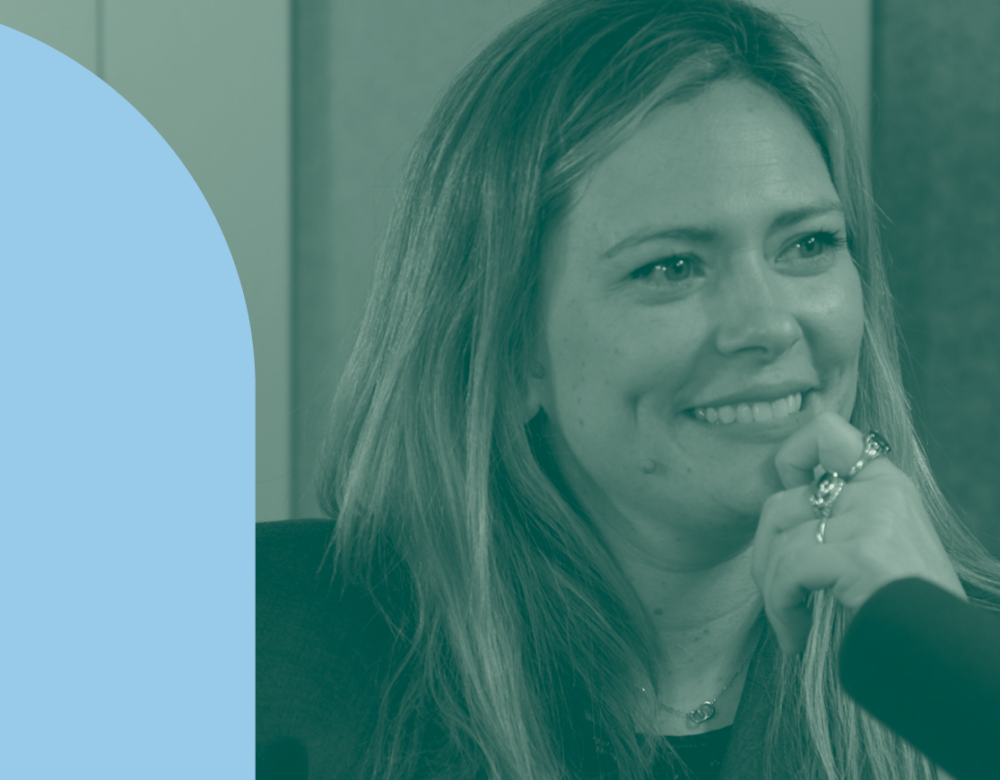
If you’ve ever read anything about the history of psychedelics, the name Timothy Leary will probably sound familiar. He was a Harvard psychologist who researched psychedelics within academia before getting fired in 1963 and taking his experiments underground. But you might never have heard of Timothy’s wife, Rosemary Woodruff Leary. We talk with author Susannah Cahalan about her book on Rosemary and how she played a quiet but foundational role in our early understanding of LSD. We also talk about our history of pinning our hopes on a miracle chemical and why some people are skeptically embracing psychedelics today.
Credits
Host: Alexis Pedrick
Executive Producer: Mariel Carr
Senior Producer: Rigoberto Hernandez
Sound Design: Seth Samuel
Fact-Checking: Alexandra Atiya
Resource List
Cahalan, Susannah. The Acid Queen: The Psychedelic Life and Counterculture Rebellion of Rosemary Woodruff Leary. Viking: 2025.
Corrections
In this interview, the Timothy Leary Papers were described as consisting of 400 boxes. The collection actually includes 610 boxes, 11 oversized folders, 22 tubes, 67 audio files, and 1.78 Gigabytes of computer files. A full list can be found here.
In this interview, the Rosemary Woodruff Leary Papers were described as ancillary. Technically, the New York Public Library does not refer to the collection as “ancillary” or “secondary.” Rosemary’s collection has its own separate call number. More information can be found here.
In this interview, the Rosemary Woodruff Leary Papers were described as consisting of 25 boxes. The collection actually includes 24 boxes, 1 volume, and 11.75 mb of computer files. A full list can be found here.
In this interview, Rosemary’s mystical experience was described as taking place when she was seven years old. The incident actually took place in 1943 during the summer after her 8th birthday.
Transcript
This interview has been edited for clarity.
Alexis Pedrick: From the Science History Institute, I’m Alexis Pedrick, and this is our new season of Distillations, American Vice: Risk, Science, and the American Experience. This episode is an interview with author Susannah Cahalan about her book The Acid Queen: The Psychedelic Life and Counterculture Rebellion of Rosemary Woodruff Leary. We filmed this interview in our studio, and you can watch it on our YouTube channel at youtube.com/@sciencehistoryinstitute.
Alexis Pedrick: If you’ve ever read anything about the history of psychedelics, the name Timothy Leary will probably sound familiar. He was a Harvard psychologist who researched psychedelics within academia before getting fired in 1963 and taking his experiments underground. But you might never have heard of Timothy’s wife, Rosemary Woodruff Leary. She was what’s known as a psychonaut, someone who experiments with altered states of consciousness, often with psychedelics. And she played a quiet but foundational role in our early understanding of LSD.
Alexis Pedrick: Rosemary wrote many of Timothy’s speeches and books, and helped shape the media’s narrative about LSD and the counterculture of the time. Susannah talked with us about how early researchers used psychedelics to understand psychosis. She also talked about how LSD left the university lab and made its way into American living rooms. She explained why we don’t know much about female psychonauts like Rosemary Woodruff Leary, and why some people are skeptically embracing psychedelics today.
Alexis Pedrick: So our guest today is Susannah Cahalan. So thank you for being here.
Susannah Cahalan: It’s a pleasure. Thank you so much for having me back. I’m thrilled to be here.
Alexis Pedrick: Yeah, yeah. This is your second show with us.
Susannah Cahalan: I love this show. So I feel very good about being back.
Alexis Pedrick: Good. We like to have you. And you always are talking about things that are fascinating. Actually, your first two books were about mental illness. The [first] one, Brain on Fire, is a memoir about your own experience with psychosis. And you had this kind of, like, mysterious autoimmune disorder. Your second one is the one that we actually interviewed you about, The Great Pretender, and that’s about a psychology study that changed our understanding of madness; let’s say, I think, is a good way to describe it. So first of all, everyone should listen to that episode. So in this latest book, you are continuing, like, your curiosity, maybe with the human mind? It feels like this is part and parcel of that. So what, what drew you to this story?
Susannah Cahalan: Thank you for finding the through line because it is like, I feel like The Acid Queen is a bit of a pivot for me, but there is 100% a through line. Yeah. And, you know, in both of my previous books—in Brain on Fire and in The Great Pretender—I talked about psychedelics in passing, right? So in Brain on Fire, I talked about ketamine treatment because ketamine actually affects the same receptor in the brain that was afflicted in the illness that I had, which was the NMDA receptor.
Susannah Cahalan: So I had a little bit of kind of an aside about the rubber hand illusion; do you know about this?
Alexis Pedrick: Yes.
Susannah Cahalan: Which I find fascinating. Briefly, basically, if you put a rubber hand on a table where someone is, then their hand is actually below them, and they can kind of look and [it] kind of appears as if it’s their hand. If you stroke it with a feather, if you’re on ketamine, you can feel that.
Susannah Cahalan: And in fact, you can do that with people not on ketamine, but ketamine definitely seems to amplify that response, so I wrote about that as a way of describing dissociation and, you know, kind of the tricks of the mind that happened with me and my condition. And then in The Great Pretender, I wrote a little bit about a psychiatrist named Humphry Osmond, who coined the term psychedelic in the 1950s with the writer Aldous Huxley, who wrote Brave New World. And they were going back and forth about how to name this and came up with that term. And meanwhile, he was actually using LSD in his practice, not only with his patients, but with his architect who was designing his psychiatric hospitals. Because at the time, psychedelics were really seen as what was called a psychotomimetic, which—meaning mimicking psychosis—so it was a way for them to understand the mind of one of their patients.
Susannah Cahalan: So someone maybe diagnosed with schizophrenia, someone experiencing psychosis. And so he would give it to his architect, who would then walk through a typical asylum record at the time. And notice like, you know, the dark recesses under the bed are kind of scary or, you know, the ceilings are too low or too high or, you know, the closets are too dark. You know, he would notice these—he’d have these reactions to his environment. And thus they would change the planning of their psychiatric hospitals. So I wrote about those two things. And really, it fascinated me.
Susannah Cahalan: And meanwhile, some researchers had reached out to me and, you know, there was this kind of burgeoning field of psychedelic therapy coming out, especially, you know, in the last 10, 15 years. And a few people had reached out to me and said, “Would you ever write about psychedelics or compare the psychotic experience to the psychedelic one?” And that was kind of interesting to me. A lot of my friends were disappearing to places unknown or, you know, like places in New Jersey, in South America or Central America or New Jersey, which, like, listen, I love New Jersey.
Alexis Pedrick: It’s a great place.
Susannah Cahalan: I’m a Jersey girl. But like a strip mall shaman in New Jersey, they would be going to and having these transformative experiences with psychedelics. And I was intrigued personally, but also just kind of as a history of medicine kind of question about the role of these substances. And so that was swirling around me. And so any time you start to look into the history of psychedelics, the name Timothy Leary inevitably comes up.
Susannah Cahalan: He’s seen as, whether or not this is true, the kind of godfather of the first wave kind of psychedelic revolution of the 1960s. And I became aware that his archive was at the New York Public Library and went there, looked at—there’s 400 banker’s boxes worth of material. And so that was a lot and overwhelming. And there was an amazing biography written about him. There’s been a lot written about him. I didn’t know what I was looking for, but at the same time I was going there, I became aware of an ancillary collection called the Rosemary Woodruff Leary Collection.
Susannah Cahalan: And I had never heard of her before. And when I looked her up, I realized that she was his wife during the height of his notoriety. So I accessed those archives, and there were a much more manageable 25 boxes of material. And in there was an unpublished memoir, and I thought: this woman is fascinating. So that’s kind of what set me off.
Alexis Pedrick: I love that. Actually, I think that’s one of the most fun parts. I always think of being a historian or being a writer in part as kind of like being a detective. And you’re you’re digging in and you’re like finding all of these things.
Susannah Cahalan: I think there’s something almost like–this may sound a little bit outlandish or intense–but there’s almost something erotic about the experience of going through an archive. It’s intoxicating. You’re on a trail. You’re like a detective. You have this obsessive quest.
Alexis Pedrick: Yeah, I get it, I get it. I think it’s bringing something to life that we may or may not have experienced, right? And I think particularly for this story, and I’m hoping you’ll be able to help us sort of set the scene for the early days of LSD. Because I feel like as someone who’s coming to it—like, obviously I didn’t live through that era, right? I wasn’t in it. And I’ve been trying to wrap my head around it. So LSD for, for listeners or for viewers at home is lysergic acid diethylamide. Did I say that right?
Susannah Cahalan: Great job.
Alexis Pedrick: Is that okay?
Susannah Cahalan: Yeah. I remember having to do the audiobook, and I tripped over that many times, so, really, kudos there.
Alexis Pedrick: Okay, all right. I feel better. So I’m curious, like, who discovered it? Where did it come from?
Susannah Cahalan: You know, the history of LSD is actually one of accidental discovery, which I feel like happens in science a lot. So Albert Hofmann, a Swiss chemist, he synthesized the substance. I think it was to use for an allergy kind of medication. And it never kind of—for various reasons—didn’t hit, wasn’t released. Later, he returned to it in the 1940s, and he accidentally ingested it, I think, by touching it. And, you know, it’s so potent that he was thrown into the first-ever LSD trip. He didn’t know what the hell was happening. [Editor’s note: Hofmann claims he planned to synthesize the compound with the intention of obtaining a circulatory and respiratory stimulant. He hoped to make something similar to Coramine. More information can be found in his memoir here.]
Alexis Pedrick: I can imagine.
Susannah Cahalan: And he ended up doing it again with his assistant on purpose because the experience was so explosive. And he actually recruited his research assistant, Susi Ramstein, to do it with him. And so again, the second-ever LSD trip, man and woman. And there’s this famous bicycle ride that occurred where he’s very high, and so he has this kind of amazing moment. It’s commemorated every year now—his bicycle ride—sometime in April. [Editor’s note: Some sources note that his assistant took the drug later in June. You can read more here.]
Susannah Cahalan: So kind of the dawn of the LSD age emerged from that. And it was in the lab for many years, seen as a psychotomimetic mimicking psychosis, a window into the mind. You know, psychoanalysts started to use it on their patients. There were secret government programs like MK-ULTRA to try to see: could this be—at that time, brainwashing was a real topic of conversation—could this be used as a weapon of war?
Susannah Cahalan: So there were a lot of research funded through kind of CIA arms and, you know, kind of sketchy stuff happening, to say the least. So all this is happening, and over time, LSD starts to kind of escape the couches [and] enter into kind of everyday Americans’ living rooms. And at that same time, people learn how to synthesize it themselves as well, so it starts to become kind of democratized.
Alexis Pedrick: So it is—again, and it’s so fascinating to me because I’m just trying to wrap my head around this time where everyone is like, it’s in a lab and it’s like a treatment.
Susannah Cahalan: It’s not illegal.
Alexis Pedrick: It’s not illegal. Right?
Susannah Cahalan: Until the late 1960s, basically in the early 1970s.
Alexis Pedrick: Right. Okay. And so I know you’ve mentioned this sort of like mimicking psychosis, but what does it actually really do to our brains? What are the effects?
Susannah Cahalan: You know, there’s a lot of conversations about that ongoing. I mean, there’s a big part with the dopamine channel. There’s maybe kind of interaction with the default mode network. There’s research now beyond LSD, but psychedelics in general seem to kind of create new connections. Like the grooves in our brain that tend to—especially with obsessive thought or things that we learned that create these patterns—it seems to open up new connections. That seems to be some of the research coming out now that I think is very exciting about this.
Susannah Cahalan: So, you know, some of the terminology about opening our mind does seem to have a neurobiological basis, at least the research that’s emerging now is showing. And also, you know, at the time it was used for a variety of treatments: so frigidity in women; it was kind of like this “cure-all.” It was seen as one of these magic bullet treatments at the time. Lots of hype. And the media was behind it too. They were very excited about this novel treatment. And, you know, this was a time of great expansion in psychopharmacology. So you also have the discovery of lithium that’s going on at that time, antipsychotics in general, like Thorazine. So we’re, you know, kind of believing that: oh, wow. We now can really understand the brain by treating it with these chemicals. And it was an exciting time. It was kind of the creation of Big Pharma. [Editor’s note: Lithium was technically discovered in the 19th century, but had been largely forgotten until this point.]
Alexis Pedrick: I mean, I get it, in that there is something really exciting and “cool” about this idea that, like: oh, we could take this thing and it could make us right. It could fix us; it could put us in society in the way society wants us to be acting in society. And I think that it’s really interesting that we’re always on the search for something like that, right?
Susannah Cahalan: I mean, it was even deeper than that. Like, I think some of the real–I mean, some of the scientists and researchers were true believers too. Timothy Leary started as a researcher. But there was this belief that not only could psychedelics change the individual, it could change society. And there is some evidence. I mean, if you look at the culture at the time—this massive shift in music and art—I mean, there is undoubtedly the effect that psychedelics had. But I mean, this is like social strictures and “okay, you know, we’ll have a more communal situation” or, you know, “we’ll, you know, stop eating meat.” I mean, “we’ll end pure racism.” I mean, it was literally like certain people believed that psychedelics could end war, right? And obviously that was a lot to put on a chemical.
Alexis Pedrick: Absolutely. So I want to go back to 1961 and the Harvard Psilocybin Project. First of all, I can’t believe I’m saying all those words together. Like, what was it? Who was involved? How did this come to be?
Susannah Cahalan: You know, again, you have to remember [that] at the time, LSD and psilocybin: they weren’t illegal. And so there was a lot of potential seen. And, you know, Harvard backed these studies at the time. So there were a variety of studies coming out of Harvard. Timothy Leary, Ralph Metzner, and Richard Alpert were three of the big faces of studying psychedelics at Harvard. And, you know, some of them were kind of more legitimate studies than others. And all of them have subsequently been questioned after further investigation. [Editor’s note: The University did fire Leary in 1963, and before that some faculty members and members of the administration did express alarm at their methods. You can read more here.]
Alexis Pedrick: But there was the Concord Prison Experiment where psychedelics were given. I think psilocybin in particular [was] given to people who were imprisoned, and then over time they were checked to see [whether] their recidivism rate [was] affected. And they found overwhelmingly that, you know, the recidivism rate was reduced. Now, subsequently, studies have shown that the collection method was faulty and the conclusions were probably fraudulent.
Susannah Cahalan: But that’s exciting. And, and these, these researchers would actually go in and do the substances with the patient population or the population they were studying. There were studies in art. They, you know, in terms of artists, part of the psilocybin study was to study what happens when you give jazz musicians and painters and writers these substances. And a lot of it was through self-reporting. So a lot of it was, you know, people writing about their trips and kind of integrating afterwards.
Susannah Cahalan: Lots of studying of a concept called “set” and “setting”, which, that is extremely important still. And that’s the idea of kind of like the mindset that you bring. And that could be literally your neurobiology, or that could be your belief system. It could be, you know, your character, your personality type. And then “setting”, which is the environment, and how both those things can affect the experience of psychedelics. And also, you can work to shape those things, to kind of train yourself or guide yourself to the maybe healing or, you know, experience that you want to try to get out of it. So that was part of that time.
Susannah Cahalan: And one of my favorite studies was done on mystical experiences. And in that, there were half a group of people [who] were given psilocybin, and the other half were not. And it was like very clear who would have gotten [what]. I actually met someone who was involved in that study; he came to one of my talks, and he was in the placebo group. And he was so upset because the other side of the “mystical experience” side of things really did seem to have quite a profound experience. Some of them–one of them in particular–kind of a negative one. But a lot of them very positive. So a lot of disparate but very interesting studies coming out of Harvard at that time.
Alexis Pedrick: Yeah. And I find it really interesting that, okay, so first of all, they’re Harvard researchers. They’re doing this research on Harvard students, like on students. And I think the fact that they’re participating sort of alongside them, I find fascinating and odd. And it’s this place where I’m like, “Oh, like if you’re researching a cancer drug, right? Like you don’t take the cancer drug alongside, right?”
Susannah Cahalan: One of many ethical lapses in this era. I mean, yeah, an IRB would never approve. I mean, they had basically a flophouse that was Timothy Leary’s house where they would be doing these, you know, they would be dropping acid or taking psilocybin. And that would be part of the study where they would do the self-reporting, or they would try all these different kind of—because Leary, before he joined Harvard, was a personality researcher. He was really studying kind of interpersonal relationships and came up with a test—a personality test that tests your ability to relate to other people. And apparently it’s still used.
Alexis Pedrick: I was going to ask. Okay, what is it called?
Susannah Cahalan: The Leary Circle. [Editor’s note: In academic literature, this is often referred to as the Interpersonal circle or Interpersonal circumplex.]
Alexis Pedrick: Okay, now I want to like look this up.
Susannah Cahalan: And like, it’s actually really quite interesting. Yeah, so he would take some of that experience before and apply it to the psychedelic setting as well.
Alexis Pedrick: Okay. All right. So he was coming into it with an interest in how people were relating to each other, maybe to themselves, that sort of thing?
Susannah Cahalan: I think that from a deep interest.
Alexis Pedrick: Okay, so did it start as psilocybin and then expand to LSD? And I guess maybe for people, what is what actually is psilocybin, right?
Susannah Cahalan: So it did start with psilocybin because that was when Leary visited Mexico. He was given magic mushrooms, which contain psilocybin. One of the many things it contains, but, you know, kind of psychoactive ingredient. And he was given these mushrooms by a curandera. So, you know, he had this really kind of explosive experience where he claims he learned more about psychology in five hours and, you know, whatever his amazing line—he had a great way with words. And that transformed him into really believing that these could change the world. [Editor’s note: The two main active ingredients are Psilocybin and psilocin.]
Susannah Cahalan: He was scared of LSD. I think with good reason. The way people who have extensive experience describe it is that psilocybin, since it comes from the earth—even though it’s [LSD] synthesized in a lab, the molecule, whatever—but anyway, psilocybin comes from the earth. You could say if you take magic mushrooms, you know, and people describe it as a very earth-bound trip. You’re very tethered to the earth, right?
Susannah Cahalan: Whereas LSD, people claim you lose your coordinates completely, or you’re off in outer space. And I think he was concerned. I think he had heard about people having these intense experiences. And he finally did do it, and then he had a bad trip. His first trip, he saw himself as a clown. He saw himself as a puppet in, you know, like a two-dimensional world. He was kind of very changed by that experience. And then, but then subsequently, as he emerged from and kind of integrated and came out of it. LSD, I think, became his chosen substance—psychedelic.
Alexis Pedrick: Okay, so Timothy Leary is, let’s say, the face, a name that comes up all the time. People know [him], but The Acid Queen, your book, is actually about Rosemary Woodruff Leary. So how does she come into the story? What’s her connection with psychedelics?
Susannah Cahalan: So yeah, what’s so fun about this is that Leary is the public face. His written words, his public persona, really shaped the way millions of people experience psychedelics. And Rosemary was there, right alongside him, helping shape those words, helping shape that image. And I found it so fascinating to kind of center my gaze on someone who was outside or right at the edge of the camera, and take in new information around her.
Susannah Cahalan: So she comes into the picture. She was born in 1935. She’s a bit younger than Leary, who was born in 1920, I believe. And she came from Saint Louis, didn’t graduate high school. Escaped a very abusive relationship at age 17, went off to New York, became kind of a working model.
Alexis Pedrick: Yeah. Wasn’t she like a flight attendant?
Susannah Cahalan: She was a flight attendant. During a time where it was notoriously difficult to be one. And she got married again. Started kind of getting into the world of drugs through the Beat movement. That’s where she first started. She dated a jazz musician, a jazz accordionist, which I just love. It’s really good, actually. It’s fantastic. And she, you know, through him, not only did she read the literature of the time that was emerging out of the Beat movement, but she also was reading paperbacks in translation. So, you know, she was reading Sartre and she was all of a sudden it was like this world of emerging new intellectualism that was through art house cinema. It was through the art itself.
Susannah Cahalan: And she was surrounded by the characters of that era, like the Jack Kerouacs of the era, the Allen Ginsbergs. She was sitting in these clubs with Miles Davis, you know, this is who she surrounded herself with. And by osmosis, she took on some of these—you know, she didn’t have women to really look to as her heroes—but she took on the men of the era as these examples of how she wanted to live her life, which was extreme freedom.
Susannah Cahalan: And so she tried drugs. She did it all, you know; she had a lot of sex. She did a lot of experimenting in that time, long before she met Leary. And then when a friend came to her with a little sugar cube with LSD, she had read Timothy Leary, Ralph Metzner, and Richard Alpert’s book The Psychedelic Experience, which was like the book you read before you had a psychedelic trip, and so that shaped her. She set her setting properly. And, you know, kind of [had] a menagerie of like Eastern religious kind of symbols around her, a comfortable kind of setting. And she prepared herself properly as she thought through that book. And she had an experience where Kali—actually the vision of Kali—came to her during that first trip. She felt extremely connected to the universe, to the world.
Susannah Cahalan: And she was reminded of an experience she had at age seven, which was not a psychedelic experience, but was a spontaneous, mystical experience, which I think a lot of people have, whether we remember them. I think a lot of people who call themselves, you know, mystics or, you know, shamans do report having these kinds of spontaneous experiences in their youth. And she had one. And taking LSD connected her to that experience that was profound but almost forgotten.
Susannah Cahalan: And it became this kind of lodestar experience that she would now—the rest of her life would be in search of repeating that. And so this is all happening before Leary. So when they do finally cross paths in an art gallery downtown. And finally, at this estate called Millbrook, it seemed almost like she was primed for this. And this kind of explosive and very complicated, but deep relationship emerged.
Alexis Pedrick: Yeah. But she’s seeing it as sort of maybe she’s always been on this path, right?
Susannah Cahalan: She 100% saw that. And, you know, at the time, she was also—through this kind of Beat movement–she became interested in some of the 19th-century kind of, you know, “William James” spirit. Kind of the spiritual side of these searchers. And she started using the tarot. She started using the I Ching, you know, all these divinatory tools, in this belief that she was on a path. I mean, no one struggled with insecurity, in a way. There was insecurity, but there was a sense of real greatness. Like: I am meant to live a Great life. And great in that big G term, you know, like I’m going to live a mythical life. And she felt that those provided a window into the path she was meant to be on, and that path led to Timothy Leary.
Alexis Pedrick: Right, right. And so you write this really great line that I love where you say, “Rosemary Woodruff Leary is everywhere and nowhere,” which I think is fantastic. And you explain how readers have probably seen her face—like you were talking about Miles Davis and all these people—but they’ve probably seen her alongside of all these famous people of the era. There’s a John Lennon and Yoko Ono—actually, we have a photo here of John and Yoko’s famous bed-in, and Rosemary and Timothy are there, of course. And it’s a great image. It’s a great, I think, sort of illustration of the impact of Timothy and Rosemary on [the] counterculture of the time. But I would also be willing to bet [people], myself included, have never heard of her before this book, you know. And are you writing in hopes of trying to remedy that a little bit?
Susannah Cahalan: Oh, gosh. You know, I think that the answer in terms of “why” is both kind of like self-created and also the culture itself. You know, it’s like, I love “everywhere, nowhere.” Thank you for that kind comment. And she is, because that picture that you talk about–the bed-in picture, which I think a lot of people are familiar with–it’s John and John and Yoko in bed protesting the Vietnam War in Montreal. And it’s like this very famous image of them.
Susannah Cahalan: And there she is. And it’s not that she’s just in the shot somewhere and you’re like: “oh.” But she’s actively looking at the camera. And once you find her in the shot, you realize she’s staring right at you. It’s almost as if she’s out of time, like she’s photoshopped in, like she’s aware of some kind of different—I don’t know—different timeline, you know? And it’s uncanny. Leary’s in the moment. He’s mid-clap, and she’s just staring right down that camera lens. And I found that utterly fascinating because she’s staring at you.
Susannah Cahalan: I mean, once you become aware of her, she’s everywhere, and she’s so present. But she disappeared. Before that moment. I had never noticed the woman staring at me in that picture all these years. I think that picture really encapsulates her role. You know, why is she not known? A) She was erased—actively erased by Timothy Leary and his acolytes in the kind of mythology that was created. B) Timothy Leary has kind of been erased a bit. He’s a little bit embarrassing to this very exciting new world of psychedelics. That history, especially in the counterculture era, is not one that people like to talk about. So this woman who is associated with that—there’s another reason to ignore her. And then it’s self-perpetuated because for many years she lived underground, and she wanted nothing to do with the legacy of this. So she erased herself from the narrative; later, to kind of decide she wanted a role in it. You know, she had a complicated relationship with fame.
Susannah Cahalan: She had gotten so close through Leary. I mean, it’s hard to overstate the power of Leary at that time. I think people who are young now—some people don’t know who he is—a lot of people don’t know who he is, but at the time it was Timothy and Rosemary. Rosemary was a woman named media heroine at that time. And he was on all the late-night shows. He was the guy you went to for a good quip about psychedelics or the counterculture. And he was, you know, constantly in the news because he was constantly having legal issues. Right? He ran for governor of California. I mean, he was a real character of that time, a larger-than-life character of that time. And I think, you know, she got so close to the bright lights of the camera herself. And I think part of her, like this “greatness” part of her, was attracted to it. But I think once she got close enough to really see what fame is about, I think she found it disgusting. And that part of her is the part I like.
Alexis Pedrick: Right, I mean, because he’s he ultimately does get fired from from Harvard, right? And and the project is canceled, right? So is that when it [LSD] just kind of like leaves academia and leaves the research labs and kind of like, goes rogue?
Susannah Cahalan: You know, it was a combination of factors of like really bad research behavior, you know, like having sex with people you’re studying, like maybe don’t do that, you know? And just really unethical stuff going on. And he also just wouldn’t show up to class. So there was plenty of reason to fire him. But also psychedelics were going out of favor. There were some embarrassing things happening. There were some dangerous things happening there. You know, there were many reports starting to emerge, especially in the kind of mid-to-late 60s, where there were stories of people jumping out of windows; there were children taking it.
Susannah Cahalan: You could say it was fear-mongering, but some of it is legitimate too. Like, I think if you just say it’s fear-mongering, I think you miss out on the fact that these were substances were being abused as well. So there was a shift, and all of a sudden the media that was once so behind these novel chemicals all of a sudden turned against them. And the LSD crisis became more of the vibe that these were seen as drugs, not as kind of tools of the pharmaceutical revolution.
Alexis Pedrick: Right, right. So in 1967, Timothy Leary utters his, I would say, maybe most famous phrase. [Editor’s note: Leary first started saying the phrase in 1966, but it wasn’t popularized until 1967.]
Susannah Cahalan: That’s very fair. I think so, yes.
Alexis Pedrick: “Turn on, tune in, drop out.” First of all, what did that mean? And what was the impact of that?
Susannah Cahalan: Yeah. I mean, I think it meant different things to different people, but really what it meant was: not only drop acid; that’s the way of “turning on.” But it’s like, you know, for Leary, especially at that time, it wasn’t just taking LSD. It was like living—incorporating aspects of Eastern philosophy and religion. Living your life in a more “communal” way, like really kind of changing. But I guess by “turning on”, you’re taking LSD. “Tuning in”, you’re using these tools: religious thought and just changing your life. And then “drop out” means drop out of what he saw as these 1950s societal roles: don’t go to the army, don’t go to your soul-sucking job, you know, drop out of what society expects of you in pursuit of something higher. That’s essentially what he was saying.
Susannah Cahalan: And man, were kids psyched to hear that, even though he was a full generation older than the children he was talking to. This really did appeal, especially because the Vietnam War was raging and there was a lot of fear. And you have the draft coming in and deferments. All of a sudden, you know, you don’t get deferments anymore, and then you have your lottery number. So there was a lot of there was a lot to react against. There was a lot of things to call BS on, and that slogan really did encapsulate the feeling of many teens—young adults of that time.
Alexis Pedrick: Yeah. And I mean, I think to your point about him sort of being larger than life, he is like a very charismatic figure. I mean, that’s like a great line, right?
Susannah Cahalan: You know, Rosemary is responsible, quietly on the sidelines, for some of these lines. Like, I don’t know what role she played with that, but some of his quips—he would acknowledge it in certain news clips. He would say, Rosemary gives me my best lines, but he did have a beautiful way with words. Some of his books are just like real “out there” and kind of unreadable. But in the beginning, especially when Rosemary was editing him, like High Priest is a fantastic book, and he’s funny and fun, and his wit and charm and charisma, especially in that book, are really evident. And, you know, everyone says the same thing about Leary, even those people who don’t like him, ultimately, that when you’re around him, if he’s on, you know, if he feels like he wants to, he can make you feel like the only person in the world. Like all of a sudden, it’s like there’s a crackle in the energy. There are certain people who have that gift. And he had it. He was a star. It’s almost like he had this headlamp that he could shine on you, and you could feel the whole world was yours with him, you know? And I think that was his power. And Rosemary, by contrast, she didn’t necessarily have that power.
Susannah Cahalan: But what she had was this ability to envelop you in this warmth and safety. And she knew how to take care, give space for everyone, not just the person that Leary had decided was worthy of it. But she was diffusely generous, diffusely open in a way that psychedelics were supposed to make you. That’s how she was. So it’s different than Leary, but very powerful as well.
Alexis Pedrick: Yeah, it’s interesting because we talk about patriarchy and science—women being sort of unsung. And I think my initial assumption was [that] this counterculture movement was probably a place where women thrived. And it turns out that the same barriers of patriarchy were intact there. And Timothy Leary, for all of his sort of “chatter,” he doesn’t accept his research partner being gay. He does see Rosemary—as much as he gives her some compliments—like he thinks she’s less than, right?
Susannah Cahalan: One hundred percent.
Alexis Pedrick: Like his ego is…
Susannah Cahalan: Yes.
Alexis Pedrick: And so I’m just wondering if you could talk about that, like describe that aspect for us.
Susannah Cahalan: A wonderful line from the late Peggy Hitchcock—she was an amazing character as well. She was kind of seen as this connector. She was kind of a society lady who loved LSD and also loved jazz and hanging with everyone. She was a very open woman. And she’s the person who actually helped connect Rosemary and Timothy. And also helped connect Timothy with this place called Millbrook, which was this estate up in Millbrook, New York, where there was a kind of experiment in psychedelic communal living. I got to interview Peggy before her passing, and she was amazing. And she gave me the best line. She said, you know, all talks of revolution ended with one question: who’s going to do the dishes? [Editor’s note: The Millbrook estate became known for the experiment in psychedelic communal living after Timothy Leary was introduced to the location and established it.]
Susannah Cahalan: So what what they found was in this communal living where: oh, we’re having sex with everyone, it’s all free. We’re communal child-rearing. We’re going to raise our own food. Well, you had one gender, one kind of person doing all the cleaning up, right? And when people fell apart, when people had bad trips, or things went sideways. The women were the ones who were there to clean up. And that’s what I heard repeatedly. That’s something when I was interviewing a lot of people who were involved in these kinds of places—that those gender dynamics were actually hardened in the counterculture. In fact, it kind of was baked into the model.
Susannah Cahalan: There was this idea of the divine feminine, and you’re supposed to embody these very traditional feminine roles. And that was very much baked into hippie counterculture. And it was—it’s interesting because Rosemary, in many ways, did follow that. She did do a lot of the cleaning up. She did some of the farming. She cooked the meals, you know, with a big problem. She could not have children, and she really struggled with that. Also, I think a lot of her personality did not fit in with this kind of idea of the ideal feminine. But she was the representative of the divine feminine. Leary was the divine masculine. She was a divine feminine, but she couldn’t have children. And that really kind of unsettled their relationship. Not only her, because she wanted children, and she didn’t know what was going on until later, when she had to get various interventions and surgeries to find out what was going on. But Leary kind of needed her to be barefoot and pregnant and embody this ideal.
Susannah Cahalan: And that didn’t happen and couldn’t happen.
Alexis Pedrick: Right. And so like, when they’re there at Millbrook, because you talked a little bit about her spreading this warmth and bringing people in—how did people see her? Was he the only person who was really worried about this? Like she’s not, you know, exemplifying the divine feminine? Or was that something a larger group thought? How did they see her role there?
Susannah Cahalan: Well, it was interesting because a lot of people did see her as that divine feminine, you know, just how she lived elevated the world. That was her art. Just the way that she was. And I talked to this wonderful character named Oden Fong, who said she was kind of an unearthly being. I heard that too. Leary’s biographer described her as this just amazing creature, really.
Susannah Cahalan: I think some of that was created by her as a kind of armour, maybe. So there were definitely people who—I mean, another person, Maria Mangini, who now works very closely in the psychedelic world and [is] very well known. She visited Millbrook as a 17-year-old, and she said that Rosemary was so kind because she made—which these are her words—”minor characters”; she called herself a minor character. She made you feel like you were the main character. That was her gift.
Susannah Cahalan: And she really I mean, she was seen as a kind of queen. She was the queen of the household; Timothy was the king. Now, we’re talking royalty—there’s always going to be backstabbing. So there were other people who didn’t quite think that she was worthy of Timothy’s love and respect, that she wasn’t worthy of the Queen mantle. She hadn’t graduated high school, and there were some male people who critiqued her as being almost too much of a true believer, because she really believed in the power of psychedelics in this kind of new way of living. So, you know, with power comes some resentment. So she did have power. She wielded soft power, and there were people who did not like that.
Alexis Pedrick: And so it’s very much [like] she’s serving this indirect role in this movement. There’s people, I think that play a lot of indirect roles, right, in doing science. And they get left out of history, right? We don’t necessarily talk about them. But Rosemary is, as you say, she’s wielding this soft power. She’s carving out this space for herself within this movement. Were there other female psychonauts alongside her? Were there other women doing this? Or was she sort of stand-alone?
Susannah Cahalan: Absolutely. There were many “acid queens.” Honestly, I mean, she got that title from Allen Ginsberg and the media because she was with the “real” face. But there were so many women behind the scenes who were propping this revolution up. And, you know, some of these people are known writers like Diane Di Prima. And some of them are wives of famous researchers or researchers themselves. But a majority of them are unknown. And that’s by design, especially if you had children. Being a woman, you could not have your drug use known, right?
Susannah Cahalan: Even before it was illegal, when it was starting to turn, there was a lot of implication about your character and worth. And especially if you had children, there were some questions about your ability to raise those children. So a lot of these people were relegated to the shadows of the underground by design and on purpose. They did not want to have that attention on them. And thus a lot of them, you know, I’ve spoken to quite a few of these people, and some of them still continue to want to remain nameless. But they’re the ones who carry the stories. They’re the ones who are passing along some of this knowledge. A lot of these experiences—they’re even conducting kind of—again, no IRB funding for this kind of research, but they are conducting research, keeping track of it. Some of them are underground psychedelic therapists and have been working for years as such, and have this knowledge that now it seems that some in the mainstream research community are starting to take seriously, and want that kind of perspective as well. But a lot of them still don’t want to be known.
Alexis Pedrick: And that makes a lot of sense though, that like, particularly if the idea is all these gender roles are being reinforced, then that becomes even more important.
Susannah Cahalan: There was danger. There was danger in being public. Rosemary faced those dangers head on. That made her very unusual because she was public about her drug use. She was quoted, she was associated, she was arrested several times with Leary. She did prison time for Leary refusing to testify against him. She did 30 days in prison. And so that makes her very unusual, because a lot of the women of that era, again, went underground as much as they could.
Alexis Pedrick: To talk about Millbrook, I think it was really clear to me as I was reading this that even though, on the outside, let’s say there is this: we’re a community, we’re coming together, we’re doing something beautiful. There is also very much this dark underbelly, right? And so you write that—another great quote—that it’s a “site of religious awakening and rank defilement”, right? And so beyond the reinforcement of these patriarchal structures, there were some pretty downright awful things that happened. There’s child neglect and abuse. There’s young kids getting access to LSD. At one point, there’s an accidental drowning. And it felt to me that Rosemary seems like she’s aware of what is happening, right? She’s kind of clear-eyed about [it]. Timothy is on a sort of a power trip, and he kind of sees it in a different way. The way he talks about the experiments, or at least presents them, even though they’re in the same place, having the same experience, they’re seeing it in very different ways.
Susannah Cahalan: That kind of schism between their perspectives of the use of psychedelics really starts in 1966 with this infamous publication of his Playboy interview, where he waxes poetically about the kind of sexual powers of LSD, like saying that women can have 200 orgasms or something ridiculous. And she really felt that that was pandering. Not only pandering [and] not true, but also pandering and also dangerous. Because she always felt that there was a risk-reward baked into these experiences where, you know, she had seen enough people have really terrible experiences and some that had lifelong effects that were negative. She had seen enough of that to know that this really wasn’t for everyone.
Susannah Cahalan: Like, she did not believe that this was for everyone, whereas he was in this kind of—Marshall McLuhan, this media theorist, Marshall McLuhan had advised him to, like, sell it like Coca-Cola with a smile. And that’s what he was doing. He was marketing LSD, right? And she really did not like that side of things. And then this is where it’s hard because as a biographer, you see the character you’re following make these decisions that you think: how do you explain this? Because she saw how he treated his children, which was terrible. And yet she stayed.
Susannah Cahalan: And, you know, there’s a lot of clear-eyed view of this from the perspective of the hindsight of her writing her memoir; I have to believe that not only under the thrall of this extremely intoxicating man, but under the thrall of drugs and fame and power—someone who was losing her power. She had aged out of her job as a stewardess. Two-time divorcee. No high school diploma. What was waiting for her outside all of a sudden? She’s a queen. All of that, I think, did shade that moral compass, maybe. Because she’s a very moral person, I think, deep down.
Susannah Cahalan: But I think she makes these decisions to look away from the darkness that I thought was really sometimes reprehensible. So it’s an interesting thing as a biographer because you can’t stray away from that. You have to, as I try to be as clear-eyed about her, about psychedelics, about Timothy Leary as I possibly could. I tried not to get intoxicated myself.
Alexis Pedrick: I’m curious if you think Timothy Leary was a fraud?
Susannah Cahalan: I do, I do have a thing with frauds, don’t I?
Alexis Pedrick: I know I’m thinking about your book. I’m thinking you have this knack for demystifying these powerful men, these powerful figures, and kind of breaking them down and saying: actually, if you peel all this back, it’s not [real]. And so, how do you see that? Do you think he’s a fraud?
Susannah Cahalan: I mean, if you were to take his, let’s just say like just a basic answer to that: his research is fraudulent for sure. That’s been revealed, so yes. Do I think he’s a fraud in the culture? I mean, I think yeah, I do. In a lot of ways, he didn’t live by what he was preaching, so yes, I do. I mean, that being said, just as with the Great Pretender, with David Rosenhan and the episode we did, there is a lot to be learned from him. And I think he was extremely intelligent. And I think that there is a lot that the psychedelic community now can still learn, especially from his work on set and setting, and also as an example of what not to do, honestly. So I do think he has worth, even if he is a fraud.
Susannah Cahalan: And I think at this point, there are the Leary fans out there, people who love Leary and you know, that’s great. I’m sure Leary, in writing his book—Psychedelic Experience in particular—changed a lot of people’s lives. And some for the better. Some people maybe were in a terrible job and had insight into what they wanted to do and did drop out of a bad experience or, you know, [were] able to get some insight and meaning through this experience and really do respect and love him for giving them that. And I don’t want to take away from that. I think that’s real, right? But I think as a person, he didn’t necessarily, most of the time, live [up] to the ideals that he was presenting. There was a very different story than the public-facing [one]. That’s true so often.
Alexis Pedrick: Oh, absolutely. Absolutely. How have psychedelics come full circle? It feels in some ways that they have. Are we back to researching them, using them for therapy? Have we learned from our mistakes? Have we learned the lessons, in some ways, of a Timothy Leary?
Susannah Cahalan: Listen, yes and no. You know, there was like kind of a height of excitement about psychedelics in 2023. And this was when it looked like the FDA was going to move forward with approving MDMA for therapy. And that didn’t happen. Now, there’s other clinical trials [underway], and there’s some excitement going on still in the field in terms of, like, there’s some evidence that perhaps the FDA is going to move forward maybe with psilocybin trials and other things that are going on. But what you saw in that height of excitement were a lot of the mistakes made in the 1960s, where there was a lot of overpromising about what these could do. I mean, even like the same things like curing war and racism. I mean, these were, again, parts of the conversation. And when I went to a conference recently, I even heard someone talking about giving them to children as a treatment. I’m sure people who know more about this can debate the value of that. But if you want to move forward through the government to get this approved, maybe don’t go to that rhetoric, you know?
Susannah Cahalan: I think, you know, there has been a focus, intelligently, in terms of the people who want this to happen; they focus on PTSD and soldiers in the military. That’s been obviously wise, because that’s almost like a counterintuitive group of people to be using psychedelics. And with great success. And it seems like there is something very, very profound that happens with PTSD and therapy—you have to have those two things combined. There has to be a container around [it], if you want to do this in the medical realm. Now, Rosemary was not a medical route person. She was a personal transformation person. These are two different ways of seeing this.
Susannah Cahalan: If you want to go through the medical route, it seems to me there has to be a very strong container around it. And what does that look like? We have a broken mental health care system. We can’t even do the basics for people who are diagnosed with serious mental illness. We don’t have housing for them. We don’t have proper hospitalization. So are we going to really spend five hours and then do integration after that experience? Like the proper integration? It seems like a tall order. Is it impossible? There seems to be a lot of excitement behind it. I love talking to young psychiatrists, particularly, who are excited about it.
Susannah Cahalan: They seem like there’s like a feeling of like a galvanized optimism, which I always think is good when it’s tempered. We’ve seen magic bullets. It’s like we always look for the magic bullet, right? There was a lot of that language, I think, because of that setback with the FDA. I think it might have been really good for the movement to remind them that this gung-ho, just like guns-blazing approach—it’s not going to work. And it was a mistake made in the past.
Susannah Cahalan: So maybe a little bit of a setback was good, I don’t know. But these are some really impossible questions because psychedelics, they touch on so many things that are kind of outside science, outside the ability to do a clinical trial. There’s been really wonderful [experiments] about mystical experiences in the use of psychedelics. But even that, you know, has its limitations and raises more questions about the self, about God, about different realms.
Susannah Cahalan: I mean, these experiences that we have, these are subconscious experiences—memory. It’s very exciting stuff. I understand why people are so excited because it really does illuminate the brain in ways that really excite me. Just the fact that with a lot of this work on PTSD, you’re recreating these memories. If this is to be really kind of seen for face value, it’s like: oh, these memories are encoded in the brain in such a deep way. We can recreate them in these amazing ways. So it’s exciting stuff, but it’s really important that people keep their feet on the ground.
Alexis Pedrick: Yeah, yeah, I think I had this experience while I was reading it the whole time, thinking, in a lot of ways: this is so silly. Like, this is so silly because there are so many other problems. And there are so many practical ways—I’m glad you pointed it out where you were like: our mental health care system is not good. So it just seemed so kind of crazy to me, and so odd and silly that we would be like: oh yes, we can just put psychedelics in here. Solved it. Done. We’ll do it right.
Susannah Cahalan: I mean, it’s just like: Haven’t we learned yet that “just take this one pill and everything will be okay” is just never the answer. And also there’s a risk to whatever you put in your body. Obviously, some are tiny risks, but I would argue that the more profound the shift is, probably you’re dealing with some kind of risk-reward calculation. And I just always suspect when someone’s trying to sell me something like that.
Alexis Pedrick: Yeah. I think one of the things I find really interesting about science is that doubt is built into it, right? Which is odd because I think sometimes people take it as like: oh, science is a place where there’s no room for that. But actually, doubt is a fundamental part of that process.
Susannah Cahalan: Once you lose doubt, it’s not science anymore.
Alexis Pedrick: Right. And that’s what I felt like I was seeing a lot in this book. Even in the very beginning, when it is still legal, when it is still in various trials and experiments, there’s not a lot of doubt in that process from the people who are doing it.
Susannah Cahalan: That does collide. There was a person I spoke to recently who’s been studying psychedelic cults now, and he said something I thought was really profound and something that I stick to as well. Not to say not take [it] seriously, but someone who has a profound transformative trip, five years need to go by to fully integrate that experience for us to really understand: what did that mean? Because there’s a real halo effect around [it], especially if you have a mystical experience when you have a psychedelic trip. And it’s really hard to see the bigger picture with anything; it’s hard to step out of yourself. So he said five years was the amount of time that before taking seriously someone’s kind of view on psychedelics after one of those transformative trips, five years had to pass. I thought that was really interesting. I mean, it’s something that I keep in mind.
Alexis Pedrick: So you talked to so many fascinating people for this.
Susannah Cahalan: It was like the best four years of my life. I just, I had such fun writing this book. It was just as you can imagine, just like some of the characters that I got to chat with. I mean, a lot of them didn’t even make it in, you know, a lot of their backstories didn’t make it in–people who really wanted to live their lives, and they did. And a lot of them were so generous, too. I don’t know if psychedelics make you a better person; I would argue I think that’s really a stretch, but I think people who are drawn to these questions of meaning, connection—who am I? They tend to be more expansive people. So I did talk to a lot of, like, really generous, fun, interesting people in the course of this. Very high people at various points too, which is very fun.
Alexis Pedrick: Can you can you talk about ego death and like ego inflation?
Susannah Cahalan: Like one of my favorite things to talk about, honestly. So one of the pursuits of the psychedelic experience in the book, and the kind of journey that Leary and company came up with, was you’re going through the Bardo, so you’re going through the process of death. But in the case of psychedelics, it’s ego death. Your goal is to kill the ego, and you’re reborn. You can’t ever kill the ego.
Susannah Cahalan: But what you find is that the ego cannot be killed, as we know, and sometimes it comes back with a vengeance. And there is something called ego inflation that can occur after a psychedelic experience. And this feeling of like: I’m, I’m great. Rosemary writes about this feeling of real importance, almost like a messiah complex that happens, that definitely happened with them, that proselytization. It’s almost like hallmarks of kind of cult behavior too. Like there’s some interesting things that go on. There’s the spiritual bypassing. A lot of this does emerge in the wake of a real, intense psychedelic experience. And now that’s kind of known. I think that it’s been studied in the literature and people are aware of it.
Susannah Cahalan: But at the time, I think just people really were like: I’m amazing. And what’s interesting is a lot of people described psychedelics as an amplifier. So if you are a kind and generous person, it might amplify that. But if you have narcissistic tendencies, these psychedelics can really amplify that. And what you find are people who use psychedelics a lot, they tend to come to a realization that it can only take them so far. What they’re after—if you want to call it ego death, enlightenment, or connection to God or something greater than yourself—it can only get you so far. And there tends to be a shift in doing things outside, maybe, that don’t involve psychedelics. Like a lot of people become religious. Some people get into meditation or yoga or something that, through practice and effort, can get closer to that feeling as well. So that’s something that I found really fascinating in Rosemary and Timothy’s story because I mean they talked about becoming Jesus and Mary.
Alexis Pedrick: There’s a point, I find it fascinating, in Millbrook [where] they’re sort of swanning through the hallways and they really feel that they are building something, but not in like a community sort of way, but in a: we are so great.
Susannah Cahalan: Like emperors or something. And there was this sense that if you didn’t take psychedelics, you were less enlightened. And you weren’t on the level. And also just this belief that everyone should do it, which is Timothy’s idea that he knew better than everyone. And it was definitely that inflation of the ego was happening to both of them for sure.
Alexis Pedrick: It reminds me almost of like—we talk a lot about like early modern science here and alchemy and alchemists keeping these books of secrets and feeling like they very much were wrapping their hands around special knowledge. Knowledge that couldn’t be shared with just anyone. They felt like they were really discovering something. And I felt like I was seeing those echoes of that, especially when they started bringing people into Millbrook.
Alexis Pedrick: And there was very much this—I don’t know—it reminded me almost of frat hazing. And it was really all predicated around this idea that we’re up here and we’re elevated and you need to go through these processes. You need to clean the dirt off the floor and do all these things to prove yourself. And it made me wonder: who is coming to these places like Millbrook? Like for all the talk of LSD as this idea of: oh, we can help with mental health, we can help with mental illness, we can do all of these various things with it. But the people who are coming to Millbrook, the people who are, like, going on these trips, who is coming?
Susannah Cahalan: Well, I think this book is a study in that. They’re seekers. And I think we all are seekers. I really relate to that part of Rosemary. To me, beyond this as a study of a woman who took psychedelics, who was a major part, a Zelig in the counterculture—those are the big things—it’s a study of a seeker. It’s the study of someone who’s looking for meaning in a world. She’s not a religious person. She was in the Beat movement, but that was coming and going. She didn’t have a connection to a community, and she was searching for answers. And I think so many of us can relate to that. And so really, for me, underneath the through line of this book is the study of a seeker. And I think a lot of her qualities continue on in seekers today. And continue on why people are after various things, but psychedelics among them. And I find that topic endlessly fascinating as the meaning crisis continues in the world, in our country specifically. You know, how do we find our purpose? That’s what she was after. I think a lot of us are looking for that.
Alexis Pedrick: Thank you for coming and sharing and letting us dig around in your brain.
Susannah Cahalan: Oh my God, that was exceptional. Thank you for reading it so closely. It was really wonderful. Thank you.
Alexis Pedrick: Distillations podcast is produced by the Science History Institute and recorded in the Laurie J. Landau Digital Production Studios. Our executive producer is Mariel Carr. Our senior producer is Rigoberto Hernandez. This episode was produced by Mariel Carr. It was fact-checked by Alexandra Atiya, and the sound design was done by Samia Bouzid.
Alexis Pedrick: Support for Distillations has been provided by the Middleton Foundation and the Wyncote Foundation. You can find all of our podcasts, as well as our videos and articles on our website at sciencehistory.org. And you can follow us on social media, @scihistoryorg, for news about our podcast and everything else going on in our free museum and library.
Alexis Pedrick: For Distillations, I’m Alexis Pedrick. Thanks for listening.