
Distillations magazine

Unexpected Stories from Science’s Past
August 6, 2026 Environment & Nature

Medium Scare

As temperatures rise, the threat of a tick-borne meat allergy grows.

Advertising photo of a man and woman grilling on a beach
About SUPPORT OUR WORK

Rick Karney wanted to celebrate. It was November 2020 and Joe Biden had just won the presidential election—an occasion fit for a steak. His neighbor was headed to the store, so he asked her to pick up something nice.

Originally from New Jersey, Karney moved to Martha’s Vineyard 50 years ago to run an oyster hatchery and spent his career working with the island’s shellfisheries. He’s usually more keen on mollusks than mammals, but sometimes red meat beckons. That night, he tossed a slab of steak on the grill and polished it off. 

Watching television a while later, Karney felt his stomach churn. He walked to the kitchen for a glass of water, and the next thing he knew he was on the floor. When he came to, sweat was pouring from his face.

After getting back to his feet, Karney noticed hives spreading across his arms, so he took an antihistamine. But then his legs broke out in a rash. “This isn’t normal,” he thought. By the time he drove himself to the emergency room 15 minutes away, his face was splotchy and he was deep in anaphylaxis. It took an antihistamine drip to calm his system. 

A week later, an antibody blood test confirmed Karney was the island’s second case of alpha-gal syndrome, an allergy to mammalian meat, dairy, and their byproducts induced by the bite of a lone star tick. Positive tests on Martha’s Vineyard have since ballooned, reaching 742 last year in a community with 20,000 year-round residents—a number that surely excludes people who discover the allergy after visiting. The emergence of alpha-gal has compounded a longstanding crisis of tick-borne disease on the Vineyard. One in five ER visits is now tick-related.

“We’re really in a plague right now,” says Gerry Yukevich, a doctor at Martha’s Vineyard Medical, a walk-in clinic with its own tick center.

The incidence of Lyme disease on the island is 11 times the statewide rate in Massachusetts, where risk is already high; the relative rates are even worse for bacterial infections tularemia and ehrlichiosis and malaria-like babesiosis. But although those diseases can all be life-threatening, none has changed the island quite like alpha-gal. Six years since Karney’s diagnosis, the Vineyard is overwhelmed—gripped by fear of a condition with no cure, borne by a uniquely aggressive and scarcely visible foe.

“People are afraid to go outside,” Karney says. 
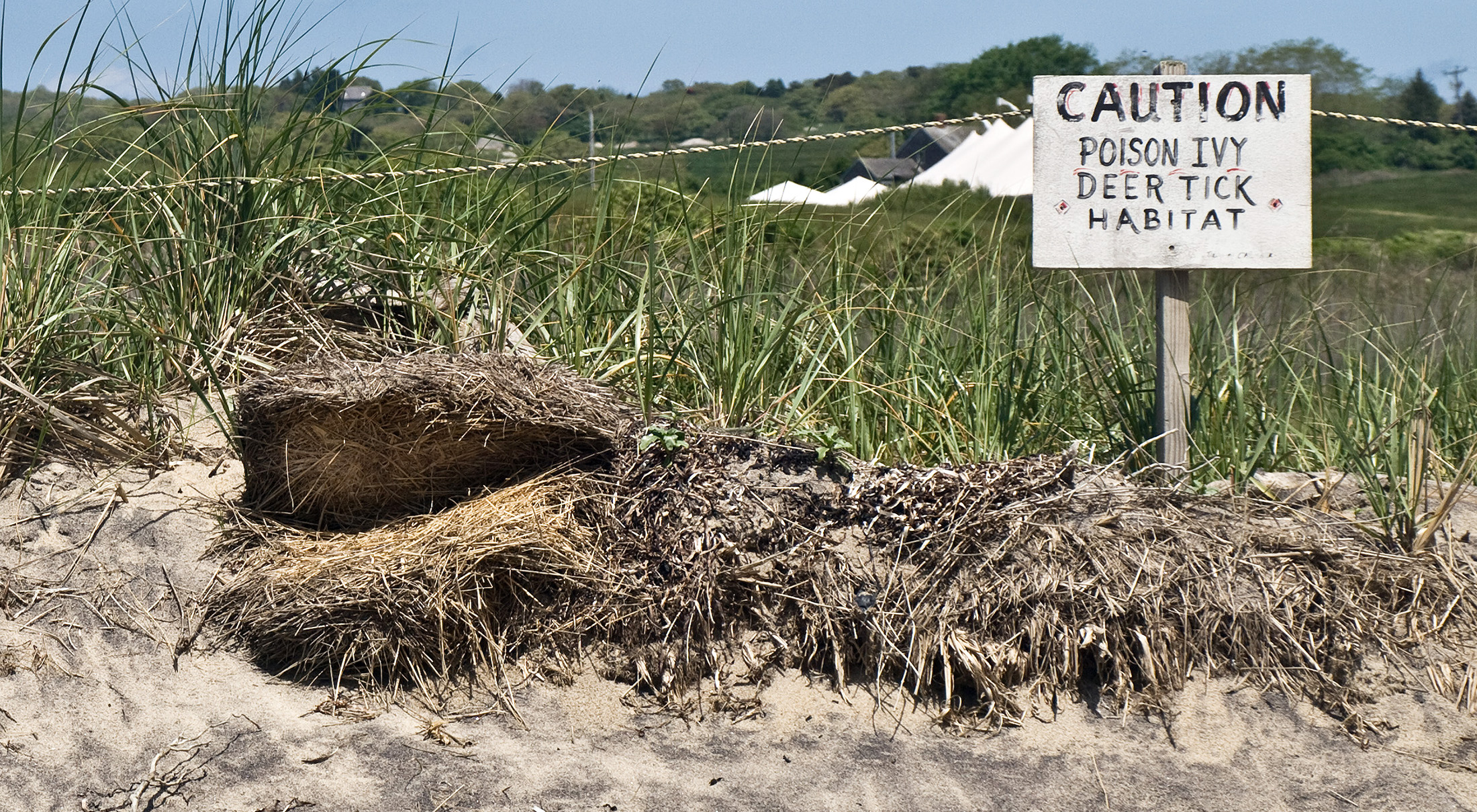
Wooden sign on a roped off grassy beach dune that reads, “Caution Poison Ivy Deer Tick Habitat”
Warning sign at Lucy Vincent Beach on Martha’s Vineyard, 2009.

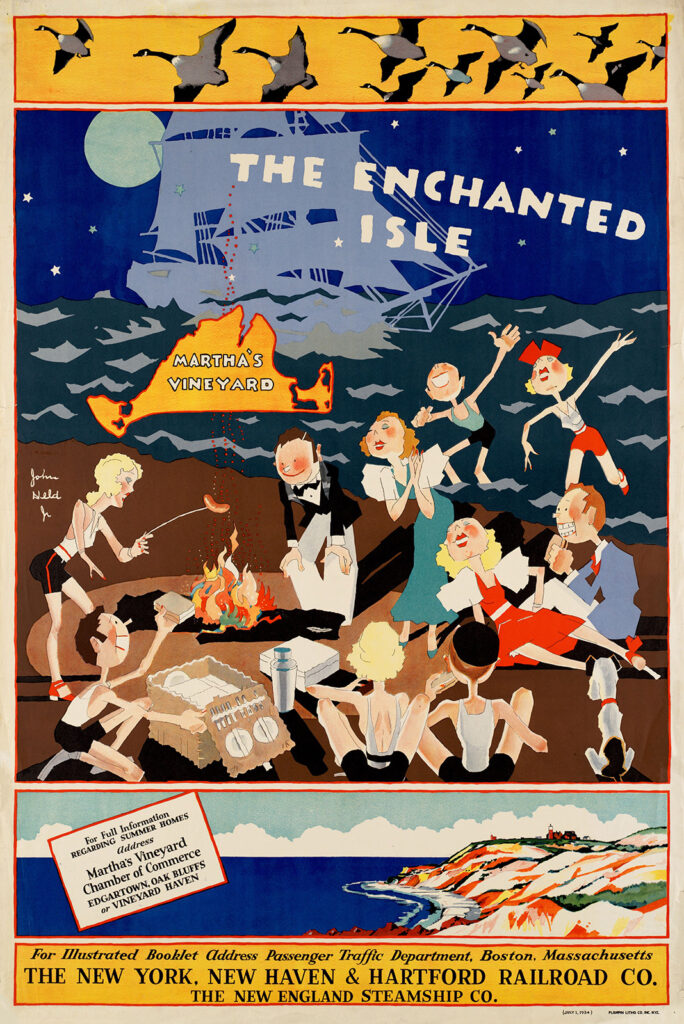
BEFORE MARTHA’S VINEYARD was a refuge for the Kennedys, Clintons, and Obamas, it was an agricultural haven for European settlers, who arrived in 1642 to land inhabited by the Wampanoag people. Colonists clear-cut woodlands to build homes and ships and turned the land into sheep pasture, establishing a community of farmers and fishermen. The thriving whaling industry of the 18th and 19th centuries brought affluence to the island, and the island’s new comforts, in turn, brought visitors. A constellation of Methodist parishes converged for a retreat on the Vineyard in 1835, and as they returned in greater numbers each year, the island’s reputation as a summer resort was cemented.

Illustrtated poster titled "The Enchanted Isle" featuring cartoon people barbecuing on a beach

The Vineyard’s human population wasn’t the only one expanding. A burgeoning tourist economy at the turn of the 20th century contributed to the decline of agriculture on the island. Grazing pastures were abandoned and woodlands returned in their stead, alongside undisturbed fields where mice and deer flourished. With an abundance of hosts in a damp and temperate climate, ticks found paradise.

By the 1920s ticks were a major nuisance, if not yet a plague. Although few fed on people, dogs were covered and residents grew alarmed. A Harvard pathologist made a bid to cleanse the island, partnering with a French entomologist to import from the forests of Fontainebleau a parasite called the chalcid wasp in hopes it would whittle away the ticks. The wasp project delivered limited results across repeated attempts, prompting the Vineyard’s congressman, Charles Gifford, to plead for research funding for his “afflicted” community.

In response, the USDA took the reins. In 1937 it launched a Ticks Affecting Man field laboratory on the island, whose efforts to eradicate mice, burn sections of forest, and treat dogs with plant-based insecticides proved as inadequate as the wasps. The project ended in 1946—a year after the first Vineyard resident died of the tick-borne disease Rocky Mountain spotted fever. The tick nuisance was becoming a nightmare just as the bid for containment collapsed.

Cows wading through a chute filled with liquid
Cattle in a dipping vat in Victoria County, Texas, 1910.

TICKS HAVE CRAWLED the earth since the Cretaceous period, sourcing bloodmeals for 100 million years. Pliny the Elder spoke for many when he called them “the foulest and nastiest creatures that be.” But ticks’ role as the primary vector for a coterie of bacteria, viruses, and parasites is a relatively recent discovery.

A watershed finding came in 1893, when USDA scientists were called in to identify the cause of Texas cattle fever. The dangerous malady emerged in summer and disappeared by winter, thinning cows’ blood and swelling their organs. An insect’s bite had never been known to transmit disease from an infected animal to an uninfected one, but that was exactly the trouble here. The source of the fever was a protozoa carried by the ticks that swarmed the cattle as the weather grew warm. An interstate effort to eradicate cattle ticks by walking cows through arsenic baths eliminated the hazard within decades. Human diseases borne by ticks, however, have been harder to mitigate.

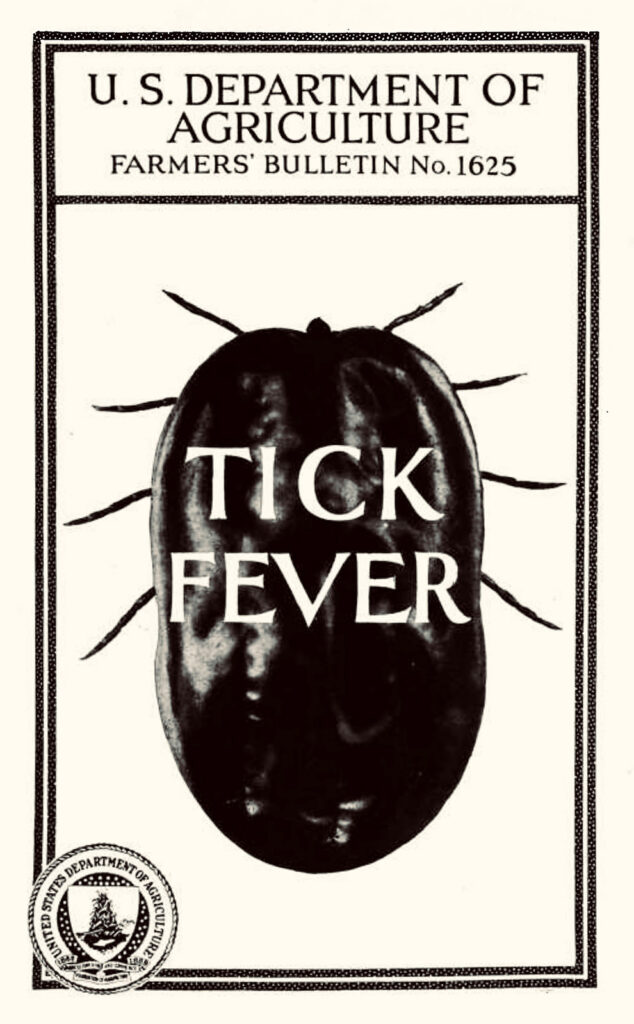
Book cover titled “Tick Fever” with a photo of a tick

Among approximately 900 known species of ticks, roughly a quarter have been reported to feed on people, though only a few dozen do so with any regularity. Still, they account for 90% of vector-borne diseases in the United States. Every so often, scientists trace a human pathogen back to a specific tick and add another to the tally.

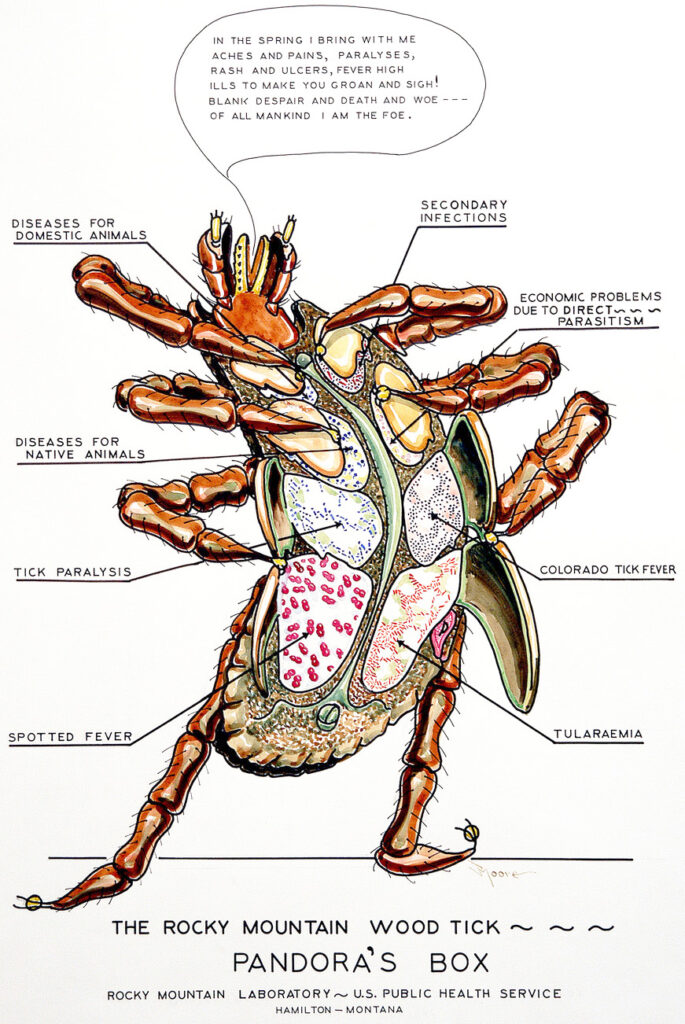
In 1906, the Rocky Mountain wood tick was identified as the source of Rocky Mountain spotted fever. By 1924, the same tick was linked to tularemia, which is often fatal when untreated. By the 1970s and 1980s, the black-legged tick became an agent of anxiety for its role in spreading babesiosis and Lyme disease, the latter of which is estimated to affect half a million Americans every year. 

The problem is only getting worse, especially as climate change expands ticks’ ranges. Already, Lyme incidence rates have risen from 6 cases per 100,000 people nationally in 1996 to nearly 27 in 2023, the last year for which Centers for Disease Control data is available.

As Lyme tightens its grip on public health, alpha-gal syndrome has surfaced as an unusual and growing threat. Lone star ticks are the condition’s primary vector in the United States. The ticks have been here for centuries, but their range and population have rapidly expanded in recent decades creating ample opportunity for new tick encounters. The CDC estimates some 450,000 Americans are already affected by the allergy. Whether they know it yet or not, that puts many of them one steak away from the emergency room.

A hand holding a vial containing a tick
A deer tick collected for Lyme disease research at Newport Naval Hospital, Rhode Island, 1990.

IN THE MID-2000s, a pair of medical mysteries collided at the University of Virginia. In one, patients would show up to the school’s allergy clinic covered in hives that emerged hours after eating red meat. In the other, doctors noticed a subset of cancer patients at UVA and other cancer centers were suffering severe allergic reactions after their first injection of the chimeric monoclonal antibody drug cetuximab. At least three died, including one in France, says Thomas Platts-Mills, a UVA allergist called in to solve the riddle. But there were likely several more deaths, he believes.

Testing revealed that somehow, before ever receiving an infusion, the reactive cancer patients already had antibodies in their systems that identified cetuximab as a threat and responded accordingly. The culprit, the allergists discovered, was a particular sugar drawn from the mouse cells used in the drug’s development, one produced by most nonhuman mammals, called galactose-α-1,3-galactose—alpha-gal for short. 

Meanwhile, Scott Commins, a fellow in Platts-Mills’s clinic, was testing meat-averse patients for answers. He found that the same test that indicated a response to cetuximab inflamed his patients. “It turns out it was obviously a test for alpha-gal,” he says. Two distinct medical populations were suffering from one overlapping medical anomaly. But how had they developed the antibodies in the first place?

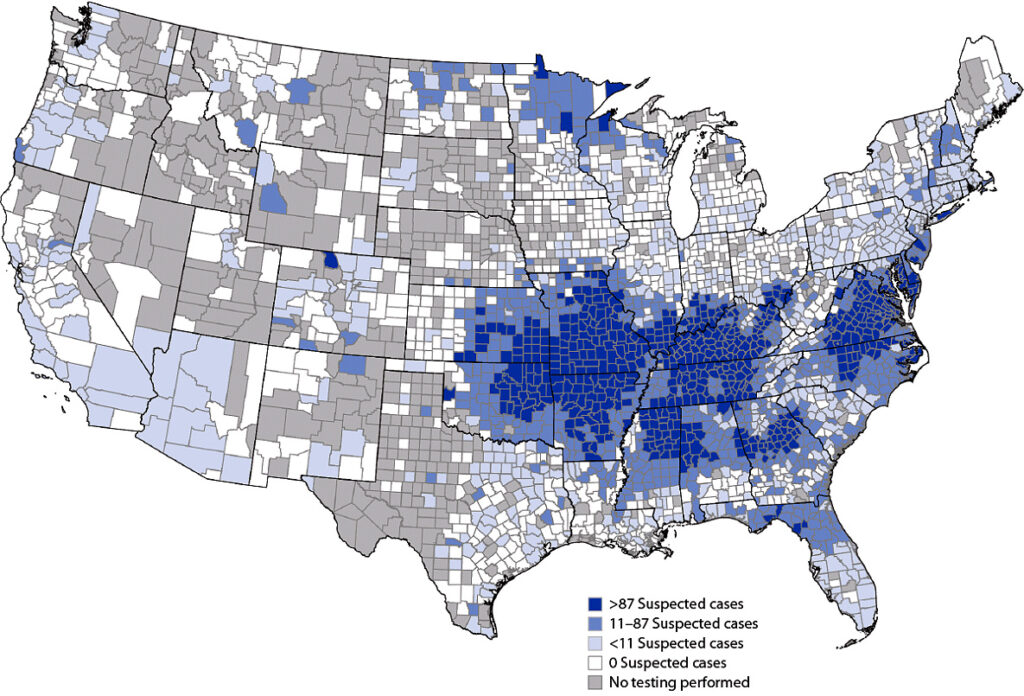
Map of the United States with blue shading concentrated in the eastern half of the country. The darkest blue areas are in the central and southeastern regions

The evidence showed a stark geographic quirk. The cetuximab reactions were occurring almost entirely at cancer centers in the Southeast. Researchers scanned distribution maps for other conditions that matched the pattern and identified one with impeccable overlap: Rocky Mountain spotted fever. When asked, more than 90% of patients enrolled in Commins’s meat-allergy study confirmed they had a history with ticks. 

In one fell swoop, the researchers had solved both mysteries. Ticks were transmitting alpha-gal into human blood and driving antibody production targeting the sugar. When people encountered alpha-gal again—either in cetuximab or a steak—the antibodies triggered a reaction. Eventually, researchers identified the lone star as the culprit. 

Fellow allergists were slow to accept Commins’s findings. Some scoffed at the notion that a tick could induce a delayed allergic reaction to meat in people who had eaten it for decades; years after Commins reported the allergy, a prominent colleague told him he didn’t believe it was real. “It sounds made-up,” Commins admits. Others trivialized the condition. Couldn’t people simply skip the burger?

Even as awareness of the allergy has grown in the past 15 years, research funding hasn’t, Commins says. “The seriousness of this sometimes does get downplayed.”

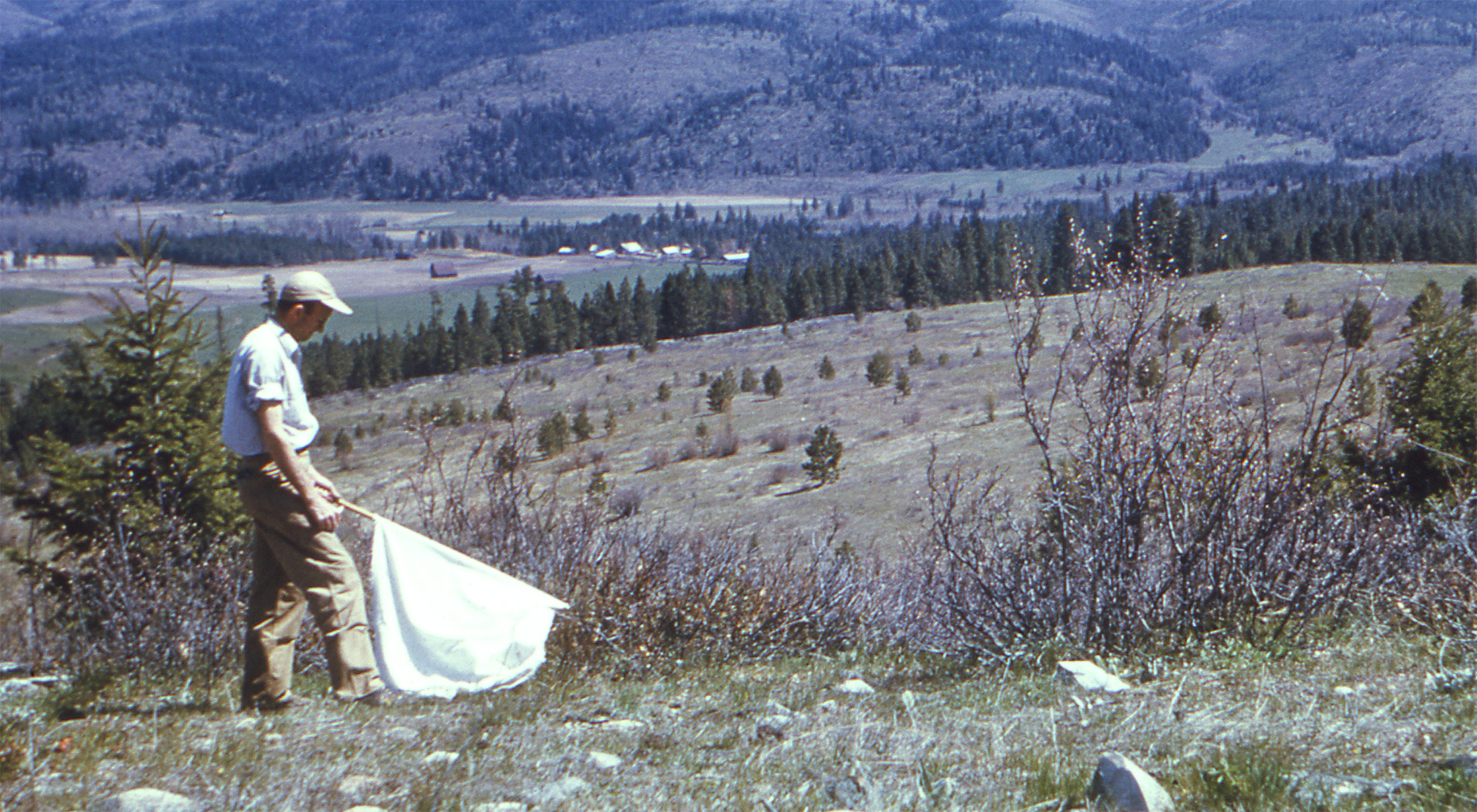
A man carrying a white net on a pole in a mountainous environment
A field technician from the National Institute of Allergy and Infectious Diseases’ Rocky Mountain Laboratory in Hamilton, Montana, collects Rocky Mountain wood ticks, 1965.

LEA HAMNER GREW UP spending summers on Martha’s Vineyard, visiting her grandparents each year when school let out. In 2021 she returned full time and soon took a job with the county health department as an infectious disease epidemiologist.

At first, Hamner was skeptical of alpha-gal syndrome. She had come from Washington state, where she had investigated a choir practice in March 2020 that was among the first COVID-19 super-spreader events. After confronting a pandemic, a red-meat allergy seemed relatively innocuous. A few years later, though, she’s fervent in her belief that alpha-gal is a serious health crisis. This spring while counting votes at Chilmark town hall, she watched a 45-year-old woman go into anaphylaxis, her lips blue and face pink, as she was rushed to the ER—a near-death experience from an allergy the woman didn’t know she had. That possibility is “terrorizing,” Hamner says.

A smiling woman posing with a person in a tick costume

Although the Vineyard is an alpha-gal hot spot, it’s far from alone. The allergy is prevalent in the South, Midwest, and Mid-Atlantic. Missouri estimates some 80,000 people in the state are affected. But the Vineyard has received outsize attention, perhaps in part because it’s easy to snicker at the well-heeled being undone by a food allergy. After all, says Dick Johnson, a biologist who in 2011 started a program to reduce the island’s tick-borne disease burden, “Presidents don’t go to Missouri.” Last summer a New York Times restaurant critic visited the island for a story playfully (and inaccurately) headlined, “Why Is Martha’s Vineyard Going Vegan? It’s All About Tick Bites.”

It’s not only the press that has treated alpha-gal more as curiosity than crisis. At a conference on ticks and tick-borne diseases hosted by Johns Hopkins University this April, alpha-gal was hardly mentioned at all. Of the 35 posters presented, not one addressed lone stars or the allergy they convey. Amid discussions on prospective vaccines, pathogen biology, and the epigenetic mechanisms of immune response, alpha-gal emerged primarily as a source of humor, its occasional mention garnering the type of gentle laughter reserved for a kooky uncle.

The public, though, seems to be paying attention. Susan Paskewitz, a University of Wisconsin entomologist who spoke at the conference, described research that found Wisconsinites are better able to identify lone stars than black-legged ticks, even though the former are rare in her state and the latter are abundant.

On Martha’s Vineyard, lone star identification is a matter of personal protection. In 2014, black-legged ticks outnumbered lone stars 50 to 1 on the island. By 2024, the ratio was just 3 to 1, according to Thomas Mather, who runs the University of Rhode Island’s Center for Vector-Borne Disease and its crowd-sourced TickSpotters program. That same year, a New Jersey man on a camping trip with his family became the first known fatality from eating meat, adding a lethal edge to the lone star’s menace.

As lone stars have spread over the past decade, the specter of alpha-gal has overtaken that of Lyme disease, Mather says. The allergy has sparked “a change in the fear of what ticks can do to you.”

Close-up of a lint roller with ticks stuck to it
Patrick Roden-Reynolds shows off ticks collected in a yard in West Tisbury on Martha’s Vinyard.

WANTING TO SEE for myself how Martha’s Vineyard is navigating the onslaught, I ask Patrick Roden-Reynolds, Johnson’s successor as the island’s tick biologist, to show me what it looks like on the front lines. He offers a warning: come prepared.

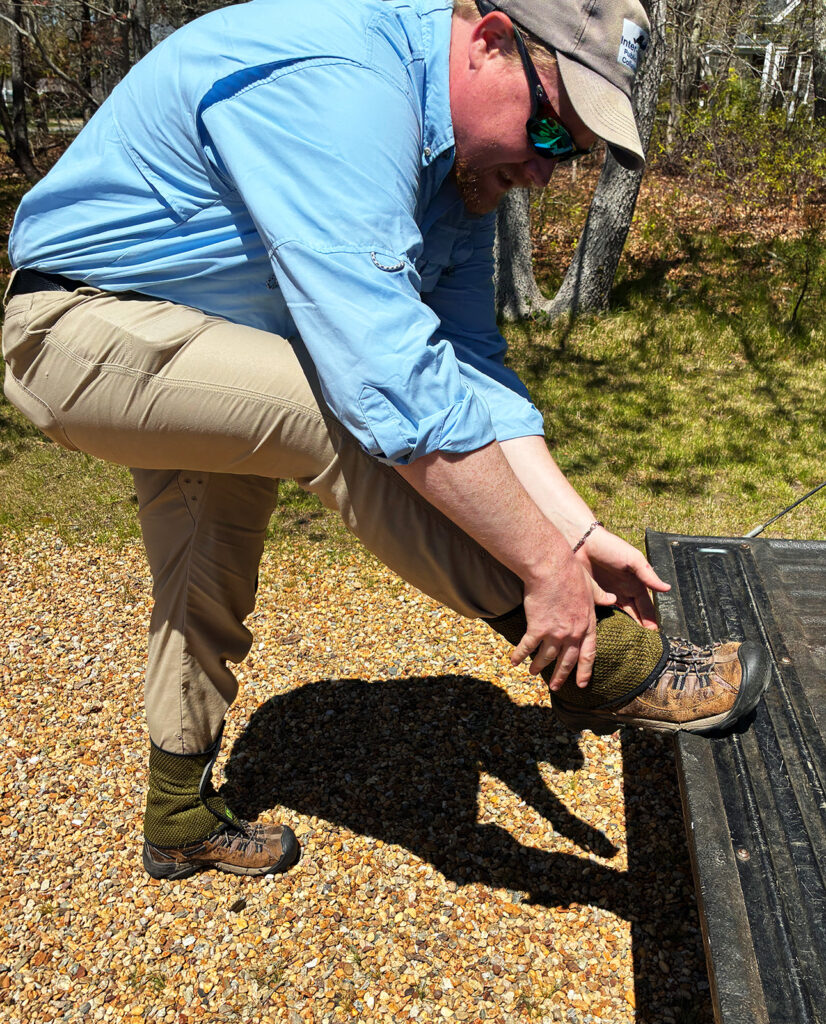
Roden-Reynolds sends all of his clothes out to be treated with the insecticide permethrin, and he spends all of tick season—beginning in March and peaking right when vacationers begin arriving in mid-May—in long sleeves with his pants tucked into his socks. It’s a tough look to sell. “I’m sweating bullets all summer long,” he admits. But in five years on the island, he’s had only two bites. Both happened when he forgot his own advice and left his pants untucked.

The day before my visit in mid-May, I heed his request, take my outfit to a gravel lot, and dutifully spray my clothes on both sides, preparing my shield. The next morning I file onto the ferry Island Home, joining day-trippers bound for the Vineyard’s beaches and golf courses. Forty-five minutes later, we lumber into port as the sun strengthens. Everyone else heads for revelry as I tuck my jeans into hiking socks, roll down my sleeves, and disembark.

Man putting on gaiters using the tailgate of a truck

As Roden-Reynolds guides me around the island, calling out pieces of Jaws lore along the way, I recall something his predecessor told me about alpha-gal: “We’re not used to being part of the food chain, and that’s what terrifies people.”

That fear keeps Roden-Reynolds’s days filled. He conducts more than 100 tick surveys each summer for residents who want to know what lurks on their properties. In untreated edge habitat, where leaf litter lingers past winter and trees and shrubs scrape the ground, he’s bound to find ticks. “If you truly want to make your yard tick-free,” he says with a wince, “pave it into a parking lot.”

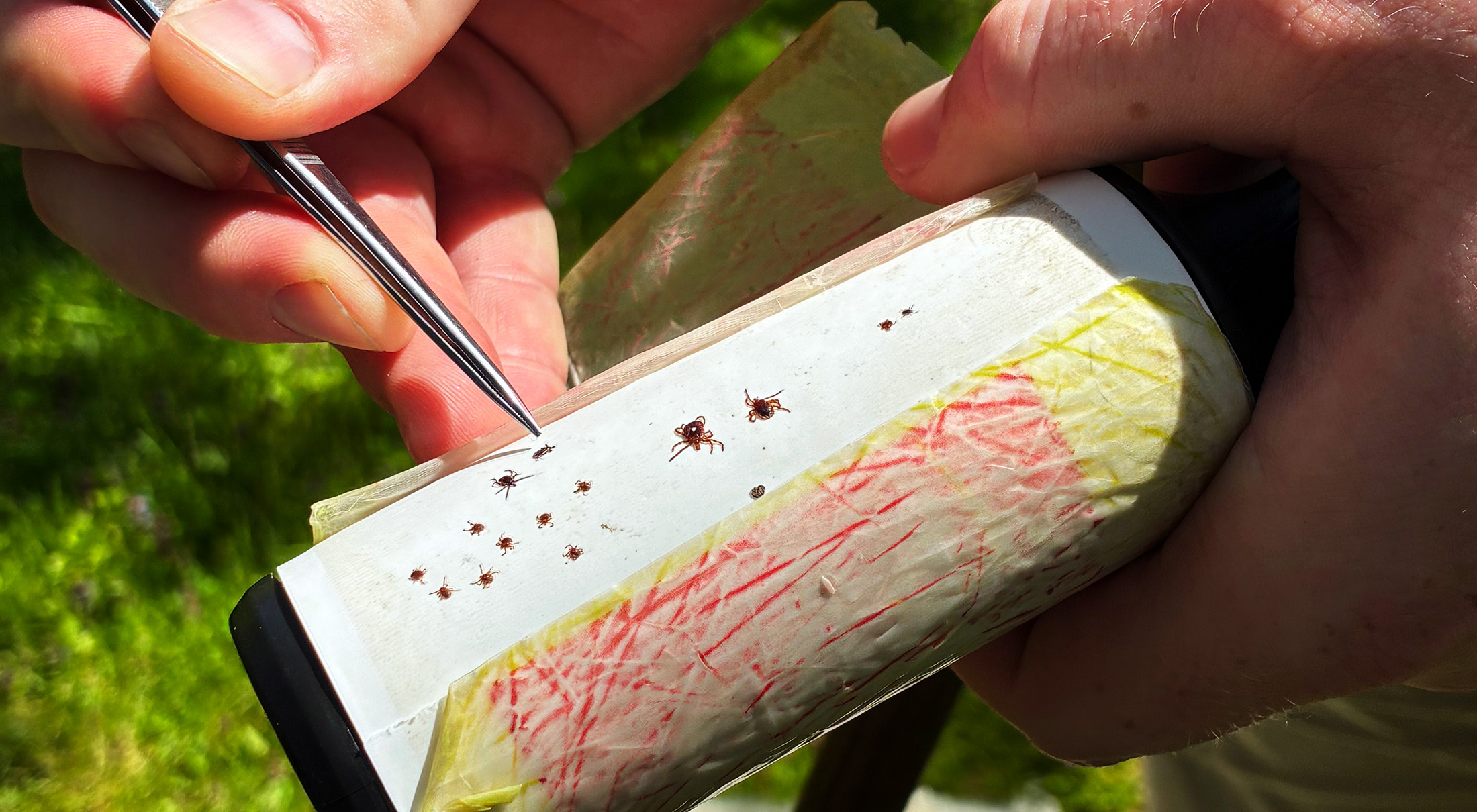
At a squat bungalow in Edgartown, near the island’s eastern shore, he clips a lint roller onto his belt, straps repellent gaiters to his ankles, and pulls out a tick flag. It’s little more than an off-white piece of fabric trailing a wooden pole, but it bewitches hungry ticks. Most simply wait, legs outstretched, for an animal—in other words, a meal—to brush by. Lone stars, by contrast, hunt, albeit slowly. They will crawl up to 30 meters toward body heat and odors and exhaled carbon dioxide. A sunny spot in the sand isn’t safe from a lone star hiding in nearby dune grasses.

Roden-Reynolds finds lone stars nearly everywhere these days. He does his best to guide residents to protect themselves and their property with the limited tools available: treated clothing, diligent landscaping, and insecticide sprays or pellets. Permethrin works best but doesn’t discriminate in what it kills; natural alternatives are less effective but less harmful for pollinators and other insects. There are no easy answers. When a house in Chilmark turned up more than 100 ticks, Roden-Reynolds didn’t know what to say. “Every potential solution we have has a web of societal, cultural, and ecological considerations.”

The homeowner in Edgartown is away, but the leaves have been raked and the shrubbery trimmed. The lawn appears to have been treated, too. On this stop, we encounter a rarity: nothing.

In West Tisbury, a retired doctor and avid gardener has called for help after her fourth tick bite of the spring. Tick anxiety has kept her daughter and grandkids away for the past two years, and she doesn’t take her dog for walks anymore. She’s treated the yard and her clothes, just like Roden-Reynolds instructs, but she’s still afraid to step outside. He mentioned this when we first spoke: “We truly have people here that are prisoners to their own home in summertime.”

Laminated sheet of paper showing different species of ticks, with different sexes and stages of development

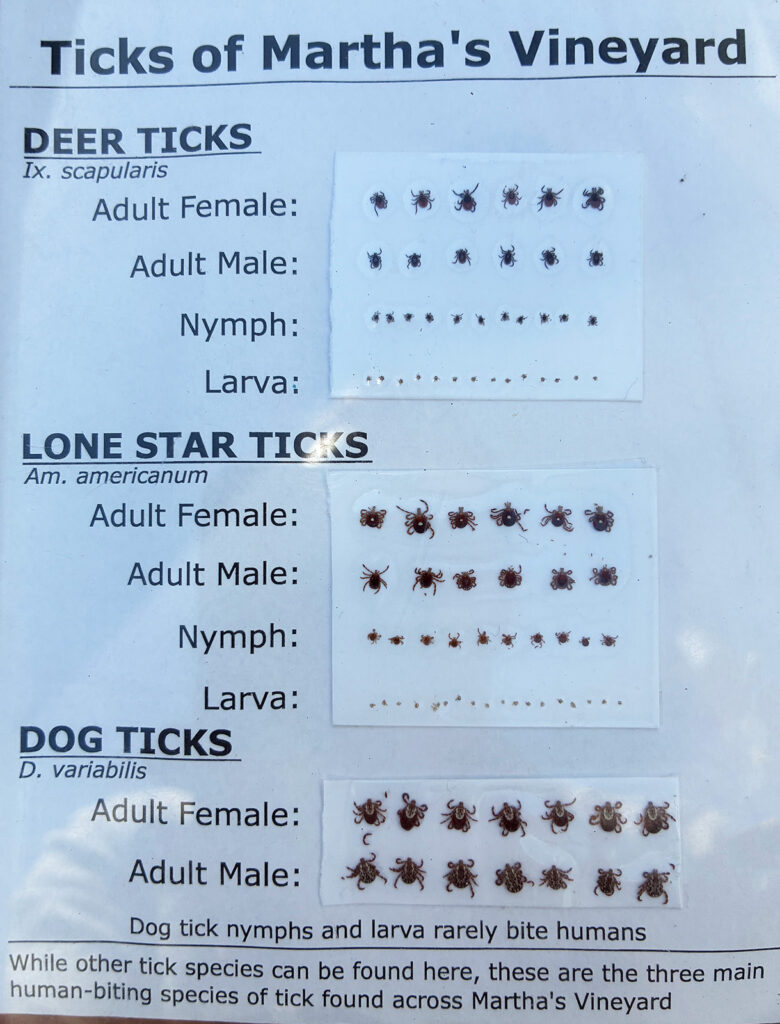
As he sweeps his flag along the edges of the property, the ticks appear as dark dots on a pale background. He plucks them off with tweezers and sticks them to the lint roller—an adult deer tick, an Asian longhorned nymph, and so on. Each one hits the doctor like a gut-punch. “This is depressing,” she mutters. When he finds a female lone star near the rear fenceline, her worst fears are confirmed. As if on cue, a deer in the brush beyond kicks up and scampers off. In all, Roden-Reynolds finds 17 ticks—a modest result that eases her anxiety ever so slightly. 

Two years ago, Hamner started hosting a monthly support group, inviting Commins and other guest speakers to help people with alpha-gal understand their condition. They swap recipes and find solace. Adapting is difficult, though. For some, just the smell of meat on the grill can trigger a reaction. And as the cetuximab case shows, even medicines require scrutiny from those with alpha-gal—gelatin products are a hidden threat.

Like Lyme, alpha-gal can be both chronic and mystifying to manage, but it heaps a series of additional complications on top. All three stages of the lone star’s life cycle—larvae, nymphs, and adults—can transmit alpha-gal, unlike other diseases that first require a bloodmeal from an infected host. Each new bite adds more antibodies to a person’s immune system, intensifying the allergy. And although a dose of the antibiotic doxycycline can treat Lyme and several other tick-borne illnesses, no such remedy exists for alpha-gal.

 “I thought tick-borne diseases were complex,” Roden-Reynolds says. “Alpha-gal is a whole other world.”

As the allergy overtakes Martha’s Vineyard, the island is but a microcosm of a public health emergency spinning out of control. In nearly every region, ER visits for tick bites are at a decade-long peak, according to the CDC. And current national estimates may underplay alpha-gal’s scale, in particular. Commins was co-author on a recent CDC report that tested blood from 3,000 adults across 10 states for alpha-gal antibodies. In Arkansas, Kentucky, Missouri, Tennessee, and Virginia—five states where both lone stars and the allergy are prevalent—an average of 24% of the samples contained antibodies. The presence of antibodies isn’t the same as a diagnosis, the authors cautioned. Still, the data suggests the experience on Martha’s Vineyard may soon be more rule than exception.  

A man standing on a boat holding a spraying device that is emitting a cloud of white gas in a marshy environment
Spraying insecticide for malaria control along the Tennessee River, 1942.

IF THERE IS AN ANALOG to the modern tick problem, it can be found in a disease Americans hardly think about anymore: malaria.

Until well into the 20th century, the summer months brought “fever season” to the United States, particularly in Southern lowlands, where malaria’s prevalence rivaled many tropical regions. Even though the cause and transmission of the disease were identified by the 1890s, it was largely treated with homespun tonics and herbal concoctions or viewed as a simple fact of life. As late as 1930, malaria caused at least one death in more than 600 Southern counties; a study two years later found that nearly 6% of school-aged children tested were infected. Life insurance companies refused to cover people living in the malaria belt, while public health officials bemoaned the scale of the problem and the inadequacy of the tools at hand. Malaria seemed to be unmanageable. It took a massive federal program to prove otherwise.

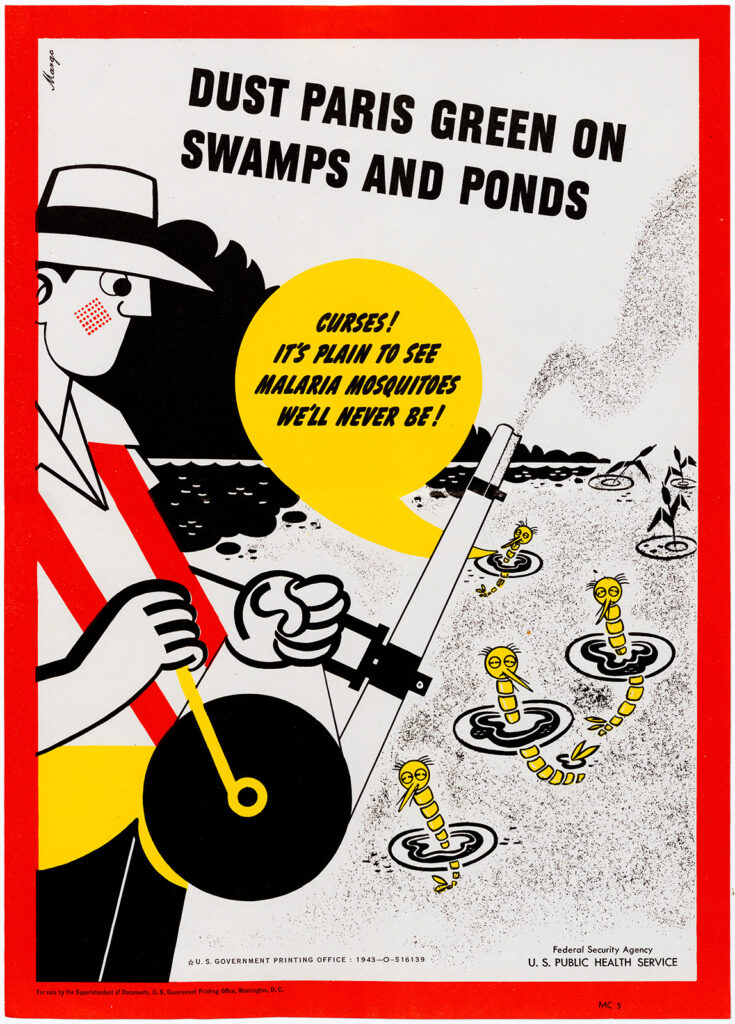
A New Jersey entomologist organized the first mosquito control districts in 1912, offering surveillance, cleanup of standing water, and targeted killing of adult insects. By the 1930s the federal government stood up large-scale infrastructure projects through the Tennessee Valley Authority, Public Works Administration, and Civil Works Administration to “build malaria out” of the South. To target mosquito breeding grounds, as many as 120,000 workers at a time drained swamps, filled ditches, and used oil slicks to suffocate larvae.

Cartoon poster of man spraying pond with mosquito larvae. Title reads, “Dust Paris green on swamps and ponds

Between the mid-1930s and 1945, malaria mortality rates in the South fell from 45 to 3 per 100,000, and the disease’s prevalence among children dropped to a fraction of a percent. The nail in the coffin was DDT, a pesticide whose widescale application met outspoken public demand but would come with its own harms to public health. The country was rid of malaria by 1951. The federal program that stamped it out became the CDC.

In contrast, the response to tick-borne disease has emphasized the individual. The CDC advocates for personal protection and backyard control as the best means of prevention, without clear evidence that they reduce risk. As a result, more than a century after ticks were identified as vectors of disease, the illnesses they carry still present “one of the most intractable contemporary public health problems” and a failure of disease control, according to infectious disease specialists at Stony Brook University, a hub of tick research for more than 40 years.

The federal government has spent hundreds of millions studying tick-borne diseases, invested largely in microbiological and clinical research for diagnostics, therapeutics, and, perhaps soon, a Lyme vaccine. All the while, vector control became an afterthought among federal public health agencies, relegated to the USDA, the Stony Brook researchers wrote. At the local level, jobs tracking ticks and tick diseases, such as those held by Roden-Reynolds and Hamner, are exceedingly rare. Mosquito control districts, however, remain active, including 11 in Massachusetts, even as diseases from ticks vastly outpace those from mosquitos.

A cartoon tick annotated with various tick-borne diseases. The main text reads: “The Rocky Mountain Wood Tick–Pandora’s Box,” and a text bubble reads: “In the spring I bring with me aches and pains, paralyses, rash and ulcers, fever high ills to make you groan and sigh! Blank despair and death and woe... of all mankind I am the foe.”

Writing in the New England Journal of Medicine this May, Yale epidemiologist Durland Fish suggested it’s time to reorient our research priorities to focus on “the root cause” of disease: ticks and their hosts. Rather than designing vaccine programs to prevent ticks from giving humans diseases, he wrote, we should refocus on vaccinating deer. Bait could be laced with oral vaccines or drugs that kill feeding ticks. The country’s 1,000-plus mosquito control districts could even be called into service for tick-related vector control, particularly in high-risk areas and places where alpha-gal is common. Target disease carriers, he argued, rather than diseases themselves.

Martha’s Vineyard is already moving in that direction, albeit with different tactics. Roden-Reynolds is a member of the MV Hunt Club, a group of about 60 hunters who have become something of an island utility as deer and ticks have proliferated. The island is home to 55 deer per square mile—four times the state’s median target—according to a recent aerial survey by Tick Free MV, a nonprofit launched in December 2025 to combat the crisis. Hunters who once had to plead with landowners for access to their property now get calls begging for help. Island hunters took a record 934 deer last season, and their approach is gaining traction. This spring, Massachusetts Governor Maura Healey visited Cape Cod to advocate for loosening hunting restrictions, including a prohibition on Sunday hunts, as part of “smart public health policy.”

But for Hamner and her colleagues on the island, vector control is just one part of the solution. Physicians need to be on the lookout for alpha-gal and other tick-borne conditions, and they need to take them seriously. Lyme disease was identified as a distinct illness in 1977 only after two Connecticut women asked the state health department to investigate the rashes and joint pain their families and community had suffered for years—and that doctors dismissed.

Hamner worries a similar pattern is developing with alpha-gal, and evidence supports her concern. More than three-quarters of health care providers in a 2022 survey were either unaware of alpha-gal or weren’t confident in their ability to diagnose or manage it. The fallout from that ignorance is evident. When Karney learned he had the allergy, his ER doctor suggested he could at least keep eating pork. Karney had to tell the doctor that a pig’s meat is no less “red” than a cow’s.

Graphic of a black tick with a white spot on its abdomen with a QR code. The text reads: “See the star? Scan for Lone Star Tick Info!”

Slowly, though, awareness is growing. This spring, Massachusetts became the 12th state to require providers report alpha-gal diagnoses to public health officials. Missouri and Oklahoma will join that group in the coming months. And in late May, Health and Human Services Secretary Robert F. Kennedy Jr., who once suggested Lyme was likely a “military weapon,” announced a “sweeping plan” to address tick-borne illness. Scant on details, Kennedy trumpeted a program focused on tick control and “frontline solutions,” including additional National Institutes of Health funding to study alpha-gal syndrome, prize money for innovative ideas, and $2 million for projects that “harness artificial intelligence.”

The announcement is backdropped, of course, by ongoing federal attacks on scientific funding. Nonetheless, Commins is optimistic about what might emerge. In particular, he hopes it will lead to funding for a longitudinal study of patients and a trial for ways to mitigate alpha-gal’s allergic reactions.

Hamner suggests Martha’s Vineyard could eventually serve as a model for other communities—not just a cautionary tale of the dangers of alpha-gal and its tick-borne brethren, but a demonstration of how they can be tamed through vector control, education, and a committed investment in public health expertise.

It’s a long way from here to there, though. Even with a truly sweeping federal campaign, eliminating malaria took decades. For now, amid one of the worst tick seasons in years, the people of Martha’s Vineyard—like those in afflicted communities from Missouri to Virginia—are left to wonder what danger lurks in the yard and whether to tuck in their pants each time they step outside.

More from our magazine

A group of men gathered around a large fish in a crate
DISTILLATIONS MAGAZINE

Atomic Tuna

An ill-fated fishing voyage pulls back the curtain on U.S. nuclear testing in the Pacific.

Pink bacteria on a blue background.
DISTILLATIONS MAGAZINE

The Philly Killer at 50

Legionnaires’ disease has never been more prevalent. So how did we forget it?

Dried plant material on a piece of white paper with an identification tag that reads “Baby Kate Botanical Search.”
DISTILLATIONS MAGAZINE

Floral Arraignment

Plant evidence can be a powerful crime-solving tool. So why is it used so rarely?

    Republish

    Copy the above HTML to republish this content. We have formatted the material to follow our guidelines, which include our credit requirements. Please review our full list of guidelines for more information. By republishing this content, you agree to our republication requirements.