Distillations magazine

Unexpected Stories from Science’s Past
April 2, 2026 People & Politics

The Misogynist Dinner

In 1880, the 4-year-old American Chemical Society threw a tantrum disguised as a party. Here’s why it still matters.

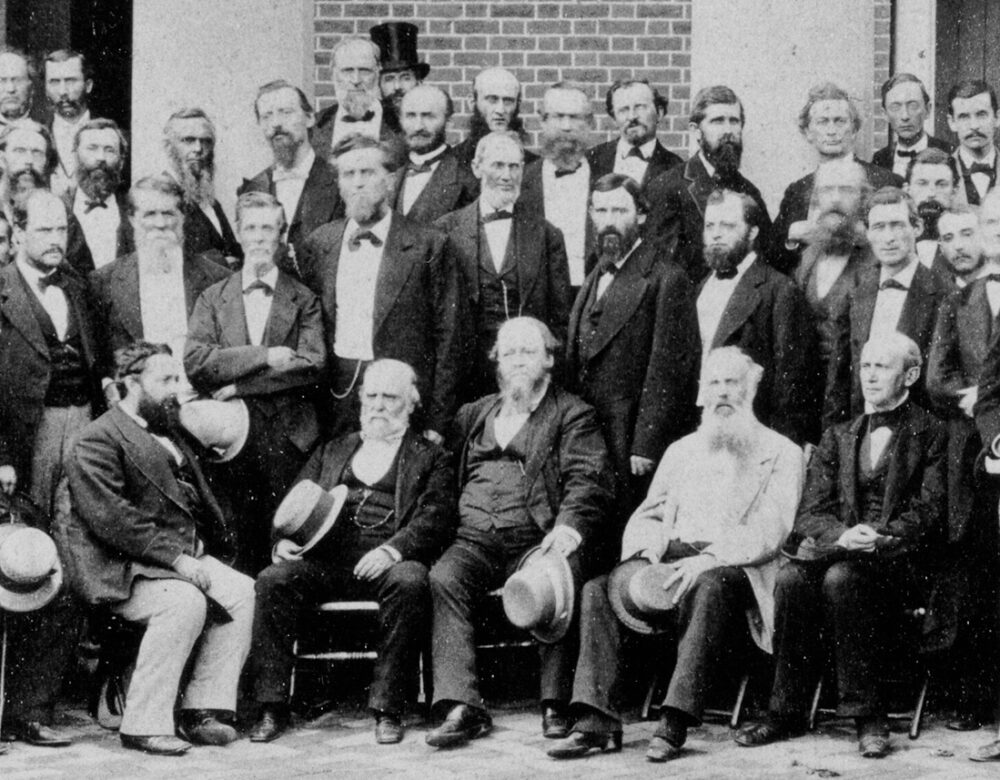
A group of men posing for a photograph in front of a house.
About SUPPORT OUR WORK

In August 1874 a group of chemists assembled at the former home and burial place of Joseph Priestley in Northumberland, Pennsylvania. They came to celebrate the centennial of Priestley’s discovery of “dephlogisticated air,” or oxygen, and to chart their field’s next 100 years. The gathering was partly organized in the pages of the journal American Chemist, inspired by a letter from chemist and botanist Rachel Bodley, dean of the Woman’s Medical College of Pennsylvania.

Bodley’s ideas for the celebration set a whirlwind in motion. The attendees quickly decided to create a national society dedicated to promoting and professionalizing American chemistry. Bodley, already a member of the Philadelphia-based Academy of Natural Sciences, was named an honorary vice president of the planning committee. When the American Chemical Society (ACS) was finally formalized in 1876, Bodley became a charter member, the only woman granted that honor.

Bodley’s inclusion was remarkable. Other women who had helped organize the ACS charter were rebuffed, including Ellen Swallow Richards, a pioneering environmental chemist and the first woman ever admitted to MIT. Bodley’s resume was no less impressive: a student at the prestigious Polytechnic College of Pennsylvania in Philadelphia, she was the first woman named professor of chemistry at an American medical school and an accomplished botanist.
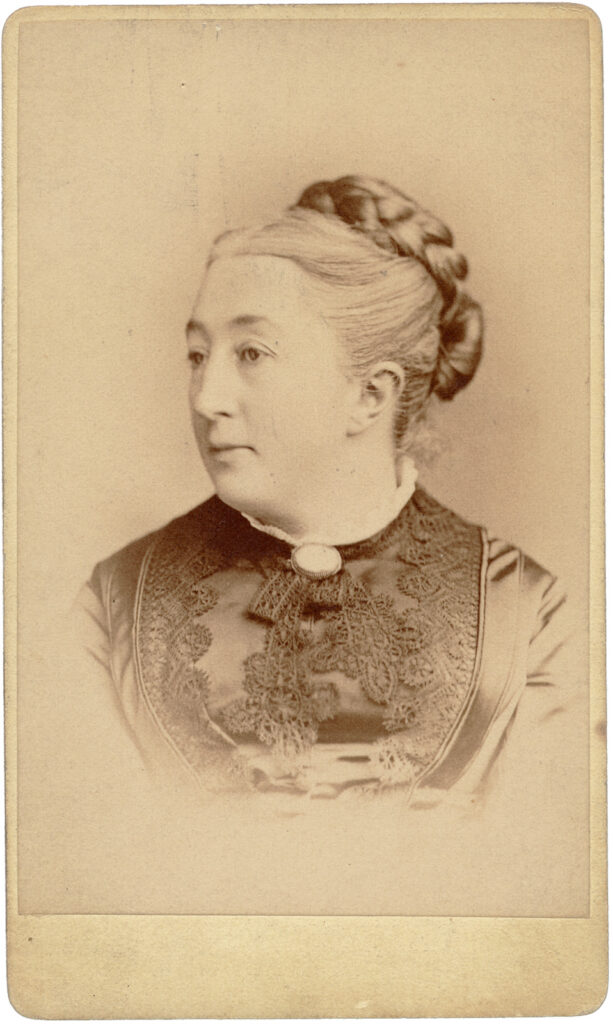
Photograph of a woman with her head slightly turned to the side

Historically, few major Western scientific societies admitted women members or did so only on a provisional or honorary basis. Even by 1876 no woman had yet been admitted to the Royal Society or the Académie des Sciences (both in operation for more than 200 years), nor to the younger but influential American Philosophical Society, founded in 1743.

A few prominent societies began to open their doors to (white) women in the mid-19th century. The Academy of Natural Sciences admitted scientific illustrator Lucy Say to membership in 1841 (predating Bodley by several decades); the American Association for the Advancement of Science elected its first woman member, astronomer Maria Mitchell, in 1850. Women’s membership and participation in American scientific societies increased significantly during the 1860s and 1870s, and Bodley’s prominence in the ACS seemed a welcome sign of change.

But after another August gathering, just four years into the ACS’s existence, Bodley left the society she had been so key in founding, never to return. And it would be more than a decade before another woman joined the ACS’s rolls (the exceptional Rachel Holloway Lloyd, the first American woman to earn a PhD in chemistry).

Historians of science are often confronted with absences or departures like Bodley’s, women who pop up in lists of scientific societies and publications or receive awards and peer recognition, only to vanish again. Their stories are obscured either by the pressures of their own era or by the neglect and biases of later scholars.

The historical roadblocks and pitfalls these women encountered are too many to name, but in the case of Rachel Bodley, we have more than absence to reflect on. Bodley’s involvement in the ACS might have begun with a letter, but the impetus for her departure was printed in a pamphlet. Specifically, a record of an ACS banquet from August 27, 1880—the Misogynist Dinner.

Though barely 20 pages long, the booklet collects the speeches, toasts, and songs that made up the night’s entertainment and speaks volumes about 19th-century attitudes toward women’s participation in science and some chemists’ attempts to keep the laboratory a masculine domain. The hosts for the event were Henry Morton, first president of the Stevens Institute of Technology and the editor of the pamphlet, and Thomas Sterry Hunt, an internationally recognized chemist-geologist and member of the Royal Society. Both Morton and Hunt were, like Bodley, founding members of the ACS.
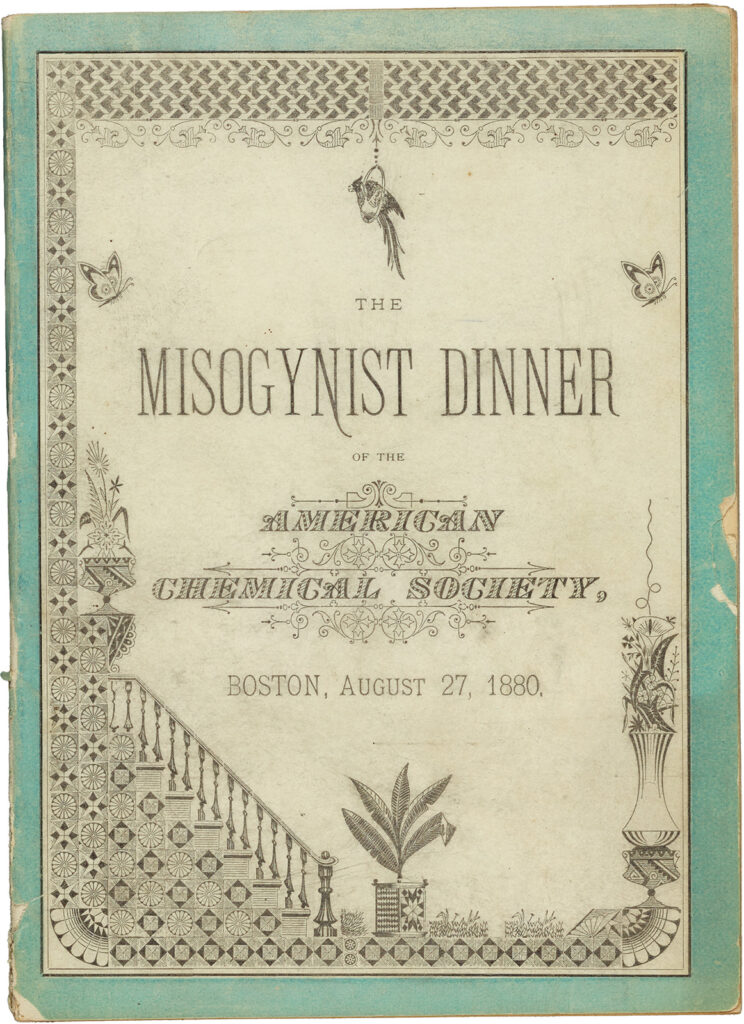
Cover page of an illustrated booklet that reads “The Misogynist Dinner of the American Chemical Society, Boston, August 27, 1880.”

In Morton’s introduction he notes that women were barred from the Misogynist Dinner, even the wives of members who had mistakenly been brought by their husbands as guests. As he writes, “these ladies were refused admission, and actually turned away from the door.” Needless to say, the ACS’s only woman member—Bodley—could have expected the same treatment.

Women members of scientific societies typically participated in formal meetings, but they were regularly (often intentionally) excluded from informal entertainments.
After-meeting socializing frequently took place in clubs, smoking rooms, and other men-only spaces. The Misogynist Dinner was no exception: Morton’s notes remark on the “absorbing effect of cigar smoke” that was felt by the attendees. During the 19th century, smoking in public, or even being present while others smoked, was considered inappropriate for women. Yet “smokers” served as a major form of male socialization, and scientific societies’ meetings and banquets frequently concluded with group smoking or other masculine amusements such as billiards—a clear sign that women were not wanted.

In other words, women were welcome to perform some of the work and organization that kept scientific societies functioning, but they shouldn’t expect to reap equal benefits from the socializing that helped form tight bonds and establish intellectual partnerships among society members.

Men-only smokers might seem like a relic of a less enlightened era, but their legacy lingers in science. Groundbreaking physicist and Nobel Prize winner Richard Feynman, for example, was known to host meetings at strip clubs and to solicit undergraduate women for sex. And while more commonplace departmental social events—involving late nights and alcohol—might not seem overtly “men only,” the risk of harassment or unwanted advances often deter women from attending. As a result, many women in STEM (especially women of color) struggle to build peer relationships or find academic and professional mentors whose personal networks, recommendations, and support can be make-or-break in competitive fields.

The attendees of the Misogynist Dinner all knew and would have worked side by side with Bodley, Swallow Richards, and other accomplished, ambitious women chemists during the forming of the ACS. But these ties were not sufficient to prevent a night of misogynist mockery.
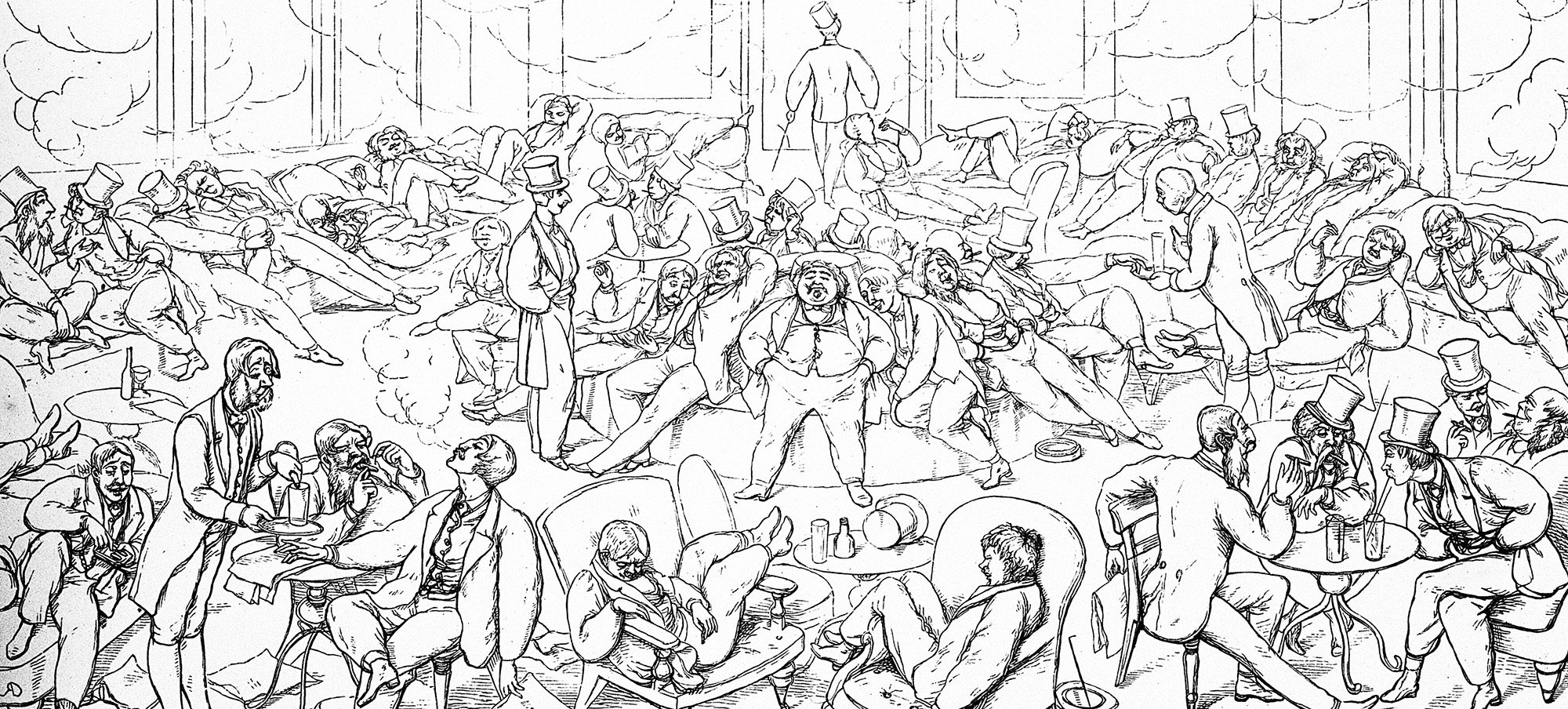
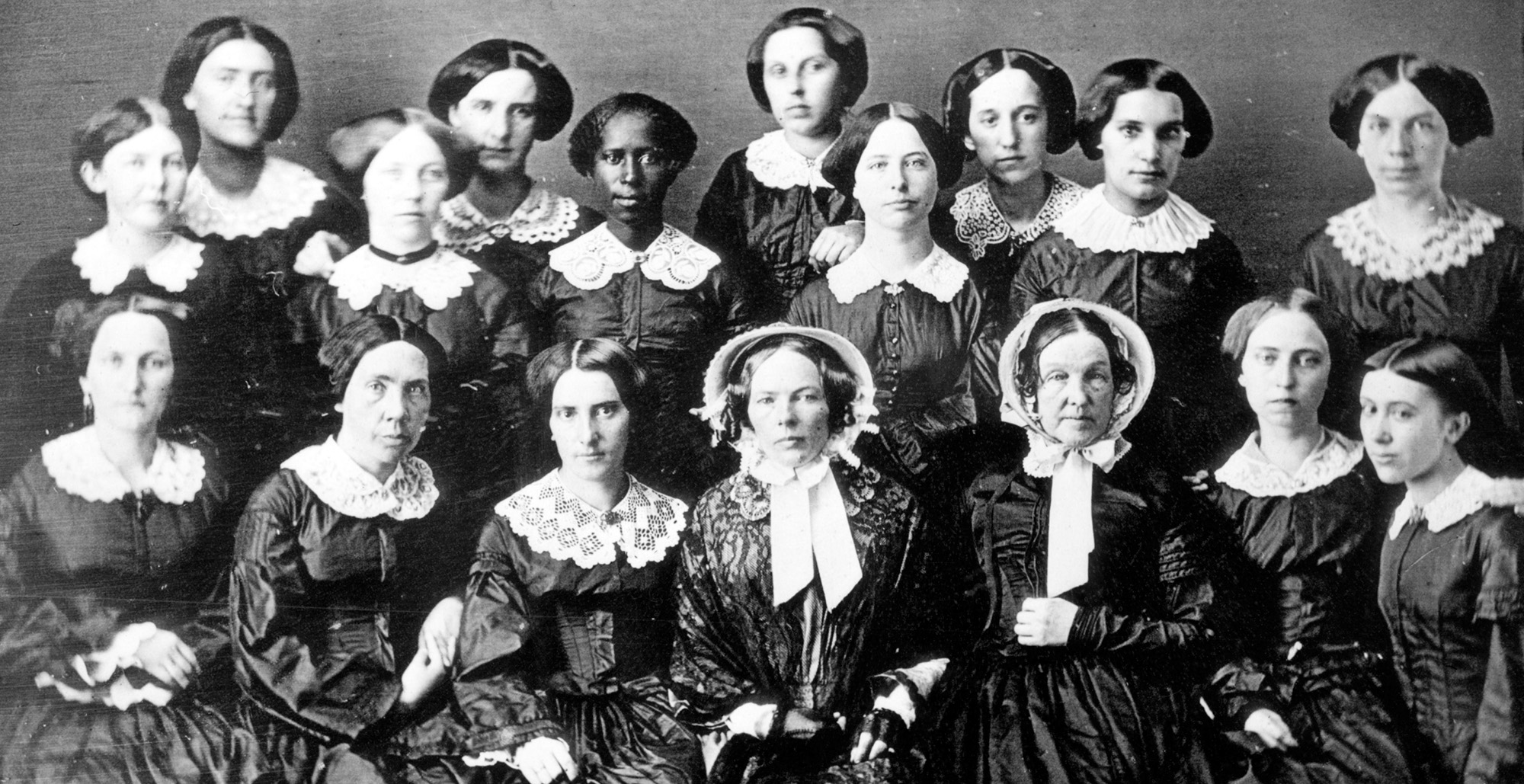
Illustration of a group of men smoking, drinking, and lounging.
“The Smoking Room at the Club,” by British artist Richard Doyle, originally featured in Cornhill Magazine, Oct. 1862.

Women’s habits, appearances, and attitudes were all subject to ridicule during the dinner. Poems and jokes stressed women’s tempers and duplicity—for wearing “false” adornments, such as wigs or cosmetics—and the undesirability of being “yoked” in matrimony. One reading, supposedly a translation from a Greek epigram, was even blunter:

Though woman is a pest,
Yet with her twice we’re blest—
Once when we marry her,
Once when we bury her.

(Hunt, the speaker and co-host of the dinner, was himself a married man. He and his wife would eventually live apart.)

The dinner program also touched on women’s professional aspirations. One toast proclaimed women were not only unnecessary to the night’s festivities but also to chemistry itself:

The present chemists, who need no female companions, seeing that all chemists are themselves feminine, the good ones being Ann-Elizas and the bad ones Charlot-Anns.

The punning transformation of analyzer and charlatan does little to hide the all-too-common sentiment that women were natural outsiders to scientific pursuits.

Whether the misogyny of the organizers was sincere, ironic, or merely typical of the period is of little consequence, considering that the outcome was Bodley’s departure from the ACS and a decade-long gap in new women joining as members. Below the blustering jokes about foolish men (i.e., those who marry twice) and frivolous women lies an undercurrent of defensiveness, a posturing resistance to women claiming seats at the society’s table. Bodley’s prominent position as a founder of the ACS—as well as her role as an educator at a women’s medical college—suggests this dinner may have been more than a simple reflection of the century’s broadly sexist mores: the word it brings most keenly to mind is backlash.

The Misogynist Dinner took place in a time marked by raging arguments over coeducation in American universities. Oberlin College was the first to open to women in 1837 (following its first admissions of African American men in 1835); during the next two decades more than 20 colleges would follow suit. Women’s eagerness to enroll was matched by vocal opposition to their suitability for higher learning.

Daguerreotype of 17 women seated for a portrait.
Women graduates of Oberlin College with their teachers seated in the front row, 1855.

One lightning rod for the debate was physician Edward Hammond Clarke’s controversial Sex in Education, subtitled A Fair Chance for the Girls. Published in 1873, after a series of lectures on the same topic, Clarke’s book was an instant bestseller and saw no less than 16 reprints. His claims—that coeducating women alongside men would destroy their fertility and leave them “pale, weak, neuralgic, dyspeptic, hysterical”—were vigorously refuted by opponents as varied as Antoinette Brown Blackwell, a minister and evolutionary theorist, and the Massachusetts Bureau of the Statistics of Labor, which conducted a survey of women college graduates to assess their physical health. But Clarke’s influence was widespread and lingering, even as record numbers of American women entered college during the 1880s and 1890s.

Clarke’s views were echoed in the later writings of British chemist Henry Armstrong, who in 1904 penned a report on the American system of coeducation. Armstrong viewed the rising presence of women in education as a systemic danger, arguing that “the prevalence of mixed schools and the preponderance of women teachers” led to a “distinctly low average of attainment.” In Armstrong’s view, women made passable students or laboratory assistants but were physiologically “incapable of doing independent original work.” A member of the Chemical Society and the Royal Society, Armstrong led a vehement and successful opposition to the appointment of engineer and physicist Hertha Ayrton to the Royal Society in 1902. On this example, no woman would be admitted to the Chemical Society for another 18 years.

Women’s gains in formerly male-dominated science fields have frequently met with reactive opposition, whether in the 19th century or the 21st. As with Clarke and Armstrong, this opposition often relies on the idea of biological difference. In 2017 a Google software engineer posted an internal memo that argued tech’s dearth of women in top leadership and technical roles was a result of women’s genetically driven tendencies for “neuroticism” and “agreeableness,” characteristics purportedly less common in men, who have a “higher drive for status” stemming from “links to prenatal testosterone.” The engineer who authored the memo was fired, but powerful Silicon Valley figures still rallied around his ideas. A 2023 U.K. study revealed that roughly 1 in 5 men employed in technology-based jobs believed women are “naturally less suited” to similar roles. Such claims have been widely refuted by evolutionary biologists and social scientists alike, but their recent dates of origin are enough to give pause.

Both contemporary and historical attempts by women to integrate into male-dominated societies—or to conduct scientific work apart from them—have their limitations. Women could, and did, form scientific societies of their own. The Natuurkundig Genootschap der Dames (Women’s Society for Natural Knowledge) was founded in 1785 in the Dutch city of Middelburg and survived for a century. At least 200 wealthy and highly educated women counted themselves members of this society, where they studied planetary movement and scientific instruments, mathematics and microscopy, electricity, and natural history, and held lectures that discussed the theories of Isaac Newton and Émilie du Châtelet. Yet these independent societies lacked the structural and financial support offered to and by national societies, not to mention the prestige afforded to groups populated by men. No matter how accomplished, women were often derided as hobbyists, dabblers, or amateurs—never mind that the latter term could describe many renowned men of science of the 18th century.

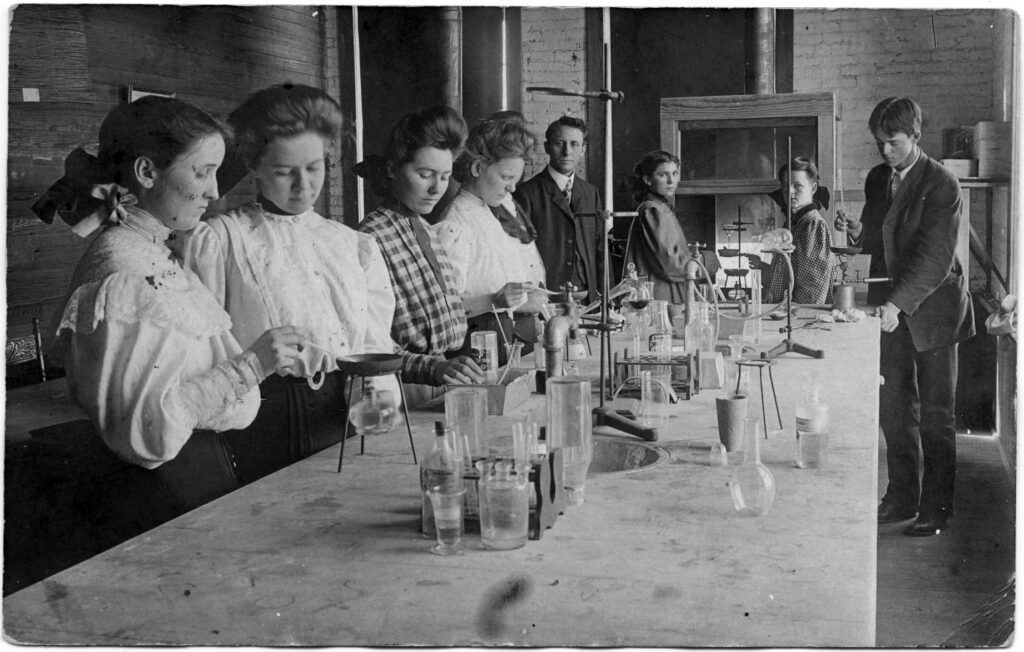
Six women and one man working at a lab bench with chemical instruments, while a male instructor observes.

While perspectives on coeducation and admission to scientific societies have shifted, gains were painfully slow in coming: the Royal Society admitted its first women members only in 1945, and the Académie des Sciences didn’t accept a woman until 1962. As of 2023, roughly 23% of the membership of the ACS identified as women, paralleling U.S. Census data that show women comprise roughly 26% of the STEM workforce. Initiatives to strengthen the pipeline and decrease attrition among women STEM students and early-career professionals may offer much-needed correctives, but for the moment women remain underrepresented in the chemical sciences.

Faced with this unfinished work, we might draw inspiration from Bodley and her dedication not only to chemistry but also to women’s intellectual achievement. In an 1874 address to the graduating class of the Woman’s Medical College of Pennsylvania, Bodley encouraged her students to pursue original work in chemistry, noting that “there is an unexhausted demand for research, and room for the workers also.” She urged graduates to remember their place in history, not only as followers to pioneering women of science but also as inspiration for those to come:

The old question of woman’s mental capacity, and of her fitness for the profession of medicine, having been forever settled by the worthy pioneers who have preceded you, there remains now for you the golden opportunity of arresting the attention, in behalf of professional study, of the younger women among your patients and associates. . . . The progress in the education of woman has been of slow growth, but it has been a natural and healthful one. From the high position which you and your [peers] occupy, you cannot, therefore, be displaced.

In the end, the Misogynist Dinner was less a marker of a world closed to women than a sign of a world already being broadened by women’s dedication and ingenuity. Perhaps the organizers couldn’t have imagined a future in which women can be Nobel Prize winners, or national science advisors, or astronauts. Or perhaps they did: perhaps they saw that future clearly and wanted to stave it off for one more night.

More from our magazine

Twin girls in Scottish costumes eating bowls of oatmeal at a table
DISTILLATIONS MAGAZINE

Fitter for a Stable Than a Table

A potted history of porridge.

A historical illustration depicts an experiment with a suspended person, possibly related to scientific studies or demonstrations.
DISTILLATIONS MAGAZINE

When Electricity Met Democratic Revolution

The science that animated a political idea.

A large white bird standing near a chick on a ground nest with the ocean and a ship are visible in the background.
DISTILLATIONS MAGAZINE

A Game of Cat and Mouse

A predator stalks Marion Island, and it weighs less than an ounce. Scientists are racing to stop it.

    Republish

    Copy the above HTML to republish this content. We have formatted the material to follow our guidelines, which include our credit requirements. Please review our full list of guidelines for more information. By republishing this content, you agree to our republication requirements.