Happy 250th! Our museum will be OPEN from 10am–7pm on July 3 and 10am–5pm on July 4.

Distillations magazine

Unexpected Stories from Science’s Past
July 2, 2026 Health & Medicine

The Philly Killer at 50

Legionnaires’ disease has never been more prevalent. So how did we forget it?

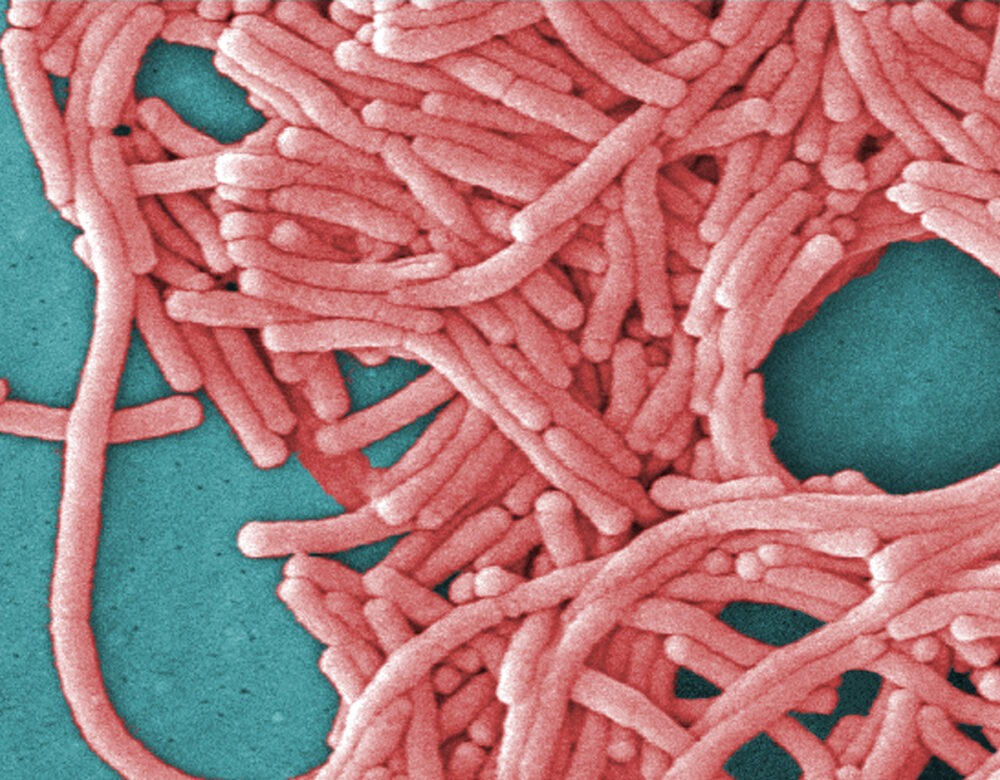
Pink bacteria on a blue background.
About SUPPORT OUR WORK

In the summer of 2022, four people in Sweden came down with Legionnaires’ disease, a dangerous bacterial pneumonia that kills at least a tenth of its victims. The pathogen begins by destroying tiny air sacs in the lungs required for breathing and then moves on to other organs, triggering their collapse. If the outbreak happens in a hospital or long-term care facility, as is common, the death rate can reach 40%. Those who survive have extensive lung damage and lifelong health impacts, or “LongLEGIO” as some call it. In Sweden, even a few cases triggered alarm—and a public health response.

A team of epidemiologists began testing the patients’ homes and workplaces, looking for the source of the waterborne bacteria in plumbing, showerheads, taps—any devices that might have dispersed tiny droplets of the pathogen into the air, where it got inhaled by its unsuspecting targets. The epidemiologists were also on the lookout for more peculiar sources of the pathogen, says Caroline Schönning, a microbiologist with the Swedish Public Health Agency who worked the case.

Although poorly managed plumbing and rooftop cooling towers are to blame for many Legionella outbreaks, the pathogen is famous for hiding in objectively weird places.

People have caught legionellosis from birthing tanks, produce misters in grocery stores, hot tubs, decorative fountains, windshield wiper fluid receptacles, and the spray from Zamboni machines that smooth the surface of ice rinks.

In a spooky coincidence, two people who nearly drowned in an estuary near Glasgow 20 years apart caught the same strain of Legionella from water that entered their lungs during their misadventures.

As the Swedish team worked to pinpoint the source of the outbreak, they discovered that the four victims, who lived hundreds of miles apart, had all recently stayed at the same hotel in Uppsala. “So of course the hotel was suspected,” Schönning says. Yet after months of sampling around the hotel, as well as from the plumbing of a nearby car wash and the irrigation devices of a neighboring soccer field, they could not find the bacteria’s hiding spot.

A break finally came when a particularly fastidious member of the team noticed the electrical fireplace in the hotel’s high-end lobby, something the epidemiologists had walked past dozens of times. These devices use ultrasonic vibrations to create a watery mist that helps create an illusion of flames. In the plastic water reservoir, Legionella bacteria were growing at dangerously high levels.
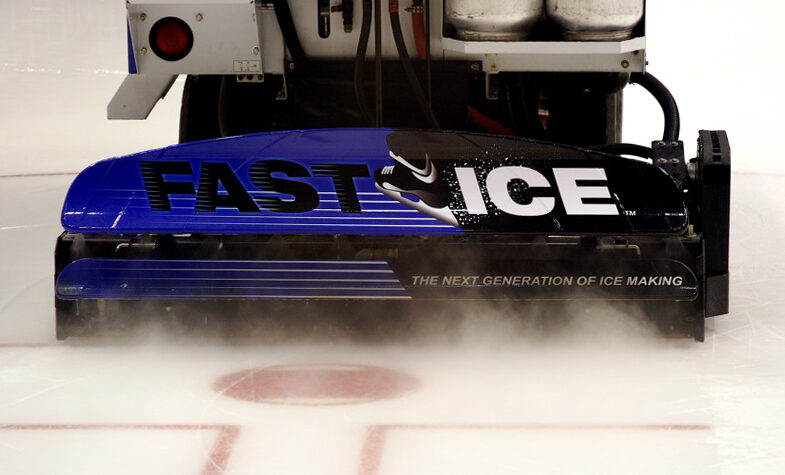
Close up of a ice cleaning machine working with mist

The Swedish case, centered at a fancy hotel, has some familiar parallels with the outbreak 50 years ago that gave the pathogen its name.

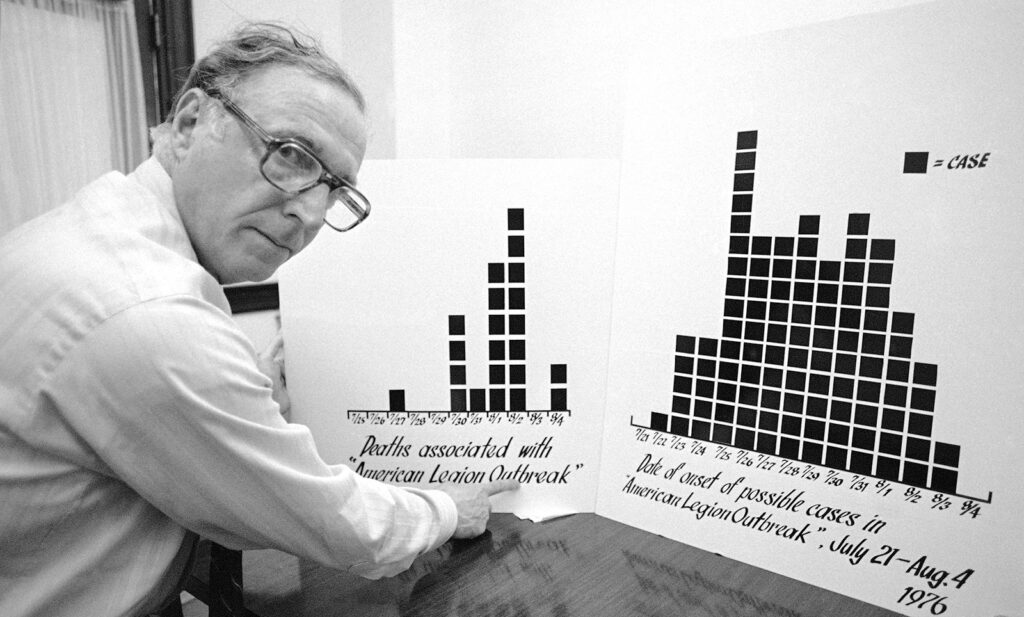
In July 1976, Philadelphia was in the full throes of bicentennial celebrations when a mysterious pneumonia befell visitors to the city. Within days several people had died. By the end of the outbreak, more than 220 people were gravely ill and 34 were dead. Public health officials were initially baffled by the cause and place of origin. They knew only that the consequent illness presented as a life-threatening pneumonia.

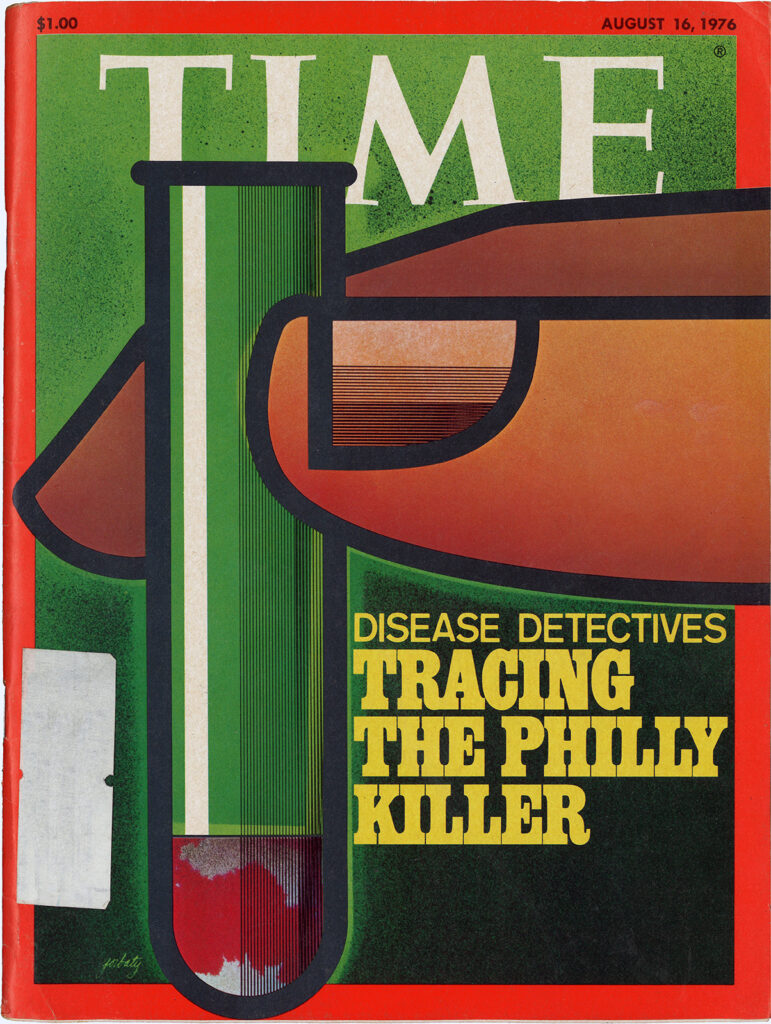
Time called it the Philly Killer; Newsweek called it Killer Fever. Eventually, the news media settled on Legionnaires’ disease. That’s because the victims were primarily veterans who attended an American Legion reunion inside the Bellevue-Stratford Hotel, the city’s most upscale lodgings. But some of those sickened had only walked past the hotel during the weekend of the reunion, not gone inside. As details emerged and fear gripped the nation, epidemiologists from the CDC searched for the cause under the media’s full glare. Pundits noted the grim irony of veterans having survived World War II only to be felled by a common enemy back home.

Skip forward to 2026, and the pathogen has mostly faded from the public eye, but it hasn’t beaten a retreat by any means. On the contrary, incidence is increasing. In the United States, Legionella infections rose nine-fold from 2000 to 2018. In a 2025 report, the World Health Organization noted that “reported case numbers are rising steadily, but legionellosis remains underdiagnosed or underreported.”

For most of the public, and even many medical professionals, Legionnaires’ disease is an anachronism if it is considered at all, says Janet Stout, an environmental microbiologist who began investigating Legionella during a 1980 outbreak at a veteran’s hospital in Pittsburgh. “And that’s dangerous.”

Cityscape with large buildings on each side. A large, ornate building with a statue of a man on the top is visible at the end of the street.
Looking north toward City Hall on Broad St. in Philadelphia. The Bellevue-Stratford Hotel is located on the left.

When Legionnaires’ disease struck Philadelphia in 1976, the country was already on edge about infectious disease. In January of that year, an outbreak of swine flu at Fort Dix army base in New Jersey killed one person and hospitalized 13 others. Fearing a repeat of the 1918 flu epidemic, President Ford launched—and then canceled—a controversial mass vaccination program, while public health officials braced for a swine flu epidemic that did not materialize. Meanwhile, cases of bubonic plague in California and other western states were making national headlines.

When CDC laboratory scientists began receiving sputum collected from those sickened in Philadelphia, they tested it for evidence of some 50 microbial pathogens, including influenza, Q fever, rickettsia, and Lassa fever. Within days, “we knew it was not swine flu,” David Fraser, who directed the CDC field investigations, told an audience in 2016. “Within the week, we were pretty certain it wasn’t anything we knew about.”

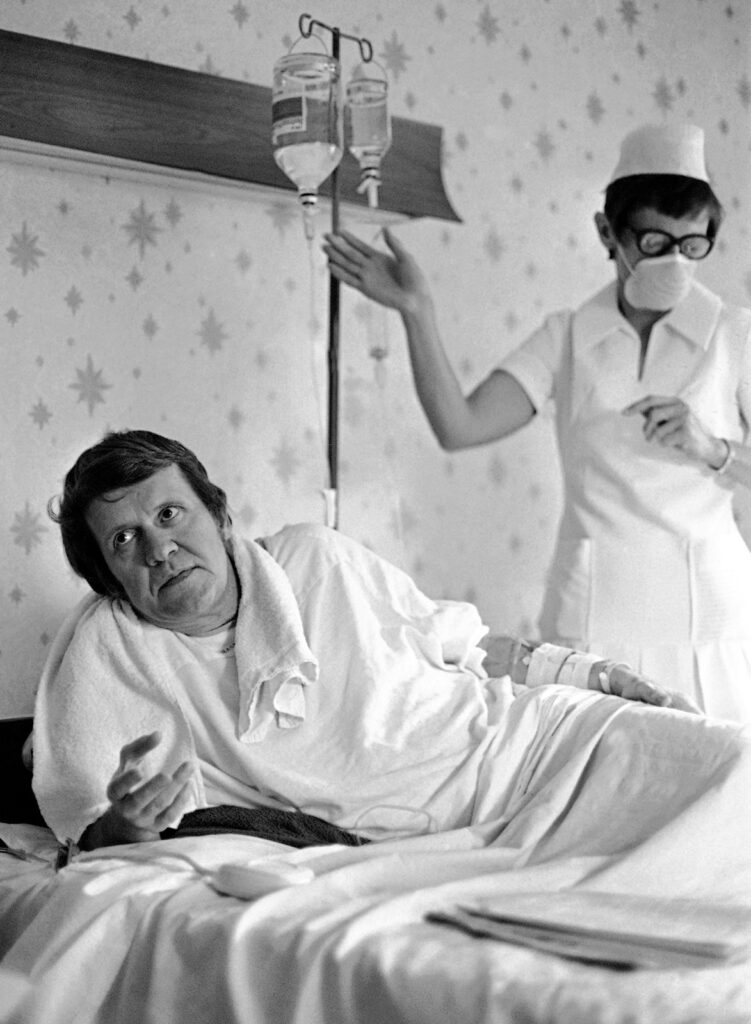
Man sitting up in a hospital bed while a nurse attends to his glass IV bottles.

With no immediate explanation for the Legionnaires’ illness, there was ample room for “baked, half baked, and unbaked theories,” says George Dehner, a historian at Wichita State University who is writing a book about Legionella. People speculated that Soviet spies had intentionally released a chemical or biological weapon. Others suggested that Fort Detrick, which had housed the U.S. biological weapons program between 1943 and 1969, had released a harmful agent, perhaps accidentally.

Some armchair epidemiologists argued that Legionnaires’ disease was ornithosis, an infection caused by inhaling bacteria in bird poop, or that people had fallen ill by consuming toxic New Jersey Shore fish. Others blamed the CIA, freon in the hotel’s air conditioning, or exposure to nickel carbonyl, a hazardous industrial catalyst.

“We had theories from one end of the alimentary canal to the other,” Lewis Polk, Philadelphia’s acting health commissioner, told the New York Times. “We got letters saying the disease was caused by dentures, onions, toilet paper! Calls from Indiana or Oregon at 4 a.m. recommending vitamin C, acupuncture, dilute vinegar, or Mentholatum for cures!”

Weeks, then months, passed. Despite hundreds of hours of epidemiological work, the CDC team came up empty-handed. Their null result triggered wide disdain: even the journal Science minced no words: “Legion Fever: Postmortem on an Investigation That Failed,” its headline read.

In November 1976, the Bellevue-Stratford hotel, shunned by the public for its association with the epidemic, closed after 72 years. Municipal officials considered tearing down the seemingly cursed heritage building. After an overhaul, the hotel reopened with new ownership and a new name but continued to struggle.

Two men loading boxes into a helicopter. A second helicopter is visible in the background. Text on the side of the helicopters reads: “Philadelphia State Police.”

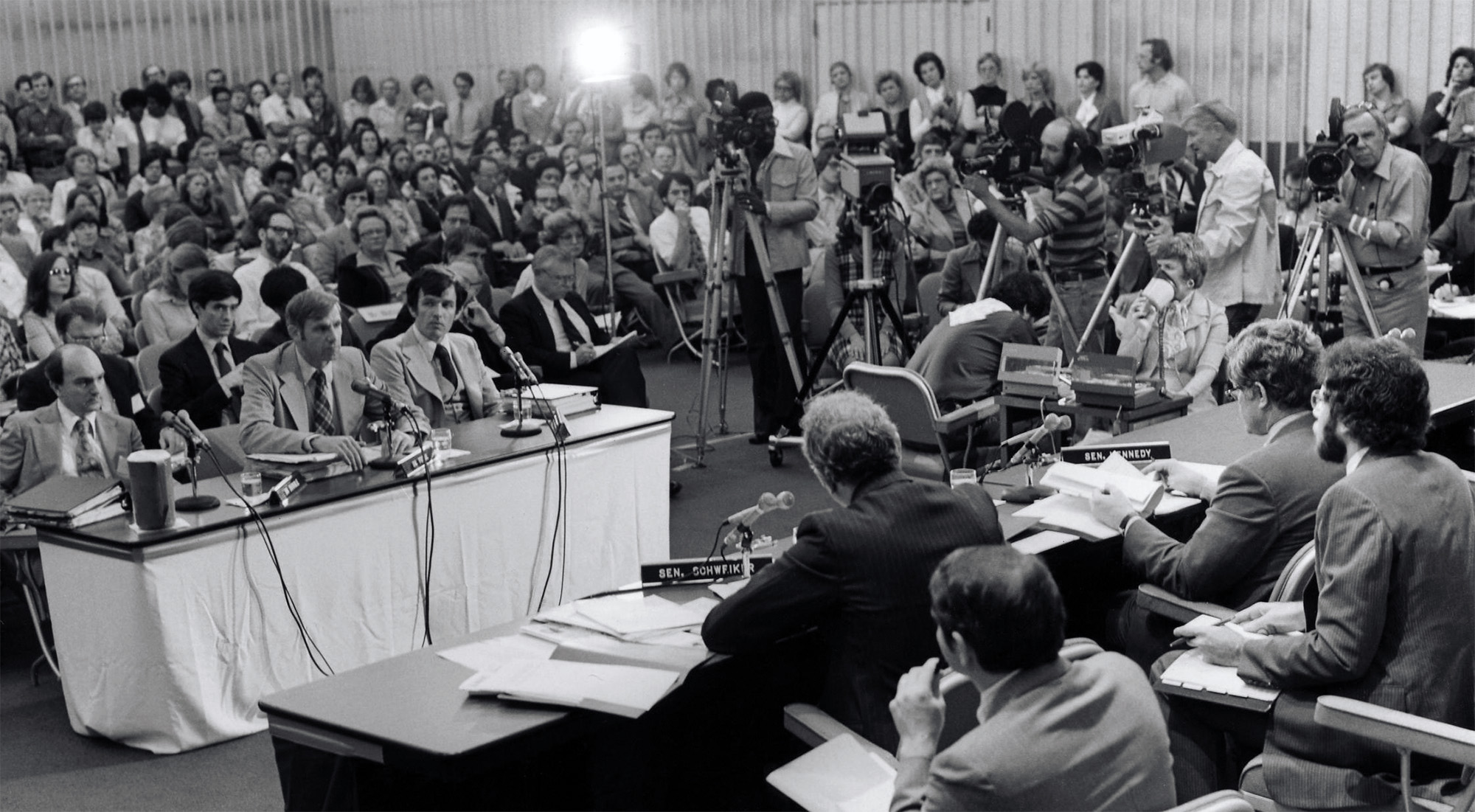
“After all the searching, investigating, theorizing, and hand-wringing, we have no idea either what the epidemic was or what to do if it happens again,” said U.S. Representative John Murphy of New York, who called a congressional hearing on the failed investigation. Murphy pointed out “all of the errors the Centers for Disease Control had made in mishandling the Legionnaires’ disease outbreak,” Fraser said in 2016. “We spent two hours being excoriated.”

Officials took to making morose statements. “With each passing day, the chances that the cause of the Legionnaires’ disease will be uncovered dwindles,” said Leonard Bachman, the state secretary for Pennsylvania’s Department of Health. “We need desperately a major breakthrough by the scientific community.”

That breakthrough came about a month later, motivated in part by an “aggressive” exchange CDC microbiologist Joseph McDade had with a stranger at a Christmas party. “Everybody knows all you scientists at CDC are kind of weird,” McDade remembered the partygoer saying when he told the story in 2016. “But, you know, we count on you to figure these things out. There’s something out there. It’s killing people, and it could do it again, and we don’t know what causing it. That’s really scary.”

McDade continued, “I was hit, you know, personally and professionally. I thought about it in the next few days. . . . Then my compulsive nature took over.”

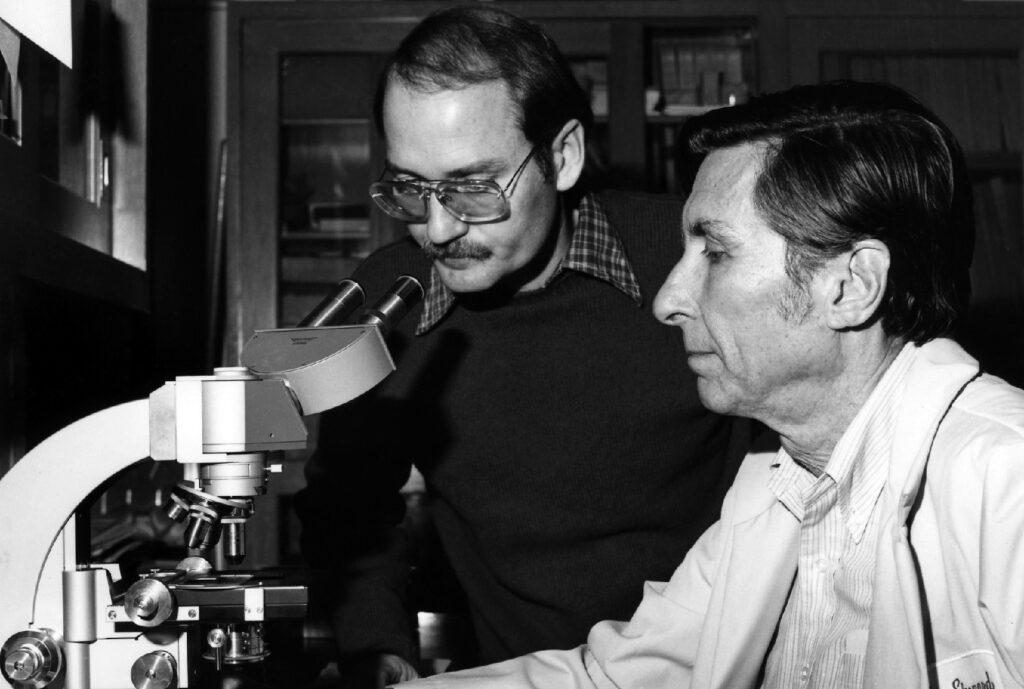
During the holiday break, he returned to the lab and again ran the samples from the outbreak under his microscope. It was “like searching for a missing contact lens on a basketball court with your eyes four inches away from the floor,” he told Time magazine. But during that painstaking process, he noticed a previously overlooked cluster of rod-shaped bacteria. They were the causative agent of the outbreak and an entirely new genus of bacteria, which he named Legionella, to honor the Philadelphia victims.

Along with CDC colleague Charles Shepard, McDade showed that the strain responsible for the deadly outbreak, Legionella pneumophila, had been responsible for unsolved and deadly outbreaks in previous decades, including one in 1965 at a psychiatric hospital in Washington, D.C., that killed 16 people. The pathogen had also killed two at an Odd Fellows convention in Philadelphia in 1974—at the very same Bellevue-Stratford hotel.

Two men working with a microscope on a table.

McDade’s breakthrough and clues from the cold cases helped the CDC to conclude that a cooling tower atop the hotel had been the breeding ground for the outbreak. The summer heat pushed the tower’s stagnant water to the optimum growing conditions for Legionella. Water droplets containing the pathogen evaporated off the hotel’s cooling tower, and then that moist air drifted down the side of the building and into the air intake system, where it infected the veterans inside and passersby below.

When the team reported their findings, “there were skeptics,” McDade said. “It ranged from the conspiracy theorists, to people who had vested interest in other possible etiologies, and to some who absolutely scoffed at the idea that you could ever find a new infectious agent.”

Ultimately McDade and his CDC colleagues convinced dissenters by showing their new bacteria were present in the Philadelphia outbreak samples and could solve many other cold cases.

Men seated at two tables facing one another in a large room surrounded by a crowd. Several camera operators are visible in the background.
Special Pathogens Branch Chief David Fraser and other CDC representatives testify at a Senate hearing into the agency’s handling of the Legionnaires’ disease outbreak, November 1977.

In the past 50 years, great strides have been made toward understanding the biology and ecology of Legionella. Researchers have catalogued more than 77 strains, yet L. pneumophila, the one that infected the Legionnaires in 1976, is responsible for more than 90% of the outbreaks worldwide.

Researchers have also figured out why the bacteria are so good at concealment: they can hide inside amoeba and use these larger life-forms as armor, Trojan horses for infection, and a mess hall banquet for nutritional resources . . . until such time as they pivot to other hosts, such as humans.

But what has not changed is that when a new outbreak occurs—whether it’s hantavirus, HIV, measles, or coronavirus—the misinformation moves faster than the science communication and discovery. And once tackled, the pathogen’s importance is often dismissed, even if it remains a threat.

Magazine cover illustration of a hand holding a test tube containing red liquid. The text reads: “Disease Detectives: Tracing the Philly Killer.”
Time, August 16, 1976.

Society tends to forget its microbial traumas, says Dehner. When COVID-19 was raging, people “speculated that it’s going to be seared into our consciousness.” But now, he says, “people are already forgetting COVID. Society quickly moved on from Spanish flu even though it killed somewhere between 40 to 50 million. People think, ‘It’s a bad thing that happened, and I don’t want to dwell on bad things,’ so they put it in the attics of their minds.”

The 1976 Legionella outbreak was called the “epidemic of the century.” Today the pathogen is as forgotten as it is omnipresent: if you sample any natural water system, there is a high chance that you will find it. Urban water infrastructure has “conditions supremely suited for the bacteria’s flourishing,” Dehner says.

Cooling towers in particular are a common, often unnoticed component of modern urban infrastructure that, as their name implies, expel heat from the HVAC systems in large buildings. In summer, the water inside the towers often reaches 29°C to 35°C (85°F–95°F), ideal for Legionella growth. But unless compelled by legislation or public shaming, many building managers do not regularly monitor water supplies for Legionella levels, says Michèle Prévost, an environmental engineer at Polytechnique Montréal.

In 2015, in what Dehner called an “eerie echo” of the 1976 outbreak, L. pneumophila in a Bronx hotel’s cooling tower killed 16 people and sickened 138 within several miles of the building.

In both the Philadelphia and Bronx cases, there was a “feverish media response that tallied up the number of stricken and killed, closely tracked the investigation of the source or sources of the illness, and asked pointed questions about how the outbreak was allowed to occur and what health officials were doing to protect the public,” Dehner says. The difference is that, after the Bronx outbreak, New York State mandated building owners regularly monitor for Legionella.

Man pointing to a poster on a table that contains two charts. The title of the chart on the left reads: “Deaths associated with ‘American Legion Outbreak.’” The title of the chart on the right reads: “Date of onset of possible cases in ‘American Legion Outbreak,’ July 21–Aug. 4 1976.”

It is impossible to entirely eradicate Legionella from water systems, Stout says, but it is possible to keep populations controlled—if the will to legislate exists. Stout has been “chagrined” by the slow pace of regulation in the United States. “France, Italy, Germany, Spain, Australia, Taiwan, all of these other countries have very proactive protective measures in place to address Legionella risk,” primarily through policy that requires regular monitoring in buildings and intervention if and when Legionella levels rise. “Most of these regulations were in place in the ’90s,” she says. Meanwhile, in the United States it took until 2021 before the CDC recommended routine testing for Legionella. “I am happy that we have made the progress that we have [in the United States], but more needs to be done.”

Even with mandatory testing, Legionella can appear unexpectedly—the outbreak from the hotel lobby’s electrical fireplace in Uppsala, Sweden, is a perfect example. The European Union saw a doubling of cases between 2010 and 2019.

The upswing in infections is “a multifactorial problem,” says Frederik Hammes, a microbiologist at the Swiss Federal Institute of Aquatic Science and Technology. Many countries have aging populations, which are more at risk. Many jurisdictions have switched away from metal plumbing—copper and steel pipes—toward synthetic polymer material, which is a more inviting surface for biofilms. We’re also much better at insulating our buildings—keeping the temperature nice and warm in the house. “But the consequence of that is pipes warm up a bit more,” says Hammes, creating an inviting habitat for Legionella. Likewise, energy-saving enthusiasts sometimes turn water heaters below the 60°C (140°F) threshold needed to thwart Legionella, which can have the adverse effect of raising the microbe’s prevalence “by tenfold, one-hundred-fold,” Prévost says.

Then there’s climate change. Previously, cooling towers would operate for two or three months a year; now it’s five months a year, Prévost says.

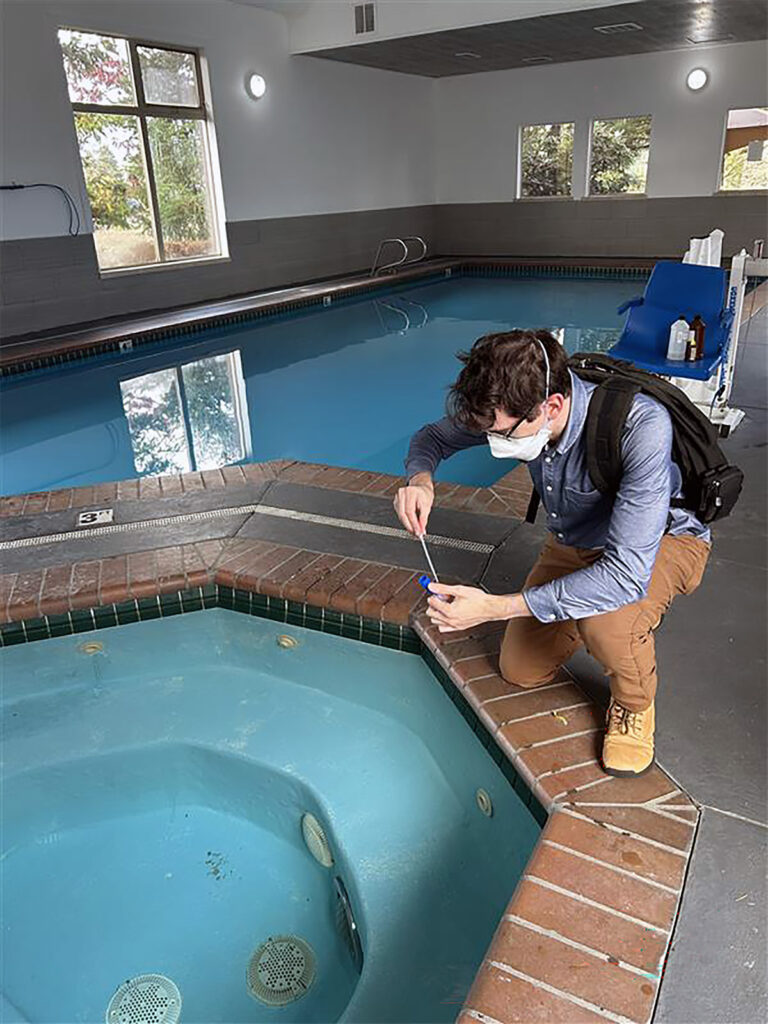
Man crouched over an indoor hot tub sampling water with a pipette.

To mitigate risk, she suggests regulations that require building managers to test their water systems monthly. If Legionella counts are too high, property owners are put on “a short leash” and required to mitigate the problem. Then testing becomes more frequent until pathogen levels drop.

Beyond regulations, Stout believes there is a need for more outreach to the public and to doctors. One reason the incidence of Legionella is underreported, Stout and many researchers say, is a lack of testing in many medical centers. When a patient enters the emergency room with life-threatening pneumonia, the medical team is focused on the patient’s survival.

Doctors often prescribe antibiotics immediately to save a patient’s life and do not pause to take a sputum sample required for accurate diagnosis. If the patient recovers, then the antibiotics have quashed the infection and no Legionella remains. If the patient dies, then there is little impetus to do a postmortem beyond noting the cause of death as pneumonia, which can result from any number of microbial infections.

But more testing and reporting from doctors would both bolster calls for regulations and improve patient outcomes. Advanced age, smoking, avid alcohol consumption, and a vulnerable immune system are all risk factors for a poor outcome from a Legionella infection. Better informed doctors might prioritize screening these patients and could, for example, help immunocompromised patients stay safe by advising them to add filters to their showerheads and to be extra vigilant about filtering water that goes into humidifiers and other water-spraying devices.

Moving forward, Schönning hopes scientists will untangle more precisely why some humans are more susceptible to infection than others. “We just know that a lot of people shower in Legionella but don’t get sick,” she says. Other researchers want to understand why the bacterium sometimes stays happily ensconced in its amoeba host and sometimes becomes actively virulent.

A half century since the infamous outbreak in Philadelphia, an adage from one of the city’s most beloved innovators, Benjamin Franklin, may be the most useful advice for avoiding Legionella infection: an ounce of prevention is worth a pound of cure.

More from our magazine

Dried plant material on a piece of white paper with an identification tag that reads “Baby Kate Botanical Search.”
DISTILLATIONS MAGAZINE

Floral Arraignment

Plant evidence can be a powerful crime-solving tool. So why is it used so rarely?

Two people in silhouette in front of a museum exhibit, a large detail of the Declaration of Independence blown up on the wall behind
DISTILLATIONS MAGAZINE

The Freedom Plane

At a fragile moment in U.S. history, a flying roadshow looks to the past.

Women and children playing outdoors with a garden hose.
DISTILLATIONS MAGAZINE

Don’t Be Evil

What does it take to care for a scientific workforce?

    Republish

    Copy the above HTML to republish this content. We have formatted the material to follow our guidelines, which include our credit requirements. Please review our full list of guidelines for more information. By republishing this content, you agree to our republication requirements.