Distillations magazine

Unexpected Stories from Science’s Past
September 3, 2026 People & Politics

Uranium Mania

The post-World War II mining rush that transformed a region.

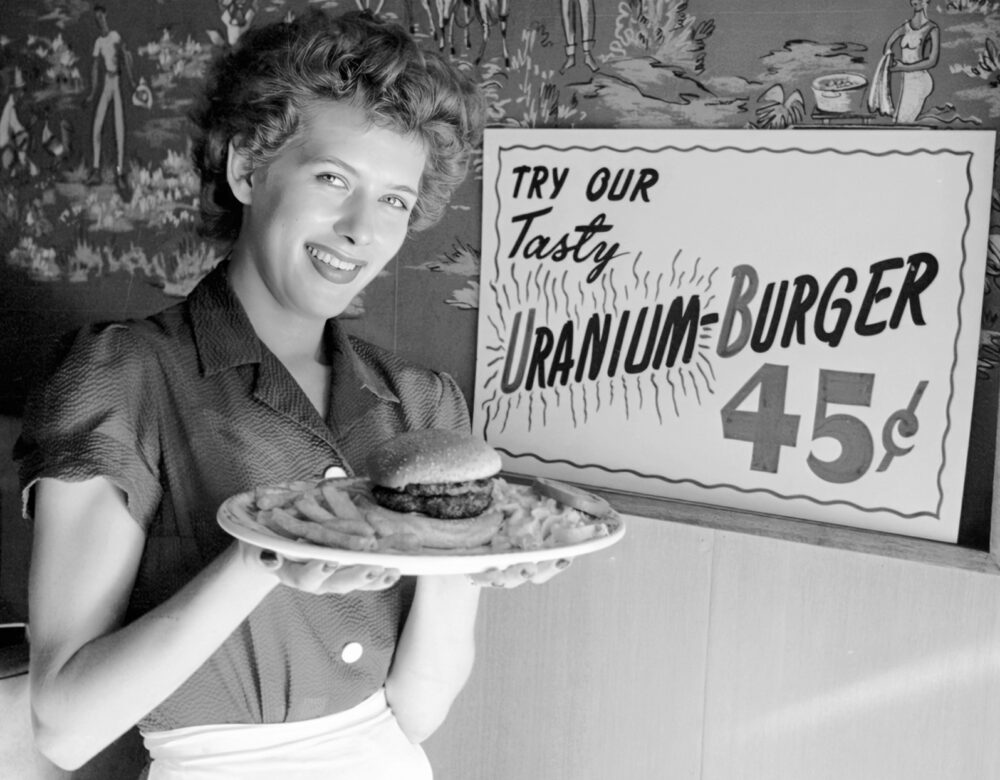
Woman holding a plate containing a hamburger and fries. A sign behind her reads: “Try our tasty uranium-burger.”
About SUPPORT OUR WORK

Before the boom, the warm winds that washed through Moab, Utah, carried the sweet scent of orchards. Apples, peaches, and cherries flourished in a fertile valley bound by the rushing Colorado River, the grand sweep of the La Sal Mountains, and an endless expanse of red-rock canyons, mesas, and hoodoos. It was an oasis in the desert. It was the American West in all its glory. And it was hiding a secret.

Settled by Mormon pioneers in the second half of the 19th century, Moab was still a sleepy town by the middle of the 20th—a ranching village where people were outnumbered by cattle and the fields of alfalfa that fed them. But buried in that dramatic landscape was something with the power to change it all. So when, in 1952, a vast deposit was discovered in the crenulated sandstone south of town, the transformation was swift and it was severe. Livestock and agriculture were the past. Uranium was the future.
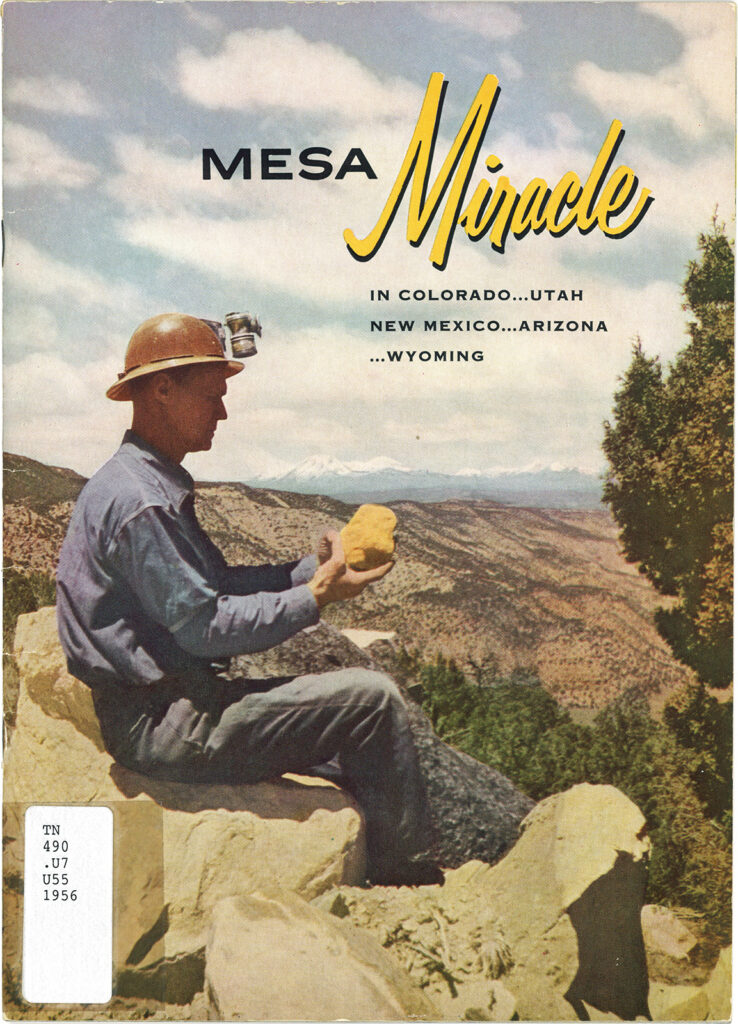
A man sitting on a boulder holding up a yellow rock in an arid, mountainous landscape. The text above him reads: “Mesa Miracle in Colorado… Utah… New Mexico… Arizona.”

Seven years earlier, in August 1945, the Enola Gay dropped Little Boy and its payload of fissionable uranium on Hiroshima. The bomb killed as many as 140,000 people and thrust the world into the nuclear age. The U.S. government packed Little Boy primarily with uranium imported from Shinkolobwe, a mine in the Belgian Congo that was the world’s foremost producer. Now entrenched in the Cold War, the Atomic Energy Commission (AEC) needed a domestic supply to fortify its standing in the accelerating arms race. It tasked the American people with finding it.

When the AEC put out the call in 1948, establishing a guaranteed minimum price for uranium and five-figure bonuses for major finds, a motley crew of mining engineers and get-rich-quicksters fanned out into the arid West with Geiger counters and scintillometers, driven by a mix of patriotic fervor and unbound optimism.

Unassuming outposts in the Four Corners burst to life with each new strike. None changed more suddenly than Moab. The uranium boomtown was, in the words of one newspaper editor, “Uncle Sam’s creature”: a community effectively created and controlled by the federal government. That didn’t bother inhabitants. There were untold riches to be won and no shortage of men willing to gamble on their own luck, no matter the risks. And they were buoyed by a belief that the country could harness for good the chain reaction that begins when an atom of uranium-235 is split.

But uranium has a way of instigating a chain reaction of another kind. As Tom Zoellner, author of Uranium: War, Energy, and the Rock That Shaped the World, suggests, history is clear on one thing about the element: “It has created instability wherever it’s been introduced in society.”
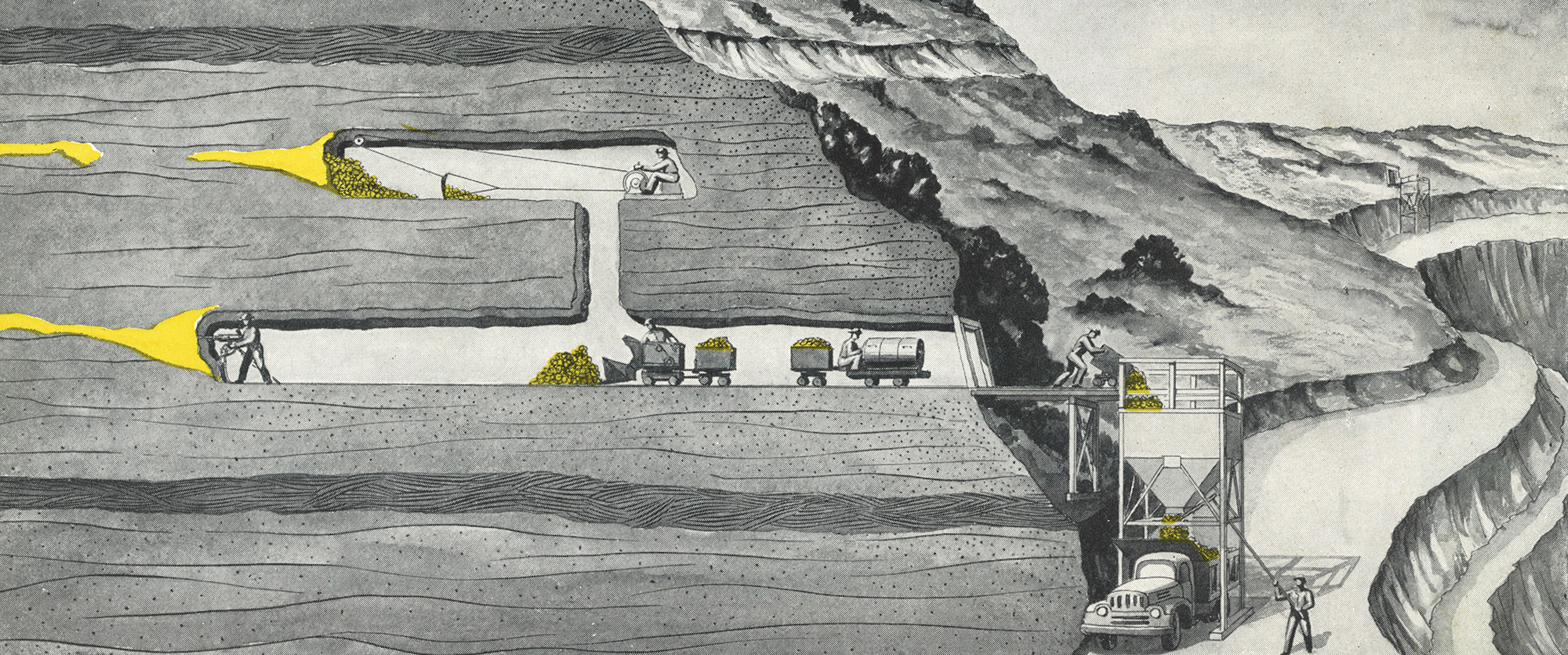
Drawing of mine shafts inside a mountain with miners working inside them.
Cross section of a uranium mine, from Mesa Miracle, 1956.

For most of human history, uranium was just another piece of earth. It provided a vivid yellow dye for ceramics and little else. In Germany, where chemist Martin Heinrich Klaproth first identified it in 1789, its name, pechblende, tagged it as a “bad-luck” rock—a reference to its knack for appearing whenever a silver mine tapped out. Its density gave it the appearance of value, but to miners it was nothing but an impediment.

It wasn’t until Marie and Pierre Curie isolated radium from uranium ore in 1898 and began investigating it as a cure for cancer that the bad-luck rock earned the world’s attention. Their studies ignited a global hunt for deposits and a modest, short-lived boom on the Colorado Plateau in the early part of the 20th century. When that rush was quelled in 1923 by the discovery of Shinkolobwe’s exceptional ore, mines and mills in the Four Corners turned instead to the bright-red, steel-strengthening vanadium found in the same deposits. For a time, uranium was again viewed as waste. It didn’t stay that way for long. The Manhattan Project kick-started uranium processing in the region.

Even after Hiroshima revealed uranium’s capacity for destruction, nuclear energy retained an aura of hope. By the 1950s, uranium was widely viewed as “the fuel that will power our rocket ships, heat our homes, and run our cooking ranges for the next 10,000 years,” as True West Magazine declared. The AEC had been formed to pursue and sell this idea to the public as it developed its weapons program. “Peaceful nuclear power became a way to soften the belligerent nature of what lay behind this exercise,” Zoellner says. But first, the agency needed a consistent source of uranium.

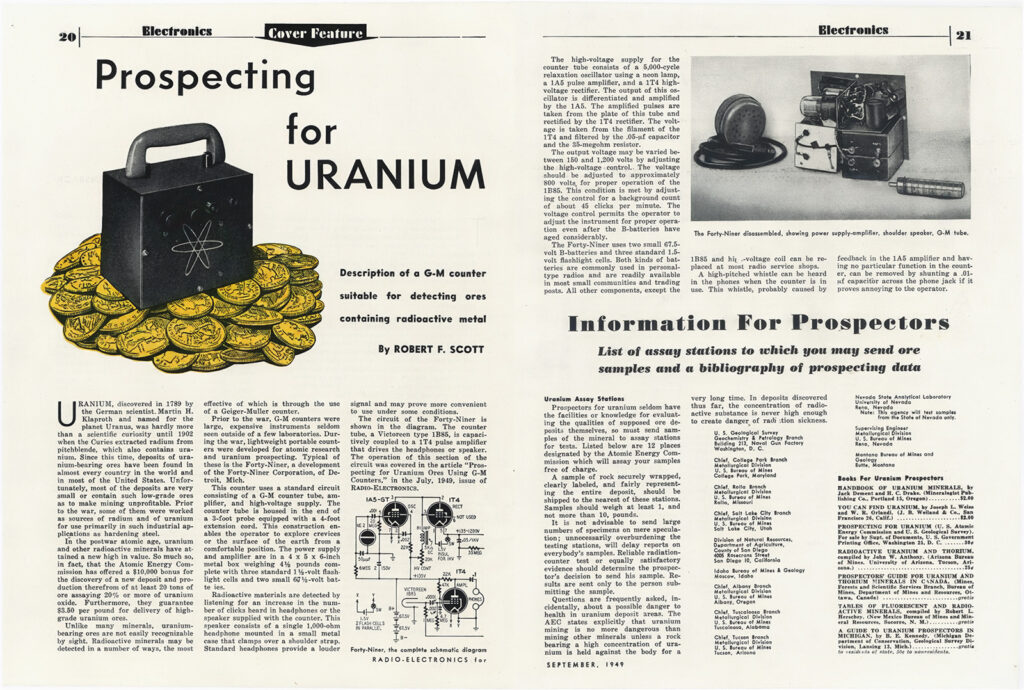
To beckon prospectors out West, the AEC and the U.S. Geological Survey in 1949 published Prospecting for Uranium, a guide to common uranium minerals and where to find them. It detailed the pricing scheme, how to identify the element’s presence, where to send samples for testing, and how to sell ore. The last part was simple, as there was only one legal buyer: the U.S. government.

Two magazine pages containing text and an illustration of a Geiger counter on top of a pile of coins. The title of the article in large print reads: “Prospecting for Uranium.”
Article on using a Geiger counter to detect uranium deposits, from Radio Electronics, September 1949.

The impact of the undertaking was immediate. Utilizing the vanadium industry’s infrastructure, U.S. uranium ore production nearly tripled between 1949 and 1950, reaching 320 tons—still a drop in the bucket when set against the flood soon to start. Whether AEC officials realized it or not, to secure enough domestic uranium for both national defense and peaceful pursuits they would need a strike that could inspire thousands of people to try their hand at a rags-to-riches miracle. They needed a catalyst, someone who could bring the great myth of the American West—the land of possibility—down to human scale. They needed Charlie Steen.

Prospecting was in Steen’s bloodline. His father had wildcatted for Texas oil, hitting big and losing it all by the time Charlie was born in 1919. By the time he was 4, his parents divorced and his father left. He was determined to do better. An education from the Texas School of Mines and Metallurgy gave him his start.

Poor eyesight kept Steen out of the war, so he headed to South America to map gas fields for an oil company. He learned plenty but failed to find a bonanza. He returned stateside for a field job with Standard Oil, only to sabotage himself. Stubborn and opinionated, he was fired for “rebellion against authority” and blackballed by the oil industry.

To the threadbare geologist, prospecting seemed like the last chance to make something of himself. When he read about the AEC’s program in late 1949, he knew most of the men staking claims would be farmers and ranchers with none of his expertise—the type who wouldn’t know what to do with a lode if they found it. (The vanadium companies were banking on this predicament. Prospectors who didn’t strike out often sold their claims to the companies for pennies on the dollar.) Steen thought he had an edge. The same methods used to find oil, he surmised, could lead him to uranium in the desert. He scraped together what little money he had, including $1,000 his mother made from mortgaging her home, and rushed out West.

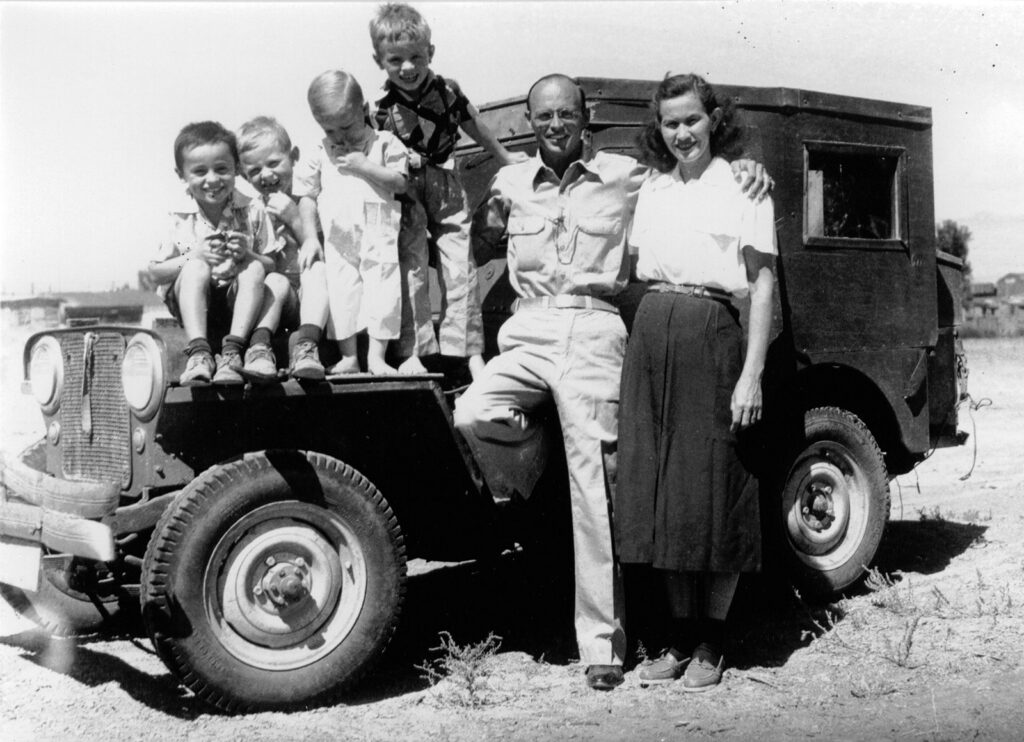
Based on his geological studies and the region’s mining history, Steen targeted an area in the Lisbon Valley southeast of Moab. He set up camp just over the border in Dove Creek, Colorado, and soon his wife, M. L., and four sons joined. The family showed up on the edge of destitution; in Steen’s words, “looking like The Grapes of Wrath.” Steen rented a tarpaper shack and scavenged railroad coal to heat the stove. Government geologists had already scanned the area and declared it barren, but he insisted they simply hadn’t looked hard enough.

A man, woman, and four children posing next to a Jeep.

Steen couldn’t afford a Geiger counter and worked with little more than geological charts, a beat-up drill rig, and boots worn through at the toes. With a secondhand Jeep on its last legs, he searched for uranium just as he would for oil, digging deep for paydirt. He sought downsloping outcroppings called anticlines that he believed would be hospitable to heavy metal deposits. An AEC official called him a “crackpot” for his unconventional methods. He didn’t seem to disagree. “You don’t have to be crazy to mine uranium,” he wrote to a friend, “but it helps.”

Two years into his quest, on a sweltering July day in 1952, Steen drilled nearly 200 feet into a gray-black vein rich with uranium, sandwiched right between Moab and Dove Creek. He raced home to M. L. to celebrate his “million-dollar lick.” He wildly underestimated his own discovery. Within four months, the Mi Vida mine, as he called it, had moved 4,000 tons of ore. In time, it delivered more than $100 million worth of ore; overall, the Lisbon Valley would surrender some 10 million tons.

Steen blossomed in the limelight that followed his strike. When he finally replaced his boots, he had them bronzed—“to remind me, in case I forget,” he said, “how easy it is to earn a million bucks”—and put them on the mantel in his new hilltop Moab mansion. His story enticed droves of prospectors to Moab and other emerging “yellowcake towns,” such as Grants, New Mexico, and Uravan, Colorado. Everyone from schoolteachers to real estate salesmen wanted to be the next Charlie Steen.

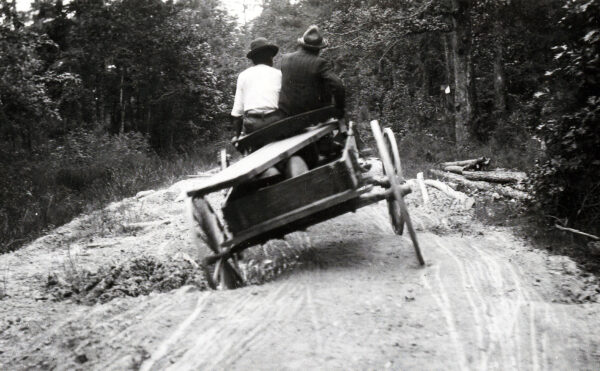
A road snaking through two mountains of reddish-brown rock.
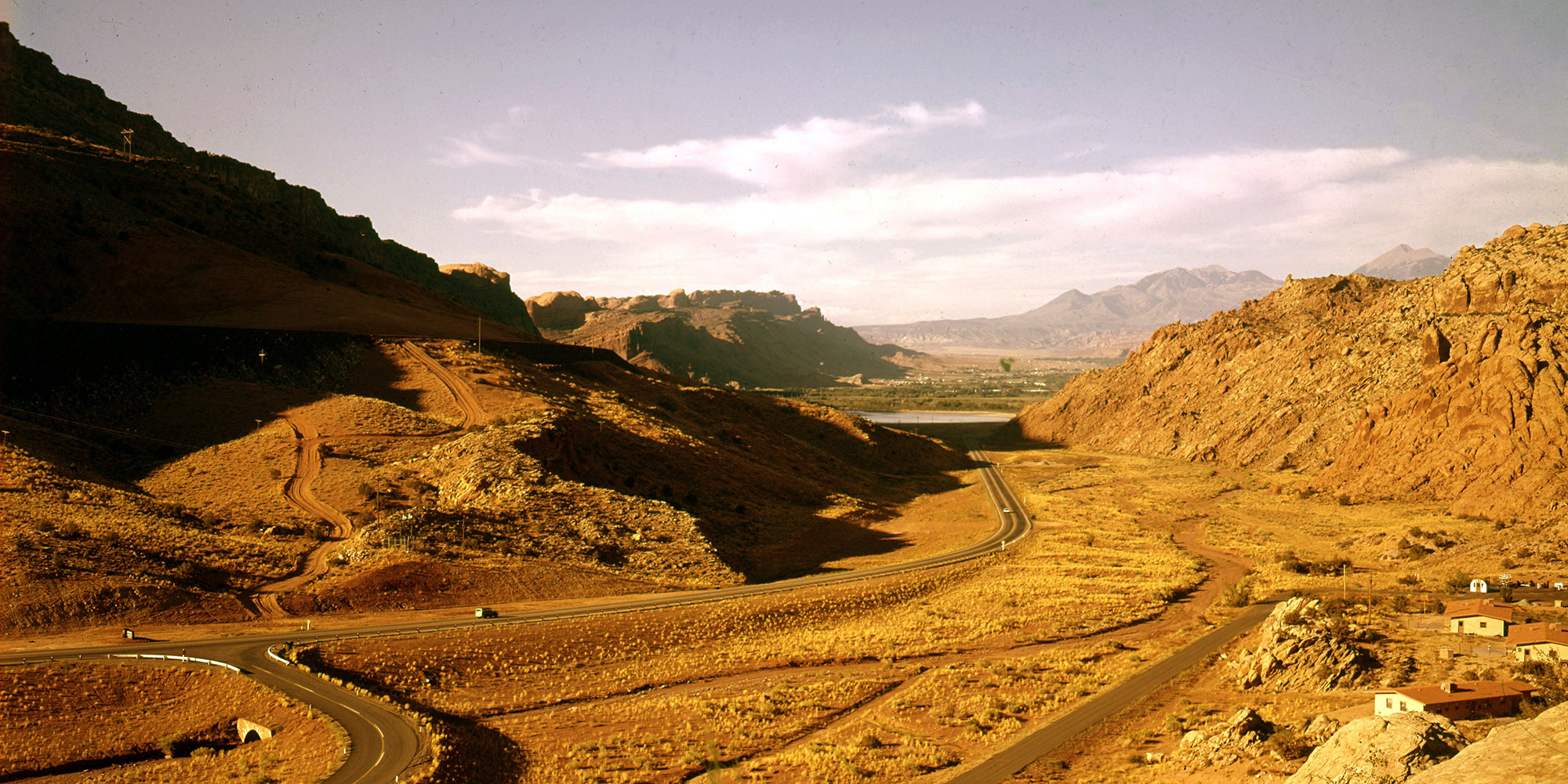
Highway leading into Moab, ca. 1950s.

Moab’s population surged from 1,200 to 7,000, seemingly overnight. Utilities were overwhelmed. Electricity wavered and the sewage system staggered, its reek replacing the smell of orchards and alfalfa. Trailer courts and tent settlements crowded the town’s edges. Students went to school in shifts. The post office jumped two classes and expanded twice within a few years.

As the town scrambled to keep up with the influx, Moab’s wealthiest man put his largesse to work, helping fund a hospital, churches, and schools, as well as a 160-acre subdivision to house employees of the uranium mill he opened near the Colorado River.

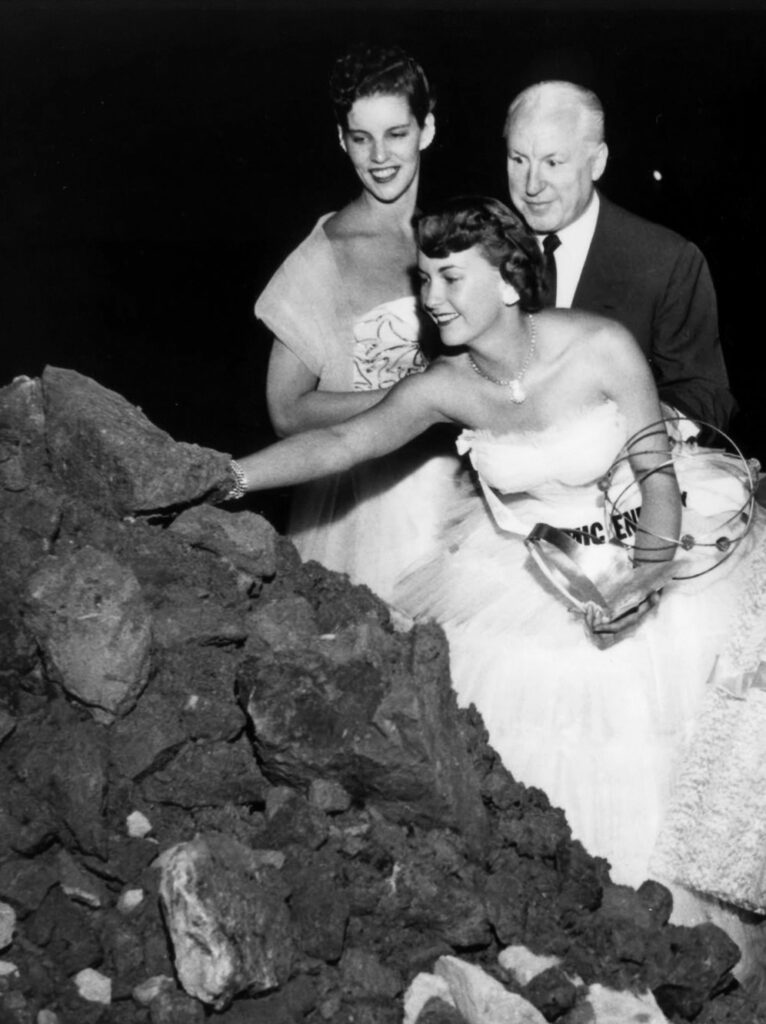
Woman in a white gown reaching out to touch a large pile of rocks. A man and women look on.

Everything in Moab revolved around uranium—and everyone wanted to stake a claim. The county recorder, who had filled one book in 16 years tracking mining claims, now burned through one a week. A group of high school students made $15,000 selling their stakes. The tables in pubs and cafés were so crowded with Geiger counters and ore samples that servers could hardly deliver dinner plates. Tablecloths gave way to paper coverings that couldn’t be ruined by diners’ scribbled calculations.

In all the excitement, Moab and other boomtowns were swept by a uniquely “pro-nuclear culture,” as Michael Amundson writes in Yellowcake Towns. Entrepreneurs opened atomic-themed motels and diners. Winners of “Miss Uranium” pageants were feted with truckloads of ore.

The enthusiasm for a modern-day gold rush reached beyond the boomtowns themselves. Magazines were blanketed with cover stories about fortunes found out West, often featuring Steen himself. A light-up Geiger counter led the way in “Uranium Rush,” a board game that debuted in 1955. Hollywood got in on the action, too, sending a comedy troupe into the desert in 1956’s Dig That Uranium. Another film, Uranium Boom, centered on a claim dispute in the Colorado badlands—a familiar experience for most prospectors.

The AEC did everything it could to encourage the frenzy Steen helped stir up. It raised its rate for ore in 1951, and in the half-decade that followed the commission bulldozed nearly a thousand miles of backcountry to create access roads for uranium hunters. It also drilled a million feet per year to help find and verify claims and paid out millions in bonuses. The one thing it didn’t do was warn miners about the dangers of working in poorly ventilated mines.

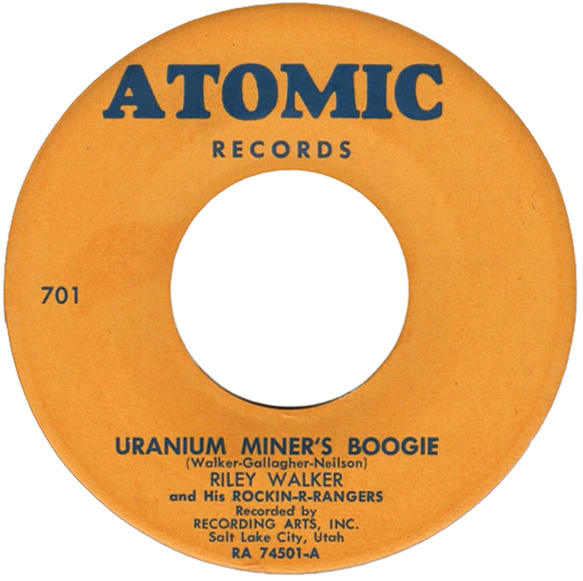
Circular yellow-orange record label that reads: “Atomic Records Uranium Miner’s Boogie.”

Uranium ore is barely radioactive, with a half-life that’s roughly the same as the age of Earth. In its natural state, it’s relatively benign. But miners in the Four Corners weren’t working with uranium in its natural state. During the element’s protracted journey of decay, it releases radioactive radon gas, which greatly increases the risk of lung cancer with prolonged exposure. In the mines and mills, where ore was broken down and processed, this release was rapidly accelerated. And in these confined spaces it had nowhere to go, lingering in the dusty air to be absorbed into workers’ lungs.

The AEC knew that hundreds of miners had died in Germany and Czechoslovakia, where uranium-containing ore had been mined for centuries, and that the vast majority had died of lung cancer. The connection between their work and the disease was first reported in 1879. By the time the AEC started its program, cancer was a compensable occupational disease for European miners. The AEC also knew that radiation levels on the Colorado Plateau were far greater than those in Europe—thousands of times higher than its own regulations would allow in enrichment plants.

But even after it was warned in 1952 by the U.S. Public Health Service about the deadly amount of radon gas in the mines—and the need for mechanical ventilation to reduce exposure—the AEC stayed mum, loath to disrupt its uranium supply. Its head of raw materials procurement cautioned against “speculations or premature and distorted inferences” from the Public Health Service’s report, fearing that “communist propagandists” might seize the opportunity to restrict production if its findings were made public.

By the mid-1950s, some 600 producers were shipping ore, and production was doubling every 18 months. Eight thousand workers toiled in the mines and mills. As they transformed rock into yellowcake, radioactive tailings piles grew into mountains. Lung cancer cases among miners rose to five times the normal rate. Four died in 1958, then five the next year, then nine the year after.

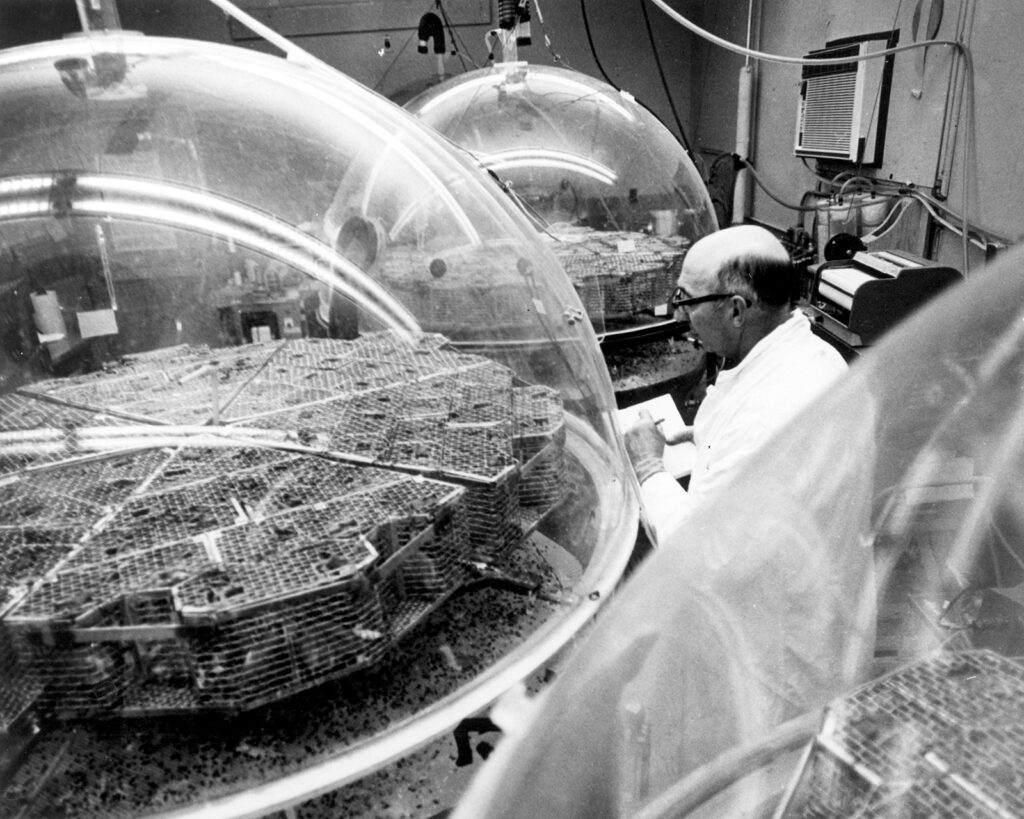
Man in a white lab coat surrounded by rounded plastic enclosures.

The threat came from above and below. The uranium that miners dug out of the earth fed an AEC testing regime that set off dozens of bombs in the Nevada desert during the 1950s. Mushroom clouds filled the air every few days for much of 1953, showering undisclosed radioactive debris on downwind communities. When nearly a quarter of the sheep grazing in Southern Utah and Nevada died between May and July that year, the AEC attributed the deaths to “unprecedented cold weather,” brushing off a rash of stillbirths and deformities among the herds. As they watched childhood leukemia and cancer diagnoses rise, downwinders were told that fallout wasn’t “a serious hazard” outside of the testing zone. Even once it acknowledged the dangers of its tests, the AEC justified them as a “small sacrifice” in an existential struggle, as chairman Lewis Strauss wrote in 1957 to a rancher-turned-activist in Utah whose child had died from leukemia.

Steen agreed. “We are living in a world in which two systems are locked in mortal conflict to determine which kind of a world our kids are going to inherit,” he wrote in 1958.

By then, the nuclear program’s toll on public health had become increasingly clear, and justifications for its continued existence all the more dubious. In 1957, staked with a surplus of uranium, the AEC began to discourage further production. With everyone from Albert Einstein to Pope Pius XII calling for an end to atomic testing, the AEC fired off 36 shots in a seven-week span leading up to a moratorium on October 31, 1958.

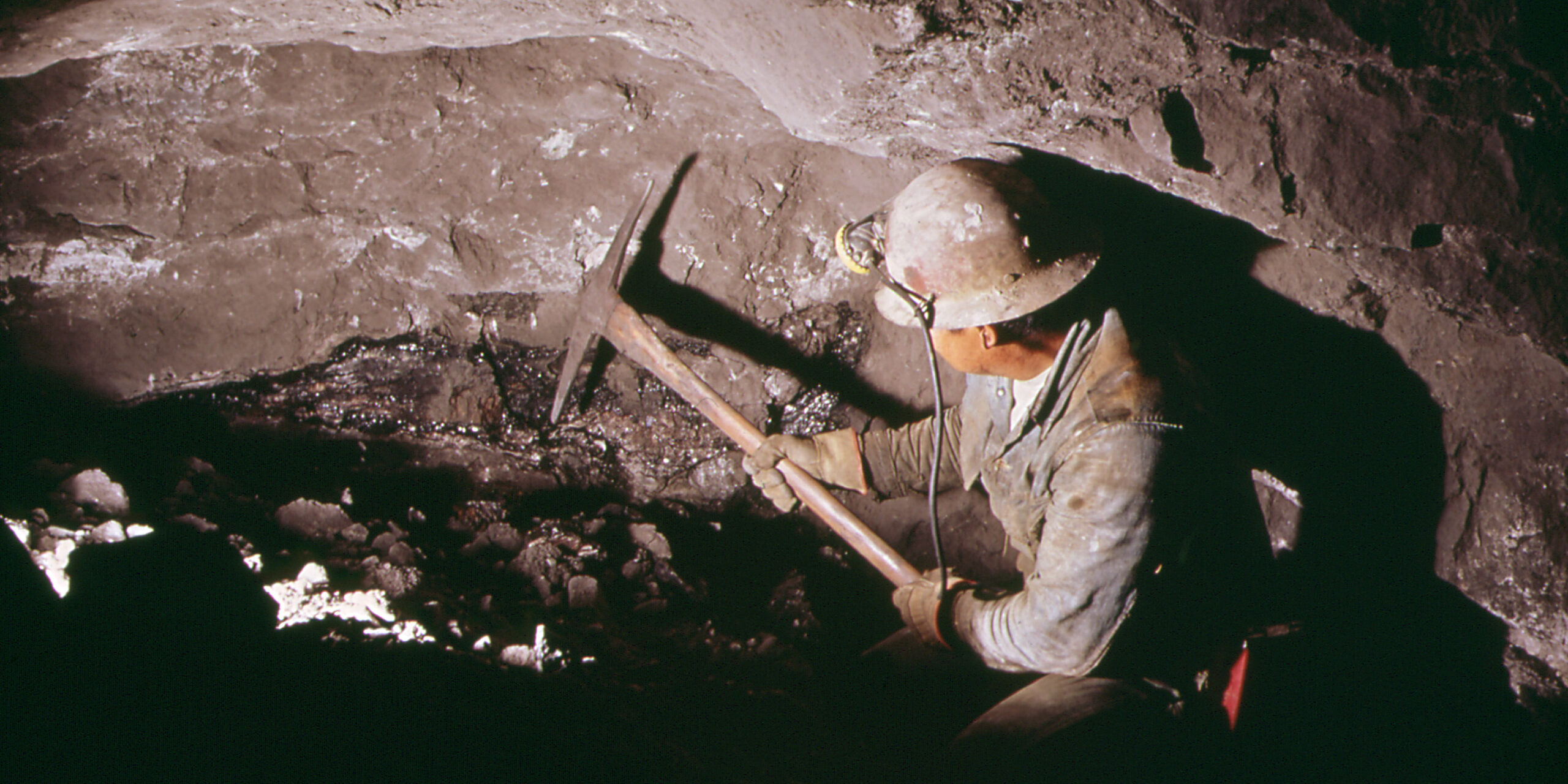
A man wearing a hardhat and headlamp wielding a pickaxe underground.
Mining uranium in Nucla, Colorado, 1972.

When it announced a few weeks later that it would purchase only “appropriate quantities” of ore derived from pre-existing stockpiles, exploration ended abruptly. According to the editor of Uranium magazine, it was the government’s most egregious bit of rug-pulling and deception since it went off the gold standard in 1933. Five years later, the Limited Test Ban Treaty with the Soviet Union sounded the boom’s death knell. Eisenhower’s vision of nuclear technology adapted to “the arts of peace” had stalled out, and the country was left with 71 million tons of uranium reserves and radioactive piles sprawled across the West.

Moab navigated the bust by rebranding as the Heart of the Canyonlands and catering to stargazers and thrill seekers. Other boomtowns were less fortunate; many withered into ghost towns as their economies evaporated.

In 1965, the AEC legalized commercial uranium sales to power plants, reigniting a smaller boom on the Colorado Plateau. This time, however, the spoils went to energy companies. The disaster at Three Mile Island in 1979, combined with stricter mining regulations, triggered another bust, and boomtowns suffered once again. Unemployment in Moab rose to 15%, and school enrollment fell by 25%.

The mill Steen built along the Colorado River held out until 1984. By the following year, just 4 of the 26 mills that had once operated in the West remained. White Mesa Mill, built in 1980 an hour south of Mi Vida, is the country’s last conventional uranium mill.

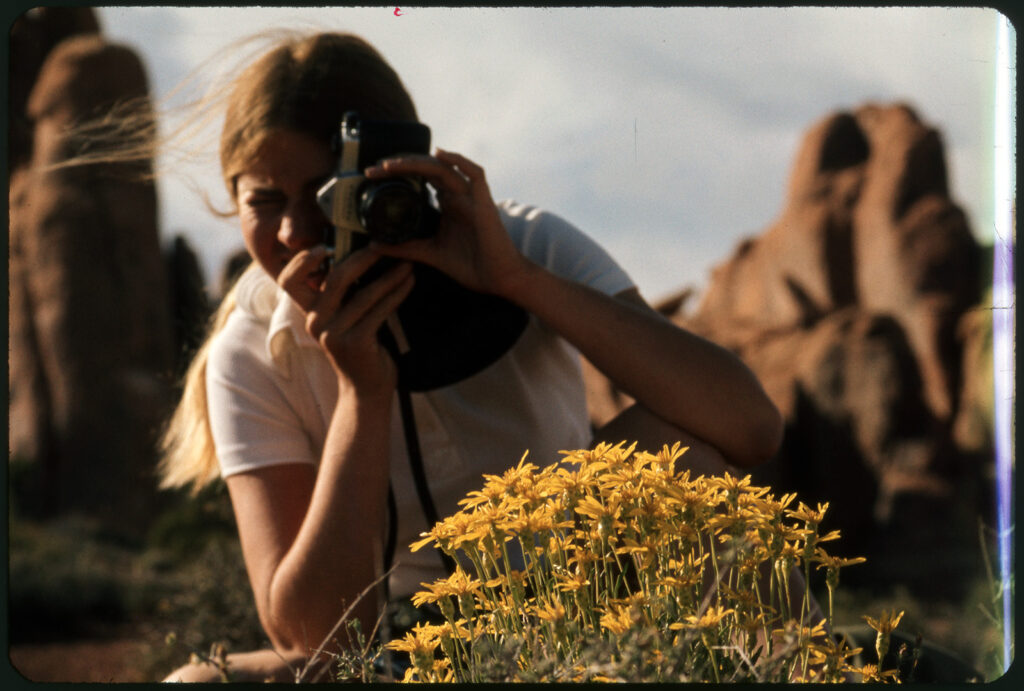
Woman photographing yellow flowers with rock formations in the background.

It took until 1990 for Congress to acknowledge the costs of the uranium program when it passed the Radiation Exposure Compensation Act, recognizing that the lives of miners and downwinders “were sacrificed to serve the national security interests of the United States.” Five years later, the Advisory Committee on Human Radiation Experiments found the government had failed to address the ventilation problems in mills and mines and failed to adequately warn miners of the hazards they faced. A 2025 study found that among roughly 4,000 miners on the Colorado Plateau, nearly 700 died from lung cancer. As radon exposure increased, the study found, so did lung cancer incidence, a danger exacerbated by miners’ propensity for heavy smoking.

Moab and its residents, meanwhile, are still dealing with the aftermath of the mill Steen once owned. When it closed, it left 16 million tons of radioactive waste in the Colorado River floodplain. For decades, wind gusts blew white clouds of metallic dust from the tailings pile into town. In April 2026, 20 years after Steen died and had his ashes scattered on a promontory overlooking Mi Vida, the town finally celebrated the pile’s removal.

Other piles, though, are growing. After President Donald Trump announced his intention to quadruple the country’s nuclear generation by 2050, activity picked up at White Mesa. The mill produced 1 million pounds of yellowcake last year and expects to double that this year. Its tailings occupy 284 acres of land, and in 2021 the US Environmental Protection Agency found the mill had committed an “egregious” violation of the Clean Air Act by failing to cover one of its piles to limit radon emissions. Like all tailings piles, it will remain radioactive for hundreds of thousands of years.

More from our magazine

A chimpanzee looking into a full-length mirror.
DISTILLATIONS MAGAZINE

Extended Family

Self-recognition was uniquely human. Then scientists put other animals in front of the mirror.

Advertising photo of a man and woman grilling on a beach
DISTILLATIONS MAGAZINE

Medium Scare

As temperatures rise, the threat of a tick-borne meat allergy grows.

A group of men gathered around a large fish in a crate
DISTILLATIONS MAGAZINE

Atomic Tuna

An ill-fated fishing voyage pulls back the curtain on U.S. nuclear testing in the Pacific.

    Republish

    Copy the above HTML to republish this content. We have formatted the material to follow our guidelines, which include our credit requirements. Please review our full list of guidelines for more information. By republishing this content, you agree to our republication requirements.